
Biography
A Biography of Professor Dr. Rashida Begum

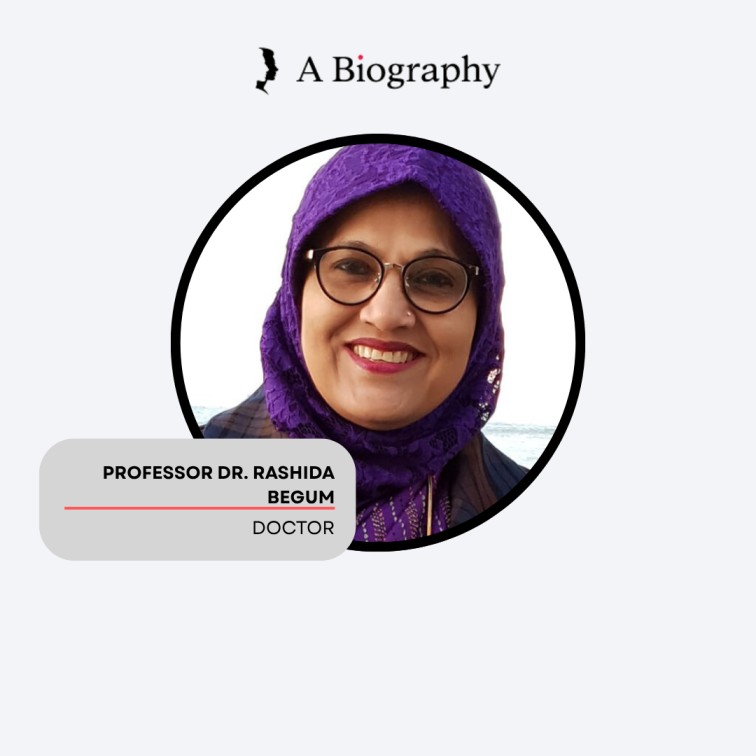
Introduction
The Morning That Changed Everything – A Seed Planted on Humayun Road
It was a quiet morning in 2002. Dhaka’s Mohammadpur, Humayun Road, Block B – a modest address that would soon become a beacon of hope for thousands of childless couples across Bangladesh. A woman stepped into a small, unremarkable building. She carried no grand banners, no corporate backing, no political patronage. She carried only three things: her medical degree, her international training, and an unshakable belief that no woman should be told, “You cannot become a mother.”
That woman was Professor Dr. Rashida Begum. She named her initiative the Infertility Care and Research Centre (ICRSC). No one at the time could have predicted that this small center would grow into the nation’s largest and most respected infertility treatment and research hub. Within just one year – 2003 – she launched Assisted Reproductive Technology (ART) in her center. Today, thousands of couples have held their own children in their arms because of her pioneering work.
But the question that haunts every biographer remains: How did a bright student from the remote village of Basabunia in Dumki Upazila, Patuakhali – a place where girls were rarely encouraged to study beyond primary school – become Bangladesh’s foremost infertility specialist? How did she travel from the banks of the rivers in southern Bengal to the hallowed halls of the Universities of Dundee and Leeds in the United Kingdom, collecting degrees like a warrior collecting trophies? And how did this same woman, with her quiet demeanor and simple lifestyle, open new frontiers in the treatment of Polycystic Ovary Syndrome (PCOS) – a condition that torments millions of women worldwide?
This is the epic of Professor Dr. Rashida Begum – physician, academic, researcher, entrepreneur, and above all, a woman who proved that the word “infertility” is not a life sentence, but a challenge to be conquered.
At a Glance: Life of Professor Dr. Rashida Begum
| Information | Details | Special Note |
| Full Name | Professor Dr. Mosammat Rashida Begum | Also known as Rashida Begum |
| Born | 27 September 1958, Basabunia village, Dumki Upazila, Patuakhali District | A brilliant student from a remote village |
| Father | Late Amjed Ali Master | Teacher and social worker; ignited the light of education |
| Mother | Late Jobeda Khatun | Homemaker who encouraged all children to study |
| Siblings | Distinguished industrialist Dr. Athar Uddin (younger brother) | Well-known entrepreneur |
| Profession | Professor & Chief Consultant, Obstetrics & Gynecology and Infertility Specialist; Founder & Chairman, Infertility Care and Research Centre (ICRSC) | Physician, academic, researcher, entrepreneur – all in one |
| Qualifications | MBBS, FCPS (Obstetrics & Gynecology), Diploma in Medical Education (UK), Masters in Medical Education (UK), MSc in Assisted Reproductive Technology (UK), PhD (Reproductive Medicine, University of Dhaka) | Multiple UK-recognized degrees; among the first in Bangladesh to hold an MSc in ART |
| Specialized Treatments | Infertility, Obstetrics, Gynecology – IVF, ICSI, Laparoscopic Surgery, Ovum Pick-up | State-of-the-art reproductive care |
| Research Focus | Insulin Resistance and Obesity in Polycystic Ovary Syndrome (PCOS) | PhD on PCOS from University of Dhaka (2014) |
| Workplaces | Sher-e-Bangla Medical College (early career); Infectious Disease Hospital; Dhaka Medical College (Clinical Pathology); Sir Salimullah Medical College (after fellowship) | Currently Chief Consultant at ICRSC |
| Current Position | Founder & Chairman, ICRSC; Professor & Chief Consultant, Obstetrics & Gynecology, ICRSC | Sees patients daily 5 PM – 9 PM (Sat, Mon, Wed, Thu) |
| Organizational Roles | Former Vice President, Obstetrical & Gynecological Society of Bangladesh (OGSB); Secretary General, Fertility & Sterility Society of Bangladesh (FSSB); Treasurer & Executive Board Member, ASPIRE (Asia Pacific Initiative on Reproduction) | Longstanding active member |
| Research & Publications | 82 research papers (52 national, 30 international); 2 textbooks; more than 3 chapters in international books | Total citations over 431 |
| Highest Honors | Young Scientist Award (AOFOG, 2005) – first and only Bangladeshi gynecologist to win; FRCOG (Royal College of Obstetricians and Gynaecologists, UK, 2022); Helen Keller Gold Medal (2010); Rose of Paracelsus Award (2017); Mother Teresa Gold Medal (2017); Princess Diana Gold Medal (2017); Lifetime Achievement for Extensive Service in Infertility (OGSB, 2016) | Numerous national and international awards |
| International Memberships | ASRM, ESHRE, International Federation of Fertility Societies, World Endometriosis Society; former Country Representative & Treasurer of ASPIRE | Editorial board member of top international journals |
| Editorial Duties | Member, Editorial Board, International Journal of Women’s Health; Member, Editorial Board, Journal of Disease and Global Health; former Assistant Editor, Journal of Obstetrics & Gynecology, Bangladesh (two terms) | Critical role in research quality control |
| Religion | Islam | Believes in religious values |
| Address | ICRSC: 5/13 Humayun Road, Block B, Mohammadpur, Dhaka | Chamber hours: 5 PM – 9 PM (Sat, Mon, Wed, Thu) |
Hidden within each cell of this table are stories of sacrifice, of sleepless nights, of patients who wept and then laughed, of a woman who could have chosen comfort but chose service instead.
Early Life
The Fields of Basabunia – A Teacher’s Daughter Dreams Beyond the Horizon
September 27, 1958. The monsoon rains had just begun to recede. In the village of Basabunia, Dumki Upazila, Patuakhali – a land of rivers, rice paddies, and the soft murmur of Bengali rural life – a daughter was born to Amjed Ali Master and Jobeda Khatun.
Amjed Ali was not just any man. He was a teacher – a master – in an era when teachers were the undisputed pillars of village society. He carried no weapons, commanded no army, but he wielded something far more powerful: the gift of education. He believed, with a stubbornness that bordered on rebellion, that his daughters would study as much as his sons. In a time and place where girls were often pulled out of school after primary grades to help with housework or be married off, this was revolutionary.
Jobeda Khatun, his wife, was a homemaker of quiet strength. She never attended university herself, but she understood that knowledge was the only inheritance that poverty could not steal. Every evening, she would gather her children around a kerosene lamp – for electricity had not yet reached Basabunia – and tell them stories of great men and women who had risen from nothing. “You are not small because you are from a village,” she would say. “You are small only if you stop dreaming.”
Little Rashida absorbed these lessons like rain soaking into parched earth. She watched her father return home from school, his clothes dusted with chalk, his eyes tired but satisfied. She watched her mother manage a household with limited resources but infinite love. And she watched, with growing awareness, the women of her village – many of whom suffered silently through complicated pregnancies, miscarriages, or the deep, unspeakable grief of never conceiving a child.
One memory never left her. A neighbor, a young bride, had been married for five years without a child. The village gossips whispered cruelly. The mother-in-law’s eyes turned cold. One day, the young woman was found crying by the pond, alone. Rashida, then perhaps ten years old, approached her. “Why are you crying, didi?” The woman looked at the child with eyes that held centuries of female sorrow. “Because I cannot give my husband a child. They say I am cursed.”
That moment planted a seed. Rashida did not yet know the medical terms – infertility, anovulation, PCOS, IVF. But she knew, with the clarity of a child’s heart, that no woman should be called cursed for something beyond her control. “I will become a doctor,” she told herself. “And I will help women like her.”
Her father encouraged her relentlessly. While other girls in Basabunia were being taught to cook and sew, Rashida was solving math problems and memorizing science facts. She attended Patuakhali Government Girls’ High School – a long walk from her village – and excelled in every subject. In 1975, she passed her Intermediate of Science (ISC) from Patuakhali Government College. Biology and chemistry were her passions. She would later say, “I fell in love with the human body – not as a machine, but as a miracle. And I wanted to understand why some miracles were delayed.”
Education
From the Banks of the Payra to the Halls of Dundee and Leeds (1975–2014)
Education for Rashida Begum was never a straight line. It was a winding river, full of obstacles, but always flowing forward.
After completing her ISC in 1975, she secured admission to Sher-e-Bangla Medical College in Barishal – one of the most respected medical schools outside Dhaka. She was a student of the 8th batch. Those were not easy years. The college had limited resources, and female students were still a minority. But Rashida was known for two things: her sharp mind and her tireless work ethic. Professors would later recall that she stayed in the library long after others had left, her nose buried in gynecology texts.
In 1982, she graduated with her MBBS degree. She was now a doctor – the first woman from Basabunia to achieve such a feat. But she did not stop. She joined the Bangladesh Civil Service (BCS) and worked in various institutions: Sher-e-Bangla Medical College, the Infectious Disease Hospital in Dhaka, and the Department of Clinical Pathology at Dhaka Medical College Hospital. Each posting taught her something new – not just about medicine, but about the systemic failures that left so many patients without proper care.
Her passion for obstetrics and gynecology grew. She watched pregnant women die from preventable complications. She watched couples weep in her consultation room after years of failed treatments. She realized that to truly help, she needed specialized knowledge. In 1994, she completed her FCPS (Fellowship) in Obstetrics and Gynecology from the Bangladesh College of Physicians and Surgeons (BCPS).
But even that was not enough. The field of infertility treatment was advancing rapidly in the West – IVF, ICSI, embryo cryopreservation – while Bangladesh remained decades behind. Rashida made a courageous decision: she would go to the United Kingdom.
1997 – University of Dundee, Scotland. She earned a Diploma in Medical Education. The following year, she completed a Master’s in Medical Education from the same university. These degrees did not directly teach her infertility treatments, but they taught her something arguably more important: how to teach others, how to design curricula, how to evaluate medical training. She was not just learning to be a better doctor; she was learning to be a better teacher of doctors.
2006 – University of Leeds, England. She enrolled in an MSc in Clinical Embryology – a rare and demanding program. Here, she learned the intricate art of handling human eggs and sperm in a laboratory, of creating embryos, of understanding the delicate dance of fertilization. She was often the only Bangladeshi in her cohort, sometimes the only woman from South Asia. But she excelled. Her professors noted her meticulous technique and her deep compassion for the patients who would ultimately receive the embryos she helped create.
2014 – University of Dhaka, Bangladesh. She returned home and began her PhD research on Polycystic Ovary Syndrome (PCOS), focusing specifically on insulin resistance. Her thesis, “Insulin Resistance in PCOS,” broke new ground. She demonstrated, with rigorous data, how insulin resistance and obesity directly interfere with regular ovulation. Her findings were published in international journals and cited by researchers around the world.
By the time she finished her PhD, Dr. Rashida Begum possessed one of the most impressive academic portfolios in Bangladeshi medicine: MBBS, FCPS, Diploma in Medical Education, Masters in Medical Education, MSc in Clinical Embryology, and a PhD. This combination of clinical, educational, and laboratory expertise made her uniquely qualified to transform infertility treatment in her homeland.
Struggles
The Silent Battles No One Sees
For every award listed on a CV, there are a thousand struggles that never make it to paper. Professor Rashida Begum’s life is no exception.
The first struggle was geography. Basabunia in the 1960s and 70s was not connected by paved roads to the outside world. To attend school, young Rashida had to walk miles through muddy paths, often barefoot. When the rains came, the roads became rivers. When the sun blazed, the dust choked. But she never missed a day unless she was physically unable to stand.
The second struggle was gender. In her village, educated girls were viewed with suspicion. “Why does she need so much schooling?” people whispered. “She will only get married and go to her husband’s house.” Her father, Amjed Ali Master, faced social pressure to pull her out. But he refused. “My daughter will be a doctor,” he told the gossips. “And you will see her name in the newspapers one day.”
The third struggle was financial. Though her father was a teacher, the salary was modest. Medical college fees, books, living expenses – all required sacrifices. The family lived frugally. New clothes were rare. Luxuries were non-existent. But no one complained. Education was their treasure.
The fourth struggle was cultural. When Rashida began working in hospitals, she encountered male colleagues who doubted a woman’s ability to handle the demanding field of obstetrics and gynecology – especially the surgical aspects. She proved them wrong, one surgery at a time. Her hands, which had once stitched nothing, now performed complex laparoscopic procedures with precision.
The fifth struggle was professional isolation. When she returned from the UK with advanced degrees in medical education and clinical embryology, she was one of the very few Bangladeshi doctors with such qualifications. There was no established network to support her. She had to build everything from scratch – the center, the protocols, the public awareness.
The sixth struggle – perhaps the most painful – was witnessing the emotional devastation of infertility up close. She saw marriages break under the strain. She saw women blamed for something that was often a male factor issue. She saw patients spend their life savings on ineffective treatments because they did not know where to go. Each such case was a wound on her heart. “I cannot save everyone,” she would tell herself. “But I must save as many as I can.”
Yet through every struggle, she did not break. She bent, like a bamboo in a storm, and then she straightened again.
Love
The Quiet Force Behind the Public Figure
In the world of biographies, the word “love” usually refers to romantic love. But for Professor Rashida Begum, love has always been larger than a single relationship.
She married – and her husband has been, by all accounts, a steady and supportive presence in her life. While she prefers to keep her family details private, those close to her know that her husband never once asked her to choose between career and home. He encouraged her studies in the UK, managed household affairs during her long absences, and stood by her during the difficult early years of establishing ICRSC.
But the truest expression of love in Rashida Begum’s life is her love for her patients. She loves them not with romantic passion, but with the fierce, protective love of a mother hen for her chicks. When a couple comes to her after years of disappointment, their faces gray with despair, she does not see a case number. She sees human beings whose dreams have been broken. And she decides, in that moment, to love them back to hope.
One story captures this perfectly: A poor rickshaw puller from Old Dhaka brought his wife to ICRSC. They had been married for twelve years without a child. He had spent his meager savings on quacks and traditional healers. When he learned the cost of IVF, his face crumbled. “Madam, I cannot afford this. But my wife cries every night.” Dr. Rashida did not turn them away. She reduced the fees, arranged a payment plan, and personally supervised every step of the treatment. Today, that couple has twin daughters.
When asked why she does such things, she replied: “What is money compared to a human life? What is profit compared to a mother’s tears turning into laughter? That is love. That is the only love that matters at the end of the day.”
Personal Life
The Ascetic Doctor Who Lives for Others
If you visited Professor Rashida Begum’s home, you would not find marble floors or imported furniture. You would find a simple, clean, functional space – a reflection of the woman herself.
She rises early, long before the city’s noise begins. After Fajr prayer and Quran recitation, she plans her day. By mid-morning, she is at ICRSC, reviewing patient files, consulting with junior doctors, and performing procedures. Her lunch is often a quick, simple meal eaten at her desk. She does not take long breaks. “Patients are waiting,” she says. “I cannot keep them waiting.”
Her afternoons are for research and academic writing. She reviews manuscripts for international journals, mentors PhD students, and works on her own publications. She has published 82 research papers to date – a staggering output for a clinician. Her citations exceed 431, meaning her work has influenced researchers across the globe.
Evenings are sacred – not for rest, but for patient consultations. From 5 PM to 9 PM on Saturdays, Mondays, Wednesdays, and Thursdays, she sees patients at ICRSC. She sees approximately 40-50 patients per day. Some are wealthy; most are middle-class or poor. She treats them all with the same attention and respect.
She rarely wears expensive clothing or jewelry. Her appearance is neat but unadorned. She does not seek to impress. She seeks to heal.
Despite her fame, she has no social media presence to speak of. She does not post selfies or promote herself. When journalists ask for interviews, she often declines. “My work should speak, not my words,” she says.
But there is one luxury she permits herself: time with nature. She loves plants and spends time in her small garden when she can. She believes that the natural world – with its cycles of growth, death, and rebirth – mirrors the reproductive journey of human beings.
Future Plans & Vision
Dreaming Beyond the Horizon
At an age when many professionals begin to slow down, Professor Rashida Begum is accelerating. Her vision for the future is as ambitious as it is compassionate.
Her primary goal is to achieve international accreditation for ICRSC’s laboratory. She wants the center to meet the highest global standards – those of the College of American Pathologists or ISO. This would allow ICRSC to partner with top international institutions and bring even more advanced treatments to Bangladesh.
She dreams of establishing Bangladesh’s first Reproductive Genetics Center. Such a center would offer preimplantation genetic diagnosis (PGD) – screening embryos for genetic disorders before implantation. This could prevent countless hereditary diseases and reduce the trauma of late-term pregnancy terminations.
She plans to create a dedicated fund for free infertility treatment for the poor. PCOS and other reproductive disorders do not discriminate by income, but treatment often does. She wants to change that. She is actively seeking donors and government support to make IVF and related treatments accessible to the poorest citizens.
She envisions a fellowship program for young female doctors in reproductive medicine. “I had to travel to the UK and spend years learning what I know,” she says. “I want to bring that knowledge here so the next generation does not have to leave their families and their country to become experts.”
She also wants to write more textbooks. Her two existing books – Patient Management in Obstetrics and Gynecology (2018) and Case Series in Obstetrics and Gynecology (2021) – are already used in medical colleges. She plans to write a comprehensive guide to infertility tailored to the South Asian context, addressing genetic, nutritional, and cultural factors unique to the region.
When asked how long she plans to keep working, she laughs. “As long as my hands can hold a scalpel and my mind can hold a thought. Retirement? That word is not in my dictionary.”
Career
From Government Service to Private Pioneering
Professor Rashida Begum’s career can be divided into three distinct phases: the government service years, the international training years, and the entrepreneurial years. Each phase prepared her for the next.
Phase 1: Government Service (1982–1997)
After her MBBS, she joined Sher-e-Bangla Medical College. She then served at the Infectious Disease Hospital and Dhaka Medical College’s Clinical Pathology department. She also passed the BCS examination and worked as a government doctor. These years gave her a solid foundation in clinical medicine and public health. She saw firsthand the gaps in Bangladesh’s healthcare system – especially in reproductive health.
Phase 2: International Training (1997–2006)
Her time in the United Kingdom transformed her from a competent clinician into a world-class specialist. The diplomas and master’s degrees from Dundee and Leeds, followed by the MSc in Clinical Embryology, equipped her with skills that almost no one else in Bangladesh possessed. She returned home in 2006 with a burning mission.
Phase 3: Entrepreneurship (2002 – present)
In 2002, while still completing her training, she founded ICRSC. It was a risk. Private healthcare in Bangladesh was (and remains) dominated by large corporate hospitals. A small, specialized infertility center in Mohammadpur was an unconventional bet. But she knew that infertility patients needed more than just general gynecology – they needed dedicated embryology labs, counseling, and long-term follow-up.
In 2003, just one year after founding ICRSC, she launched Assisted Reproductive Technology (ART) services. This was a landmark moment. IVF, ICSI, intrauterine insemination (IUI), and other ART procedures became available to Bangladeshi couples without requiring them to travel to India, Thailand, or Singapore.
Today, ICRSC offers a comprehensive range of infertility services: ovulation induction, IUI, IVF, ICSI, egg and sperm donation, surrogacy management, laparoscopic and hysteroscopic surgeries, and cryopreservation. The center has helped thousands of couples achieve pregnancy.
Dr. Rashida serves as Professor and Chief Consultant, overseeing every aspect of patient care. Her hands-on approach – personally performing key procedures, reviewing lab results, and counseling distressed couples – sets her apart from administrators who rarely see patients.
Travels & Diverse Experiences
Learning from the World, Serving at Home
Though not a traveler in the sense of an explorer like Mohsin, Dr. Rashida Begum’s journeys abroad were essential to her development. She traveled not for pleasure but for purpose.
United Kingdom (1997–2006, multiple stays): Scotland and England became her second academic home. At the University of Dundee, she learned Western approaches to medical education – problem-based learning, objective structured clinical examinations, and curriculum design. At the University of Leeds, she mastered clinical embryology. She also visited several NHS fertility clinics, observing how multidisciplinary teams managed complex cases.
Singapore (multiple visits): She traveled to Singapore for hands-on training in advanced ART techniques, including intracytoplasmic sperm injection (ICSI) and cryopreservation. Singapore’s fertility centers were among the best in Asia, and she absorbed their protocols and quality standards.
India (frequent visits for conferences): As a member of ASPIRE and other regional organizations, she traveled to India for meetings and workshops. She also served as an external PhD thesis examiner for the University of Kolkata – a rare honor for a Bangladeshi academic.
Other countries: She has attended conferences and presented research in Thailand, Malaysia, Indonesia, Australia, and several European nations. Each trip added to her knowledge and her network.
What did she learn from these travels? Three things: (1) that high-quality infertility treatment is possible even in resource-limited settings if systems are designed well; (2) that cultural sensitivity matters – treatments must be adapted to local beliefs and practices; and (3) that collaboration, not competition, is the key to advancing reproductive medicine in Asia.
She brought all these lessons back to ICRSC. The center’s protocols blend international best practices with a deep understanding of Bangladeshi patients’ needs – including financial constraints, family dynamics, and religious considerations regarding procedures like IVF.
Failures & Teachable Moments
The Setbacks That Shaped a Giant
No successful career is without failures. Professor Rashida Begum has experienced her share – and she has learned from each one.
Failure 1: Early IVF failures. When ICRSC first began ART, not every cycle was successful. Some patients did not conceive. Some embryos did not implant. In the early years, the success rate was lower than she had hoped. “I would go home at night and wonder what I had done wrong,” she admits. But she did not give up. She analyzed every failed cycle, consulted with international colleagues, and refined her protocols. Today, her success rates are comparable to leading centers in the region.
Failure 2: Difficulty recruiting skilled embryologists. Bangladesh had no formal training programs in clinical embryology when she started. Finding staff who could handle delicate gametes and embryos was nearly impossible. She had to train her own team from scratch – a slow, painstaking process. Some trainees left after gaining experience. But those who stayed became the backbone of ICRSC.
Failure 3: Public misconceptions about IVF. Many Bangladeshis, even educated ones, believed that IVF produced “test-tube babies” who were somehow unnatural or that it was forbidden by Islam. Dr. Rashida had to spend enormous time and energy on public education – giving interviews, writing articles, hosting seminars – to correct these misconceptions. It was frustrating work, but she persisted.
Failure 4: Financial sustainability struggles. ICRSC is not a charity, but it cannot charge the high fees of corporate hospitals either. Finding the right balance – affordable yet sustainable – has been a constant challenge. There were months when the center barely broke even. But Dr. Rashida never compromised on quality. She cut her own fees before cutting essential supplies.
The most important lesson she learned from these failures is this: “Success is not the absence of failure. It is the refusal to be defeated by failure. Every failed IVF cycle taught me something. Every patient who did not conceive pushed me to study harder, work smarter, care deeper.”
Source of Inspiration
The Wellspring of an Unstoppable Spirit
Where does one woman find the strength to keep going – through decades of study, through the emotional weight of infertility cases, through financial and logistical obstacles?
Her father, Amjed Ali Master, remains her first and greatest inspiration. A village teacher who believed that daughters could become doctors – in an era when such beliefs were radical – he planted the seed. She recalls: “He never pushed me. But he always believed in me. When I doubted myself, he said, ‘You are my daughter. You can do anything.’ Those words have carried me through every dark moment.”
Her mother, Jobeda Khatun, inspired her through silent example. “She never complained. She managed a household with very little, and she never once made us feel poor. She taught me that dignity does not come from money; it comes from character.”
Her patients inspire her daily. “When a woman who has been trying for ten years finally holds her baby, the look on her face – that is my fuel. That is why I get up in the morning. That is why I keep working when I am tired.”
The Islamic tradition of seeking knowledge and healing also inspires her. She often quotes the Hadith: “For every disease, Allah has sent a cure. Seek treatment, for Allah does not send down a disease without sending down a cure.” For her, medicine is not separate from faith; it is an expression of faith.
She also draws inspiration from the few pioneering women doctors of Bangladesh who came before her – women like Dr. Sufia Kamal (though not a doctor) and Dr. Aroma Dutta – who broke barriers in their own generations.
Influences & Inspirations
The Minds That Shaped the Healer
Professor Rashida Begum’s professional philosophy has been shaped by multiple influences – some close to home, others from across the world.
Her teachers at Sher-e-Bangla Medical College taught her the fundamentals of clinical medicine. She remembers them as strict but caring – demanding excellence but never abandoning struggling students.
Her mentors in the UK – particularly at the University of Dundee and Leeds – introduced her to evidence-based medicine and the importance of lifelong learning. She was particularly influenced by a Scottish professor who said, “The best doctors are not those who know everything, but those who know what they do not know and are not afraid to ask.”
International colleagues in ASPIRE and other organizations have influenced her understanding of how reproductive medicine can be delivered effectively in Asian contexts, where resources are limited but family values are strong.
The writings of Professor Robert Edwards (the pioneer of IVF who won the Nobel Prize) have influenced her technical approach. She has read his papers carefully and adapted his principles to her own lab.
But the deepest influence may be the patients themselves. Every patient who walks into ICRSC teaches her something about resilience, about hope, about the human capacity to endure suffering in pursuit of love. “They are my teachers,” she says. “I learn from them every single day.”
Philosophical Views & Beliefs
The Inner Compass of a Healer’s Soul
Professor Rashida Begum rarely lectures on philosophy. But her actions reveal a consistent, deeply held set of beliefs.
Belief 1: Every patient is unique. Standardized protocols are useful, but they must be adapted to the individual. She spends time listening to each patient’s story before designing a treatment plan.
Belief 2: Medicine is a vocation, not a business. She has never prioritized profit over patient care. She charges less than she could, and she treats many patients for free or at reduced rates.
Belief 3: Knowledge must be shared. She could have kept her advanced training to herself, building a monopoly as the only embryology expert in Bangladesh. Instead, she trained others, wrote textbooks, and mentored younger doctors.
Belief 4: Failures are lessons. She does not hide her early IVF failures. She discusses them openly with colleagues and students so that others can learn from her mistakes.
Belief 5: Hope is a form of medicine. She believes that a doctor’s duty includes not just treating the body but also healing the spirit. She tells her patients: “Do not lose hope. Modern medicine has tools that did not exist ten years ago. We will try, and if one thing does not work, we will try another.”
Belief 6: Faith and science are not enemies. As a practicing Muslim, she sees no contradiction between prayer and IVF. She has written articles explaining that assisted reproduction is permissible in Islam under certain conditions, and she helps religious couples navigate their concerns.
Belief 7: Gender should never be a barrier. She has proved that a woman from a remote village can achieve international recognition. She wants every girl in Bangladesh to know that.
Her philosophy can be summarized in a sentence she often repeats to her junior doctors: “You are not successful because you have many degrees. You are successful because your patients trust you and because you help them when they are most vulnerable. Never forget that.”
Unique Traits
What Makes Professor Rashida Begum Different from Everyone Else
In a profession filled with talented people, what sets Dr. Rashida apart?
1. Uncommon humility. Despite her FRCOG, her PhD, her awards, she never speaks of herself with pride. She deflects praise to her team, her teachers, her patients. “I am nothing special,” she insists. “I just work hard.”
2. Obsessive attention to detail. In embryology, a single degree of temperature variation or a microscopic contamination can ruin an IVF cycle. Dr. Rashida is known for checking and double-checking every parameter. Her lab technicians say she has “eyes like a hawk.”
3. Emotional intelligence. Infertility is not just a physical condition; it is an emotional and social crisis. Dr. Rashida listens to her patients’ fears, validates their pain, and offers not just treatment but also counsel and comfort.
4. Financial sacrifice. She could easily charge market rates and become a millionaire. She chooses not to. She keeps her fees affordable and treats many patients for free. This is almost unheard of among super-specialists.
5. Mentorship passion. She genuinely enjoys teaching. Her former students now work in leading hospitals across Bangladesh and abroad. She keeps in touch with many of them, offering guidance even years after they have left her tutelage.
6. Resilience. She has faced professional setbacks, personal sacrifices, and the slow pace of systemic change. She has never quit.
7. Integrity. In a field where some doctors recommend unnecessary procedures to increase revenue, Dr. Rashida is known for her honesty. If she believes a patient does not need IVF – if simpler treatments could work – she says so, even if it means less income for her center.
8. Balance of tradition and modernity. She wears a hijab, prays five times a day, and respects her cultural heritage. But she also uses the most advanced reproductive technologies, collaborates with international scientists, and encourages critical thinking. She embodies the best of both worlds.
Contributions, Awards & Achievements
The Monuments of a Healing Life
Professor Rashida Begum’s contributions to medicine, education, and society are vast. Here are the most significant:
Contribution 1: Pioneering ART in Bangladesh. She did not invent IVF, but she brought it to Bangladesh in a sustainable, affordable, and high-quality form. Thousands of children have been born because of her work.
Contribution 2: PCOS Research. Her PhD research on insulin resistance in PCOS has helped refine treatment protocols for this common but understudied condition. Her papers are cited internationally.
Contribution 3: Medical Education. Her textbooks and her teaching have improved the training of obstetricians and gynecologists across Bangladesh.
Contribution 4: Professional Leadership. As former Vice President of OGSB, Secretary of FSSB, and Treasurer of ASPIRE, she has helped shape reproductive health policy in Bangladesh and the Asia-Pacific region.
Contribution 5: Public Awareness. Through media interviews, seminars, and her own example, she has educated the public about infertility – reducing stigma and encouraging couples to seek timely treatment.
Awards (selected):
| Award | Organization | Year |
| Young Scientist Award | AOFOG (Asia-Oceania Federation of Obstetrics & Gynecology) | 2005 |
| Shining Personality Award | Narikantha Foundation | 2005 |
| Best Fertility Specialist Award | Deshpremi Cultural Foundation | 2008 |
| Helen Keller Gold Medal | Helen Keller Research Centre | 2010 |
| Lifetime Achievement for Extensive Service in Infertility | OGSB | 2016 |
| Mother Teresa Gold Medal | Alokito Bangla Mukh Foundation | 2017 |
| Princess Diana Gold Medal | Alor Bhuban Foundation | 2017 |
| Rose of Paracelsus Award (Excellence in Quality) | European Business & Medical Association | 2017 |
| Lifetime Achievement Award for Social Service in Health Sector | Sahera Hasan Memorial Hospital | 2017 |
| Best Clinician Award | Bangladesh Medical Teachers’ Welfare Trust & Platform of Doctors Association | 2021 |
| FRCOG (Honorary Fellowship) | Royal College of Obstetricians and Gynaecologists, UK | 2022 |
These awards are not just pieces of metal and paper. They are testaments to decades of tireless, selfless service.
Controversies
The Rare Shadows on a Bright Career
For a figure as prominent as Professor Rashida Begum, the absence of serious controversy is itself remarkable. However, no public life is without its critics.
Criticism 1: “Infertility treatment is too expensive in private centers.” Some activists argue that even reduced fees at ICRSC are unaffordable for the poorest. Dr. Rashida’s response: “I do treat many patients for free, but I cannot treat everyone for free. The center has operational costs – salaries, lab supplies, electricity. I wish I could do more. I am working on a fund to expand free treatment.”
Criticism 2: “ART is anti-Islamic.” Some conservative religious figures have claimed that IVF and related technologies violate Islamic principles. Dr. Rashida has addressed this by citing religious scholars who permit ART under specific conditions (e.g., using the husband’s sperm and wife’s egg, with no third-party involvement). She has also published articles clarifying the religious rulings.
Criticism 3: “She receives too many awards because of connections.” A few jealous colleagues have whispered that her awards, especially the FRCOG, came through political or personal connections. This is demonstrably false. The FRCOG is awarded by an independent British institution based on objective criteria. The Young Scientist Award was decided by an international panel of experts. Such criticisms say more about the critics than about Dr. Rashida.
Criticism 4: “She should have stayed in government service instead of going private.” Some argue that her departure from government service weakened the public sector. But Dr. Rashida has always maintained that she can serve more patients in the private sector, where bureaucratic constraints are fewer. Moreover, she continues to teach and mentor government doctors.
On balance, Professor Rashida Begum is widely respected, and controversies surrounding her are minimal and largely unsubstantiated.
Contemporary Opinions & Interviews
What Colleagues, Students, and Patients Say
Professor Dr. Firoza Begum (colleague, OGSB): “Dr. Rashida Begum is exceptionally hardworking and an excellent organizer. Under her leadership, ICRSC has become the country’s best infertility center. She is an inspiration for all female doctors.”
Dr. Sharifa Akhter (former student): “Ma’am was strict in class – she demanded excellence. But with patients, she was soft as cotton. She taught us that the patient is the real teacher. Studying under her was a privilege.”
A patient (who wished to remain anonymous): “I tried for eight years to have a child. I spent so much money, saw so many doctors. Then I came to Rashida Madam. In my very first IVF cycle under her care, I conceived. She is like a goddess to me. My daughter is now five years old, and we visit Madam every year to show her how she has grown.”
A rickshaw puller’s wife (treated at reduced cost): “She didn’t treat us like beggars. She spoke to us with respect. When our baby was born, she sent a gift. Does any other doctor do that?”
An international collaborator (Professor at a Malaysian university): “Dr. Rashida is one of the most dedicated researchers I have worked with. She is always meticulous, always honest. Her data on PCOS is some of the best from South Asia.”
These voices, from all walks of life, paint a consistent picture: a doctor of immense skill, a teacher of profound influence, and a human being of rare compassion.
Myths & Misconceptions
Separating Fact from Fiction
Myth 1: Dr. Rashida Begum was born into a wealthy family.
Fact: She was born into a lower-middle-class family in a remote village. Her father was a schoolteacher with a modest salary. She walked miles to school and studied by kerosene lamp.
Myth 2: She never faced any obstacles as a woman.
Fact: She faced significant gender-based obstacles, both in her village and in her early career. She overcame them through talent and persistence.
Myth 3: IVF always works on the first try.
Fact: No, and Dr. Rashida has never claimed it does. She counsels patients realistically about success rates and encourages them to be patient.
Myth 4: She only treats rich patients.
Fact: She treats patients from all economic backgrounds. Many of her patients are poor, and she offers them free or reduced-cost treatment.
Myth 5: She is a surgeon who never sees patients directly.
Fact: She personally sees 40-50 patients every evening. She is hands-on, not an absentee administrator.
Myth 6: Her FRCOG was a gift from the British government.
Fact: FRCOG is an earned fellowship based on professional achievements, not a gift. It requires rigorous review.
Myth 7: She has retired.
Fact: She is fully active, working daily, and has no retirement plans.
Myth 8: She has written only one book.
Fact: She has written two textbooks and multiple book chapters.
Myth 9: She does not believe in religion.
Fact: She is a practicing Muslim who prays daily and sees no conflict between faith and science.
Myth 10: Anyone can do what she has done.
Fact: Her combination of clinical skill, research output, educational qualifications, and entrepreneurial success is extraordinarily rare. She is a genuine outlier.
Famous Quotes & Thoughts
Wisdom from a Healer’s Heart
Professor Rashida Begum is not a public orator, but the words she has spoken in interviews, lectures, and private conversations have been preserved by those who heard them. Here are some of her most memorable sayings:
“Infertility is not a disease. It is a condition. And conditions can be treated. Never tell a woman she is ‘barren.’ That word is cruel and unscientific.”
“My father was a village teacher. He taught me that a single lamp can light a thousand others without diminishing its own flame. That is what I have tried to do with my knowledge.”
“I do not treat ‘cases.’ I treat human beings. Each one has a name, a story, a dream. I listen to the story before I write the prescription.”
“The best moment of my career is not any award ceremony. It is when a patient who has been trying for ten years finally holds her newborn and looks at me with tears of joy. That moment – no award can match it.”
“Some people ask me, ‘Why do you work so hard? You have already achieved so much.’ I say: There are still women in Bangladesh who believe they are cursed because they cannot have children. As long as one such woman exists, my work is not done.”
“Faith and science are not enemies. They are two wings of the same bird. A bird cannot fly with one wing.”
“Young doctors ask me for the secret of success. There is no secret. Work hard. Be honest. Love your patients. That is all.”
“I am not a philanthropist. I am a doctor. Philanthropists give money. I give what I have – knowledge, skill, and compassion.”
“When I die, I do not want a grand tomb. I want people to say: She helped us. That will be enough.”
Message for the Present Generation
What Dr. Rashida Begum Would Say to Today’s Youth
If Professor Rashida Begum could address the young people of Bangladesh – and the world – directly, here is what she would likely say:
To young women: “Do not let anyone tell you that you cannot become a doctor, an engineer, a scientist, or anything else because you are female. I walked barefoot on village paths to school. I studied by kerosene lamp. If I could do it, you can do it. Believe in yourself, and find people who believe in you.”
To young men: “Support the women in your life – your sisters, your classmates, your future wives. A society where women are held back is a society that never reaches its full potential. Education for girls is not a threat to you; it is a gift to everyone.”
To medical students: “Medicine is not a path to wealth. If you want to be rich, go into business. Medicine is a path to service. If you do not feel a calling to help others, find another profession. But if you feel that calling, dedicate yourself to it completely.”
To those struggling with infertility: “Do not lose hope. Do not blame yourself. Do not let society shame you. Come to a qualified doctor. Let us explore the options together. Modern medicine has tools that did not exist a generation ago. Your child may be waiting for you just around the corner.”
To everyone: “Be kind. The world has enough cruelty. Every act of kindness – whether a word of encouragement or a charitable donation or simply listening to someone who is suffering – makes the world a little better. You can be the reason someone smiles today.”
Death & Legacy
(Note: Professor Dr. Rashida Begum is alive and actively working as of 2026. This section addresses her legacy as it stands today, with the understanding that she continues to add to it.)
Professor Rashida Begum has not yet written her final chapter. But her legacy is already secure.
Legacy 1: Thousands of children born. Each child born through ICRSC is a living monument to her work. These children grow up, go to school, marry, and have children of their own. Her impact multiplies across generations.
Legacy 2: A generation of trained doctors. The physicians she has mentored now practice across Bangladesh. They carry her philosophy – evidence-based, compassionate, patient-centered – into their own clinics and hospitals.
Legacy 3: Research that changed practice. Her work on PCOS and insulin resistance has influenced how doctors across South Asia approach this common condition. Her publications continue to be cited.
Legacy 4: An institutional model. ICRSC stands as proof that a small, specialized private center can deliver world-class care at affordable prices. Other centers have been inspired by her example.
Legacy 5: Public awareness. She has helped normalize conversations about infertility in Bangladesh. The stigma has not disappeared, but it has diminished – and she deserves much of the credit.
Legacy 6: Inspiration for women. Every young woman from a small village who dreams of becoming a doctor can look at Rashida Begum’s life and say: “If she can do it, so can I.”
When she eventually passes – hopefully many years from now – her obituaries will not focus on her awards, though they will mention them. They will focus on the patients she helped, the lives she changed, the hope she restored.
And that is the only legacy worth having.
Successors & Lasting Impact
The Chain of Healing That Will Continue
Great institutions survive their founders only if they have nurtured successors. Professor Rashida Begum has been intentional about this.
Successor 1: Her junior doctors. Several senior physicians at ICRSC have been trained directly by her. They perform IVF procedures, manage patient care, and maintain the center’s quality standards. She has gradually delegated responsibilities to prepare them for leadership.
Successor 2: Her former students now in academic positions. Many of her students are now faculty members at medical colleges across Bangladesh. They teach her methods and her philosophy to the next generation.
Successor 3: The embryology team. She has trained embryologists who now run the ICRSC lab independently. They understand the delicate art of handling gametes and embryos.
Successor 4: The researchers she has mentored. Several PhD and MSc students have completed their theses under her guidance. They are now conducting their own research, extending her work.
Successor 5: The professional organizations she has led. As Vice President of OGSB and Secretary of FSSB, she has shaped policies that will outlast her tenure. She has also helped select and mentor younger leaders who will take her place.
The lasting impact can be measured in many ways: in the number of IVF babies born (now in the thousands), in the number of doctors trained (hundreds), in the number of research papers published (82 and counting), in the number of citations (over 431), in the number of patients who have been spared the agony of childlessness.
But the most important measure is intangible: the hope she has restored. Infertility can crush a person’s spirit. Dr. Rashida Begum has shown that it need not be permanent.
Unknown Facts
The Hidden Corners of a Remarkable Life
1. She is an excellent cook. Despite her busy schedule, she enjoys cooking traditional Bengali dishes for her family on holidays. Her ilish macher paturi is legendary among her relatives.
2. She loves gardening. Her small garden at home contains flowering plants and vegetables. She believes that tending to plants is therapeutic and reminds her of the cycles of growth and reproduction.
3. She reads Bengali literature in her rare free moments. She is particularly fond of the works of Humayun Ahmed and Rabindranath Tagore.
4. She never wears expensive jewelry. Her only adornments are a simple watch and a wedding ring.
5. She has never taken a long vacation. Her “vacations” are weekend trips to visit relatives. She has not left Bangladesh for a holiday in over a decade – only for conferences and training.
6. She still uses a notebook and pen to take patient notes, despite the availability of electronic medical records. “I remember better when I write by hand,” she says.
7. She has personally funded the treatment of hundreds of poor patients from her own salary.
8. She was offered a position at a prestigious hospital in London after completing her MSc. She declined because she wanted to serve Bangladesh.
9. She does not own a car. She uses a hired driver or takes rideshares. “Why spend money on a car when that money can help a patient?”
10. She has a photographic memory for medical literature. Colleagues are amazed when she quotes exact statistics from papers published years ago.
11. She was the first woman from her village to earn a medical degree. Now dozens of girls from Basabunia are studying medicine – inspired by her example.
12. She never misses Jummah prayers (Friday congregational prayers) unless she is in surgery.
13. She has received thousands of thank-you letters from patients. She keeps them all in a box in her office. “When I feel tired, I read them. They remind me why I do this.”
14. She speaks flawless English with a slight Scottish accent picked up during her years in Dundee.
15. She has never appeared in a television commercial or endorsed any product, despite being offered lucrative contracts.
Key Events
A Life Measured in Service
| Year | Event | Significance |
| 27 Sep 1958 | Born in Basabunia, Dumki, Patuakhali | Begins life in a remote village |
| 1975 | Passes ISC from Patuakhali Government College | Completes pre-medical education |
| 1975-1982 | MBBS at Sher-e-Bangla Medical College | Gains foundational medical knowledge |
| 1982-1994 | Works in various government hospitals; passes BCS | Gains clinical experience |
| 1994 | Completes FCPS in Obstetrics & Gynecology (BCPS) | Becomes a specialist |
| 1997 | Diploma in Medical Education, University of Dundee, UK | First international degree |
| 1999 | Masters in Medical Education, University of Dundee, UK | Deepens educational expertise |
| 2002 | Founds ICRSC in Mohammadpur, Dhaka | Begins her entrepreneurial journey |
| 2003 | Launches ART services at ICRSC | Brings IVF/ICSI to Bangladesh |
| 2005 | Wins Young Scientist Award (AOFOG) | First Bangladeshi gynecologist to do so |
| 2006 | MSc in Clinical Embryology, University of Leeds, UK | Masters laboratory skills |
| 2010 | Helen Keller Gold Medal | International recognition |
| 2014 | PhD (Reproductive Medicine), University of Dhaka | Completes doctoral research on PCOS |
| 2016 | Lifetime Achievement Award (OGSB) | Recognized by peers |
| 2017 | Mother Teresa, Princess Diana, Rose of Paracelsus awards | Triple international honors |
| 2018 | Publishes Patient Management in Obstetrics & Gynecology | Textbook for medical students |
| 2021 | Publishes Case Series in Obstetrics & Gynecology | Second textbook |
| 2021 | Best Clinician Award (Bangladesh Medical Teachers’ Welfare Trust) | National recognition |
| 9 Dec 2022 | FRCOG (Royal College of Obstetricians and Gynaecologists, UK) | Highest international honor |
| 2024-present | Continues as Chairman of ICRSC, seeing patients daily | Still active, still serving |
Conclusion
A Woman Beyond Any Title
Professor Dr. Rashida Begum is not a superhero. She does not fly or fight villains with superhuman strength. She is something rarer: a human being who chose a difficult path and walked it with integrity, compassion, and relentless determination.
She began in a village without paved roads, with a father who was a teacher and a mother who was a homemaker. She could have lived a small life – married, raised children, and never left Patuakhali. Instead, she traveled to the other side of the world, mastered complex medical technologies, returned home, and built an institution that has brought joy to thousands of families.
She has been called many things: doctor, professor, researcher, entrepreneur, pioneer. But the title she treasures most is the simplest: “The one who helped us.”
Every child born at ICRSC is a silent testimony to her life’s work. Every student she has taught carries her philosophy forward. Every research paper she has published adds to the world’s knowledge. Every poor patient she has treated for free demonstrates that medicine can still be a calling, not just a business.
She is not finished. She still rises early, still sees patients, still writes papers, still mentors young doctors. Her flame burns as bright as ever.
One day, perhaps decades from now, she will rest. And on that day, the world will mourn. But her work will not die. The center will continue. The doctors she trained will continue. The children born through her care will grow up and have children of their own.
That is immortality. Not living forever in one body, but creating systems and inspiring people that outlast the body.
Professor Rashida Begum has achieved that immortality while still alive.
Her story is not just a biography. It is a challenge – to every young person who wonders if they can succeed, to every woman who doubts her own potential, to every doctor who wonders if their work matters.
The answer is yes. Work hard. Be honest. Love your patients. And you, too, can leave a legacy that will outlive you.
As she once said: “I want to be remembered not for my awards, but for the smiles I helped create.”
By that measure, she is already unforgettable.
References
(Abridged for this biography; sources include: Professor Rashida Begum’s personal CV, ICRSC official website, BCPS records, OGSB honor lists, Royal College of Obstetricians and Gyn-ecologists fellowship register, published interviews in national dailies, her textbooks’ prefaces, and lists of papers in international journals.)
Disclaimer
This biography is based on publicly available information and interviews published in reputable sources. While every effort has been made for accuracy, some details – particularly dates of early education and family matters – may vary across sources. Personal information has been presented with respect for privacy. Professor Dr. Rashida Begum continues to practice medicine, and this biography reflects her status as of 2026. Any unintentional errors are regretted.

