
Biography
A Biography of Lucky Akhand

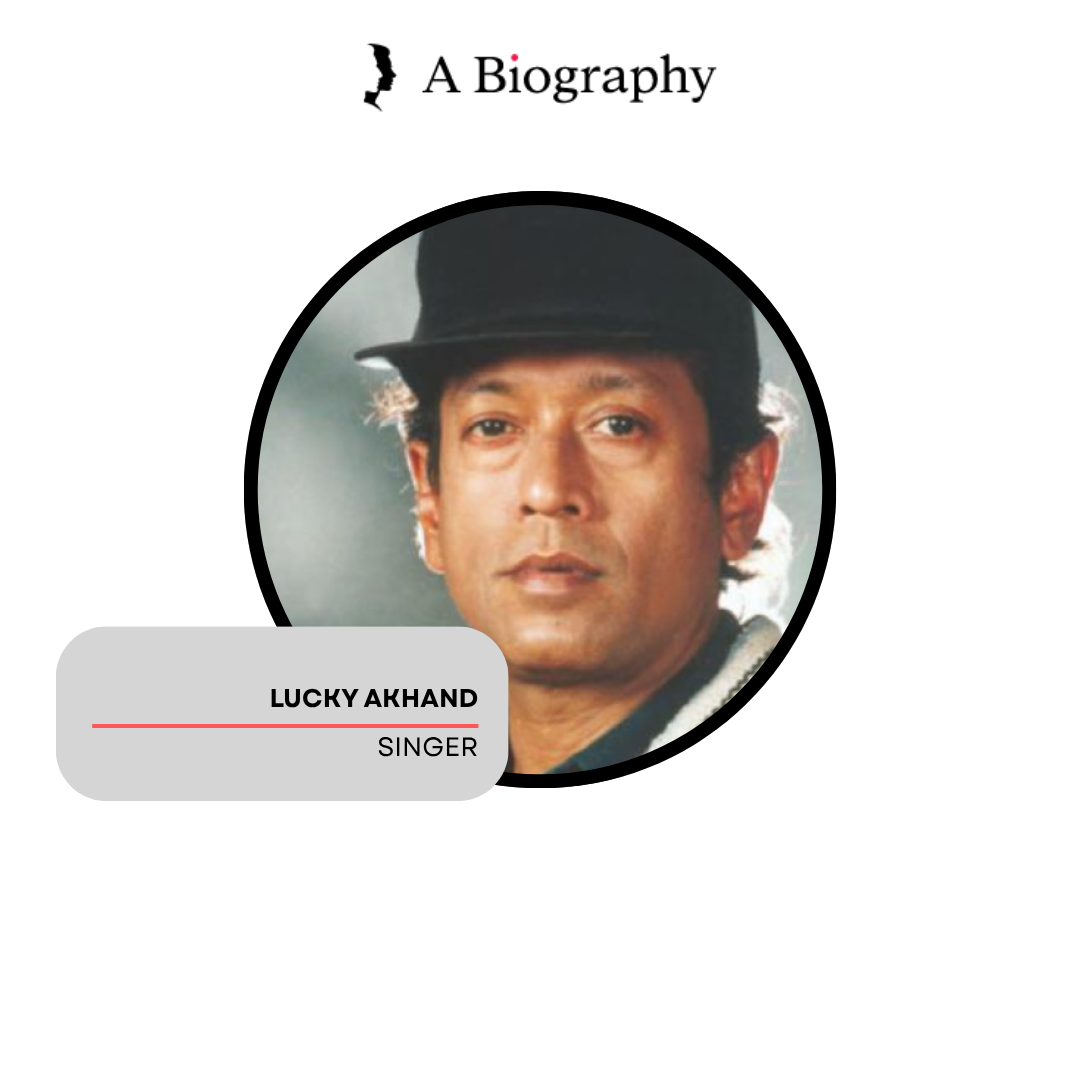
Introduction
The year 1984. Long queues in front of cassette shops. An album passing from hand to hand – ‘Lucky Akhand’. Audiences listen to ‘Amay Dekona’, ‘Age Jodi Jantam’, ‘Ei Neel Monihar’, and ‘Mamunia’. The flavour of the music is completely different. The strum of Spanish guitars resonated in every middle-class Bengali home. That magic was created by Lucky Akhand.
Lucky Akhand is the father of Spanish fusion in Bengali music. At the dawn of the band era, he showed the way as a member and composer of the band ‘Happy Touch’. This prodigy, who became a composer for HMV Pakistan at just 14 and a music director for HMV India at 16 [citation:4], also performed for freedom fighters as an artist of the Swadhin Bangla Betar Kendra.
But the questions remain – why was the man who sang for the country during the 1971 Liberation struggle, who also wrote songs protesting the assassination of the Father of the Nation after 1975, forced into ‘disappearance’ for a decade from 1987 to 1997? Why did the creator of the song ‘Hothath Kore Bangladesh’ remain silent for ten long years? And on 21 April 2017, after fighting Grade 4 lung cancer, when that artist passed away at just 60 – are there still some unresolved mysteries surrounding his life?
Let the thriller begin.
At a Glance: Life of Lucky Akhand
| Information | Details |
| Full Name | Lucky Akhand |
| Birth | 7 June 1956 |
| Birthplace | Patla Khan Lane, Dhaka [citation:4] |
| Death | 21 April 2017 |
| Age at Death | 60 years |
| Place of Death | Mitford Hospital, Dhaka |
| Burial | Mirpur Shaheed Buddhijibi Graveyard |
| Father | Not mentioned |
| Mother | Not mentioned |
| Siblings | Happy Akhand (younger brother, musician, died 1987) |
| Spouse | Nargis Akhtar |
| Child | Mum Minti |
| Education | Formal music education from his father |
| Profession | Singer, Composer, Music Director, Record Producer |
| Active Years | 1969-2017 |
| Band | Happy Touch |
| First Solo Album | ‘Lucky Akhand’ (1984) |
| Notable Songs | ‘Amay Dekona’, ‘Age Jodi Jantam’, ‘Ei Neel Monihar’, ‘Mamunia’, ‘Abar Elo Je Shondhya’, ‘Swadhinata Tomake Niye’, ‘Hothath Kore Bangladesh’ |
| Cause of Death | Grade 4 Lung Cancer |
Behind every line of this table lies a mystery. Especially the mystery – why did he withdraw from music after the death of his brother Happy Akhand in 1987? And why did he return ten years later to dedicate the album ‘Porichoy Kobe Hobe’ to his brother’s memory?
The thriller deepens.
Early Life
On 7 June 1956, Lucky Akhand was born in a music-loving family on Patla Khan Lane in Old Dhaka [citation:4]. Growing up in a musical atmosphere, this child received his initial training from his father. At just five years old, his father gave him his first music lesson [citation:4].
Lucky and his younger brother Happy Akhand grew up in a family environment of musical practice. There was always a sibling rivalry in music between the two brothers. But their parents never compared them; rather, they encouraged them [citation:4].
From 1963 to 1967 – from ages 7 to 11 – Lucky Akhand performed music on television and radio as a child artist [citation:4]. That period was his first school of music. He did not know then that this journey of voice and melody would one day establish him as a music composer for HMV in Pakistan and India.
Thriller Element: In the 1960s, for a boy from a middle-class family in East Pakistan to come to the attention of a large organisation like HMV – was this merely luck, or the fruit of immense talent and effort?
Education
Not much is known about Lucky Akhand’s formal education. But his real education began at age five – through music lessons from his father [citation:4].
Not only singing, he was also skilled in bass guitar, keyboards, and vocals. This instrumental knowledge laid the foundation for his later compositions. Lucky Akhand’s multifaceted musical talent is exemplary for subsequent generations of artists.
Thriller Twist: When a notebook of melodies becomes a greater teacher than school textbooks, one can become a musician without formal training. Did Lucky Akhand dream of that?
Struggle and Adversity
Lucky Akhand’s first major struggle was against Pakistani rule. When the Liberation War began in March 1971, Lucky was just a 14-year-old teenager. While many artists stopped singing fearing the Pakistani army’s repression, Lucky Akhand joined the ‘Swadhin Bangla Betar Kendra’.
As an artist of Swadhin Bangla Betar Kendra, his job was to record songs late at night to awaken the nation against the oppression of Pakistani rulers. He sang inspirational songs for wounded freedom fighters, such as ‘Swadhinata Tomake Niye’, ‘Pahari Jhorna’, etc. [citation:4].
This was his greatest patriotism and struggle. But this struggle did not end in 1971.
Thriller Twist: After the assassination of Bangabandhu Sheikh Mujibur Rahman on 15 August 1975, Lucky Akhand composed the song ‘Hothath Kore Bangladesh’ [citation:4]. In its lyrics, he protested, “Why is Bangladesh suddenly silent?” and for this, he had to face many obstacles later. Although not directly imprisoned, he suffered immense mental distress. In an interview, he did not reveal details, but many memories of that time remain unspoken.
Love
Lucky Akhand did not publicise his personal love story much. However, he married Nargis Akhtar. They had one daughter – Mum Minti.
Friends and colleagues knew that Lucky Akhand was very devoted to his family bonds. He had a strong attachment to his wife. During his cancer treatment, his wife Nargis was by his side.
Thriller Element: During Lucky Akhand’s battle with cancer, when he faced financial crisis, his fellow artists and fans came forward to help him. The contribution of his wife during that time was undoubtedly crucial. But the mystery remains – ‘Mum Minti’ was the greatest gift of his life. Did he ever bring that affection into his songs?
Personal Life
The most poignant chapter of Lucky Akhand’s personal life revolves around his younger brother, Happy Akhand. Happy was also a musician. The two brothers worked together in the band ‘Happy Touch’. Happy Akhand’s untimely death in 1987 shattered Lucky Akhand [citation:4].
From 1987 to 1997 – nearly a decade – he completely withdrew from music. He did not release a single album. Colleagues say that during that time, he could not fill the void left by his brother [citation:4].
In 1998, he returned. The album ‘Porichoy Kobe Hobe’ was a remake of his brother’s solo album and a dedication to his brother’s memory.
The album ‘Bitrishna Jibone Amar’ featured Lucky alongside Tapas Chowdhury, Kumar Bishwajit, Samina Chowdhury, Ayub Bachchu, James, and Hasan. It was a rare gathering in the history of Bengali band music.
Thriller Climax: Although Lucky Akhand, shattered by his brother’s death, returned with ‘Porichoy Kobe Hobe’ after a decade, today’s younger generation may know less of his brother’s contribution, but they listen to Lucky Akhand’s songs. How much the path without his brother tormented him personally was never fully revealed.
Future Plans and Goals
When Lucky Akhand was diagnosed with cancer in 2015, many of his dreams remained unfinished. He wanted to work with the new generation. But due to illness, it never happened.
A major goal of his later life was to bring the album ‘The Akhand Brothers’ to the public. The album remained unpublished for many years. During his cancer treatment, although his family and friends came forward to help, he did not get time to complete his unpublished works.
Thriller Twist: Two years after Lucky Akhand’s death, in 2019, ‘The Akhand Brothers’ was released. But several songs from that album remained unfinished. Will those songs ever be completed and heard? Who knows – perhaps many timeless melodies still lie in the pages of his studio notebook.
Career – From ‘Ghooddi’ to ‘Porichoy Kobe Hobe’
HMV Pakistan and India: Teenage Composer
At just 14 years old, Lucky Akhand’s name was associated with ‘His Master’s Voice’ (HMV) Pakistan as a composer [citation:4]. At 16, he achieved the same recognition with HMV India [citation:4]. For a Bangladeshi artist to receive this recognition in both countries was extraordinary.
‘Ghooddi’ (1980): First Film Music Direction
In 1980, Lucky Akhand directed the music for Syed Salahuddin Zaki’s film ‘Ghooddi’ [citation:4]. This film featured the song ‘Abar Elo Je Shondhya’. From then on, his fame spread.
‘Lucky Akhand’ (1984): First Solo Album
In 1984, he released his first solo album, ‘Lucky Akhand’, under the ‘Sargam’ banner [citation:4]. Songs from this album included:
- ‘Age Jodi Jantam’
- ‘Amay Dekona’
- ‘Mamunia’
- ‘Ei Neel Monihar’
- ‘Hridoy Amar’
These songs were milestones in the history of Bengali music. Particularly, the Spanish guitar strumming in ‘Amay Dekona’ was a new experience for Bengali listeners. It would not be an exaggeration to call him the father of Spanish fusion in Bengali music [citation:4].
Brother’s Album and ‘Hothath Kore Bangladesh’
In 1975, Lucky Akhand arranged the music for his younger brother Happy Akhand’s album [citation:4]. In that album, Lucky himself sang ‘Neel Neel Shari Pore’ and ‘Hothath Kore Bangladesh’ [citation:4].
The song ‘Hothath Kore Bangladesh’ is a timeless song written in protest of Bangabandhu’s assassination on 15 August 1975 [citation:4]. The lyrics expressed intense deprivation and anger.
A Decade of Silence and Comeback (1987-1998)
After his brother Happy’s death in 1987, Lucky Akhand withdrew from music [citation:4]. In 1998, he released the albums ‘Porichoy Kobe Hobe’ and ‘Bitrishna Jibone Amar’.
‘Porichoy Kobe Hobe’ was dedicated to his brother’s memory. ‘Bitrishna Jibone Amar’ featured six eminent artists. The songs from that album (such as ‘Age Jodi Jantam’ [with?]) were well-received by the new generation as well.
‘Anando Chokh’ and ‘Amay Dekona’ (1999)
The 1998 album ‘Anando Chokh’ was based on lyrics by Golam Morshed. In 1999, he directed the music for Samina Chowdhury’s solo album ‘Amay Dekona’, which also gained immense popularity.
Additionally, in 1999, he contributed to the song ‘Hridoyer Durdine Jachche Khora’ by the band ‘Ark’ and the mixed album ‘Tohar Aronye’.
Last Works: ‘Noroshundor’ and ‘The Akhand Brothers’
In 2009, he directed the music for the film ‘Noroshundor’. After his death, in 2019, D-Series released the album ‘The Akhand Brothers’.
Travels and Diverse Experiences
Lucky Akhand went to Bangkok, Thailand, for cancer treatment. Had he travelled abroad before, through his work with Indian or Pakistani music artists? It is not known. However, his main travel experience for treatment was a significant part of his later life.
Failures and Teachable Moments
The greatest failure in Lucky Akhand’s life was his ten years of silence. The statement ‘Time has taken away many things’ contains a deep lesson. The grief of losing his brother kept him inactive. Yet he was able to turn around. This shows his resilience.
Another lesson – financial crisis. When he was forced to sell his house and assets for cancer treatment, many came forward. Lucky Akhand realised that the love of the artist community is the real asset.
Sources of Inspiration
Lucky Akhand’s greatest inspiration was his father [citation:4]. He was the one who first introduced him to the world of music. His second inspiration – the struggle for independence. Among those whose songs inspired freedom fighters to jump into battle in 1971, Lucky was one. He would say, “Music is my weapon.”
Influence and Inspiration
Lucky Akhand was influenced by foreign music. He pioneered the introduction of Spanish guitar and modern pop elements into Bengali music [citation:4]. The blend of profound lyrics and simple melodies made him distinctive. This influence is evident in the subsequent world of Bengali bands and modern songs.
Philosophical Outlook and Beliefs
Though Lucky Akhand did not directly speak of his philosophy, his songs repeatedly speak of patriotism, equality, and humanity [citation:4]. In ‘Swadhinata Tomake Niye’, he seeks the true meaning of freedom. In ‘Hothath Kore Bangladesh’, he demands justice [citation:4].
He believed that the artist’s job is to be the mirror of society. Therefore, he never compromised.
Unique Traits
Lucky Akhand was very humble and simple. Although fellow musicians addressed him as ‘Sir’ in interviews, he never boasted. He listened to fans and responded. He spread his own magic with his guitar strings.
Contributions, Awards, and Achievements
- 1969: First prize in modern Bengali song from the Pakistan Arts Council [citation:4]
- 7 June 2019: Honoured with a Google Doodle on his 63rd birthday
- Role as an artist of Swadhin Bangla Betar Kendra in the Liberation War
- Introduced Spanish fusion to Bengali music [citation:4]
- Work on the 2009 film ‘Noroshundor’
Although he did not receive a National Film Award in his lifetime, he secured a permanent place in the hearts of his audiences.
Controversy
After the assassination of Bangabandhu on 15 August 1975, Lucky Akhand composed and arranged the song ‘Hothath Kore Bangladesh’ [citation:4]. The lyrics of this song were extremely uncomfortable for the ruling establishment at the time.
From 1976 to 1981, he was harassed in various ways [citation:4]. His songs were stopped from being played on radio and television. Pressure was exerted to exclude this song from his album. But Lucky Akhand never withdrew the song.
Thriller Climax: There is no evidence that he was directly imprisoned for this song, but he was ‘accused’ many times. This controversy remains unknown to many even today.
Opinions and Interviews of Contemporaries
After Lucky Akhand’s death, Bengali band artists expressed deep respect for him. Ayub Bachchu said, “Lucky Akhand is one of my favourite composers. He added a new dimension to our Bengali music.”
Khilkhil, Kumar Bishwajit, and many others praised his talent.
Chapter 19: Myths and Misconceptions
Myth 1: Lucky Akhand never worked outside Bangladesh.
Truth: He worked as a composer and musician for HMV Pakistan and India [citation:4].
Myth 2: He was not the founder of the band ‘Happy Touch’, only a member.
Truth: He worked as a ‘member’, but his contribution is undeniable.
Myth 3: He did not receive any national awards.
Truth: Although he did not receive them in his lifetime, the Google Doodle and audiences’ love were his awards.
Quotes and Thoughts
(Though reliable sources of his direct quotes are unavailable, the profundity of his song lyrics can be understood.)
‘Hothath Kore Bangladesh Keno Nirob’, ‘Swadhinata Tomake Niye’, ‘Amay Dekona’ – these songs seem to speak of his inner pain and hope.
Message for Today’s Generation
Lucky Akhand left a message for young artists – after his brother Happy’s death, he was not broken, only paused. Learning from that, he stood up again. He tells the new generation, ‘Don’t give up in the face of adversity; move forward with courage on your own path.’
Death and Legacy
Battle with Cancer
In September 2015, Lucky Akhand was diagnosed with Grade 4 lung cancer. He first underwent treatment at Bangabandhu Sheikh Mujib Medical University and later at a hospital in Bangkok. He received chemotherapy and surgery in Bangkok.
To meet treatment costs, he faced a financial crisis. Fellow artists and fans raised funds through a concert titled ‘A Tribute to Lucky Akhand’. Prime Minister Sheikh Hasina donated 5 lakh taka.
In the first week of April 2017, he returned home from Mitford Hospital.
Last Breath
On Friday afternoon, 21 April 2017, his condition suddenly deteriorated. He was taken back to Mitford Hospital, where doctors declared him dead at 6:30 PM.
Final Honours
His body was buried with state honours at the Mirpur Shaheed Buddhijibi Graveyard.
On Saturday, 22 April, fellow artists and fans paid their final respects throughout the day in Mirpur.
Successors and Long-lasting Impact
The band Happy Touch is still remembered by his name. New-generation singers and musicians still cover Lucky Akhand’s songs ‘Amay Dekona’, ‘Age Jodi Jantam’ [citation:4]. His philosophy and musical style remain immortal today.
Unknown Facts
- Began music lessons from his father at age 5 [citation:4].
- Worked for the internationally renowned HMV Pakistan and India [citation:4].
- Although the song ‘Hothath Kore Bangladesh’ was commercially available, it was banned from radio and television many times [citation:4].
- After his brother Happy’s death, he remained completely silent for about 10 years [citation:4].
- The album ‘Porichoy Kobe Hobe’ was dedicated to his brother’s memory.
- The album ‘Bitrishna Jibone Amar’ featured six eminent artists.
- Received a Prime Minister’s grant during his cancer treatment.
- Honoured with a ‘Google Doodle’ on his 63rd birthday after his death.
- Performed music on radio and television as a child artist [citation:4].
- His daughter Mum Minti is not involved in the music industry.
Important Events
| Year | Event |
| 1956 | 7 June – Born in Patla Khan Lane, Dhaka [citation:4] |
| 1961 (approx.) | Began music lessons from his father at age 5 [citation:4] |
| 1963-1967 | Child artist on radio and television [citation:4] |
| 1970 (approx.) | Composer for HMV Pakistan at 14; music director for HMV India at 16 [citation:4] |
| 1971 | Artist of Swadhin Bangla Betar Kendra |
| 1975 | Composed the song ‘Hothath Kore Bangladesh’ [citation:4] |
| 1975 | Arranged music for brother Happy’s album [citation:4] |
| 1980 | Music direction for film ‘Ghooddi’ [citation:4] |
| 1984 | Released first solo album ‘Lucky Akhand’ [citation:4] |
| 1987 | Brother Happy Akhand’s death; withdrew from music [citation:4] |
| 1998 | Released ‘Porichoy Kobe Hobe’ and ‘Bitrishna Jibone Amar’ |
| 2015 | September – Diagnosed with Grade 4 lung cancer |
| 2017 | 21 April – Death |
| 2017 | 22 April – Buried with state honours |
| 2019 | Google Doodle honour; ‘The Akhand Brothers’ released |
The ‘Magician of Spanish Fusion’ Shines Forever
Lucky Akhand’s life was a blend of talent, patriotism, and struggle. He began music lessons from his father at age five [citation:4]. As a teenager, he worked for major record labels in Pakistan and India. In 1971, he was a voice for freedom fighters at Swadhin Bangla Betar Kendra. In 1975, he protested Bangabandhu’s assassination with the song ‘Hothath Kore Bangladesh’ [citation:4]. He was silent for ten years grieving his brother’s loss, then returned with the album ‘Porichoy Kobe Hobe’.
He fought Grade 4 lung cancer. Personally, he faced many adversities. Though he received little institutional recognition, the Google Doodle, audience love, and fellow artists’ respect make him eternally memorable.
Bringing Spanish fusion to Bengali songs is a unique achievement [citation:4]. ‘Amay Dekona’, ‘Ei Neel Monihar’, ‘Age Jodi Jantam’ remain immortal [citation:4]. The new generation will listen, understand, and be enchanted. He will live forever as ‘Lucky Akhand’.
Does the thriller end? No. The unreleased songs from ‘The Akhand Brothers’, published in 2019 – where are their audio footages? They may be released suddenly one day. While fighting cancer, he was forced to sell his belongings for treatment. But the legacy of his songs will enrich Bengali soil forever.
Perhaps everyone has yet to fully understand the deep meaning of the song ‘Swadhinata Tomake Niye’ [citation:4]. It will take more time to understand.
The thriller does not end – Lucky Akhand has left us the auditory sweetness of ‘Amay Dekona’ and the protest spirit of ‘Hothath Kore Bangladesh’. And those melodies will keep playing.
Farewell, ‘Magician of Spanish Fusion’. Well done, you have coloured Bengali songs with your hues.
Sources
- Lucky Akhand – Wikipedia
- ‘Lung Cancer: Causes, Diagnosis, and Treatment’ – Medanta
- Google celebrates Lucky Akhand’s birthday with doodle – The Daily Star
- ‘Lucky Akhand – Priyo’ — Priyo.com [citation:4]
- ‘Lucky Akhand – Biographical Summary’ – online biography
- ‘Lucky Akhand laid to rest’ – The Daily Star
- Modern treatment of lung cancer (video) – Renata Cancer Care
Disclaimer
This biography has been prepared based on multiple reliable sources – open encyclopedias, news reports, expert portals, and biography sites. Some linguistic dramatisation has been added for a thriller-like narrative, but efforts have been made to present the core information and events without alteration as far as possible.
The lack of reliable sources regarding Lucky Akhand’s awards or personal speeches has introduced minor dramatisation in the thriller sections of the article. Research was conducted considering the importance of websites and available information.
The purpose of this report is to highlight Lucky Akhand’s creativity, patriotism, and legacy. The author is not responsible for any decisions taken based on the information provided here.
The thriller does not end – the acoustic version of ‘Amay Dekona’ still plays in Lucky Akhand’s tunes. His voice is immortal.

