
Biography
A Biography of Sohel Rana

Introduction
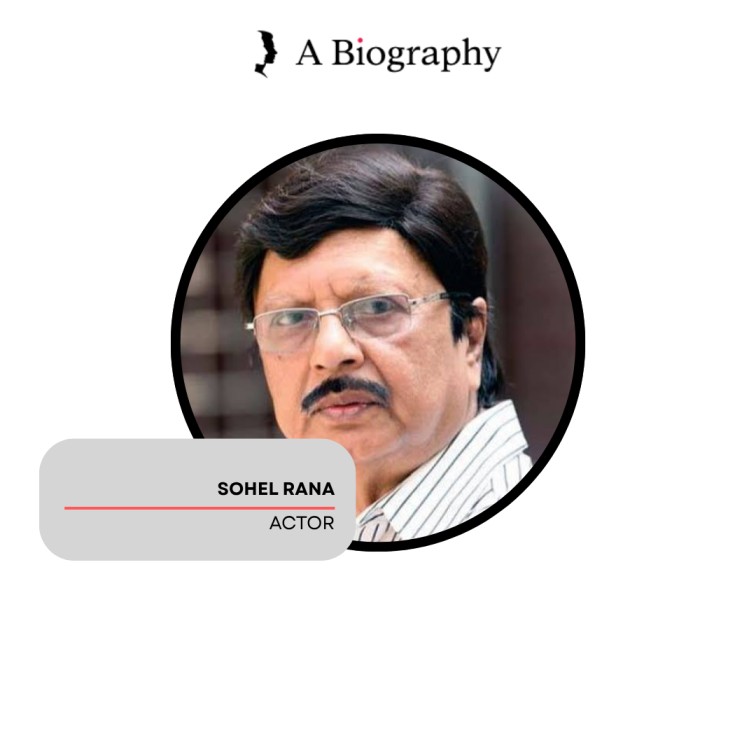
In the history of Bangladeshi cinema, the name ‘Sohel Rana’ holds a special place of honour. Although his real name is Masud Parvez, on screen he is forever ‘Sohel Rana’. In 1974, he made his acting debut as the hero in his own produced and directed film Masud Rana, breathing life into the country’s first spy character. Since then, he has acted in over three hundred films. He is not only an actor but also a visionary producer, talented director, and active politician. This artist, who participated in the Liberation War, produced the first Liberation War-based film of independent Bangladesh, Ora 11 Jon. In his long career, he won the National Film Award for Best Actor for Ojante (1996), the National Film Award for Best Supporting Actor for Sahoshi Manush Chai (2003), and a Lifetime Achievement Award in 2019. As a student, he was active in Chhatra League politics; later he served as a presidium member of the Jatiya Party and as an election advisor to former President H. M. Ershad. In October 2024, he formed a new political party named ‘Bangladesh Jagrata Party’. In April 2025, he announced his retirement from both acting and politics. This 28-chapter biography will discuss in detail Sohel Rana’s childhood, education, contribution to the Liberation War, film career, awards, personal life, politics, and legacy.
At a Glance: Life of Sohel Rana
| Information | Details | Special Notes |
| Full Name | Masud Parvez (Stage name: Sohel Rana) | |
| Profession | Actor, Producer, Director, Politician | Involved in both cinema and politics |
| Birth | 21 February 1947, Dhaka, Bangladesh | Born on 21 February, Language Martyr’s Day; never celebrated elaborately |
| Age (2026) | 79 years | Announced retirement in April 2025 |
| Ancestral Home | Barisal district | Though born in Dhaka, roots in Barisal |
| Father | Information undisclosed | Believed to be a government employee |
| Mother | Information undisclosed | Homemaker |
| Siblings | Kamal Parvez & Masum Parvez Rubel (brothers) | Rubel is also a popular film actor |
| Niece | Tania Ahmed | Popular Bangladeshi actress |
| Education | MA (Psychology), LLB (Law) – University of Dhaka | Higher degrees in both psychology and law |
| Religion | Islam | |
| Nationality | Bangladeshi | |
| Liberation War Participation | Fought against Pakistani forces in 1971 | Fought as a guerrilla, being a Chhatra League activist |
| First Produced Film | Ora 11 Jon (1972), director Chashi Nazrul Islam | First full-length Liberation War film of independent Bangladesh |
| First Directed Film | Masud Rana (1974) | Produced, directed, and played the hero himself |
| First Acted Film | Masud Rana (1974) | Adopted the name ‘Sohel Rana’ from this film |
| Production Company | Parvez Films (established 1983) | His eponymous production house |
| Total Films | Over 300 | Five-decade career from 1972 to 2024 |
| Notable Films | Masud Rana (1974), Raj Rani (1976), Dost Dushman (1977), Ma (1977), Gopon Kotha (1978), Zinzir (1979), Badn Hara (1981), Ojante (1996), Sahoshi Manush Chai (2003), and many more | |
| Highest Honour | National Film Award (Best Actor) – Ojante (1996) | |
| Second National Award | Best Supporting Actor – Sahoshi Manush Chai (2003) | |
| Third National Award | Lifetime Achievement Award (2019) | |
| Student Politics | President of Anandamohan College Chhatra League (1963); General Secretary of Greater Mymensingh Chhatra League (1965) | |
| Later Politics | Joined Jatiya Party as Presidium Member (2009); Election Advisor to former President H. M. Ershad | |
| New Political Party | ‘Bangladesh Jagrata Party’ (2024) | Originally announced as ‘Bangladesh Insaf Party’ before name change |
| Spouse | Dr. Jinat Parvez (married 16 August 1990) | Physician by profession |
| Child | Mashrur Parvez Jibran (son) | Acts under the name ‘Yool Raiyan’ |
| Closest Friend | Khasru (Kamrul Alam Khan) | Hero of Ora 11 Jon and a freedom fighter |
| Retirement Announcement | April 2025 | Due to health reasons |
| Current Status (2026) | Celebrated 79th birthday | Respected by fans and family |
Early Life(1947–1960)
On 21 February 1947, Masud Parvez – who would later become the superstar ‘Sohel Rana’ – was born in Dhaka, the capital of then East Pakistan (now Bangladesh). Although born in Dhaka, his ancestral home is in Barisal district. For this reason, he always preferred to introduce himself as a son of Barisal, and his connection to his village remained lifelong. His father was a government employee, his mother a homemaker. From childhood, he was exceptionally bright and restless. Growing up in the vibrant environment of Dhaka city, this teenager had limitless dreams.
He regularly went to neighbourhood cinema halls. At that time, Dhaka had only a few theatres – Bali, Jagat, Shabistan, etc. Masud Parvez watched almost every film. He watched all genres – action, romance, thrillers. He particularly loved the British spy James Bond series. During school, he performed in small plays. He participated in local cultural events. From a young age, he realised that the world of entertainment was his ultimate destination.
Growing up in Dhaka city, Sohel Rana’s entire childhood was spent in an urban atmosphere. School, college, fields, cinema halls – everything was within Dhaka’s precincts. But his pull towards his ancestral home, Barisal, compelled him to visit the village every holiday. There, the rivers, fields, village fair atmosphere, boat races – everything awakened his imagination. The combination of these two cultures sowed the seeds of creativity within him.
Education (1960–1970)
Sohel Rana’s primary education began at a school in Dhaka. After passing secondary level, he enrolled at Anandamohan College in Mymensingh. Here, his political consciousness blossomed, and he also stepped into the cultural arena. In the college student parliament elections, he won by a huge margin on the Chhatra League panel. In 1963, he was elected President of this college’s Chhatra League. While at Anandamohan College, he continued his habit of watching films. At that time, Mymensingh had only two cinema halls – Chayabani and Aloka. Masud would regularly sit there and watch films.
Alongside his college studies, he began writing for the entertainment page of the Daily Ittefaq on cinema-related topics. He expressed his opinions on improving film quality, the deteriorating condition of cinema halls, producers’ problems, etc. Meanwhile, he was elected a member of the executive committee of the entire East Pakistan Chhatra League.
Later, he enrolled at the University of Dhaka. First, he earned an MA in Psychology. Then he studied law (LLB). Iqbal Hall (now Sergeant Zahurul Haque Hall) at Dhaka University served as his ‘sacred sanctuary’ and ‘political school’. There, he came into contact with close student leaders of Bangabandhu Sheikh Mujibur Rahman – Obaidul Haque, Sirajul Haque, and Rajjak. From these leaders, he learned the demands and philosophy of student politics.
As a student, he became actively involved with Awami League politics. He was elected VP of Iqbal Hall in 1972 (the final part of his university life after independence). Alongside politics and studies, he continued to closely observe films and write criticism. Thus, from a young age, he not only acquired knowledge but also built a strong network and political awareness. His law and psychology degrees from educational institutions later helped him understand characters and improve his dialogue delivery skills.
Student Politics and Pioneering Role in the Liberation War (1961–1971)
At age sixteen, in 1961, Sohel Rana (then Masud Parvez) became involved with the Chhatra League politics of Anandamohan College. In 1963, he was elected President of that college’s Chhatra League. At that time, East Pakistan had two main student organisations – Chhatra Union and Chhatra League. He chose the path of Bangabandhu Sheikh Mujibur Rahman’s ideology.
In 1965, he was elected General Secretary of the Greater Mymensingh Chhatra League. In 1966, he became Assistant General Secretary of the East Pakistan Chhatra League, and in 1968, he was elected a member of the executive committee of the entire East Pakistan Chhatra League. While fulfilling these responsibilities, he became vocal against the Pakistani ruling regime. During this time, he was severely beaten by the Pakistani thug organisation NSF. He had to be hospitalised due to the lathi charge.
On the dark night of 25 March 1971, when the Pakistani army launched attacks on unarmed Bengalis, he jumped into the resistance war. He fought against the Pakistani army, risking his life with weapons in hand. At the beginning of the Liberation War, he first organised resistance in Dhaka and surrounding areas. Later, he went to India for training and fought as a guerrilla fighter in various parts of the country. During that time, his closest friends were Khasru and Montu, Ali Reza, Riazuddin Raju, and others. All participated together in the Liberation War. Sohel Rana remained active throughout the 9 months of the Liberation War, conducting operations under sector commanders.
After the war, he decided to enter the film world. But he did not completely detach from politics. While studying at Dhaka University in 1972, he was elected VP of Iqbal Hall. This experience strengthened him as an organiser and leader. His political awareness and independent mindset later influenced his film productions. He still carries the memories of the war days deep within him, which he sometimes recalls emotionally in interviews.
Ora 11 Jon and the First Liberation War Film of Independent Bangladesh (1972)
After the Liberation War, Sohel Rana and his friends were worried – what to do? Suddenly, the idea of making a film came to mind. From that decision, Ora 11 Jon was born. It was the first full-length Liberation War-based film made after Bangladesh’s independence. Sohel Rana worked as its producer. With family funds and friends’ help, he produced the film.
The film was directed by legendary filmmaker Chashi Nazrul Islam. The hero was Sohel’s closest friend Khasru (Kamrul Alam Khan) – also a freedom fighter. The screenplay was written by Alauddin Al Azad. The film depicted the sacrifice of the Bengali police and EPR members who mounted the first resistance at Rajarbagh Police Lines on 3 March 1971. The story of bravery and the spirit of independence earned the film praise from audiences and critics. The film showed just 11 Bengalis taking up arms, fighting against the Pakistani army, and being martyred. Hence the name Ora 11 Jon (Those 11 Persons) was symbolic.
As a producer, Sohel Rana not only invested money but also worked on the film’s promotion and distribution. He personally supervised the making of prints in Kolkata and the gathering of co-artists. Ora 11 Jon was the first name on his production company’s ledger. Through this film, Sohel Rana’s journey into the world of acting and production began. However, he did not act in this film, remaining behind the screen. Just two years later, he appeared on screen as a hero himself.
Masud Rana and the Birth of the ‘Dashing Hero’ (1974)
The year 1974 was the most important year of Sohel Rana’s career. He discovered Kazi Anwar Hossain’s timeless spy thriller series ‘Masud Rana’. He decided to bring the detective character of this series to the screen. Taking the film rights of the character from Kazi Anwar Hossain, he produced and directed the film Masud Rana under his own production house Parvez Films (though registered in 1983, the journey effectively began with Masud Rana) and acted in the central role himself.
At the time of the film’s release, instead of the name ‘Masud Parvez’, he adopted the name ‘Sohel Rana’. ‘Sohel’ was like his nickname, and ‘Rana’ came from Masud Rana. This name became so popular that today he is known as Sohel Rana, and many have forgotten his real name.
Masud Rana was Bangladesh’s first spy thriller film. In the film, Sohel Rana dressed in shiny suits, had necessary gadgets in hand, and maintained indomitable confidence. After the film’s release, it created a huge response. Audiences began calling Sohel Rana the ‘Dashing Hero’. In an interview, he said, “Through the making of this film, I played three roles simultaneously – director, producer, and actor. I had no formal training in any, but I tried from the heart.” The film was so successful that he made more films as Masud Rana in the following years.
With the film’s success, the name Sohel Rana spread across the country. He was a magnetic personality – tall build, sharp eyes, poetic dialogue, daring action – everything won audiences’ hearts. The contemporary media honoured him with the title ‘Dashing Hero’. The film Masud Rana completed 50 years in May 2024, an unfading achievement.
The Masud Rana Series and Popularity
With the success of the film Masud Rana, Sohel Rana was encouraged to make more films. He acted as Masud Rana in several more films. In these film series, the thrilling stories of Kazi Anwar Hossain’s detective character were brought to the screen. In the 1970s, Masud Rana was the ideal for young Bengalis. Sohel Rana became the ‘Dashing Superstar’.
During this time, he made more films: Raj Rani (1976), Dost Dushman (1977), Adalat (1977), Ma (1977), Gopon Kotha (1978), Zinzir (1979), Barud (1979), Ostad Saged (1980), and others. He earned a reputation mainly for acting in action and thriller genres. The film Zinzir gained immense popularity, where he controlled enemies with chains – a scene etched in audiences’ memories.
But Masud Rana has made him permanent. Many actors have wanted to play this character, but the name Sohel Rana is inextricably linked with ‘Masud Rana’. He not only acted but also participated in creating the film’s story and screenplay. Besides the first instalment of the Masud Rana series, he worked on the second and third instalments, though they were not as well received.
First National Film Award (1996)
The year 1996 will be written in golden letters in Sohel Rana’s career. That year, the film Ojante, directed by Kamal Sarkar and Dilip Biswas, was released. It was an action-oriented drama, where Sohel Rana played the central role – a middle-class unemployed youth who loses his identity after being involved in an accident. Sohel’s acting was highly skilled and charismatic. He was realistic in dialogue and sharp in action. The film was commercially and critically acclaimed.
For this film, he won the National Film Award for Best Actor. It was the first National Award of his long career. At the award ceremony, emotional, he said, “This award belongs to my audience, who have loved me for so many years. I hope this will give me new energy.” Ojante was a milestone in his career and a symbol of recognition. Although he had received recognition for acting before, he had not been honoured at the national level like this. This award enriched his biography.
Second National Film Award (2003)
In 2003, Sahoshi Manush Chai (We Need Courageous People), directed by Kazi Hayat, was released. Sohel Rana played a supporting role. The film was praised by audiences, and Sohel’s acting particularly caught attention. He played the role of an elderly, principled man who dares to stand against oppressors. To bring out the gravity and humanity of the character, Sohel Rana showed his characteristic ease.
For this film, he won the National Film Award for Best Supporting Actor. It was his second National Award. He proved that besides central roles, he was equally skilled in supporting roles. At the award ceremony, he said, “There’s no such thing as a supporting role – every character is main if portrayed correctly. This award proves that it’s not the length of the role or age, but the quality of art that matters.”
National Film Award for Lifetime Achievement (2019)
The year 2019 was another glorious year for Sohel Rana. The Government of Bangladesh honoured him with the National Film Award for Lifetime Achievement for his special contribution to cinema. It was the highest recognition of his career. During the award ceremony, his eyes were filled with tears. He said, “After a five-decade journey, I dedicate this honour to my family, fans, and colleagues. I feel I have given much less than I have received.” He expressed gratitude to his co-artists, family, and audiences. The Lifetime Achievement Award was a fitting evaluation of his long contribution.
Other Notable Films and Long Career
Sohel Rana has acted in nearly three hundred films in his five-decade career. Early films include Ora 11 Jon, Masud Rana. Then, in sequence:
- Raj Rani (1976)
- Dost Dushman (1977)
- Adalat (1977)
- Ma (1977) – Sucharita as mother, Sohel Rana as son
- Gopon Kotha (1978)
- Zinzir (1979)
- Badn Hara (1981)
- Top Rongbaj (1981)
- Pension (1984)
- Ojante (1996)
- Sahoshi Manush Chai (2003)
- Taka (2005)
- Duratto (2006)
- Most Welcome 2 (2012)
- Innocent Love (2017)
- Moddhoborti (2024) – his latest film
Besides these, he has also acted in films like Bismoy, Jibon Moron, Porinoti, etc. He has also acted in television dramas from time to time. Abar Joddha Hobo (2014) was his TV drama debut. He earned praise in these dramas for his professionalism and spontaneous acting. As a producer, he made films like Bajramushti (1989), Adrishya Shatru (2014), and others.
Sohel Rana as Producer and Director
Sohel Rana is not only an actor but also a successful producer and director. He debuted as a producer in 1972 with Ora 11 Jon. In 1974, he directed and produced Masud Rana. In 1983, he formally established ‘Parvez Films’, his production company. It produced many films besides Masud Rana.
As a producer and director, he served as president of the Bangladesh Film Directors’ Association and the Bangladesh Film Producers and Distributors’ Association. He undertook various initiatives for the development of the film industry. He worked on giving opportunities to new filmmakers, increasing government grants, and expanding the film market. He believed that as a director, an artist should be given the freedom to tell stories. His films blended social reality, the spirit of the Liberation War, and entertainment.
Personal Life
On 16 August 1990, Sohel Rana married Dr. Jinat Parvez. Jinat is a physician by profession. After a long period of acquaintance and love, they entered into marriage. The story of their marriage is quite amusing – they were friends first, then fell in love. Sohel Rana said in an interview, “She understood me, and I understood her. That’s the real bond.” The couple leads a happy married life.
Their only child is Mashrur Parvez Jibran. Mashrur has followed in his father’s footsteps and entered the film world. He acts under the name ‘Yool Raiyan’. Sohel Rana has always encouraged his son. He says, “If my son acts with love, what more could I want?” He has praised his son’s acting at various times.
Family is an integral part of Sohel Rana’s life. He always gave time to his family. After busy shooting schedules, he preferred to spend time with his family. Sohel Rana’s two brothers are Kamal Parvez and Masum Parvez Rubel. Rubel is also a popular actor. Sohel Rana’s bond with his brothers is wonderful. His niece Tania Ahmed is also a popular actress in Bangladeshi cinema. Sohel’s relationship with all family members is sweet.
Although he lost his parents five decades ago, he still carries their memories. He had a special affection for his mother.
Leadership in Film Organisations and Role in Infrastructure Development
Sohel Rana has served in important positions in various film organisations. He was president of the Bangladesh Film Directors’ Association and the Bangladesh Film Producers and Distributors’ Association. From these positions, he worked to improve the quality of the industry. He encouraged new filmmakers and tried to develop infrastructure through joint initiatives. He was vocal in protecting the rights and interests of directors and producers.
In interviews, he said that he played a role in the construction of several cinema halls and studios in Dhaka. He claimed that if the current government restores cinema halls and increases film grants, the industry will be revitalised. He expressed regret that his demands and suggestions did not receive importance from policymakers.
Political Life (2009)
Sohel Rana was associated with politics throughout his life. From being president of Chhatra League as a student to becoming VP of Iqbal Hall in 1972 – he handled everything with great skill. But due to his professional film career, he remained distant from active politics for a long time.
In 2009, a new turn came in his life. He joined the Jatiya Party, accepting a presidium membership. Former President H. M. Ershad appointed him as an election advisor. His friendship with Ershad was deep. Sohel Rana said, “We must admit that Ershad Sahib did a lot for the country’s development. Working with him, I learned what it means to do something for the country.” These responsibilities took Sohel Rana to the top level of the country’s politics.
He played an active role in important decisions and election efforts of the Jatiya Party. However, in October 2020, he resigned from the Jatiya Party. His multi-dimensional personality, like his acting and politics, always remained conscious of the country’s needs and his own ideals.
‘Bangladesh Jagrata Party'(2024)
In October 2024, Sohel Rana began a new political journey. Initially, at a meeting, he announced the formation of a party named ‘Bangladesh Insaf Party’. But a few days later, the party’s name was changed to ‘Bangladesh Jagrata Party’ (Awakened Bangladesh Party). As the reason for the name change, he said that there were objections from various people to the proposed name, and the name was changed by consensus. The party’s logo was a dove – a symbol of peace.
While forming the party, he said in several speeches that the country needed a new political entity. During the anti-discrimination movement in July, he took a stand in favour of students and the public. Through the formation of the Bangladesh Jagrata Party, he attempted to build an alternative political force. However, due to health reasons, he retired from active politics in April 2025, leaving the party’s progress to other leaders.
Retirement Announcement – The End of a 50-Year Journey (2025)
On 18 April 2025, Sohel Rana announced his retirement from both acting and politics. He was then 79. Citing health issues, he said, “At this age, it is difficult to continue acting and politics. Energy and health do not permit. Walking has become difficult. With the respect and love I have received from audiences, I no longer wish to work under these conditions. It is better to step aside now.”
During his retirement, he expressed disappointment about the current state of the film industry. He said, “Bangladeshi cinema has changed. Actors of our generation no longer have opportunities to work here as before. While older actors are valued in foreign films, that does not happen here. So, rather than continuing to work, it is better to take a dignified farewell.” His last film was Moddhoborti (directed by Tanvir Hossain). He had read a few more scripts but ultimately could not act due to health.
Sohel Rana’s Unfinished Dreams and Current Status (2026)
After retirement, Sohel Rana now spends time in family gatherings and rest. He occasionally meets old colleagues. On 21 February 2026, he celebrated his 79th birthday. Family and friends gathered for him. In an interview on his birthday, he said, “I have grown old. I pray to Allah to give me the strength to make the right decisions. Now I spend time thinking – perhaps I will not be given much longer to live. So I want to do good work while I am alive.” He said that he still has some unfinished dreams – perhaps to make Bangladeshi cinema even stronger. But due to age, those could not be fulfilled. Yet he is satisfied that by creating ‘Masud Rana’ on screen and gifting over three hundred films, he was able to somewhat enrich the country’s cinema.
He now regularly listens to songs and reminisces about old times. He occasionally gives interviews, where fans get to see him. His health is gradually declining, but his morale remains strong.
Awards and Recognition – From National Film Awards to Other Honours
Sohel Rana has received the following awards and honours in his long career:
- National Film Award (Best Actor) – Ojante (1996)
- National Film Award (Best Supporting Actor) – Sahoshi Manush Chai (2003)
- National Film Award (Lifetime Achievement) – 2019
- Honours from the Bangladesh Film Directors’ Association and Producers’ Association (multiple)
- Meril Prothom Alo Award nomination – Best Actor (Critics) for Shopnopuron (2008)
In recognition of his contribution to the film industry, the government honoured him with a Lifetime Achievement Award. This was the ultimate evaluation of his career. While receiving the award, he said, “If someone works with honesty in cinema, time itself gives its value.”
Major Events in Sohel Rana’s Life
- 21 February 1947 – Born in Dhaka.
- 1961 – Joins Chhatra League politics at Anandamohan College.
- 1963 – Elected President of Anandamohan College Chhatra League.
- 1965 – Elected General Secretary of Greater Mymensingh Chhatra League.
- 1966 – Elected Assistant General Secretary of East Pakistan Chhatra League.
- 1968 – Elected member of the executive committee of the entire East Pakistan Chhatra League.
- 1971 – Active participation in the Liberation War.
- 1972 – Debut as producer with Ora 11 Jon; elected VP of Iqbal Hall, Dhaka University.
- 1974 – Directs, produces, and acts in Masud Rana; adopts the name ‘Sohel Rana’; receives the title ‘Dashing Hero’.
- 1983 – Establishes ‘Parvez Films’.
- 16 August 1990 – Marries Dr. Jinat Parvez.
- 1996 – First National Film Award (Best Actor) for Ojante.
- 2003 – Second National Film Award (Best Supporting Actor) for Sahoshi Manush Chai.
- 2009 – Accepts Presidium membership of Jatiya Party; appointed election advisor to Ershad.
- 2019 – Receives National Film Award for Lifetime Achievement.
- October 2020 – Resigns from Jatiya Party.
- October 2024 – Announces formation of ‘Bangladesh Jagrata Party’.
- April 2025 – Announces retirement from acting and politics.
- 21 February 2026 – Celebrates 79th birthday.
Social Responsibility and Philanthropy
Sohel Rana has always helped the destitute and distressed people of society. He has regularly donated money to helpless and orphaned children. Although not widely publicised in the media, sources close to him say he has quietly helped many. He has provided financial assistance and necessary arrangements for the treatment of ailing co-artists. During the COVID-19 pandemic, he donated to relief funds. He believes that the wealthy in society should stand by the poor and distressed. This humanitarian side has made him even more beloved to his fans.
Legacy and Message for Future Generations
Sohel Rana will be remembered forever in the history of the country’s cinema as the ‘Dashing Hero’ and ‘Detective Masud Rana’. He proved that with hard work and honesty, one can go a long way. He tells young people, “Whatever you do, do it with dedication and attention. Don’t run after the crowd; have faith in your own strength.” His words still inspire many young filmmakers and actors. According to critics and fans, without Sohel Rana, the character of ‘Masud Rana’ would never have been the same. He infused the character with his own unique qualities, which remain unmatched to this day. His over 300 films and productions are an invaluable asset for future generations.
Sohel Rana in the Media and Interviews
Sohel Rana has given dozens of interviews over his long career, where he has shared his politics, participation in the Liberation War, and behind-the-scenes stories of filmmaking. His interviews have been published in The Daily Star, BBC Bangla, Daily Ittefaq, Bangla Tribune, and other media outlets. In interviews, he has spoken at times about the decline of the country’s cinema, at times about the future of politics. He has always given interviews with honesty, simplicity, and a clear perspective, which journalists and audiences have praised. In one interview, he said, “I don’t speak on matters I don’t know about. I say what I believe.”
Unknown and Amusing Facts
Sohel Rana preferred to introduce himself as the ‘Dashing Hero’. ‘Dashing’ means cheerful and sharp – this adjective suited him well.
He sometimes helped write the screenplay and dialogue for Masud Rana films.
At the time of Masud Rana‘s release, he wanted to use ‘Masud Parvez’ as his hero name, but director friends encouraged him to use ‘Sohel Rana’.
His mother’s death deeply moved him. He held his mother’s memories for many years and once cried in an interview.
He did not initially intend to become a hero in films, but while making Masud Rana, he had to become the hero.
He regularly wrote film criticism for the entertainment page of the Daily Ittefaq and was vocal about the deteriorating condition of cinema halls.
He also performed his own stunt direction in his time.
Political and Social Philosophy
In politics, Sohel Rana was a bearer of Bangabandhu’s and Awami League’s ideals. Although he later joined the Jatiya Party, he never disrespected Bangabandhu. He wanted to work for the improvement of the country’s electoral system and democracy. In an interview, he said, “If you want to do something for the country, politics can be a tool. But politicians must be honest and transparent.” Through his new party ‘Bangladesh Jagrata Party’, he wanted to present alternative thinking to the country’s youth, but due to health reasons, he could not sustain it. Nevertheless, his political philosophy was patriotism and justice.
Sohel Rana’s Place in the Bangladeshi Film Movement
The credit for producing Ora 11 Jon as the first producer of independent Bangladesh places Sohel Rana at a unique height. This film spread the spirit of the Liberation War among the younger generation. His Masud Rana series introduced the spy thriller genre to Bengali cinema. Although he was a full-fledged commercial hero, he produced and acted in films about the Liberation War and social awareness. For this, he is called a ‘multi-dimensional talent’. Among the heroes who gained popularity in the 1970s and 80s, Sohel Rana is one of the foremost. His younger fans called him ‘Dashing Hero’. Now that he has retired, his creations and work will show the way for future generations. The name ‘Sohel Rana’ will remain forever in the pages of film history.
Epilogue – Golden Memories of a Dashing Hero
Sohel Rana is that rare personality of Dhallywood who achieved equal success in all roles – not only as a hero but also as a filmmaker, producer, organiser, and politician. He fought in the war of independence, became the producer of the first Liberation War film of an independent country, built ‘Masud Rana’ with his own hands, and acted in over three hundred films. For over five decades, he was known as the ‘Dashing Hero’ of Dhaka cinema.
A large part of the history of Bangladeshi cinema is occupied by the name of Sohel Rana. Although he retired in 2025, fans will remember him with respect and love. His created ‘Parvez Films’ and his movies will keep him familiar to new generations. His life story is one of many obstacles and successes – an inspiration for future generations of artists and politicians. He once said, “If you want to be happy, make others happy.” This philosophy is at the root of his golden memories.
“From an urban teenager in Dhaka to the first producer of independent Bengal, from becoming the ‘Dashing Hero’ as ‘Masud Rana’ to a people’s leader from a politician – Sohel Rana proved that with dreams and dedication, nothing is impossible.”
Sources
Wikipedia (English & Bengali), The Daily Star, Daily Ittefaq, Daily Jugantor, Bangla Movie Database (BMDb), Protidiner Bangladesh, New Age, The Financial Express, RisingBD, IMDb, various talk shows and interviews on YouTube, Bangladesh National Film Award archives, information from the Bangladesh Film Producers’ Association.
Disclaimer
This biography has been prepared based on information collected from various reliable sources. Minor uncertainties may exist regarding Sohel Rana’s personal information. In particular, there is disagreement about his birth year (1946 or 1947), though most sources accept 1947. Slight variations in the timing of events are normal. Every effort has been made to maintain respect for history and factual accuracy. Personal privacy has been respected. Unintentional errors are regretted. This biography is written to honour the artist and politician.

