
Biography
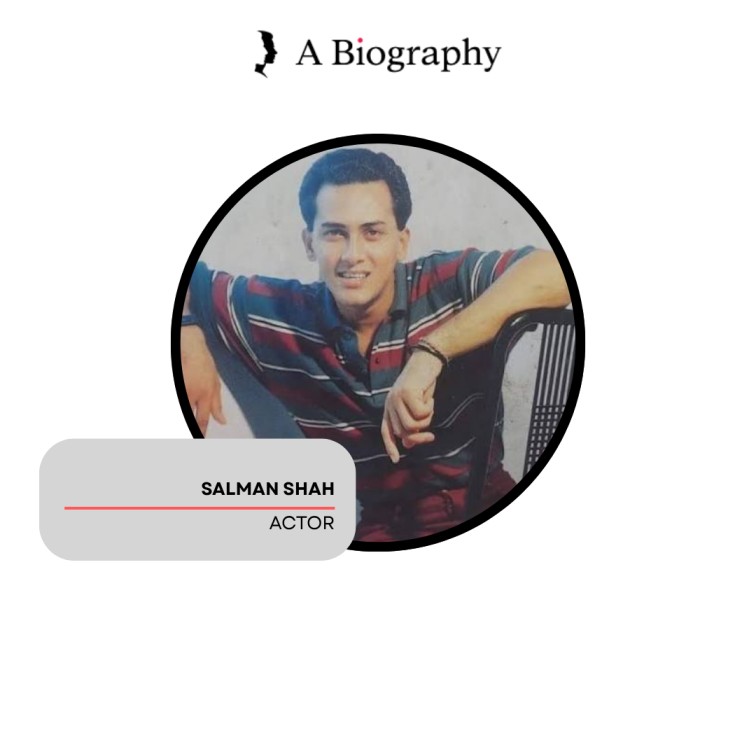
A Biography of Salman Shah

Introduction
The Heartbreaking Melody That Still Echoes in Every Bengali Home
March 1993. A cinema hall in Dhaka. The film “Keyamot Theke Keyamot” has just been released. On the screen appears a young man — eyes full of dreams, face adorned with an immortal smile, his hairstyle carrying a unique magic. The audience is mesmerized. Teenage girls go crazy; young men feel inspired.
That hero was none other than Salman Shah — the “Crown Prince of Dhallywood.” At just 22, with his very first film, he became a phenomenon. In a career spanning only three years and just twenty‑seven films, he conquered the hearts of millions. He was the man who redefined stardom for a generation.
And then, on September 6, 1996, his body was found hanging from a ceiling fan in his bedroom at Eskaton, Dhaka. Police called it suicide. His family screamed murder. An entire nation stood still, frozen in disbelief. To this day, the mystery remains unsolved.
The questions haunt us: How did a boy from a respectable family in Zakiganj, Sylhet, become the superhero of Bengali cinema? How did he make twenty‑seven films in just three years — was he exhausted, or was he made to be exhausted? And after his tragic death, what became of his work, his legacy?
This epic of 28 chapters tells the story of Salman Shah — a dreamer’s meteoric rise, the heartbreaking tale of his untimely departure, and the unresolved mystery that still grips Bengal.
At a Glance: Life of Salman Shah
Comprehensive Profile
| Information | Details | Special Note |
| Full Name | Chowdhury Muhammad Shahriar Emon (stage name Salman Shah) | |
| Profession | Actor, Model, Playback Singer, Fashion Icon | Known as “Crown Prince of Dhallywood” and “Superhero” |
| Born | September 19, 1971, Zakiganj, Sylhet, East Pakistan (now Bangladesh) | Would have been 54 in 2026, but died young |
| Died | September 6, 1996 (age 24), Eskaton, Dhaka, Bangladesh | Mysterious death (found hanging) |
| Father | Kamar Uddin Chowdhury (died 2002) | Businessman and social worker |
| Mother | Nila Chowdhury | Homemaker, culturally inclined |
| Siblings | Chowdhury Muhammad Shahran Evan (younger brother) | |
| Education | SSC (Arab Mission School, 1987); HSC (Adamjee Cantonment College); Bachelor’s (Dr. Maleka University College) | Graduated in commerce |
| Religion | Islam | |
| Nationality | Bangladeshi | |
| First TV Serial | Pathor Somoy (1993) — first episode appearance | Other serials: Itikatha, Akash Chhoa, Doyle, Shob Pakhi Ghore Fere, Nayon, Shopner Prithibi, Shoikote Shorosh |
| First Film | Keyamot Theke Keyamot (March 25, 1993), heroine Moushumi, director Sohanur Rahman Sohan | Massive success, instant stardom |
| Career Span | 1986–1996 (approx. 3 years of full film career) | Very short but blazing |
| Total Films | 27 released before death + Buker Vitor Agun (posthumous) | Some sources say 28 |
| Notable TV Serials | Pathor Somoy, Itikatha, Akash Chhoa, Doyle, Shob Pakhi Ghore Fere, Nayon, Shopner Prithibi, Shoikote Shorosh | Extremely popular on television as well |
| Notable Films | Keyamot Theke Keyamot (1993), Tumi Amar (1994), Antore Antore (1994), Sujan Sakhi (1994), Konyadan (1995), Denmohor (1995), Shopner Thikana (1995), Bichar Hobe (1996), Ei Ghor Ei Sansar (1996), Jibon Sansar (1996), Shopner Prithibi (1996), Anondo Osru (1997), etc. | Almost every film was a commercial hit |
| Most Successful Pair | With Shabnur — 14 films | Also worked with Moushumi (4 films), Shahnaz, Lima |
| Highest Recognition | Posthumous memorial councils and annual remembrance events | Did not receive any national award; honored with title “Crown Prince of Dhallywood” |
| Wife | Samira Haque (married August 12, 1992) | Daughter of former Bangladesh cricket captain Shafiul Haque |
| Children | None | |
| Nicknames | “Crown Prince of Dhallywood,” “Dream Hero,” “Hero of Heroes,” “Immortal Mahanayak” | Given by media and fans |
| Grave | Shah Jalal Dargah Cemetery, Sylhet | Buried in ancestral village |
| Trademark | Hair flip, smile, eye language, “tip to ear” dialogue | Also known as “Style Avatar” |
| Controversy | Cause of death (suicide vs. murder) remains unresolved | PBI cited 5 suicide reasons in 2021; in 2025 court ordered re‑investigation as homicide |
| Fashion Icon | A beacon of fashion for 1990s youth | Hair, clothing, mannerisms widely imitated |
| Languages | Bengali, English |
Early Life
On September 19, 1971, in the Zakiganj upazila of Sylhet district (then East Pakistan, now Bangladesh), a boy was born into a respectable Muslim family. He was named Chowdhury Muhammad Shahriar Emon. His father, Kamar Uddin Chowdhury, was a businessman and social worker; his mother, Nila Chowdhury, was a homemaker with a deep love for culture.
The lush green hills, ponds, and fields of Zakiganj were the backdrop of his earliest childhood. Soon the family moved to Khulna for business. There, young Emon (as his parents called him) began his primary education at Bayra Model High School. Teachers remembered him as exceptionally smart and naturally gifted in performance — though he had not yet started acting formally.
From a very young age, Emon was drawn to music and dance. He learned to sing and play the harmonium and guitar. His mother encouraged his artistic side; his father hoped he would become a respectable officer. But Emon’s heart was set on a different path — he dreamed of appearing on television and cinema screens.
It is said that as a teenager, he once declared, “I will become a big hero.” The seed of stardom had already been planted. Interestingly, his maternal grandfather had acted in East Pakistan’s first film, Mukh O Mukhosh. Perhaps the artistic gene ran in the family.
Education
Salman Shah (then Emon) was a good student, but his passion for acting and music was equally strong. He completed his SSC from Arab Mission School in Dhaka in 1987. He then enrolled at Adamjee Cantonment College for his HSC (science), followed by a bachelor’s degree in commerce from Dr. Maleka University College.
While studying, he never stopped his cultural pursuits. He took a diploma in folk music from Chhayanaut in 1986. He also began appearing in television commercials and small cultural programs. His teachers and classmates called him “handsome and smart.”
After his bachelor’s, he chose acting as his full‑time profession. In a candid conversation with his mother, he once said, “Ma, my living expenses now come from acting.” That was his declaration — acting was no longer a hobby; it was his life.
Television and Modeling (1986–1992)
Salman Shah’s first appearance on national television was as a model in a musical segment of the popular show Ittyadi, directed by Hanif Sanket. That was 1986. Then came his acting debut in the TV drama Akash Chhoa (1985 — some sources say 1985). Over the next few years, he appeared in notable serials: Doyle (1985), Shob Pakhi Ghore Fere (1985), Shoikote Shorosh (1988), Nayon (1995), Shopner Prithibi (1996). But the serial that truly established him as a mature actor was Pathor Somoy (1990), based on a novel by Moinul Ahsan Saber.
On the small screen, he created his own persona — a particular haircut, crisp clothing, a unique way of delivering dialogues. Television success brought him to the attention of film makers. Director Sohanur Rahman Sohan saw his potential and offered him the lead role in Keyamot Theke Keyamot.
Television also gave him a fan base across the country. His mysterious character in Pathor Somoy was widely appreciated. This was the foundation upon which the “Salman Shah brand” was built.
Beginning of a Legend (1993)
The story of Salman Shah’s film debut is unusual. Production house Ananda Mela bought the rights to several Hindi films and asked Sohanur Rahman Sohan to remake them in Bengali. The heroine was Moushumi, but a hero was hard to find. Through the former wife of actor Alamgir, the director learned of a young man named Emon.
Emon was chosen, and his name was changed to Salman Shah. On March 25, 1993, the film Keyamot Theke Keyamot (a remake of Bollywood’s Qayamat Se Qayamat Tak) was released.
The story was a Romeo‑Juliet style romance between “Raj” and “Neelima.” Audiences were overwhelmed. The film became a blockbuster, and overnight Salman Shah became a “superstar.” His hairstyle, his jeans‑and‑t‑shirt look, his eyebrow movement (the famous “tip to ear”) — all became fashion trends. The Salman Shah‑Moushumi pair was adored.
That single film defined a generation. It remains one of the most commercially successful and timeless films in Bangladeshi cinema history. Salman Shah went from an unknown youth to the “Crown Prince of Dhallywood” in one stroke.
The Most Successful Jodi in Dhallywood History
On May 22, 1994 (Eid release), Zahirul Haque’s Tumi Amar hit the screens. Opposite Salman Shah was Shabnur. It was their first film together. The audience welcomed the pair with ecstasy. The film was a hit, and the Salman‑Shabnur romance became legendary.
They went on to deliver several blockbusters: Sujan Sakhi (1994), Kkhob (1994), Bichar Hobe (1996), Shopner Prithibi (1996), and many more. Of Salman Shah’s 27 films, 14 featured Shabnur as the heroine. Shabnur later said, “Working with Salman was very memorable. He was very professional and fun.”
Their on‑screen chemistry was unparalleled — whether in romantic dramas, social dramas, or tragedies. Sujan Sakhi (rural backdrop) and Anondo Osru (where Salman played a mentally unstable character) showcased their versatility. The dialogue from Bichar Hobe — “I have loved you defying fate” — is still quoted today.
The Salman‑Shabnur jodi remains one of the most successful and enduring in Dhallywood history.
Deep Bond with Moushumi and Their Success Together
Salman Shah’s first heroine was Moushumi. They acted together in four films: Keyamot Theke Keyamot (1993), Antore Antore (1994), Sneho (1994), and Denmohor (1995). All were super hits.
But their relationship went beyond the screen. Moushumi later revealed in an interview: “People may think we were in love. Actually, we were not. But our connection was deep. We shared many private things we could not tell anyone. When I had a fever, he would feel uneasy; when he was unwell, I would be restless. There was a pull of souls.”
This intimacy made their on‑screen pairing natural and believable. Moushumi was devastated by his death. She said, “Salman was like a brother to me.” She remains in touch with his mother, whom she calls “Ma.”
The Diversity of His Films
Salman Shah also worked with Lima (Konyadan, 1995; Prem Juddho, 1995), Shahnaz (Anjuman, 1995; Asha Bhalobasha, 1995; Sotter Mrittu Nei, 1996; Mayer Odhikar, 1996), Bristi (Ei Ghor Ei Sansar, 1996), Shilpi (Priyojon, 1996), Shama (Shudhu Tumi, 1997), and Kanchi (Anondo Osru, 1997).
In his brief career, he played a wide range of characters: romantic heroes, social drama protagonists, action roles, rural stories, comedies, tragedies, and even a mentally disturbed youth in Shopner Prithibi. His performance as a political rebel in Kkhob (1994) and as a symbol of women’s rights in Konyadan were particularly noted.
Salman Shah’s specialty was that he could be both tender and powerful in the same role. His “look” — especially his eye expressions and gentle smile — captivated audiences. His trademark “tip to ear” (raising both eyebrows together) and hair flip were copied by countless young men, but none could replicate his magic.
Versatile Talent and a New Wave in Acting
Salman Shah was not merely a handsome face; he was a complete actor. His eye language, expressions, dialogue delivery, and body language were extraordinary. He immersed himself so completely in his characters that audiences believed him. His portrayal of a mentally unstable youth in Shopner Prithibi was emotionally devastating. In Anondo Osru and Prem Piyasi, he brought tragic depth.
Film analysts say that Salman Shah’s emergence in the 1990s created a new wave in Dhallywood. The “hero” concept changed — he could be both rough and tender, proud and compassionate. His dialogue style and acting fluency earned him the title “Style Avatar.”
He was also a trained singer. He could play the guitar and harmonica. On a television show, he once sang a song from Keyamot Theke Keyamot in his own voice, which audiences loved.
Fashion Icon and Personality
In 1990s Bangladesh, fashion was defined by Salman Shah. His medium‑length hair, side parting, dark jeans, leather jacket, yellow sunglasses — everything was imitated by the youth. The “tip to ear” became his trademark. Young girls plastered his posters on their walls; boys cut their hair like his.
He was also known for his clean lifestyle — he neither smoked nor drank, and he exercised regularly. He was humble and friendly on sets and in life. Fellow artists called him “Salman Bhai.” In interviews, he often appeared in simple clothes, yet his look was unmatched. His modesty combined with charisma made him an “idol.”
Fashion magazines published features on the “Salman Shah look.” His style was used in commercial branding.
Personal Life
On August 12, 1992, Salman Shah married Samira Haque, daughter of former Bangladesh cricket captain Shafiul Haque and his Thai wife Lusi. The marriage was arranged with family consent, especially his mother Nila Chowdhury’s approval. Samira was a beautician. The couple had no children.
Salman shared a very affectionate relationship with his parents and younger brother Shahran Evan. He was the most loved child of the family. His father had initially hoped he would go into business, but after seeing his success, he became proud.
Salman was deeply attached to his mother. Some reports suggest that his fear of separation from her caused him emotional distress. There were also rumors of marital discord between Salman and Samira, but nothing is confirmed. After his death, Samira moved to Canada and never remarried.
Media, Fans, and Co‑artists’ Love
Fans adored Salman Shah with unmatched passion. They would crowd around him on the streets, cheer wildly in cinema halls. Every small news about him made headlines. He was the “ideal” star for the media.
After his death, Moushumi tearfully told journalists: “Salman was never incomplete without me.” Shabnur said: “Getting a co‑artist like Salman was my good fortune. He was very sincere and dedicated.” Lima remembered him as a “good‑hearted person.” Later heroes like Riaz and Ferdous acknowledged that they drew inspiration from him.
Even today, on his birth and death anniversaries, social media floods with tributes. Fan clubs organize charitable events. His songs, posters, cut‑outs still evoke the romance of the 1990s.
Unfinished Dreams and Filmography
Salman Shah’s death left many films incomplete. Shudhu Tumi, Anondo Osru, and Buker Vitor Agun (1997) were released posthumously. The film Mon Mane Na was later completed with Riaz. His filmmaker friends say he had plans for several big‑budget films that could have transformed Dhallywood.
List of Salman Shah’s films:
- Keyamot Theke Keyamot (1993) – Moushumi
- Tumi Amar (1994) – Shabnur
- Antore Antore (1994) – Moushumi
- Sujan Sakhi (1994) – Shabnur
- Kkhob (1994) – Shabnur
- Sneho (1994) – Moushumi
- Konyadan (1995) – Lima
- Denmohor (1995) – Moushumi
- Shopner Thikana (1995) – Shabnur
- Anjuman (1995) – Shahnaz
- Mahamilon (1995) – Shabnur
- Asha Bhalobasha (1995) – Shahnaz & Sabrina
- Prem Juddho (1995) – Lima
- Bichar Hobe (1996) – Shabnur
- Ei Ghor Ei Sansar (1996) – Bristi
- Priyojon (1996) – Shilpi
- Tomake Chai (1996) – Shabnur
- Shopner Prithibi (1996) – Shabnur
- Sotter Mrittu Nei (1996) – Shahnaz
- Jibon Sansar (1996) – Shabnur
- Mayer Odhikar (1996) – Shahnaz
- Chaoa Theke Paoa (1996) – Shabnur
- Prem Piyasi (1997) – Shabnur
- Shopner Nayok (1997) – Shabnur
- Shudhu Tumi (1997) – Shama
- Anondo Osru (1997) – Shabnur & Kanchi
- Buker Vitor Agun (1997) – Shabnur
Most films were commercial successes. After his death, Shudhu Tumi, Anondo Osru, and Buker Vitor Agun were released.
Key Events in Salman Shah’s Life
| Year | Event |
| September 19, 1971 | Born in Zakiganj, Sylhet |
| 1985 | TV debut in Akash Chhoa; begins modeling |
| 1986 | Diploma in folk music from Chhayanaut; appears on Ittyadi |
| 1987 | SSC from Arab Mission School |
| Early 1990s | HSC from Adamjee Cantonment College; bachelor’s from Dr. Maleka University College |
| August 12, 1992 | Marries Samira Haque |
| March 25, 1993 | Keyamot Theke Keyamot released — instant stardom |
| 1994 | Tumi Amar, Antore Antore, Sujan Sakhi, Kkhob, Sneho, Prem Juddho released |
| 1995 | Konyadan, Denmohor, Shopner Thikana, Anjuman, Mahamilon, Asha Bhalobasha released |
| January–August 1996 | Bichar Hobe, Ei Ghor Ei Sansar, Priyojon, Tomake Chai, Shopner Prithibi, Sotter Mrittu Nei, Jibon Sansar, Mayer Odhikar, Chaoa Theke Paoa released |
| September 6, 1996 | Found hanging at his Eskaton apartment; mysterious death |
| September 7, 1996 | Body recovered; police investigation begins; family files murder case |
| 1997 | Posthumous releases: Prem Piyasi, Shopner Nayok, Shudhu Tumi, Anondo Osru, Buker Vitor Agun |
| 2002 | Father Kamar Uddin Chowdhury dies |
| 2016 | PBI reopens investigation |
| 2021 | PBI submits final report, citing five reasons for suicide |
| October 2025 | Court orders re‑investigation of death as homicide case |
Death Mystery — Suicide or Murder? (September 6, 1996)
On the morning of September 6, 1996, Salman Shah’s body was found hanging from a ceiling fan in his bedroom at Eskaton, Dhaka. Police and doctors declared him dead on arrival. The initial police report claimed suicide.
But his mother, Nila Chowdhury, vehemently rejected suicide. She insisted her son was murdered. The family never accepted the suicide theory. An “unnatural death” case was registered, which later became a murder case in 1997. CID and later PBI investigated.
In 2021, after four years of investigation, the PBI declared it a suicide, listing five reasons: excessive intimacy with Shabnur, marital discord with Samira, mental instability, an unhealthy mother‑son relationship, and childlessness.
Nila Chowdhury and the family rejected the PBI report and filed a revision petition in court. In October 2025, a Dhaka court ordered the death to be reinvestigated as a homicide case. The mystery remains unsolved.
Eyewitness accounts and leaked photographs showed marks on Salman’s wrists and neck, suggesting possible strangulation. The body’s position was also unnatural. His father had been denied access to the apartment earlier that morning. These inconsistencies continue to fuel suspicion.
Funeral and Grave
After his death, Salman Shah’s body was taken to Sylhet. A janaza was held at the ancestral home in Zakiganj. Thousands of fans, relatives, and artist friends attended. He was buried at the Shah Jalal Dargah Cemetery in Sylhet.
His grave has become a place of pilgrimage for fans. Every Friday and on special occasions, admirers gather to pay respects. On his birth and death anniversaries, his grave is decorated with flowers, and fans sing his songs.
The “Salman Shah Memorial Council” regularly organizes remembrance events. His grave is often called a “shrine” by devotees.
Legacy
The Salman Shah Memorial Council organizes annual events on his birth and death anniversaries. Television channels air his films and special programs. In February 2015, ATN Bangla held a “Salman Shah Week,” broadcasting seven of his popular films consecutively.
Online forums and fan pages keep his memory alive with photos, captions, and tributes. There are plans to build a “Salman Shah Memorial Auditorium.” The council gives out “Salman Shah Memorial Awards” to new talent.
Though he never received any national award (Ekushey Padak or National Film Award), he was honored by fans as the “Best Hero” and “Dream Hero.” Many consider him the greatest hero in the history of Bangladeshi cinema.
Unknown Facts and Anecdotes
- As a child, Emon was very restless. Once, after a quarrel with friends, he wrote a letter with his own blood.
- He was a trained singer and could play guitar and harmonica. He would sing at family gatherings.
- For Antore Antore, he improvised several dialogues that made it to the final cut. The line “I love you, the biggest truth of this world” is still remembered.
- He started modeling at 19. His appearance on Ittyadi was unpaid, just for experience.
- During the shooting of Shopner Thikana, fan pressure was so intense that police had to be deployed. Once, fans mobbed him, and several were injured.
- After his death, a diary was reportedly found in his room, but its contents were never made public. It allegedly contained his mental anguish.
- He was not a fan of Bollywood star Salman Khan; he created his own original style. In an interview, he said, “I don’t want to be like everyone else. I want to be myself.”
- In just 1.5 years of active film career, he made nearly 30 films — almost a world record.
Contemporary Impact and Successors
Salman Shah is recognized as Dhallywood’s first modern superstar. Unlike earlier heroes (Kaka, Farooque, Bulbul), he created a new generation of hero — fashion‑conscious, relatable to ordinary youth. Heroes like Riaz and Ferdous have cited him as an inspiration.
Nearly 30 years after his death, his popularity remains undiminished. Teenagers and middle‑aged viewers alike still watch his films with emotion. His style is still referenced on fashion websites.
The term “Salman Shah Syndrome” was coined in Dhallywood to describe the industry’s stagnation after a hero’s premature death. Books, web documentaries, and web series about his life are being planned by young filmmakers. Fan pages and groups celebrate his birth and death anniversaries. This legacy is rare in Bengali cinema.
His songs on YouTube — “Amar Sara Deho Khuje Tare,” “Ami Tomakei Bolechi,” “Keno Eto Maya” — still get millions of views.
Salman Shah’s Unfulfilled Dreams and the Future of Bengali Cinema
If Salman Shah had lived, he might have given many more films. His involvement in quality storytelling and big‑budget productions could have taken Dhallywood to greater heights. Director Sohanur Rahman Sohan once said, “If Salman had lived, Bangladeshi cinema would have taken a different shape.”
The industry struggled to fill the void left by his sudden death. Fans still wonder: “If Salman were alive…” Perhaps Bengali cinema would have advanced much further on the global stage. Co‑artists agree that he was made for great roles, but time consumed him too early.
Reminiscences from Family and Friends
Mother Nila Chowdhury has spent her life preserving his memory, repeatedly stating, “Salman did not commit suicide; he was murdered.” His father fought for justice until his death in 2002. Younger brother Shahran Evan has occasionally spoken about his brother.
Moushumi said, “I cannot forget Salman even today. I pray for his soul.” Shabnur said, “Without Salman, my career would have been incomplete.” Actor Ferdous stated, “Twenty‑five years have passed, but the void he left will never be filled.” The legendary actor Razzak said, “A bright star has set.”
“Salman Shah Week” and Special Broadcasts
In 2015, ATN Bangla aired a “Salman Shah Week,” broadcasting seven of his hit films consecutively. It was a major initiative by a TV channel after his death. The week generated huge enthusiasm among viewers. Channel i and BTV also aired special programs. On his 25th death anniversary in 2019, a documentary titled “Salman Shah: The Living Legend” was broadcast.
Fan groups and pages continue to share his photos and edit videos. The “Salman Sriti Foundation” raises funds for charity. His influence is not limited to Bangladesh; he is also very popular among the Bengali diaspora in West Bengal, the UK, and the USA.
Media and Salman Shah’s Enduring Influence
After his death, national newspapers published condolences. To this day, on his birth and death anniversaries, major dailies like Prothom Alo, Ittefaq, and The Daily Star publish features. In 2021, on what would have been his 50th birthday, they called him the “Dream Hero.”
Social media and YouTube have hundreds of tributes. His dialogue “I love you…” remains popular among youth. Many families still hang his collage or photo in their homes.
The media special “Salman Shah: 25 Years” featured reminiscences from his old co‑artists, deeply moving the audience.
Why Is the “Dream Hero” Still Relevant?
Salman Shah’s simple, vibrant personality endeared him to all. His on‑screen chemistry, dialogues, and style were far ahead of his time. Films like Jibon Sansar and Shopner Prithibi carried a touch of philosophy; Anondo Osru featured a mentally disturbed character; Tomake Chai told a story of sacrifice — all remain timeless.
There was no scandal associated with him. He was a gentleman and a cultured person. His sudden death raised many questions, and the unresolved mystery keeps him forever “legendary.” Even now, many viewers listen to his songs daily on YouTube. The teenagers of the 1990s are now parents, and their children may not know Salman Shah’s name, but they hear those songs and feel the same thrill.
Message for the Present Generation
Nila Chowdhury still believes: “Until justice is done for Salman’s murder, my soul will not rest.” The family and friends continue to seek closure.
For the new generation of actors and filmmakers, Salman Shah’s memory sends a message: “One can reach the pinnacle of art through honesty, dedication, and hard work.” His films and TV serials remain educational and inspirational. His younger brother Shahran Evan said in an interview, “Brother wanted to give much more to Dhallywood, which could not happen. We want his unfinished dreams to be fulfilled.”
Salman Shah’s message to today’s youth: “Dream, but also remember the struggle that comes with dreams.”
Salman Shah — The Phenomenon
Salman Shah’s arrival in Bangladeshi cinema was a rare phenomenon. He was a star, an idol, a brand — a charismatic personality all in one. Today, he would have been fifty‑five. Perhaps he would still be a hero, or maybe a director or producer. We can only imagine.
But in reality, wherever he is, he remains the “Dream Hero.” The mystery of his death has made him even more mythical. Yet the painful truth that he is no longer with us will never fade. Salman Shah flowed like an uninterrupted stream of acting, which still irrigates the river of Bengali emotion. The generation that never saw him still worships him — a rare phenomenon.
He is not just a hero; he is a cult figure. The name Salman Shah will be written in golden letters in the history of Bengali cinema forever. His songs, his style, his eye language — he left behind a classic enchantment in every heart.
Conclusion
Salman Shah lived only 25 years, but his achievements and influence will flow for centuries. He is the legend of Bengali cinema whose path stopped on the darkest night. Yet he is immortal. In the hearts of fans and audiences, he remains the “Crown Prince,” the “King of Dhallywood.” His songs, his dialogues, still spread the same emotion on the streets.
From the horrific event of 1996 to the fresh investigation orders of 2025, the discussion has never ended. But Salman Shah’s legacy has not diminished — it has only grown. His untimely departure made him “immortal.”
Whenever Keyamot Theke Keyamot is broadcast on television, audiences travel back to those golden days. Salman Shah is nowhere, but his creations, his films, his songs, his characters — they remain eternally fresh in the Bengali heart. We may never know whether he truly committed suicide or was murdered. But one truth is unassailable: he remains the “Dream Hero” of the Bengali psyche, the Crown Prince forever.
“A career of only a few years, just twenty‑seven films — yet one hit after another, an unfading example of fashion and fascination. Salman Shah left the gathering, but his seat remains empty. An unresolved mystery, an unfinished dream, and a body hanging in a dark room — a nightmare hero who remains the eternal sorrow of Bengal.”
References
- Bengali Wikipedia – Salman Shah (birth, family background, education, career)
- English Wikipedia – Salman Shah (actor) (career, success, “first Dhallywood superstar”)
- Bangla Movie Database – Biography and filmography
- The Daily Star – “Salman Shah’s legacy lives on, his light unfading”
- Prothom Alo – PBI investigation report, court’s homicide order
- Bangla Tribune – Salman Shah’s death remains a mystery after 28 years
- Ittefaq – PBI report citing five reasons for suicide
- IMDb – Salman Shah – Biography (personality and film success)
- Vorer Kagoj – Complete list of Salman Shah’s films with release dates
- Protidiner Sangbad – Salman‑Shabnur pair’s first film Tumi Amar and popularity
- Prothom Alo (online) – Moushumi on her deep connection with Salman
Disclaimer
This biography is based on reliable and authentic sources from the provided Bengali text, as well as publicly available information. Key events, dates, filmographies, and statements have been preserved; some literary dramatization has been added for narrative engagement. The cause of Salman Shah’s death remains legally unresolved; this biography presents the known facts and differing claims without asserting any conclusion. There is no malicious intent toward any person or organization. The biography aims to honor the legacy of Salman Shah and to keep the memory of the “Crown Prince of Dhallywood” alive.
The thriller is not over. The mystery of Salman Shah’s death remains open. But his films, his smile, and his immortal stardom continue to reign in the hearts of millions.

