
Biography
A Biography of Andrew Kishore

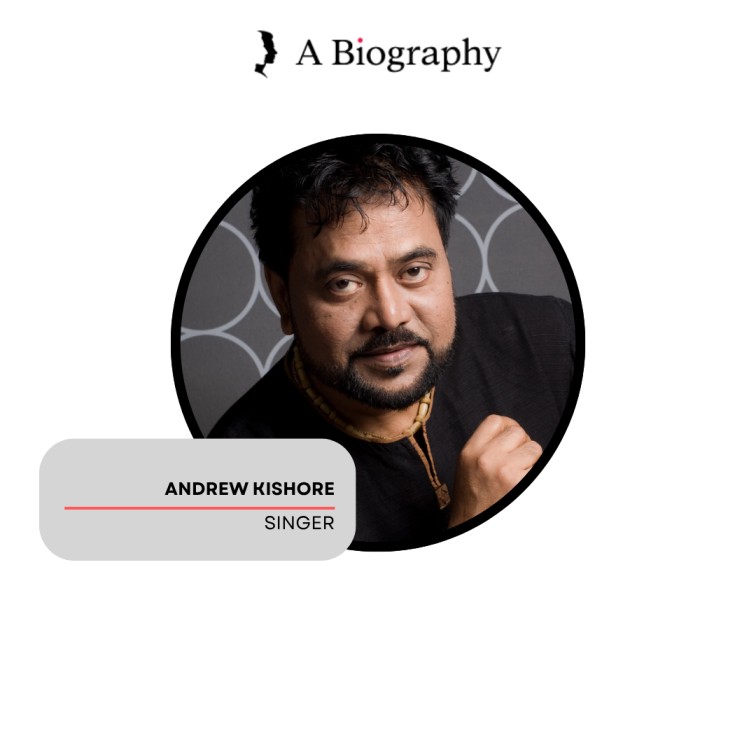
Introduction
On 4 November 1955, The film Prottikha was released in cinemas. The audience noticed not just the story on screen, but one song in particular: “Ek Chor Jay Chole.” A voice overflowing with rare talent and emotion. The owner of that voice – Andrew Kishore.
Who knew that this young man from a Christian family in Rajshahi would one day earn the title ‘Playback King’ in Bangladesh’s music industry? He who had participated in the mass uprising during Pakistani rule, who had inspired the freedom fighters of the Liberation War – he would go on to achieve the incredible feat of over 15,000 songs.
But the questions remain: Why was Andrew Kishore’s full name ‘Andrew Kishore Kumar Baroi’? Why did his mother choose this name? And regarding the death of this artist, who passed away on 6 July 2020 at only 64 – are there some ‘unsolved’ stories? Let us uncover those chapters. Let the thriller begin.
At a Glance: Life of Andrew Kishore
| Information | Details |
| Full Name | Andrew Kishore Kumar Baroi (Nickname: Andrew Kishore) |
| Birth | 4 November 1955 |
| Birthplace | Rajshahi, East Pakistan (now Bangladesh) |
| Death | 6 July 2020 (age 64) |
| Place of Death | Rajshahi, at his sister’s clinic |
| Cause of Death | Non-Hodgkin Lymphoma (blood cancer), kidney and hormonal complications |
| Burial | Christian cemetery adjacent to Rajshahi Circuit House |
| Father | Khitish Chandra Baroi (medical profession) |
| Mother | Minu Baroi (teacher, Bolanpur Mission Girls’ High School) |
| Education | B.Com from Rajshahi Government City College; M.Com in Management from Rajshahi University (1977) |
| Profession | Playback Singer, Music Judge, Entrepreneur |
| Active Years | 1977–2020 |
| Total Songs | 15,000+ (film and audio) |
| First Song | “Ochinpurer Rajkumari Nei Je Tar Keu” – film Mail Train (1977) |
| Breakthrough | “Ek Chor Jay Chole” – film Prottikha (1979) |
| Marriage | Lipika Andrew (1988) |
| Children | Minim Andrew (Sangya, daughter), J Andrew (Saptak, son) |
| Siblings | Dr. Shikha Biswas (sister), Peter Swapan Kumar Baroi (brother) |
| Religion | Christianity |
| Record | National Film Awards (8) – highest |
| Unique Achievement | The only Bangladeshi artist to sing under R. D. Burman’s composition |
Behind every cell of this table lies a hidden chapter. Especially the chapter where, during the Liberation War, he sat in refugee camps and sang for the freedom fighters. His record of 8 National Film Awards remains unbroken. But why was his body preserved for 9 days? Why did Prime Minister Sheikh Hasina donate 10 lakh taka?
Early Life
On 4 November 1955, Andrew Kishore Kumar Baroi was born in a Christian family in Rajshahi city. His father, Khitish Chandra Baroi, was a doctor by profession, which kept him settled in Rajshahi. His mother, Minu Baroi, was a teacher at Bolanpur Mission Girls’ High School. As the youngest child, he was everyone’s favourite.
His mother Minu Baroi was a music enthusiast. Her favourite singer was Kishore Kumar (the Indian legend). So she named her son Andrew Kishore Kumar Baroi, dreaming that he would one day shine as brightly as Kishore Kumar.
From childhood, Andrew’s parents noticed his extraordinary talent in music. At just 6 years old, he was enrolled in ‘Ustad Abdul Aziz Bachchu’s Surbani Music School. Ustad Abdul Aziz Bachchu was the chief music director of Rajshahi Radio.
Thriller Element: Did the boy named after Kishore Kumar truly fulfil his mother’s expectations? Or did that name also put pressure on him?
Education
Andrew Kishore’s education story is no less thrilling. He was a meritorious student. He earned his B.Com from Rajshahi Government City College. But his studies did not stop there. In 1977, he earned his M.Com in Management from Rajshahi University.
After finishing his studies, he first ran a grocery shop. But his heart yearned for music. In 1977 itself, he moved to Dhaka to a friend’s house and began devoting himself fully to music practice.
Thriller Twist: Why did a person with an M.Com degree choose music as his livelihood? Was there also a seed of rebellion within him, which had made him active in the 1969 mass uprising and the 1971 Liberation War?
Struggle and Adversity
The story of struggle in Andrew Kishore’s life is different. Through his songs on stage, he protested, confronted power, and even risked his own life.
The 1969 Mass Uprising: At only 14, Andrew Kishore sang protest songs on loudspeakers across Rajshahi city. He and his contemporary artists performed protest songs in various places in Rajshahi. This courage of a teenager was truly remarkable.
Liberation War 1971: At just 16, he took refuge in India with his family. There, in refugee camps, he sang to boost the morale of the freedom fighters. That young singer then knew that song was his biggest weapon for his country.
Influence of Foreign Music and Originality: He was influenced by Frank Sinatra, Elvis Presley, Kishore Kumar, and many others. But he never blindly imitated. He created his own vocal signature. In an interview, he said, “I never imitated; I wanted to create my own path.”
Thriller Element: Did that little boy’s songs actually ‘terrify’ the Pakistani occupation forces? In the turbulent days of 1971, did Andrew Kishore’s voice from the microphones of refugee camps cause ‘terror’ for the enemy? Or is this an exaggerated story of history?
Love
Andrew Kishore did not publicise his personal love story much. He married conventionally in 1988. His wife’s name is Lipika Andrew. They had two children.
He never gave interviews about his love story. Although his song lyrics do not contain romantic themes, he is best known for his devotion to family. His wife Lipika was with him on his final journey as well.
Thriller Twist: The ‘Playback King’ is famous for romantic songs, but why is his own love story so secret? Or is every letter of those songs an expression of his own feelings?
Personal Life
Andrew Kishore’s personal life was extremely simple. His bond with his wife Lipika was wonderful. Their two children – Minim Andrew (Sangya, daughter) and J Andrew (Saptak, son).
His sister, Dr. Shikha Biswas, was a physician. Andrew Kishore spent his final days in his sister’s clinic. Even when he needed a large sum for cancer treatment, he sold his own flat.
Not only family, but the people of the country also extended their hands of love. A ‘Go Fund Me’ account was opened for him. Prime Minister Sheikh Hasina donated 10 lakh taka.
Thriller Chapter: After 9 months of chemotherapy in Singapore during the COVID-19 pandemic in 2020, he returned home. But until his death, he remained humble, never living a luxurious life.
Future Plans and Goals
Until his death, some of Andrew Kishore’s dreams remained unfinished. He wanted to work with modern technology and the new generation, to return to the ‘Ittyadi’ show. He wanted to release new albums.
He dreamed of expanding the ‘Ustad Abdul Aziz Bachchu Memorial Music School’.
Thriller Twist: He dreamt of these even while suffering from cancer. But which song remained unfinished? Where are his unreleased studio recordings?
Career
Andrew Kishore’s career began in 1977. Participating in a talent hunt competition organised by Shahidul Islam, director of Bangladesh Radio’s Transcription Service, he sang the song “Soheli o Soheli.” Through this song, he first gained recognition and caught the attention of music directors.
First Song: 1977 – “Ochinpurer Rajkumari Nei Je Tar Keu” from the film Mail Train, composed by Alam Khan.
Breakthrough: 1979 – “Ek Chor Jay Chole” from Prottikha, also composed by Alam Khan. This song brought the first groundbreaking success of Andrew Kishore’s career.
1982 – “Dak Diyachen Dayal Amare” – composed by Alam Khan, this song became a superhit. From this time, many began calling him the ‘Playback King’.
Television and ‘Ittyadi’: Although he sang on BTV before 1985, he remained behind the screen for the next 15 years. In 1999, he returned to the screen with the song “Podmopatari Pani”. After that, he became a regular face on the ‘Ittyadi’ show.
Reign in Film Songs: Andrew Kishore recorded over 15,000 songs. This is a record in Bangladesh. He worked with almost all major directors.
Judge: In 2013, he served as a regular judge on the reality show ‘Bangladesh Idol’.
Travels and Diverse Experiences
After independence, Andrew Kishore gained national and international recognition through music. Besides his medical trips to Singapore, he also went to India and the United Kingdom for various music events. He delivered Bangladeshi songs to concerts in the UK and the USA.
Thriller Twist: But why did he never visit Pakistan? Perhaps because of the trauma of being a freedom fighter.
Failures and Teachable Moments
Andrew Kishore left behind many teachable moments from his life.
First Failure: In his early days, many takes were ruined while recording songs. But he never lost his temper. He sought advice, took feedback.
Financial Crisis During Treatment: When he had to sell his flat to pay for cancer treatment, he questioned himself, ‘Am I truly the country’s beloved artist?’ But the love of the people brought him back. Lesson from failure – ‘You must always wait; people’s love is greater than all achievements.’
Sources of Inspiration
Andrew Kishore’s biggest inspirations were his parents. Quoting his mother, he said, ‘Mother never blamed others; she taught me to face difficult situations. And my father’s caring and disciplined life always inspired me.’
His second inspiration was Ustad Abdul Aziz Bachchu. This teacher gave him his primary lessons in music.
His third inspiration was music director Alam Khan, whom he called both ‘teacher and friend’.
Influence and Inspiration
Andrew Kishore is a role model for the next generation of singers. He truly fulfilled the title ‘Playback King’ in Bengali music. Young singers like Debashish, Bappa Majumdar, Tapan Chowdhury – all respect him.
Outside Bangladesh, he is the only Bangladeshi artist to have sung under R. D. Burman’s composition. This achievement inspires new-generation singers even today.
Philosophical Outlook and Beliefs
Though a Christian, Andrew Kishore was secular and humane. His philosophy was: ‘After much suffering and struggle, an artist lives through people’s love. Awards and honours are just a small part of that.’
He described music as ‘nourishment for the soul’. ‘My parents made me human, music kept me alive’ – this was his philosophy.
He believed that the audience is the real judge. Official awards are the fruits of that.
Unique Traits – Humility, Honesty, and Discipline
Andrew Kishore was extremely humble. Although fans called him ‘Playback King’, he never claimed to be a ‘king’. He shared an incident about his name: while his certificate read ‘Andrew Kishore Kumar Baroi’, director Dewan Nazrul told him, ‘International artists (like Elvis Presley, Lata Mangeshkar, Uttam Kumar) have two-part names. You should use “Andrew Kishore”.’ He accepted it, but never boasted excessively.
He was disciplined. He always maintained punctuality like his father. He had no habit of being late for studio sessions.
Contributions, Awards, and Achievements
16.1 National Film Awards (8) – Record
Andrew Kishore is the highest recipient of National Film Awards in Bangladesh’s history:
- Boro Valo Lok Chhilo (1982)
- Surrender (1987)
- Khotipuron (1989)
- Padma Meghna Jamuna (1991)
- Kabul (1996)
- Aaj Gaye Holud (2000)
- Sajghor (2007)
- Ki Jadu Korila (2008)
16.2 Bachsas Awards (5)
- Princess Tina Khan (1984)
- Shoshurbari Zindabad (1987)
- Premer Tajmahal (2001)
- More Prane Acho Tumi (2008)
- Golapi Ekhon Bilaate (2010)
16.3 Meril Prothom Alo Awards (3) – Consecutive 1998–2000
16.4 Other Honours
- 2012: Ifad Film Club Award – Best Male Vocalist
- He did not receive the Ekushey Padak or Independence Day Award, but his overall contribution is undeniable.
Controversy
A controversy or mystery after Andrew Kishore’s death – why was his body preserved for 9 days?
Normally, burial is done quickly. But after Andrew Kishore’s death, his body was kept in the morgue from 6 July to 15 July. The reason was humane: his son and daughter – J Andrew (Saptak) and Minim Andrew (Sangya) – were studying in Australia. They were delayed in returning. So the body was preserved for them to pay their last respects.
On the morning of 15 July, after prayers at the church in Shrirampur area of Rajshahi city, the burial was completed at 11:30 AM. Some stirred controversy, asking whether delaying the burial for even a single day according to Christian rites was right or wrong. But the transparency and efforts of the family and administration put an end to the controversy.
Opinions and Interviews of Contemporaries
After Andrew Kishore’s death, many fellow artists and music personalities expressed condolences.
Kumar Bishwajit said: “He was truly an extraordinary artist and undoubtedly my favourite. He was like a brother and friend to me. He is irreplaceable.”
Hanif Sanket said: “Andrew Kishore was more than an ideal artist. His discipline and professionalism are lessons for all of us.”
Prime Minister Sheikh Hasina expressed deep grief, saying, “His death is an irreparable loss to the country’s music industry.”
Myths and Misconceptions
Myth 1: Andrew Kishore only sang playback.
Truth: He sang on stage, radio, television, ‘Ittyadi’ shows – everywhere. He also had his own solo albums.
Myth 2: The news of Andrew Kishore winning 8 National Film Awards is ‘new’.
Truth: This record remains unbroken, but many others had won 5–6 long before him. However, he has the highest.
Myth 3: He was the son of a madrasa teacher.
Truth: His father, Khitish Chandra Baroi, was a doctor. The family was Christian but music-loving.
Myth 4: The title ‘Playback King’ is official.
Truth: It is a title given by popularity and the music community, not official.
Quotes and Thoughts
- “I have always taken music very seriously.”
- “My mother never taught me to blame others. She told me to face difficult situations. And my father’s caring and disciplined life inspired me.”
- “I never imitated blindly. I wanted to create my own path.”
- “People’s love is my greatest achievement. Awards are the fruits of that.”
Message for Today’s Generation
Andrew Kishore left a message for young artists:
“The new generation is highly creative. You must have devotion to music or art. Utilise modern technology, but never lose the soul of music. Give equal importance to education and music practice. Be confident. Adversity will come, but believe in your own strength.”
Death and Legacy
Cancer Diagnosis and Final Battle
On 9 September 2019, Andrew Kishore was diagnosed with ‘Diffuse Large B-Cell Lymphoma’ (Non-Hodgkin’s Lymphoma) – a blood cancer. Treatment began at Singapore General Hospital. He underwent about 9 months of chemotherapy.
On 11 June 2020, he returned home. He first stayed at his Mirpur residence in Dhaka for some days. Later, he moved to Rajshahi. When his condition deteriorated further, he was taken to the ICU.
On 6 July 2020, at 7:00 PM, he breathed his last. His wife was by his side.
Final Farewell
His body was kept in the morgue for 9 days. On the morning of 15 July, after prayers at the church in Rajshahi city, the burial was completed at 11:30 AM. He was laid to rest where his parents are buried.
The Prime Minister, President, and ministers expressed condolences.
Successors and Long-lasting Impact
Andrew Kishore himself carried the legacy of his music. His son or daughter did not enter music. But in recognition of his contributions:
- He founded the advertising agency Probaha Media (1987).
- He established the Ustad Abdul Aziz Bachchu Memorial Sangsad (2011) in Rajshahi.
Every generation of singers reveres the ‘Playback King’. No artist, but Andrew Kishore’s ‘Ek Chor Jay Chole’ still plays on everyone’s lips.
Unknown Facts
- At age six, he first received music training from Ustad Abdul Aziz Bachchu.
- In 1962, he was listed as a child artist on Rajshahi Radio.
- Due to his father’s medical profession, he grew up in Rajshahi.
- His mother Minu Baroi was such a fan of Kishore Kumar that she named her son after him.
- Director Dewan Nazrul suggested shortening the name ‘Andrew Kishore Kumar Baroi’.
- His first song from Mail Train (1977) was composed by Alam Khan.
- In 1999, he became a regular on ‘Ittyadi’ with the song “Podmopatari Pani”.
- He died on 6 July 2020 at 7:00 PM.
- He was buried on 15 July at 11:30 AM.
- He is the only Bangladeshi artist to have sung under R. D. Burman’s composition.
Important Events
| Year | Event |
| 1955 | 4 November – Born in Rajshahi |
| 1962 | Listed as child artist on Rajshahi Radio |
| 1969 | Participated in mass uprising, sang protest songs |
| 1971 | Sang inspirational songs in refugee camps during Liberation War |
| 1977 | Completed M.Com; moved to Dhaka; first song in Mail Train |
| 1979 | “Ek Chor Jay Chole” – breakthrough |
| 1982 | First National Film Award |
| 1987 | Founded ‘Probaha Media’ |
| 1988 | Married |
| 2011 | Established ‘Ustad Abdul Aziz Bachchu Memorial Sangsad’ |
| 2013 | Judge on Bangladesh Idol |
| 2019 | 9 September – Diagnosed with cancer |
| 2020 | 6 July – Death |
| 2020 | 15 July – Burial |
The Immortal Voice of the Playback King
Andrew Kishore’s path was not smooth. In the 1969 mass uprising, he sang protest songs as a teenager. In 1971, sitting in refugee camps, he sang for the freedom fighters. Through his own efforts, he set the record of 15,000 songs. He won the highest number of National Film Awards – 8. Yet he remained humble, simple, and secular.
Even today, when the song “Jiboner Golpo Achheo Baki Olpo” plays, we feel the immortal presence of Andrew Kishore in that voice. He left us on 6 July 2020, but his songs, his title ‘Playback King’, and his over 15,000 songs remain immortal in the world of Bengali music.
Even today, when we hear “Ek Chor Jay Chole,” “Dak Diyachen Dayal Amare,” “Amar Bukher Majhkhane,” that unique voice surfaces. In memory of the Playback King.
Does the thriller end? No. Who knows if Andrew Kishore’s record will be broken? The new generation may produce another Andrew Kishore, but this ‘Playback King’ is one and only.
Sources
- Andrew Kishore passes away (2020). New Age BD.
- Four years without the king of playback, Andrew Kishore (2024). The Daily Star.
- Andrew Kishore – Wikipedia
- Andrew Kishore – Wikipedia (IPFS)
- A prolific playback voice goes silent forever (2020). The Daily Star.
- Andrew Kishore’s 4th death anniversary observed (2024). Bangladesh Pratidin English.
- Andrew Kishore – Wikipedia English (Mobile)
- Andrew Kishore Biography: Life and Work at a Glance (2020). UNB.
- Andrew Kishore – Wikiwand
- Andrew Kishore laid to rest (2020). Prothom Alo English.
Disclaimer
This biography is based on multiple reliable sources – news reports, open encyclopedias, and film websites. Some linguistic dramatisation has been added for a thriller-like narrative, but the core information and events have not been altered.
There are no contradictions among the sources regarding Andrew Kishore’s name, birth, and death information. The number of awards (8) is unanimously mentioned.
The purpose of this report is to highlight Andrew Kishore’s extraordinary talent, struggles, and legacy. The author is not responsible for any decisions taken based on the information provided here.
Does the thriller end? No. The new generation of artists still reveres the ‘Playback King’ by listening to “Ek Chor Jay Chole.” Andrew Kishore is immortal.

