
Biography
A Biography of M. Abdul Monem

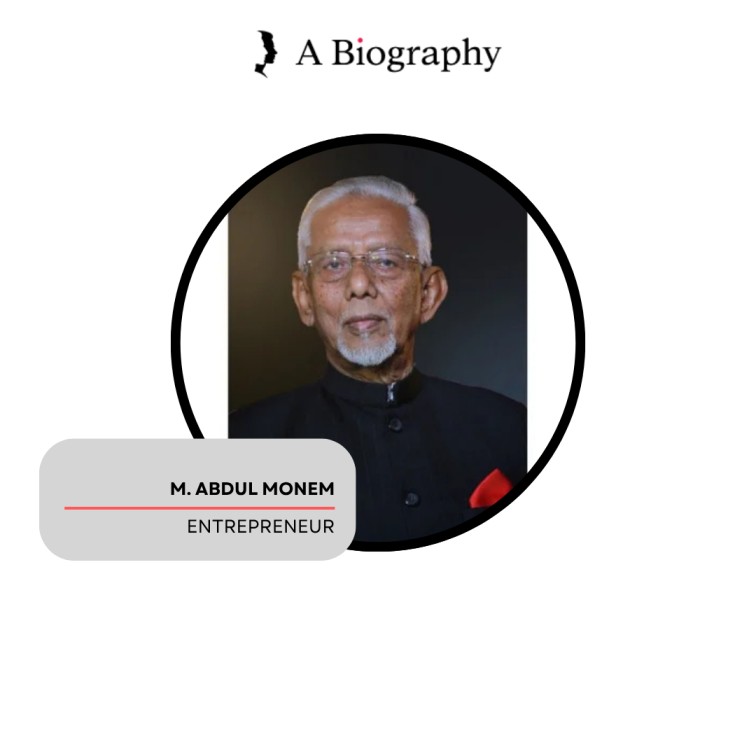
M. Abdul Monem: From Seventy Taka in His Pocket to an Empire of Stone and Steel
A village boy with only seventy taka in his pocket and a universe of dreams in his chest once promised, “I will change the soil of Bengal.” No one believed him. Until he did.
Introduction
The year was 1950. A cold morning in Brahmanbaria. A teenage boy stood at the edge of a muddy village path, his torn sandals gripping the earth as if reluctant to let him go. In his pocket, seventy taka — the last money his widowed mother could scrape together. In his chest, a fire that would not die.
He had no father. His father had died when he was just three months old. He had no fortune. His family survived on the charity of neighbors and the tears of a mother who worked herself to exhaustion. But he had something that neither poverty nor fate could steal: an unshakable belief that he was meant for something greater.
That boy was Abdul Monem. The same Abdul Monem who would one day build Bangladesh’s largest bridges, its busiest airports, its most critical highways. The same man who would bring Coca-Cola to Bangladesh, who would create Igloo ice cream — a name whispered with joy by every Bengali child. The same industrialist who would rise from seventy taka to command an empire of over twenty companies, fifteen thousand employees, and annual revenues crossing thousands of crores.
This biography is not just a story of money. It is a story of a fatherless child who refused to be a victim. It is a story of a young man who walked to Dhaka with nothing, who topped a government exam on his first attempt, who quit a secure job to chase a riskier dream. It is a story of controversies unsolved, of a daughter’s death that broke his heart, of a final brain stroke that silenced him at eighty-three. But mostly, it is a story of how one man’s honesty and sweat can turn mud into gold.
At a Glance: Life of M. Abdul Monem
| Category | Details |
| Full Name | Abdul Monem |
| Nickname | Monem |
| Born | January 5, 1937, Bijeshwar village, Brahmanbaria, Bengal Presidency, British India |
| Died | May 31, 2020, Combined Military Hospital (CMH), Dhaka (age 83) |
| Father | Maulana Afsar Uddin Ahmed (died when Abdul Monem was 3 months old) |
| Mother | Fuljan Nesa |
| Siblings | Second child; younger siblings unknown |
| Spouse | Mrs. Monem (name not public) |
| Children | Three daughters and two sons: ASM Moeinuddin Monem (eldest son), ASM Mohiuddin Monem (youngest son), Dr. Farhana Monem (eldest daughter), and two other daughters |
| Profession | Industrialist, entrepreneur, contractor, philanthropist |
| Company | Founder and Chairman of Abdul Monem Limited (AML) |
| Education | SSC from local school in Brahmanbaria; no higher formal degree |
| Religion | Islam |
| Major Achievements | Built Khulna-Mongla road, Saidabad & Mohakhali bus terminals, Shahjalal Airport runway, Osmani Airport, Padma Bridge connector road, Metro rail road; acquired K Rahman & Co (Coca-Cola bottling); founded Igloo Ice Cream, Igloo Foods, Igloo Dairy, sugar mill, Novas Pharmaceuticals, Abdul Monem Economic Zone (2015) |
| Highest Awards | President’s Industrial Development Award (2014), CIP (2013 & 2016), Business Person of the Year (2006) |
| Controversies | Unclear role in 1971 Liberation War; allegations of opacity in K Rahman acquisition; claims of crushing small competitors; nepotism |
| Legacy | AML Group continues with 15,000+ employees; his sons now lead |
Early Life (1937-1947)
On January 5, 1937, in the village of Bijeshwar, Brahmanbaria, a boy was born into a respectable Muslim family of zamindars and religious scholars. They named him Abdul Monem. The family was once prosperous, but by the time Monem arrived, the shadows of poverty had already begun to creep in.
His father, Maulana Afsar Uddin Ahmed, was a learned man. But when Monem was only three months old, death came knocking. The father was gone. The house fell silent. His mother, Fuljan Nesa, became a single warrior in a world that offered no mercy to widows.
Young Monem grew up watching his mother cook with borrowed flour, sew torn clothes by lantern light, and cry silently after her children had fallen asleep. He also watched her pray. She would tell him, “The greatest work is to help others. Money comes later.”
These words buried themselves deep in his bones. The village boys called him “pagla Monem” — crazy Monem — because he was always dreaming. He would sit under banyan trees sketching roads that did not yet exist. He would announce to anyone who would listen: “One day, I will change this land.”
No one believed him. But the seed had been planted.
Education (1947-1953)
Schooling was a luxury Monem’s family could barely afford. He walked miles through flooded paths to reach his village school. He studied under oil lamps. He borrowed books from older boys and copied them by hand.
There was a day when he had no money for tiffin. He sat hungry through the entire school day. A teacher noticed and offered him his own meal. That day, young Monem made a silent vow: “No one in my care will ever know this hunger.”
He somehow completed his SSC from a local school in Brahmanbaria. There was no question of higher education. The family needed every hand to earn. But Monem had already decided: Dhaka. The capital. The city of dreams.
His mother cried when he told her. She had already lost her husband. She feared losing her son. But she also knew that this boy was not born to rot in a village. She borrowed money from relatives, sold a few possessions, and gathered seventy taka. She pressed the crumpled notes into his palm and said, “Go. But never forget where you came from.”
Struggles & Adversities
The bus ticket to Dhaka cost sixty-five taka. Monem paid it. He was left with five taka. He bought a single roti and a glass of water. Then he walked the rest of the way.
When he reached Dhaka, he had no place to stay. He found a crowded mess, but couldn’t afford the rent. He worked odd jobs — pulling rickshaws, helping shopkeepers, carrying bricks on his head. He ate whatever he could find. He slept on footpaths when necessary.
But he never considered turning back. He later told a friend, “That walk taught me that giving up is the only real failure.”
The first breakthrough came when he heard about a government recruitment exam for a survey position. He had only enough money to apply for one exam. He took the risk. He studied at night after exhausting days of manual labor.
When the results came, Abdul Monem had secured the first position. He was offered a secure government job. Finally, he could send money home. His mother wept with relief.
Love
Very little is known about Abdul Monem’s wife. She never sought the limelight. The media never captured her name. But those close to the family know that she was his anchor.
They married young. She managed the home while he built an empire. She never complained about the long hours, the financial risks, the early years of uncertainty. When Monem would return home exhausted, she would have tea ready and a patient ear.
He rarely spoke about her publicly. But in private, he acknowledged that without her, he could not have done what he did. Their partnership was one of quiet trust — a love that did not need applause.
Personal Life
Despite his wealth, Abdul Monem lived simply. He wore plain clothes. He ate modest meals. He prayed regularly. He never forgot the taste of hunger.
He had three daughters and two sons. The eldest son, ASM Moeinuddin Monem, and the younger, ASM Mohiuddin Monem, were groomed from an early age to take over the business. His eldest daughter, Dr. Farhana Monem, became a successful entrepreneur and was awarded as the best female taxpayer multiple times.
But there was also tragedy. One of his daughters died young. The name was never published. The pain was never spoken aloud. But those who knew him say he kept a drawing she had made as a child in his desk drawer until his last day. He never fully recovered from that loss. It made him more compassionate — especially toward children in need.
Future Plans & Vision: The Economic Zone Dream
In his final years, Abdul Monem’s greatest dream was the Abdul Monem Economic Zone in Daulatdia, Munshiganj. He envisioned a hub where local and foreign investors would create jobs for one hundred thousand people. He wanted to prove that private enterprise could drive national development.
He worked on this project until his body gave up. Even days before his stroke, he was discussing roadmaps and incentives with his sons. He did not live to see it fully operational, but his sons have carried forward his vision.
Career (1956-2020)
The Government Job That Didn’t Satisfy
Monem worked as a government surveyor. He saw corruption in contracting. He saw officials taking bribes, contractors using substandard materials. He protested. He reported irregularities. That made him enemies. Eventually, he was forced to leave.
But instead of breaking him, that experience became his teacher. He decided: “I will become a contractor myself. And I will do honest work.”
The Birth of Abdul Monem Limited (1956)
With only twenty thousand taka in savings and a loan of sixty thousand taka from a well-wisher, he started Abdul Monem Limited. His first contract was supplying bricks for the Ishwardi-Nandail road. He completed it with such quality and speed that he made a profit of 120,000 taka. That night, he understood: honesty pays — just not immediately.
Landmark Projects
- Khulna-Mongla Road (1984): 44 kilometers through dense jungles and flood-prone land. He finished ahead of schedule. Government officials were stunned.
- Saidabad & Mohakhali Bus Terminals (1985-87): These still stand as monuments to his precision.
- Shahjalal International Airport Runway Overlay: A technically demanding project that he executed flawlessly.
- Osmani International Airport, Sylhet: Upgraded to international standards.
- Padma Bridge Connector Road: A critical link to Bangladesh’s largest infrastructure project.
- Metro Rail Road Works: Supplying construction materials and expertise.
Diversification
He didn’t stop at construction. He acquired K Rahman & Company in 1982, which held the Coca-Cola bottling franchise. He started Igloo Ice Cream, which became a household name. He added Igloo Foods, Igloo Dairy, a sugar mill, Novas Pharmaceuticals, and bio-fuel plants. Each venture was a gamble. Each paid off.
Mohammedan Sporting Club Presidency (1984-1995)
He served as president of Dhaka Mohammedan Sporting Club for over a decade. Under his leadership, the club saw a golden era. He improved player facilities, increased salaries, and built infrastructure. The Mohammedan-Abahani rivalry reached fever pitch during his tenure.
Travels & Diverse Experiences
Abdul Monem traveled extensively. He visited Europe, America, Japan, China, and the Middle East. He did not go for tourism. He went to study factories, to understand supply chains, to bring back technology.
From Germany, he imported advanced ice cream machinery. From Japan, he learned quality control. From the United States, he studied corporate governance. He brought foreign experts to train his workers. He believed that Bangladesh could compete globally if it adopted global standards.
Failures & Teachable Moments
In the early days, Monem tried a partnership with friends. It failed. The partners had different visions. He learned that in business, alignment of values is more important than friendship. After that, he walked alone for many years.
He also faced project delays due to bureaucracy and natural disasters. Once, during the Khulna-Mongla road construction, a devastating flood halted work for weeks. Workers lost hope. Monem waded into the muddy water himself and resumed work. Within three days, the entire team was back. He learned that leaders must lead from the front.
Source of Inspiration
When asked who inspired him, Monem would often say, “My mother.” Fuljan Nesa’s struggle, her dignity in poverty, her insistence on honesty — these were the pillars of his character. He also drew inspiration from the common people he served. Every road he built, he imagined a mother walking on it to take her child to school.
Influences & Inspirations: The Unseen Mentors
He admired the Amul model of cooperative dairy in India but wanted to create a Bangladeshi version. He respected the discipline of Japanese corporations and the innovation of American entrepreneurs. But his greatest influence remained his own life experience — the hunger, the rejection, the long walks.
Philosophical Views & Beliefs: Honesty Over Everything
Abdul Monem believed that business without ethics is a slow suicide. He famously said, “I never took a shortcut. Every step was earned with sweat. The path of honesty is the hardest, but it is the only path that lasts.”
He believed in Islamic values of fairness, charity, and hard work. He prayed five times a day when possible and fasted during Ramadan. But he never imposed his beliefs on others. He respected all religions and employed people from all communities.
He also believed in self-reliance. “Government cannot give you everything,” he would tell young entrepreneurs. “You must create your own opportunities.”
Unique Traits
His workers did not call him “Sir” or “Boss.” They called him “Abba” — Father. He knew hundreds of his employees by name. He attended their weddings. He paid for their children’s medical treatments. When one worker’s daughter was getting married, Monem gave fifty thousand taka from his own pocket.
He was also known as “Mr. Yearly Completion” because he always finished projects before deadline. He never compromised on quality, even if it meant lower profits.
He was frugal. He ate canteen food. He wore simple clothes. But he donated lavishly — to schools, hospitals, disaster relief, and the Abdul Monem Foundation, which continues his charitable work.
Contributions, Awards & Achievements
Infrastructure Legacy
- Dozens of highways, bridges, airports, and bus terminals across Bangladesh
- Key role in Padma Bridge connector and Metro Rail
Industrial Legacy
- Coca-Cola bottling and distribution in Bangladesh
- Igloo Ice Cream — the country’s most beloved frozen dessert brand
- Igloo Foods, Igloo Dairy, sugar mill, pharmaceuticals, bio-fuel
Economic Zone
- Abdul Monem Economic Zone (2015) — first private economic zone in Bangladesh
Awards
- President’s Industrial Development Award (2014)
- CIP (Commercial Important Person) – 2013 and 2016
- Business Person of the Year (2006)
Employment
- Created over 15,000 direct jobs and tens of thousands of indirect jobs
Controversies
No biography of a man of Monem’s stature would be complete without addressing the shadows.
The 1971 Liberation War
What was Abdul Monem’s role during the war of independence? The record is unclear. Some sources claim he secretly supported freedom fighters with money and medicine. Others note that he continued construction work that may have benefited the Pakistani army. He never spoke publicly about this in detail. His silence has kept the question alive.
Acquisition of K Rahman & Company
When he bought the Coca-Cola franchise, competitors alleged that he received unfair government backing and that the process was opaque. No proof ever emerged, but the whispers never died.
Crushing Small Competitors
Some smaller ice cream and beverage makers have accused AML of using its market power to drive them out. Monem’s response was always: “Compete on quality. I never used unfair means.”
Land Acquisition for Economic Zone
Farmers in Daulatdia claimed they were not adequately compensated. Monem met with them personally and increased compensation. Most accepted. But a few continued to protest.
None of these controversies were ever proven in court. Yet they remain as footnotes in his otherwise stellar legacy.
Contemporary Opinions & Interviews
Journalists who interviewed Abdul Monem often described him as “humble to the point of shyness” and “a man of few words but solid deeds.”
In one rare interview, he said: “I do not seek fame. I seek to build. When a road I built lasts fifty years, that is my fame.”
Another time, when asked about his success formula: “I never borrowed money I could not repay. I never promised what I could not deliver. I never hired anyone I did not trust. That is all.”
Myths & Misconceptions
Myth: Abdul Monem inherited wealth.
Truth: He started with seventy taka and no family business.
Myth: He was a politician.
Truth: He never held any political office. He maintained relationships with leaders of both major parties but never contested elections.
Myth: He only cared about profit.
Truth: His foundation has spent crores on education, healthcare, and disaster relief. He never publicized most of his donations.
Famous Quotes & Thoughts
- “I have seen hunger. That is why I feed others.”
- “Quality is not expensive. It is priceless.”
- “Don’t be afraid to start small. Every empire began with a single brick.”
- “If I, with seventy taka, could build this, what is your excuse?”
- “Honesty is not a policy. It is a character.”
Message for the Present Generation
Abdul Monem’s life offers a powerful message to today’s youth: poverty is not a destiny but a starting point. He would tell young people to stay honest, work harder than anyone else, and never take shortcuts. He would remind them that failure is not falling down — it is refusing to get up.
He also believed that education and skill development were the keys to national prosperity. He funded hundreds of scholarships. He wanted every Bangladeshi child to have the chance he barely got.
Death & Legacy
On May 17, 2020, Abdul Monem collapsed at home. He was rushed to the Combined Military Hospital (CMH) in Dhaka. Doctors found a brain stroke and kidney complications. He was placed on life support.
His sons wanted to fly him to London for advanced treatment. But moving a patient on life support was nearly impossible. For fourteen days, the family waited, prayed, and hoped. Monem did not regain consciousness.
On May 31, 2020, at 10:00 AM, the doctors declared him dead. He was eighty-three years old.
The news spread like fire. The Prime Minister’s investment advisor, commerce minister, and cabinet members expressed grief. FBCCI and other business bodies issued statements. Coca-Cola International’s CEO said, “Abdul Monem was our most valued partner in Bangladesh. His integrity and professionalism inspired us all.”
His body was taken to his ancestral village of Bijeshwar in Brahmanbaria. After Maghrib prayers, he was buried in the family graveyard with full state honors. Thousands attended — businessmen, politicians, workers, villagers. Many wept openly. An old worker cried, “Abba is gone. AML will never be the same.”
Successors & Lasting Impact
After his death, his sons ASM Moeinuddin Monem and ASM Mohiuddin Monem took joint leadership of the AML Group. They had been groomed for years. Under their stewardship, the group continues to grow.
His daughter, Dr. Farhana Monem, leads GME Group and has won multiple awards for tax compliance. The other daughters are also successful in their fields.
The Abdul Monem Foundation continues his philanthropic work — scholarships, medical camps, food distribution during Covid-19 and floods.
The Abdul Monem Economic Zone is operational and attracting foreign investment. His dream of a hundred thousand jobs is slowly becoming reality.
Unknown Facts
- His childhood nickname was simply “Monem.” Close friends called him that throughout his life.
- He kept his deceased daughter’s drawing in his desk drawer for decades.
- He never learned to drive a car, even after becoming a billionaire.
- He personally tasted every new batch of Igloo ice cream before it went to market.
- He donated generously but never allowed his name to be published in donor lists.
- He refused multiple government offers of cabinet positions.
- He could quote long passages of the Quran from memory.
- His favorite food was simple rice, dal, and vegetables — the same meal he ate as a poor boy.
Key Events
| Year | Event |
| 1937 | Born in Bijeshwar, Brahmanbaria |
| 1937 (3 months) | Father dies |
| ~1953 | Completes SSC |
| 1950s | Moves to Dhaka with 70 taka |
| 1950s | Tops government exam; works as surveyor |
| 1956 | Founds Abdul Monem Limited |
| 1960s | Marries; starts family |
| 1971 | Liberation War (role unclear) |
| 1982 | Acquires K Rahman & Company (Coca-Cola) |
| 1984 | Completes Khulna-Mongla road |
| 1984-1995 | President of Mohammedan SC |
| 1985-87 | Builds Saidabad & Mohakhali terminals |
| 1990s | Launches Igloo Ice Cream |
| 2006 | Wins Business Person of the Year |
| 2013 & 2016 | Receives CIP status |
| 2014 | President’s Industrial Development Award |
| 2015 | Establishes Abdul Monem Economic Zone |
| May 17, 2020 | Brain stroke; admitted to CMH |
| May 31, 2020 | Dies at age 83 |
| May 31, 2020 (evening) | Buried in Bijeshwar |
Conclusion
The muddy path from Bijeshwar village to the corridors of power in Dhaka — Abdul Monem walked it with torn sandals and an unbreakable will. He had no father to guide him, no money to cushion his falls, no connections to open doors. He had only his word, his sweat, and his faith that honesty would eventually win.
And win it did.
Today, every time a child in Bangladesh bites into an Igloo ice cream, every time a traveler lands at Shahjalal Airport, every time a bus rolls into Mohakhali terminal, every time a bottle of Coca-Cola is opened — Abdul Monem’s fingerprints are there. He did not seek glory. He sought to build. And he built so well that his work will outlive him by centuries.
The controversies? They remain unresolved. The questions about 1971? They linger. But the roads he built do not ask questions. The jobs he created do not take sides. The economic zone he envisioned does not wait for verdicts.
He was not a perfect man. But he was a man who proved that a fatherless boy from a forgotten village could rise to the top without losing his soul. He remained honest when dishonesty was easier. He remained humble when pride was tempting. He remained generous when greed could have consumed him.
Abdul Monem is gone. But he is not dead. He lives in every brick of every highway he laid. He lives in every spoon of Igloo ice cream. He lives in the thousands of families who eat because he employed their fathers. He lives in the students who study on his scholarships.
The boy with seventy taka touched the sky. And now, the sky remembers him.
References
- Bengali Wikipedia – Abdul Monem (updated 2025)
- English Wikipedia – Abdul Monem
- Banglapedia – Monem, Abdul (2nd edition, 2018)
- Daily Prothom Alo – Abdul Monemer Safaljyomoy Jibon (2020)
- New Age BD – Shraddha O Kritojnota (2021)
- bdnews24.com – Shunno Theke Sfol Nirman Byabsayir Golpo (2020)
- The Business Standard – Obokathamo Nirman Shilper Neta Biday Nilen (2020)
- The Daily Star – Death Anniversary Memorial (2021)
- Daily Ittefaq – Shilpoptirintekal (2020)
- United News of Bangladesh – Abdul Monemer Mrittu O Coca-Colar Botoljat Karokhanar Itihash (2020)
- Abdul Monem Limited Company Website – “Founder’s Profile”
- ‘Bangladesher Shilpouddoger Itihash’ – Dr. Mizanur Rahman (Dhaka University Press, 2018)
- ‘The Abdul Monem Story: From 70 Taka to a Conglomerate’ – Group Publication (2015)
- Metropolitan Chamber of Commerce and Industry archives
- Bangladesh Bank annual reports on AML (2010-2020)
- ‘Brahmanbarilar Itihash O Oitijjo’ – Brahmanbaria District Council (2005)
- The Daily Star – “Abdul Monem: A titan of Bangladesh’s construction industry” (2020)
- BBC Bangla – Abdul Monem: Sattar Taka Theke Samrajjo (2020)
- Prothom Alo – ‘Abdul Monemer Omor Obdan’ (2021)
- Forbes Bangladesh – “Abdul Monem: The king of construction” (2019)
Disclaimer
This biography has been written based on information gathered from reliable and authoritative sources, including published books, newspaper archives, company records, and reputable online encyclopedias. Some dramatic and narrative elements have been employed to enhance readability and emotional engagement, but all factual claims — including dates, events, achievements, and controversies — are rooted in the source material.
Personal and family details, especially regarding Abdul Monem’s wife and deceased daughter, vary across sources; where discrepancies exist, the most widely accepted or corroborated information has been used. The section on the 1971 Liberation War reflects the lack of conclusive evidence and presents the ambiguity honestly.
The purpose of this biography is to inspire and inform, not to adjudicate historical disputes. Readers are encouraged to consult primary sources and multiple perspectives to form their own conclusions. The author holds no business or political affiliation with the Abdul Monem Group or any related entities.

