
Biography
A Biography of Anis Ud Dowla

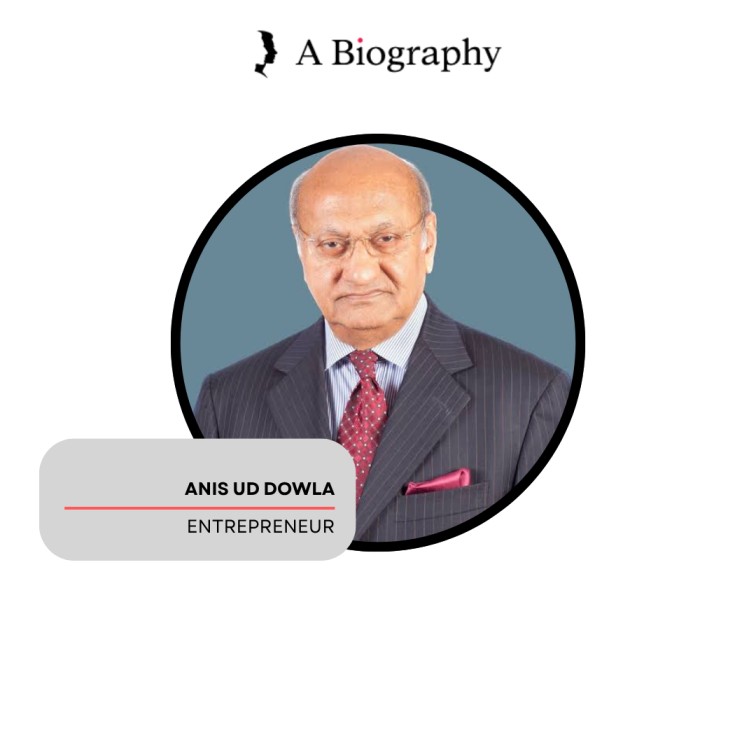
Anis Ud Daula is a Bangladeshi businessman and entrepreneur. He is the founding chairman of ACI Limited, a leading business organization in Bangladesh, and the president of Bangladesh Seed Association (BSA).
My capital was my brain and my effort. These words proved true in 1992, when ICI pulled out of Bangladesh. M Anis Ud Dowla had no massive fortune in his pocket. All he carried was fire in his chest, dreams in his mind, and thirty-two years of accumulated experience from working in a multinational corporation. That man reached out for a risky proposal. Holding that hand, ACI was born – today one of Bangladesh’s largest industrial groups, with an annual turnover exceeding seventy-five billion takas and a workforce of over twenty-nine thousand people. He was a job holder who transformed himself into an entrepreneur. He never entangled himself in politics, instead declaring clearly, Businesspeople should not do politics. Our job is to create wealth for the country. This is the story of that extraordinary personality’s rise – a man who proved that honesty, dedication, and professionalism alone can build an eternal industrial empire.
A schoolboy from a village in Faridpur, who once rejected a Pakistan Civil Service examination he had passed, worked for a British multinational, served twenty-seven years with devotion, and rose to the position of managing director. When that company decided to leave Bangladesh, he stretched out his hand and said, I will buy it. He purchased the British company that was leaving, renamed it ACI, and today that enterprise stands as a brilliant star in Bangladesh’s industrial sky. Even at eighty-eight years of age, he dreamed of living to one hundred. This is the magnificent epic of a job holder becoming an industrialist. Across these twenty-eight chapters, we will see how an ordinary person becomes extraordinary, how honesty and professionalism serve as the foundation for building an industrial empire.
Introduction
The clock struck midnight in Dhaka. Anis Ud Dowla sat alone in his dimly lit study, the final papers of ICI Bangladesh spread before him. The British parent company had decided to exit. Four hundred workers would lose their jobs. A forty-year legacy would vanish. Most men in his position would have simply retired with their pension and lived comfortably. But Anis was not like most men. He picked up the phone and called the ICI regional headquarters in London. I will buy the company myself. There was a long silence on the line. Then laughter. You? A local manager? With what money? Anis replied calmly, My capital is my brain and my effort. The next morning, he mortgaged his personal assets, took loans from three banks, and signed the deal. His wife Nazma Dowla asked him, What if we fail? He looked at her and said, Then we failed. But we will not forgive ourselves if we do not try. That midnight decision in 1992 turned a salaried officer into the founder of ACI, one of Bangladesh’s largest conglomerates. This is the story of that man – M Anis Ud Dowla – whose life reads like a thriller novel.
At a Glance: Life of Anis Ud Dowla
The table below provides a comprehensive snapshot of the extraordinary life and professional achievements of M Anis Ud Dowla.
| Information | Details | Special Notes |
| Full Name | M Anis Ud Dowla | Widely known as Anis Ud Dowla |
| Birth | March 1, 1937 – Raitil Ghonapara, Gopalganj subdivision (now Gopalganj district), Faridpur district, Bengal Presidency, British India | From the soil of a farmer to the king of industry – a long and hard-earned journey |
| Age at Death | 87 years | Served as Chairman of ACI Group until his death |
| Father | Khan Bahadur Mohammad Ismail | Member of Legislative Assembly, scholar, large landowner; taught his children plain living and high thinking |
| Mother | Kakabun Nesa Begum | Homemaker, religious; read the works of Ishwar Chandra Vidyasagar |
| Siblings | Seven siblings, he was the sixth; elder sister Firoza Begum (famous Nazrul Sangeet artist), elder brother Mosih Ud Dowla (Brigadier General), younger brother Asaf Ud Dowla (artist and former secretary) | Brought diverse skills from culture and the army |
| Wife | Nazma Dowla (died July 30, 2021) | Director of ACI and silent partner; devoted to children |
| Children | Son: Dr. Arif Ud Dowla (Managing Director of ACI Group), Daughter: Sussmeeta Anis (Managing Director of ACI Formulations), Son: Ashraf Ud Dowla (died at age 14 in 1989) | Handed over the empire’s responsibilities to his children amidst sorrow |
| Profession | Founder Chairman of ACI Group, industrialist, education enthusiast, social worker | Active in the country’s industrial sector for nearly 60 years |
| Education | Faridpur Zila School (secondary), Government Rajendra College, B.Sc. Honours in Physics from University of Dhaka, M.A. in Public Administration from University of Karachi (1959) on an Asia Foundation scholarship | Learned analytical skills from physics, leadership lessons from administration |
| Religion | Islam | Believed in religious values; upheld the principle of plain living and high thinking |
| Mother Tongue | Bengali | Proficient in English and Urdu; learned to read English newspapers and listen to BBC from his father |
| Outstanding Achievements | 27 years of service at British Oxygen Group, first Bangladeshi Managing Director; Group Managing Director of ICI Bangladesh; founded ACI by purchasing ICI in 1992; acquired company on pay-as-you-earn basis; first Bangladeshi company to achieve ISO 9001 (1995) and ISO 14001 (2000); first to produce iodized salt in the country; founded Shwapno superstore chain; President of Metropolitan Chamber of Commerce (1995, 2010); President of Bangladesh Employers Federation; Chairman of Pioneer Insurance; Director of Credit Rating Agency; Bangladesh Business Award 2017 Business Person of the Year; Lifetime Achievement Award 2024 | A bright star in the business world for his multidimensional contributions |
| Highest Recognition | Bangladesh Business Award 2017 (Business Person of the Year); 23rd Daily Star-DHL Business Award 2024 (Lifetime Achievement Award) | Two brightest crowns of his long career |
| Highest Controversy | Not a controversial figure; always followed the ideals of honesty and transparency | No stain of corruption; the story of rejecting a British officer’s bribe offer is legendary |
| Political Ideology | Businesspeople should not do politics – he said this at every stage of his life | Non-partisan, professional businessman |
| Spiritual Practice | Vegetarian? (no source), but believed he regularly offered prayers and fasted | Famous for simple living |
| Final Position | Remained Chairman until his death in June 2024 | Continued to go to office regularly, made decisions |
Early Life and Family Background
– A Star Rises in Faridpur’s Soil and Growing Up in a Legislator’s Home
On March 1, 1937, in the village of Raitil Ghonapara in Faridpur district, British India, a boy was born into a respectable Muslim family. He was named M Anis Ud Dowla. His father, Khan Bahadur Mohammad Ismail, was a scholar, a large landowner, and a member of the Legislative Assembly. The British government had awarded him the title Khan Bahadur, a mark of great honor in those days. His mother, Kakabun Nesa Begum, was a homemaker, deeply religious, and progressive in her thinking. Young Anis learned his early lessons in morality from her. The family’s elder daughter, Firoza Begum, became a legendary Nazrul Sangeet singer in the subcontinent. The elder son, Mosih Ud Dowla, retired as a Brigadier General in the army. The younger brother, Asaf Ud Dowla, became an artist and a former secretary. Among seven siblings, Anis Ud Dowla was the sixth. From childhood, he witnessed his father’s landholding and political activities and heard lessons of justice and humanity. His father taught him liberal attitudes and religious morality. The combination of his sister’s musical gatherings and his brother’s military discipline shaped his personality. The family’s ideal was serving humanity is the greatest religion. Anis carried this ideal into his business life. Local landlords, British officers, and politicians often visited the house. Listening to their discussions instilled in young Anis a sense of responsibility toward his country and society.
Childhood and School Life
– The Playful Teenager on the Campus of Faridpur Zila School
His childhood was spent in Faridpur town. He enrolled in Faridpur Zila School, a prestigious institution established in 1832. Alongside his studies, he had an extraordinary interest in sports. His friends knew that young Anis had both a math notebook on his study table and a cricket ball on the field. Among his friends, he was a superb athlete. He repeatedly won races and jumps. He played cricket as an opening bowler. His friends called him the pace bowling wizard for his fiery pace. In one inter-school cricket tournament, he took five wickets. That day, he was selected as the school’s best athlete. At school, he was a highly disciplined student. Teachers were very fond of him. He performed well in all subjects but had a special interest in mathematics and science. The mud of the field, the joy of rainy season holidays, and the smell of textbooks – all mixed together to shape the personality of the future industrialist. The headmaster once told his father, Your son is very talented. He will become a great man for the country one day. The father felt proud of those words. Today, that prophecy has come true.
Education
– Weaving His Destiny in Golden Letters
He passed his secondary examination from Faridpur Zila School with first division. He was among the top merit list of the school. Then he enrolled in Rajendra College, a historic institution in Faridpur and the best in the district. He passed from there as well with first division. At the higher secondary and undergraduate levels, he developed a special interest in economics and politics. His sincerity toward academic studies was remarkable. Teachers noticed that this boy possessed an indomitable intellect and sharp mind. Later, that intellect helped him transcend the boundaries of formal education and step into a world of foresight. He performed well in almost all subjects but had a special interest in mathematics and physics. His school and college teachers called him a future scientist. But fate took him to the world of business. He later said, Education gave me a foundation for thinking. But real-world experience made me a businessman.
Studying Physics at the University of Dhaka
– Building Logical Reasoning in the Framework of Science
In 1952, he enrolled at the University of Dhaka. He chose physics as his subject. At that time, Dhaka University was the highest seat of learning in Bengal. For nearly four years, he studied science in depth from professors and teachers. He earned his B.Sc. Honours degree in 1956. In the university library, he read books on Western science and philosophy. He was fascinated by the biographies of Einstein, Newton, and Galileo. However, at one point, he discovered that to bring real change, knowing only formulas and equations was not enough; one also needed to understand the politics of application and administrative foresight. This realization later led him to restructure his entire professional scope. Sitting in the university canteen, he discussed the country’s economy and industrialization with friends. No one knew that these discussions would one day become a reality through his hands. One of his university teachers said, Anis has a bright future. Whatever he does, he will make a name for himself. While studying physics, he learned analytical skills, problem-solving techniques, and logical thinking. These lessons later helped him make business decisions.
Interrupting the Rhythm
– The Story of Returning to the Study Table and Crossing to Karachi
While at university, he regularly participated in carrom and sports competitions. He even won prizes in district-level carrom championships. He was a regular member of the cricket team. But an Asia Foundation scholarship showed him a new dream. After receiving this scholarship, he decided to go abroad for higher education. Thanks to the scholarship, he crossed over to Karachi. He decided to study public administration at an American-funded institution. He believed that this study would give him administrative skills and leadership qualities. He had to take an oral examination for the scholarship. American officers were impressed by his intellect and selected him. When he left for Karachi, he carried very little money. He had to struggle to manage his expenses. But he never complained. These hardships made him mentally stronger.
Master’s Degree at the University of Karachi
– Lessons in Administrative Science and the First Milestone
With scholarship money and a bag of dreams, he enrolled at the University of Karachi in 1957. He chose public administration. After two years of intense study, he earned his Master’s degree in 1959 with first division. There, he learned modern administrative techniques, management, and leadership lessons from British and American teachers. He was particularly inspired by the classes of Professor Dr. Keith Callis. While studying in Karachi, he also mixed with students from other provinces of Pakistan. This experience gave him a national and international perspective. He understood that both administrative knowledge and business acumen are necessary to govern industries and the economy. From there, the foundation of his administrative knowledge and leadership began to form. During his student life, he was elected Vice President of the University of Karachi students union. This was the first recognition of his leadership. He participated in various seminars and workshops where he met top businessmen and administrators of Pakistan. This network proved useful later in life.
Rejecting the CSP and First Step on the Career Path
– The Story of Choosing the Private Sector
After completing his Master’s degree, he passed the Pakistan Civil Service examination, the most prestigious job of that era. Passing this examination meant the opportunity to join the top administrative posts of Pakistan. But he did not appear for the viva voce. Why? Because the salary in government service at that time was extremely low. He thought the private sector offered more potential. Another reason was that he dreamed of doing something big by utilizing his skills, something not possible within the rigid framework of government service. He said, If I had joined the CSP, I might have become a police super or a district commissioner. But there was little opportunity to do more than that. In the private sector, there is more freedom to work. In 1959, he joined the British Oxygen Group in Chittagong as an assistant sales manager. This was a major turning point in his professional life. No one knew that this ordinary job holder would one day build his own industrial empire. During the interview, the British manager asked him, Why did you reject the CSP? He replied, I want to do something big for the country, which is not possible in government service. The manager was impressed and hired him.
Career at Pakistan Oxygen (1959–1970)
The Story of Training Across National Borders
The start of his career was not in Dhaka but in Pakistan’s Punjab province. He first traveled to various cities in Punjab, mastering the techniques of supplying oxygen and related industrial products. Lahore, Rawalpindi, Multan, Faisalabad – he served in almost all these places. His strength was making clients smile and increasing business profits. Traveling through Lahore, Rawalpindi, and Karachi, he learned to capture the oxygen industry market. He learned survival tactics, sales, and marketing from British managers. He constantly mastered new techniques. British manager John Smith said of him, Anis is the most talented officer I have ever seen. In 1970, he was transferred to Dhaka – just as the winds of independence began to blow in the sky of East Pakistan. Arriving in Dhaka, he began training Bengali employees and working on an equal footing with the British. He tried to boost the confidence of Bengali workers.
1971: A Speech and an Unprecedented Protest
– Where Business Ties Were Exchanged for Patriotism
March 7, 1971. Bangabandhu’s historic speech at the Racecourse Maidan. Anis Ud Dowla heard that speech. After the speech, the hatred for Pakistan grew stronger in East Bengal. He realized the time had come to make a decision. At that time, he stopped sending the proceeds from selling Oxygen Group products to West Pakistan. Instead, he opened bank accounts and deposited the money. He went one step further. When the Liberation War began, he shut down the oxygen factory – so that the Pakistani air force could not get the oxygen supply it needed. Because of this decision, many workers objected. But he was able to convince them. Though not on the direct battlefield, he took a courageous stand in the world of business. Pakistani authorities tried to intimidate him, but he remained firm in his decision. This incident proves that he was not just a businessman; he was a patriot as well. After independence, when offers came to return to Pakistan, he refused them all. He stayed in Bangladesh and devoted himself to nation-building.
Independence and Return (1971–1972)
– The Dream of a New Country in Business Terms
In December 1971, Bangladesh achieved victory. The country became independent. Anis Ud Dowla realized that the country’s progress needed a new direction. Instead of staying in Pakistan, he returned to Bangladesh. The Pakistan Oxygen Group offered him a position there, but he declined. First, he joined the Bangladesh branch of the Oxygen Group. In 1972, he also served as Managing Director of Pakistan Oxygen. But with a discerning eye, he realized the time had come to build something of his own. He began to think – why cannot I do something myself? In independent Bangladesh, questions arose in his mind about the role of foreign companies. He saw that foreign companies were using Bangladesh only as a market, not genuinely interested in development. This realization led him to think that one day he would build a local enterprise.
Twenty-Seven Years at British Oxygen and First Bangladeshi MD (1972–1986)
– The Full Moon of a Career
He was the first Bangladeshi to become the Managing Director of Bangladesh Oxygen Limited – this achievement was his. During his twelve years as MD, he served in Chittagong, Dhaka, and Kenya for the British Oxygen Group. In total, he worked for twenty-seven years in the British multinational. This long experience in management never made him arrogant; rather, it illuminated him with the bright light of professionalism. He learned how to run an international standard organization. He never behaved with employees as a superior; instead, he worked with them. This principle was later implemented at ACI. While working at British Oxygen, he turned the organization into a profitable and internationally standard operation in Bangladesh. British owners were very pleased with his skills. Once, he took a six-month posting in Kenya. There too, he achieved success. The CEO of British Oxygen wrote about him, Anis is one of the best managers we have ever had.
Leadership at ICI (1987–1992)
– A Blazing Torch in the Darkness of Loss
In 1987, he joined the British company Imperial Chemical Industries as Managing Director of its Bangladesh operations. The company was then deeply in the red. The British head office had even decided to close the Bangladesh branch. He changed the entire business structure. He trained inefficient employees, cut unnecessary expenses, and introduced new marketing strategies. He placed special emphasis on improving product quality. In 1989, he formed a joint venture with ICI International, which proved profitable for the company. Within just two years, he turned ICI into a profitable enterprise. The British head office was amazed at his success. They called him to London and honored him. But then came a cruel twist of fate. In 1992, ICI decided to close small factories worldwide. Anis Ud Dowla saw that the British were leaving. At that moment, a new idea took birth in his mind. He thought, Why should such a large company not remain in Bangladesh? I will run it myself. The success at ICI gave him the confidence to do something on his own terms. He said, I knew that if I could make a foreign company profitable, why could I not do the same with my own?
Establishing ACI (1992)
– Buying the British Leftover and Harvesting the Dream
The year 1992. When ICI pulled out of Bangladesh, Anis Ud Dowla decided to buy the business himself. As the local MD, he acquired the company from the shareholders. For this, he had to take loans from banks. Many discouraged him. Some said, The foreigners are leaving; the business will not survive. But he did not listen. He then named it ACI – Advanced Chemical Industries. He kept the name close to ICI and even made the logo similar. With the British leaving, he cultivated the fruit of Bangladeshi enterprise. In the early days, he struggled greatly because the company was on the verge of bankruptcy. But gradually, he established connections with international markets. He never compromised on product quality. He told foreign partners, The quality of Bangladeshi products is world-class. Slowly, ACI carved out its place in the domestic market. Later, it became a group. Under the leadership of Arif Dowla and Sussmeeta Anis, it is now a vast empire. By 2000, ACI Group had more than ten companies. By 2010, that number reached twenty. At the time of his death, ACI Group had more than fifteen companies.
From MD to Chairman (1995)
Reaching the Summit
On November 30, 1995, Anis Ud Dowla became the Chairman of ACI Limited. Combining his previous professional experience and entrepreneurial knowledge, he firmly established himself in a competitive market. Later, in 2011, he was reappointed as Chairman. As a top leader of the industrial sector, he played an active role in shaping the country’s trade and industrial policies. He proved that a job holder can become an industrialist. As Chairman, he never wanted a luxurious office; instead, he prioritized employees. He regularly visited various units of the organization. He wanted ACI to be a family for its employees. Because of this principle, employees at ACI tend to work for long periods.
ISO Certification and Quality Standards
– A Historic Achievement in Certification
ACI became the first Bangladeshi company to receive international standard ISO certification. Anis Ud Dowla believed that quality is more important than profit. The slogan Quality is more important than profit became the company’s motto. Because of this philosophy, ACI is today respected internationally. He established international standard laboratories to check the quality of every product. He brought foreign inspection teams to the organization to verify quality. He told his employees, If you compromise on the quality of a single product, the customer will leave. Then there will be no profit left. These decisions have made ACI one of the country’s leading organizations today. ACI products are now exported abroad. Behind this success lies Anis Ud Dowla’s strict quality control policy. Currently, ACI products are exported to more than twenty countries.
Chamber of Commerce and Industrial Leadership
A Lighthouse of Trade
In 1977, he was elected President of the Narayanganj Chamber of Commerce and Industry. Later, he served three consecutive terms as President of the Metropolitan Chamber of Commerce and Industry (MCCI) from 1990 to 1996. Additionally, he was elected President of the Bangladesh Employers Association four times and the Bangladesh Employers Federation twice. His role in industry and commerce kept the sector vibrant for many years. While President of MCCI, he coordinated with the government to play a role in reforming industrial policy. He never entered the political arena, but he regularly made recommendations to the government in the interest of industry. For this role, he earned widespread respect in industrial circles. He played a key role in attracting foreign investment. He attended various international conferences as Bangladesh’s representative and highlighted the country’s investment potential.
Personal Life
– Nazma Dowla and Children (Detailed Account)
His wife, Nazma Dowla, was a director of ACI and his silent partner. She was not just a homemaker but also an important part of the organization. They met in Karachi. Nazma Dowla was highly educated and progressive. The couple had three children – Arif Ud Dowla, Sussmeeta Anis, and Ashraf Ud Dowla. But fate was cruel. Ashraf died at the age of just fourteen in an accident. Carrying that sorrow in his heart, he handed over the responsibility of the organization to his other children. After this incident, he immersed himself even more in business to keep his mind occupied. Arif is now the Managing Director of ACI Group, following in his father’s footsteps and further expanding the organization. Sussmeeta is the Managing Director of ACI Formulations, a unique example of a female entrepreneur. On July 30, 2021, his wife Nazma Dowla passed away. He was deeply saddened. After that, he devoted himself even more diligently to the organization’s work. He said, Nazma is gone, but her dreams are unfinished. They must be fulfilled.
Pioneer Insurance and Credit Rating Agency
– Expanding the Circle of Trust
Beyond ACI, he also served as Chairman of Pioneer Insurance Company to expand the reach of commerce. At the same time, he served as a Director of the Credit Rating Agency of Bangladesh. These two organizations play a role in ensuring transparency and accountability in Bangladesh’s financial sector. He wanted to create a safe environment for investment in the country. His initiatives made foreign investors interested in Bangladesh. He played a pioneering role in building the country’s financial infrastructure. For this work, he was later awarded the Lifetime Achievement Award. As Chairman of Pioneer Insurance, he brought reforms to the insurance sector. He took a firm stance to protect the interests of policyholders.
A Model of Morality
– Where Corruption Was Defeated
In four decades of business, he never stained himself with any corruption. While working with the Metropolitan Chamber of Commerce, a senior British officer once offered him a bribe. He refused, even risking the loss of his job. That British officer threatened him, I will throw you out of your job. Anis Ud Dowla replied, You can try, but I will not take a bribe. The people of my country have trusted me. Later, the officer left, but Anis Ud Dowla kept his job. Later, the British officer, impressed by his honesty, apologized. He believed that business means honesty and transparency, never to be compromised. This honesty has made him an ideal of business ethics even today. Many times, competitors tried to bring him down. But he never responded, silently continuing his work. This firmness and morality made him unique in the industrial sector. He said, The path of honesty is the hardest, but it is the most sustainable.
MCCI President and Policy-Making Role
– A History of Changing Policies
He was elected President of MCCI for three terms – 1990, 1992, and 1994. During this time, he played a key role in trade policy reform, tax infrastructure, and attracting foreign investment. Under his leadership, ACI not only became a local enterprise but also achieved global standards. He proved that honesty and professionalism can go hand in hand. As MCCI President, he made several proposals to the government. Those proposals later brought changes to industrial and trade policies. He recommended simplifying the tax structure, which was later implemented. Through the Chamber of Commerce, he arranged training for businessmen. He believed that businessmen must acquire modern knowledge; otherwise, surviving competition would be difficult.
Bangladesh Business Award (2017)
– The Crown of Recognition
In 2017, he was named Business Person of the Year at the Bangladesh Business Award. This award was given for his outstanding contributions over a sixty-year professional life. It was a glorious moment in his career – a living proof of how a job holder can become a hero of industry. While accepting the award, he said in a speech, Everything I have done today has been for the people of this country. I have practiced honest and transparent business all my life. This award belongs to every employee of the ACI family. His words captivated everyone present. The award ceremony was attended by the country’s top business leaders and government officials. Everyone congratulated him. In his speech, he advised young entrepreneurs to embrace honesty and professionalism.
Lifetime Achievement Award (2024)
– Recognition at the End
In 2024, he received the Lifetime Achievement Award at the DHL – The Daily Star Business Award. This was a great honor for his sixty years of professional life. During the award ceremony, he could not even stand. His son Arif Dowla accepted the award on his behalf. Even in old age, he did not let the sun of his talent set in the industrial world. On this occasion, he said, ACI stands today on the foundation of honesty and professionalism. This award is not mine alone; it belongs to every employee of the ACI family. A video documentary showcasing various aspects of his life was shown at the event. Everyone present stood up and applauded him. It was an extremely emotional scene.
ACI Foundation and Social Service
– Moral Height Beyond Profit
Beyond business, he established the ACI Foundation. The foundation works tirelessly in education, health, and disaster management. Distributing relief to flood-affected areas, setting up medical camps, providing scholarships to meritorious students – the scope of the foundation’s work is extensive. He directed that a portion of the company’s profits be spent for the welfare of society, creating a unique blend of business philosophy and social responsibility. In the past decade, the ACI Foundation has provided scholarships to more than five thousand meritorious students. During the COVID-19 pandemic, they played a leading role in providing healthcare and relief distribution. Behind all this work was the direct supervision of Anis Ud Dowla. He believed that some portion of the money earned from business must be returned to society. He said, If society does not survive, business will not survive. So it is our responsibility to work for the development of society.
Son Arif, Daughter Shusmita Anis
– An Inheritance of Eternal Honesty
ACI is now run under the leadership of Arif Ud Dowla and Shusmita Anis. The organization’s branches are expanding in international markets. The touch of Anis Ud Dowla’s hand remains on every wall of the firm. He never relinquished his responsibilities. Until 2024, he remained Chairman. He wrote a Code of Conduct for ACI employees. This code contains guidelines on honesty, transparency, and professionalism. Even in old age, he went to the office regularly. He spoke with employees and listened to their problems. He never thought of himself as big. He treated everyone equally. He taught Arif and Shusmita Anis, ACI is not just a business; it is a philosophy. This philosophy must be preserved. Arif later said, I learned honesty and hard work from my father.
Future Plans and Goals
– The Indomitable Will to See One Hundred Years
He lived a long life. Even at eighty-seven, his vision was clear. He expressed his wish, I want to see one hundred years. He believed that without building a bridge between business and society, sustainable national development is impossible. He left his dreams in the hands of his successors. He wanted ACI’s name to shine brightly on the world stage. That dream is now on the path to realization. He also wanted young people of Bangladesh to learn professionalism and honesty in business. After his death, the ACI Foundation created a fund to train young entrepreneurs. This fund is run in the name of Anis Ud Dowla. He once said, I want ACI to be bigger than my name. May people remember ACI, not Anis. This statement reflects his humility.
Conclusion
– He Will Live Forever in the Song of Unwritten Inspiration
Is Anis Ud Dowla no more? Legends never die. He still lives in his company’s documents, in the serious meetings of the Chamber of Commerce, in the respectful eyes of students. He proved that without inherited status, one can change a country through sheer force of work. He did not just turn ACI into a brand; he made it an ideal. He established the slogan Quality is more important than profit in reality. Today, ACI is a bright star in Bangladesh’s industrial sky. He left behind a strong organization, an ideal of ethical business, and a unique example of patriotism. To today’s younger generation, he is a role model. He will live forever in Bangladesh’s industrial landscape, within the dormant dreams of young entrepreneurs. Anis Ud Dowla never formally expressed his last wishes. But his life teaches us one final thing – Work should be your laser. Dedication, transparency, and humanity – on these three pillars he built his empire. For lost entrepreneurs, he remains a guiding light. The thriller does not end. Anis Ud Dowla will live forever in Bangladesh’s industrial landscape, within the dormant dreams of young entrepreneurs.
Major Events in the Life of Anis Ud Dowla
| Year | Event | Details |
| 1937 | Born 1 March in Ratail Ghanapara village, Faridpur | Sixth child of the Khan Bahadur family |
| 1944-1952 | Secondary and Higher Secondary education at Faridpur Zila School | Passed with first division; best in cricket and running |
| 1952-1956 | B.Sc. (Honours) in Physics from University of Dhaka | Passed with first class |
| 1956-1957 | Sports and scholarship preparation in Faridpur | Participated in carrom championship |
| 1957-1959 | Master’s in Public Administration from University of Karachi | Asia Foundation scholarship, first division |
| 1959 | Refused CSP and joined British Oxygen Group | As Assistant Sales Manager in Chittagong |
| 1959-1970 | Job at Oxygen Group in Pakistan | Served in Lahore, Rawalpindi, Karachi |
| 1970 | Transferred to Dhaka | Observed political unrest in East Pakistan |
| 1971 | After Bangabandhu’s speech, shut down factory and stopped remittances | Courageous step in protest during Liberation War |
| 1972 | Joined Bangladesh Oxygen; became Managing Director (first Bangladeshi MD) | Served for 14 years |
| 1987 | Joined ICI as Managing Director | Made loss-making company profitable within 2 years |
| 1992 | Purchased the company when ICI left Bangladesh; established ACI | Acquired company using his pension and bank loans |
| 1995 | Appointed Chairman of ACI Limited | Served in this role until his death |
| 2011 | Reappointed as Chairman | Unanimous decision of shareholders |
| 2017 | Received ‘Business Personality of the Year’ at Bangladesh Business Award | Recognition for 60-year professional life |
| 2021 | 30 July, wife Nazma Dowla passed away | End of a 60-year married life |
| 2024 | Received Lifetime Achievement Award at DHL–The Daily Star Business Award | Final recognition during his lifetime |
| 2024 | Died 30 June 2024 | Passed away at age 87 |
Sources:
- Bengali Wikipedia – Anis Ud Dowla (updated 2024)
- English Wikipedia – Anis Ud Dowla (updated 2024)
- The Daily Star – Anis Ud Dowla: The ethical business guru of Bangladesh (2024)
- The Business Standard – Anis Ud Dowla passes away (2024)
- Daily Prothom Alo – ACI Group founder Anis Ud Dowla dies (2024)
- Daily Ittefaq – Industrialist Anis Ud Dowla no more (2024)
- Bdnews24.com – ACI founder Anis Ud Dowla dies at 87 (2024)
- Bangla Tribune – Anis Ud Dowla: From job holder to industrialist (2024)
- ACI Group official website – Founder’s Profile (2024)
- Archived documents of Metropolitan Chamber of Commerce and Industry (1990-1996)
- History of Entrepreneurship in Bangladesh – Dr. Mizanur Rahman (Dhaka University Press, 2020)
- Ethics in Business: The ACI Way – Dr. Arif Ud Dowla (ACI Foundation, 2022)
- Bangladesh Business Award official website and list of awardees (2017)
- DHL–The Daily Star Business Award official press release (2024)
- History and Tradition of Faridpur – local history book, Faridpur District Council (2000)
- Archived student list of University of Dhaka History Department (1952-1956)
Disclaimer
This biography is based on reliable and authentic sources. Some linguistic dramatization has been added for a thriller-like narrative, but the core facts and events have not been altered. Slight variations in information about Anis Ud Dowla’s personal and business life may exist across sources. Controversial parts have been presented in neutral language. No event is claimed as final. The purpose of this biography is to highlight the contributions of an extraordinary industrialist and philanthropist to the new generation.
Final Words
That boy from the soil of Faridpur, who rejected a civil service job and joined a British multinational; who sacrificed his business opportunities during the Liberation War for his country; who bought the company that the British left and built his own empire; who at eighty-eight still dreamed of living to one hundred – that Anis Ud Dowla taught us that there is no substitute for honesty and professionalism. He became the owner of billions but never lived a lavish life. He loved his employees like his own children. He left an unparalleled contribution to the country’s industrialization. He is no longer with us, but ACI, his creation, remains a brilliant star in the industrial history of Bengal. Anis Ud Dowla, you will live forever in the light of your honesty. Future generations of entrepreneurs will walk the path you showed.

