
Biography
A Biography of Annisul Huq

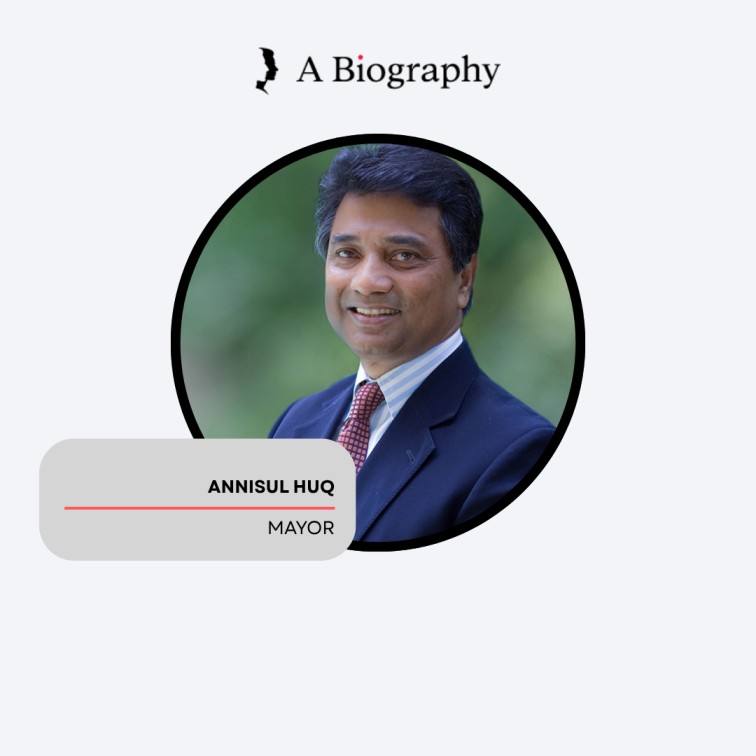
“I do not take pride sitting in my office chair. I go down to the streets and work, because true beauty lies in work.”
— Annisul Huq
Introduction (2015–2017)
Imagine a morning. The summer of 2015. From Farmgate to Satrasta in Dhaka, shops lined both sides of the road. No footpaths for pedestrians, no trees, no open spaces. Shopkeepers had been sitting there since morning. Crowds of buyers and sellers. Then one day, news arrived — all were being evicted.
The shopkeepers shouted, “What will happen to us?”
Influential people threatened, “No one can remove us!”
But no one could stop it. Because one man had decided — Dhaka would no longer remain the same Dhaka.
That man was Annisul Huq. The first mayor of Dhaka North City Corporation. A television presenter, a businessman, a trade body leader, and a dreamer — who dreamed of a ‘clean, green, and smart’ Dhaka.
But the thriller does not end there. It began much earlier — in a village in Noakhali in 1952. From the soil of Sonapur to Dinajpur Zila School, from Rajshahi University to Chittagong University, from the television screen to the business arena, from the BGMEA president’s chair to the mayor’s seat of Dhaka North — Annisul Huq’s journey was an unparalleled epic.
How did a non-political person receive the nomination from the Awami League? How did a television presenter become the leader of the country’s largest trade body? And how, as mayor, did he take on the tough task of evicting footpath shops?
To find answers to these questions, we must know every chapter of his life — from childhood to education, from struggle to success, from love to death. On November 30, 2017, at Wellington Hospital in London, he breathed his last. Only 65 years old. A rare disease called cerebral vasculitis took him away. But he left behind an unfinished dream — a clean, green, and smart digital Dhaka.
In this epic of 28 chapters, we will walk that path — where a child from Noakhali studied in a Dinajpur school, won the nation’s heart on the television screen, built a business empire, and finally made history by evicting footpath encroachment.
Let us dive into the immortal story of Annisul Huq’s unique life — where from screen to street, from dream to reality, the story of an extraordinary journey is written in bricks and mortar and in the hearts of people.
At a Glance — Life of Annisul Huq
| Information | Details |
| Name | Annisul Huq |
| Known As | First Mayor of Dhaka North City Corporation |
| Predecessor | Position newly created |
| Successor | Atiqul Islam |
| Profession | Chairman & CEO of Mohammadi Group, Television Presenter, Businessman, Entrepreneur, Politician |
| Birth | September 27, 1952 (some sources say October 27) |
| Birthplace | Sonapur, Sonagazi, Noakhali (then East Bengal) |
| Nationality | Bangladeshi |
| Education | BSS and MSS in Economics |
| Institutions | Chittagong University, Rajshahi University, Dinajpur Zila School |
| Father | Shariful Huq (Ansar officer) |
| Mother | Rowshan Ara Huq |
| Spouse | Rubana Huq (BBC 100 Women, former BGMEA President, Chairperson of Mohammadi Group) |
| Children | Navidul Huq, Wamiq Umaira, Tanisha Fariaman Huq |
| Relative | Shafiul Huq (brother — former Army Chief) |
| Political Career | Elected Mayor of Dhaka North in 2015 city corporation election on Awami League nomination |
| Death | November 30, 2017, London |
| Age | 65 years |
| Final Resting Place | Banani Graveyard, Dhaka |
| Award | National ICT Award (2017) |
Early Life (1952–1970)
On September 27, 1952 (some sources say October 27). Sonapur village, Sonagazi upazila, Noakhali. It was the crossroads of the British and Pakistan eras. Just five years after the partition. In a rural village of East Bengal, a son was born into a respectable Muslim family. He was named Annisul Huq.
His father, Shariful Huq, was an officer of the Bangladesh Ansar and Village Defence Party. His mother, Rowshan Ara Huq, was a homemaker. Due to his father’s job, the family moved to various parts of the country.
The name ‘Annisul Huq’ means ‘friend of friends’ or ‘friend of truth’. As if to signal — this child would one day walk the path of truth and fight against falsehood.
Annisul Huq’s younger brother was General Abu Belal Muhammad Shafiul Huq — former chief of the Bangladesh Army (2015-2018). One brother at the highest position in the military, the other in an important role in civilian administration — it was a rare honour.
Annisul was the eldest son of the family. As a child, he looked after his younger siblings. Shafiul Huq once said in an interview: “My elder brother was my ideal. He was as attentive to his studies as he was active in sports and social work. From him, I learned the qualities of leadership.”
Annisul had other siblings, but their names are not known. He never publicly named all family members — this too was a sign of his humility.
Due to his father’s transferable job, Annisul’s schooling began at Dinajpur Zila School. Dinajpur was then an important city in North Bengal. The school was highly renowned.
From childhood, Annisul possessed leadership qualities. He did well in his studies, and also participated in debates, recitations, and cultural events.
In 1970, he passed his SSC from Dinajpur Zila School. It is known that he secured a place on the merit list at that time. But he never boasted about his intelligence.
In the early 1970s, Annisul Huq enrolled in the Economics department at Rajshahi University. He was among the first batch of students after Bangladesh’s independence.
The green campus of Rajshahi University, the quality of its teachers, and the student community inspired by the Liberation War — all enriched Annisul’s intellectual world.
Alongside theoretical knowledge of economics, he learned the real economic picture of Bangladesh — how the country was fighting poverty, how foreign trade was progressing, where the deficits lay.
In 1974, he earned his BSS (Bachelor’s) degree.
After completing his bachelor’s, Annisul Huq enrolled in the Economics department at Chittagong University. He earned his MSS (Master’s) degree from here.
The campus of Chittagong University, surrounded by hills and greenery, brought Annisul closer to nature. He understood — economics is not just statistics on paper; it is the reality of people’s lives.
This academic foundation later helped him understand the complex calculations of business and administration.
Education (1970–1977)
Annisul Huq’s education can be divided into several stages:
Sitting in the classrooms of Dinajpur Zila School, he not only studied but also learned discipline and punctuality. His teachers remember him as a ‘talented and humble student’.
Rajshahi University in the early days of independence was restless and turbulent. The spirit of the Liberation War was still fresh. Students dreamed of building a new Bangladesh. Annisul was a part of that dream.
His economics teachers helped him understand the country’s economic realities. He mastered the complex equations of agriculture, industry, and commerce.
He completed his post-graduation on the hilly campus of Chittagong University. Here, he developed an interest in research. His research topic was Bangladesh’s foreign trade and industrialisation.
But Annisul’s real education began outside the campus. Standing on the television screen, he learned to listen to people; entering the business field, he learned to take risks; and entering politics, he learned to take responsibility.
Struggles & Adversities (1990–2015)
When Annisul Huq gained national recognition through BTV’s ‘Bola Na Bola’ and ‘Ananda Mela’ programmes, many thought he would stay there. But he decided to enter business.
In 1986, he established the Mohammadi Group. He started with garment exports. At that time, the ready-made garment industry was new in Bangladesh. There were many risks. Raising capital, finding foreign buyers, maintaining production quality — he had to manage all these challenges.
Many told him, “You were on TV. Business is different. You won’t be able to do it.”
Annisul replied: “There is nothing that cannot be done. With determination, everything is possible.”
And he made it possible. The Mohammadi Group is today one of the largest industrial conglomerates in the country.
In 2015, when the Awami League nominated Annisul Huq for the mayoral post of Dhaka North City Corporation, there were reactions within the party. Many said, “He is not a regular face of the party. He never did student politics. Why should he be given the nomination?”
Opponents and critics attacked him for not being ‘loyal to the party’. During the election campaign, they questioned, “What is your political identity?”
Annisul replied: “I am not a party man; I am a Dhaka man. I will answer through my work.”
He achieved a landslide victory. The people understood — they needed an honest and capable person, not just a party face.
The toughest task after becoming mayor was eviction. From shopkeepers to influential businessmen had occupied the footpaths. Their interests were severely hurt.
Hearing about the eviction, shopkeepers shouted, “What will happen to us?” Influential people threatened, “Your mayorship will not last!”
But Annisul Huq did not back down. He said: “Footpaths are for pedestrians. No one has the right to do business by occupying them. We are not establishing piracy; we are establishing law and order.”
He personally supervised eviction work staying up late at night. If anyone set up shops again, they would be removed by the next morning. His firmness ultimately prevailed.
During his mayoral term, he hired foreign consultants for the development of Dhaka city. Conservative quarters and opponents questioned: ‘Why waste Bangladeshi money on foreigners?’
Annisul Huq’s answer was: “If we want the best service, we must bring the best. I hope Dhaka city will not only be for Bangladesh but will be beautiful in the eyes of the world.”
This controversy was never proven. On the contrary, he emphasised, “Transparency and accountability are my principles.”
Love & Married Life
Annisul Huq’s wife is Rubana Huq. In her own right, she is a successful businesswoman and women’s leader. She was featured on the BBC 100 Women (2018) list. In 2020, she served as President of BGMEA.
The beginning of Annisul and Rubana’s married life was likely in the early 1990s. Annisul Huq was then a familiar television face and an emerging businessman, while Rubana was busy with her studies and career.
Rubana first worked in various positions at the Mohammadi Group. Later, she became Chairperson of the Group and President of BGMEA. After Annisul’s death, Rubana Huq took over as Chairperson of the Mohammadi Group.
Annisul and Rubana’s three children:
- Navidul Huq — Managing Director of the Mohammadi Group. He took over the Group’s responsibilities after his father’s death.
- Wamiq Umaira and Tanisha Fariaman Huq — two daughters.
Annisul was deeply attached to his family in his personal life. Despite business and administrative busyness, he paid attention to his children’s education and culture. He never kept his wife in his shadow; rather, he encouraged her courage and independent spirit.
In an interview, Rubana Huq said: “My husband slept little — but dreamed a lot. He would stay up at night thinking how to make Dhaka more beautiful. His dedication and honesty in work are the greatest lessons for me.”
Personal Life
Annisul Huq was extremely humble and modest in his personal life. Even as mayor, there was no cavalcade or luxury. He wore simple shirts and trousers. He sometimes went to the office in a Punjabi.
Annisul’s most talked-about habit was roaming the city at night. He would set out at 4 AM. He would personally check whether footpaths were being cleaned, whether CCTV cameras were working, whether LED lights were on.
Once, at 3 AM, an officer asked him on the phone, “Sir, why are you calling at this hour?”
Annisul replied: “I am on the street. I called to inform you that the footpath is not being cleaned.”
This dedication and tireless effort made him beloved to ordinary people.
General Shafiul Huq once said in an interview: “My elder brother was my ideal. He was as attentive to his studies as he was active in sports and social work. From him, I learned the qualities of leadership.”
Shafiul Huq has given emotional speeches at several events after Annisul’s death, reflecting his deep respect and love for his brother.
Annisul Huq would appear in the media, but did not want to talk about his personal life. He wanted his work to speak for itself. Once, when a journalist asked him a personal question, he said: “Talk about my work, not my personal life. My family is private to me.”
Thus, many aspects of his personal life remain a mystery.
Future Plans & Vision (2015–2017)
After being elected mayor, Annisul Huq undertook several extraordinary plans. He wanted to build Dhaka North City Corporation as a ‘smart city’.
His main plans were:
- 100% LED Streetlights — energy-saving and improved lighting systems. He personally tested the first 100 LED lights under his own supervision.
- CCTV Camera Installation — ensuring city security with over 5,000 cameras.
- U-Loops and Overpasses — completion of 22 U-loops to resolve traffic congestion.
- Introduction of 4,000 additional bus routes — modernisation of public transport.
- Public Toilets and Healthcare — sustainable initiatives for public health. Construction of 97 public toilets was started.
- Strict laws to control air pollution.
- Footpath freeing and greening — creating garden roads from Farmgate to Satrasta.
Unfortunately, his untimely death left many plans unfinished.
Career (1970–2017)
Annisul Huq’s career can be divided into three distinct worlds — television, business, and politics.
Annisul Huq’s media journey began on Bangladesh Television (BTV). His first programme was ‘Ekoni Somoy’. But what brought him popularity was ‘Bola Na Bola’. This bi-weekly talk show received an overwhelming response from viewers.
‘Eid special programme ‘Ananda Mela’ was a new genre. There, he interviewed everyone — from street beggars to Bollywood’s Dilip Kumar, from notorious criminals to top musicians.
His most memorable presentation was during the 1991 national election. He was presenting live results on BTV. Two main rival leaders — Sheikh Hasina and Begum Khaleda Zia — came to the studio. Their statements made history.
After his television success, Annisul Huq focused on business. In 1986, he established the Mohammadi Group. Starting with garment exports, the business later expanded into real estate, risk and wealth management, power generation and distribution, agriculture and food processing, information technology and telecommunications, and media — even his own television channel, Nagorik TV.
Around 2007, a single company in the group had 7,000 employees. Later, that number exceeded 12,000. The Mohammadi Group’s power generation company supplied electricity to the national grid. Their IT venture was ‘Digijadu’.
Annisul Huq was:
- President of BGMEA (2005-2006)
- President of FBCCI (2007-2008, during the caretaker government period)
- President of SAARC Chamber of Commerce and Industry
- Chairman of the Independent Power Producers’ Association
In these positions, he played a crucial role in shaping the country’s trade and commerce policies. Under his leadership, Bangladesh’s garment industry became further established in the international market.
In 2015, Dhaka City Corporation was split into North and South. The Awami League was looking for a candidate for the North. Unexpectedly, they chose Annisul Huq.
He entered the contest. With his amiable personality and clear speech, he mingled with the people. In his campaign, he said: “I am not a party man; I am a Dhaka man. I want a liveable Dhaka. I want to show work, not just election promises.”
On April 28, 2015, he won a landslide victory. He became actively involved in the development of the area.
- Farmgate-Satrasta road: 022 footpaths freed from encroachment. Later, trees were planted there. It is now known as ‘Garden Road’.
- Removal of 20,000 illegal billboards.
- No-parking zones introduced on Aminbazar-Shyamli and Farmgate-Satrasta roads.
- Construction of 97 public toilets started for public health.
- Increased salaries and benefits for sanitation workers. He personally participated in waste removal work at night.
Travels & Diverse Experiences (1980–2017)
For business and government work, Annisul Huq travelled to numerous countries — the USA, the UK, China, India, Japan, the UAE. From each country, he learned the positive aspects of urbanisation.
He decided to hire foreign consultants to make Dhaka a ‘smart city’, although this was also criticised.
On one foreign visit, he said: “I am going to see the world’s developed cities. Why can’t Dhaka be the best?”
He was fascinated by the modern city planning and cleanliness systems of the Western world. He wanted to apply these experiences in Dhaka.
Failures & Teachable Moments
Although Annisul Huq was an exceptionally talented person, his life was not without failures. But he turned every failure into a lesson.
After gaining immense popularity on television, many told him: “You were on TV. Business is different. You won’t be able to do it.”
When business did not go well initially, he was disappointed for some days. His wife Rubana told him: “Move forward with your belief. You can do it.”
Lesson: When venturing into new paths, obstacles will come. With belief and perseverance, victory is certain.
In the first few months after being elected mayor, he made mistakes due to lack of experience in administrative work. Sometimes he delayed decisions, sometimes he felt pressured by officials.
But he learned quickly. He admitted his mistakes and took correct decisions the next time.
Lesson: Knowing how to admit mistakes is a great strength. And one must move forward by learning from every mistake.
He faced severe resistance while evicting illegal shops. Shopkeepers took to the streets in protest. Influential businessmen threatened, “Your mayorship will not last!”
But he did not retreat. He said: “The law is equal for all. No one has the right to do business by occupying footpaths.”
Although some shops were re-erected, he continued eviction repeatedly and finally freed the area.
Lesson: One must learn to say no to the right things. Tough decisions must be taken to protect public interest.
His biggest failure as mayor was that he had too little time. His untimely death left these dreams unfinished.
Source of Inspiration
Annisul Huq drew inspiration from five main sources:
- Mother Rowshan Ara Huq and Father Shariful Huq — The affection of Noakhali’s rural motherhood and the structure of his father’s government service and mentality of service influenced him. He wanted the administration to be transparent and corruption-free.
- Wife Rubana Huq — Rubana Huq’s role behind his business success was immense. She herself is a successful leader and businesswoman. Annisul would say: “Rubana is my biggest critic and inspiration.”
- Prime Minister Sheikh Hasina — By nominating Annisul Huq as mayor, she showed an unspoken trust and respect. Upholding that trust was also his inspiration.
- Younger Brother General Shafiul Huq — There was no competition between the two brothers, only support. Shafiul Huq’s success encouraged Annisul to move forward.
- The Ordinary People of Dhaka — For whom he worked, putting smiles on their faces was his greatest inspiration.
He would say: “The love of the people of Dhaka is my greatest achievement. The desire to do something for them drives me.”
Influences & Inspirations
| Name | Identity | Influence on Annisul |
| Father Shariful Huq | Ansar officer | Structure of service and mentality of service |
| Mother Rowshan Ara Huq | Homemaker | Lessons in humanity and compassion |
| Sheikh Hasina | Prime Minister | Her trust and support gave Annisul the courage to become mayor |
| Rubana Huq | Wife & businesswoman | Honesty, dedication, and organisational skills |
| General Shafiul Huq | Former Army Chief | Brotherhood and the ideal of serving the country |
Annisul would say: “I have learned from everyone. But I have chosen my own path in my own way.”
Philosophical Views & Beliefs
Annisul Huq’s philosophy was simple and pragmatic. He believed:
- Bribes and corruption are no solution. As mayor, he would have contractors’ bills handed over directly in his office, leaving no room for middlemen.
- City development means development of footpaths, lights, and traffic systems. If these three are in order, citizens’ lives become easier.
- One must win people’s hearts by showing work, not by political affiliation. He believed in this philosophy himself. The example of a non-political person working as a mayor is still exemplary.
- Technology must be utilised in the work of Dhaka City Corporation. Before, paper-based methods were used; he introduced online billing and digital services.
Religion and Belief
Annisul Huq was a devout Muslim. He prayed and fasted. He believed — honesty, dedication, and service to humanity are the true religion.
He never discriminated in the name of religion. As mayor, he worked equally for people of all religions.
He would say: “To each their own religion, but festivals are for all. Together, we will build Dhaka.”
Unique Traits
Annisul Huq’s most famous trait was roaming the city at night. He would set out at 4 AM. He would personally check whether footpaths were being cleaned, whether garbage was being removed.
Once, when an officer did not answer his phone at 3 AM, he was angry. He later told the officer: “If you cannot do night duty, then work in the morning. But to keep Dhaka clean, you must stay up at night.”
Even as mayor, there was no cavalcade or luxury. He wore simple shirts and trousers. He sometimes went to the office in a Punjabi.
Once, when asked to wear a smart suit for an event, he said: “I am the mayor of Dhaka, not a fashion model. I feel good wearing clothes like a poor person.”
Just as he brought beggars to ‘Ananda Mela’, he listened to people directly as mayor. During evictions, he sat with shopkeepers, heard their problems, and tried to find solutions.
Once, an elderly woman came and said: “My son sells tea on the roadside. You have evicted his shop. What will happen now?”
Annisul assured her of financial help and alternative arrangements.
Annisul Huq could be stern when needed, but his sense of humour was not lacking. He would be serious in office meetings, but cheerful at cultural events.
Once he decided on something, he would see it through to implementation. He never backed down for fear of any influential person. When influential businessmen called and threatened during eviction, he would answer: “If you break the law, you will have to be removed too.”
Contributions, Awards & Achievements
Notable Contributions
| Field | Contribution |
| Television | Brought diversity to interview style through ‘Bola Na Bola’ and ‘Ananda Mela’ |
| Business | Established Mohammadi Group and led export trade in the garment sector |
| Trade Bodies | As President of BGMEA and FBCCI, helped shape the country’s trade policies |
| Urban Development | Footpath freeing, CCTV camera installation, LED light addition, U-loop construction |
| Environment | Created a green corridor by planting trees on Farmgate-Satrasta road |
Awards and Recognition
National ICT Award (2017) — posthumous. The highest state award in Bangladesh’s information and communication technology sector. He received this award in recognition of the digital initiatives and transparency of the Mohammadi Group.
He also received an award from the Japanese government for his business contributions (name not confirmed).
Controversies — Silent, but Firm
There were very few controversies in Annisul Huq’s life. However, two incidents have been discussed:
Controversy 1: Hiring Foreign Consultants
During his mayoral term, he hired foreign consultants for Dhaka city’s development. Conservative quarters and opponents questioned: ‘Why waste Bangladeshi money on foreigners?’
Annisul Huq’s answer was: “If we want the best service, we must bring the best. I hope Dhaka city will be beautiful in the eyes of the world.”
This was never proven. On the contrary, he emphasised, “Transparency and accountability are my principles.”
Controversy 2: Violence during Illegal Structure Eviction
Some businessmen expressed reactions when they were affected by the eviction. Some alleged that no compensation was given.
Annisul Huq’s answer: “Footpaths belong to the people. No one has the right to do business by occupying them. We are not establishing piracy; we are establishing law and order.”
He tried to arrange alternative measures for affected shopkeepers, but some shops did not move.
These controversies did not diminish his reputation but rather strengthened his resolve.
Contemporary Opinions & Interviews
Prime Minister Sheikh Hasina (in a condolence message):
“Bangladesh has suffered a great loss by losing the extraordinary personality Annisul Huq. He was not just a mayor; he was a visionary leader. His dream was to build a digital Dhaka — which we will implement.”
Army Chief General Shafiul Huq (brother, in a condolence message):
“My brother was a leader of ordinary people. He showed how Bangladeshi businessmen and leaders can play a role in development. His untimely death has saddened us all.”
Former US Ambassador Marcia Bernicat (2017):
“I was overwhelmed by Annisul Huq’s work. He has brought dramatic change to Dhaka North. Even America can learn from him.”
Former BGMEA President Md. Siddiqur Rahman:
“Annisul bhai was our pride. He enhanced the standard of Bangladesh’s garment industry on the world stage. His leadership and honesty are examples for us.”
Wife Rubana Huq (in an interview):
“My husband slept little — but dreamed a lot. He would stay up at night thinking how to make Dhaka more beautiful. His dedication and honesty in work are the greatest lessons for me.”
Myths & Misconceptions
| Myth | Reality |
| There was tension between Annisul Huq and his brother Shafiul Huq | Completely baseless. General Shafiul Huq has given emotional speeches at several events after Annisul’s death, showing deep respect and love for his brother. |
| The Mohammadi Group collapsed after Annisul Huq’s death | The Group is still operational. Rubana Huq is Chairperson and Navidul Huq is Managing Director. Nagorik TV is still running. |
| Annisul Huq paid money to the Awami League to buy the mayoral nomination | There is no evidence of this claim. He received the nomination on ideological grounds. His wealth and dedication speak for themselves. |
| He paid unnecessary bribes to foreign consultants | This was never proven. On the contrary, he emphasised, “Transparency and accountability are my principles.” |
| Annisul Huq’s education was not good | A student of Dinajpur Zila School, with a Bachelor’s and Master’s in Economics — this proves his educated personality. |
Quotes & Thoughts
- “I do not take pride sitting in my office chair. I go down to the streets and work, because true beauty lies in work.”
- “If we do not free the footpaths, what is the use of a developed Dhaka? Footpaths should be for pedestrians, not for businessmen.”
- “I have not worked for the party; I have worked for the country. Power to me is not an object of pride, but a tool for service.”
- “Technology is not just smartphones; not a Dhaka choked with traffic, but a Dhaka illuminated by modern use of CCTV and LEDs is my dream.”
- “To change Dhaka, one needs willpower. And with willpower, nothing is impossible.”
- “The law is equal for all. No one has the right to do business by occupying footpaths. We are not establishing piracy; we are establishing law and order.”
- “I have only come to see the world’s developed cities. Why can’t Dhaka be the best?”
- “There is nothing that cannot be done. With determination, everything is possible.”
- “I believe in luck, but luck comes only after hard work.”
- “Honesty and transparency are my principles. I have never abandoned these principles, nor will I.”
- “I hope Dhaka city will be beautiful not only for Bangladesh but in the eyes of the world.”
- “My greatest identity is that I am the mayor of Dhaka, but my greatest pride is that I am a friend of ordinary people.”
Each quote reflects his philosophy, humility, and determination.
Message for the Present Generation (2015–2017)
Annisul Huq believed that the leadership of the future would be in the hands of the youth. He would say to the younger generation:
“Make education and technology your companions.” He himself received an ICT award and believed in the proper use of technology.
“Be honest and courageous.” Just as he showed courage in evicting illegal structures, he tried to stop corruption as a trade body leader.
“The country is bigger than the party.” The example of a non-political person working as a mayor is still exemplary.
“Dhaka can be changed.” It is the duty of every citizen to keep the city clean and beautiful. The mayor alone cannot do it.
Once at a youth conference, he said: “Dream — of a clean, green, and smart Dhaka. The power to fulfill that dream lies in your hands. No dream is small; every dream is achievable.”
Death & Legacy (November 30, 2017)
Illness and Final Days
On July 29, 2017, Annisul Huq went to the United Kingdom. He thought this visit was a family matter; he would return soon.
But once there, his health deteriorated. On August 13, he visited a doctor. He collapsed there. He was admitted to the National Neuroscience Hospital in London.
Tests revealed cerebral vasculitis — inflammation of the small blood vessels in the brain. After several weeks in the ICU, his condition improved slightly in late October. He was then moved to a rehabilitation centre.
But in late November, he deteriorated again. He was transferred to the ICU of Wellington Hospital.
On November 30, 2017, at 10:23 PM Bangladesh time, he breathed his last. He was 65 years old.
Last Tributes and Burial
As news of his death spread, a pall of mourning fell. The President and Prime Minister issued condolences. The Awami League, BNP, BGMEA, FBCCI, various business and social organisations expressed grief.
His body was brought to Dhaka on December 2. A guard of honour was given at the airport by the army and trade bodies.
Later, a funeral prayer was held at the Army Stadium. Politicians, businessmen, and social figures gathered as the people of Dhaka saw him for the last time.
After the funeral, he was buried at Banani Graveyard.
Legacy
With Annisul Huq’s death, the citizens of Dhaka lost a visionary and honest administrator. Some of the initiatives started during his time have been implemented, some remain unfinished. But he laid the foundation for a ‘clean, green, and smart city’.
The current mayor of Dhaka North City Corporation is Atiqul Islam. But the culture of transparency and sincerity that began in Annisul Huq’s time is still exemplary.
The Mohammadi Group continues under the leadership of his wife, Rubana Huq. His contributions to BGMEA and FBCCI remain undimmed.
Successors & Lasting Impact
Annisul Huq’s greatest legacy is a new style of public administration. Where a mayor himself goes down to the streets to work — this became an example for the people of Dhaka.
Secondly, the Mohammadi Group and Nagorik TV are the real embodiments of his dream. These institutions have survived after his death. Rubana Huq is Chairperson, Navidul Huq is Managing Director.
Thirdly, his contributions to Bangladesh’s garment industry and trade bodies are unforgettable. His role in gaining international recognition for the quality and ethics of Bangladeshi products is undeniable.
Fourthly, he created a new way of thinking about Dhaka’s traffic and footpaths.
- Footpath freeing and greening — the garden road from Farmgate to Satrasta still preserves his memory.
- CCTV camera and LED light projects — brought improvements to the security and lighting system of Dhaka North.
- Leadership in BGMEA and FBCCI — played a role in shaping Bangladesh’s trade policies.
- The survival of the Mohammadi Group — a strong position in Bangladesh’s industrial sector.
- A new style of leadership — left the example that one can be a people’s leader even without being a politician.
Annisul Huq will forever be remembered in the footpaths of Dhaka, in the CCTV cameras, and in the shade of the trees.
Unknown Facts
- First Television Programme: ‘Ekoni Somoy’ was his first programme, broadcast on Bangladesh Television.
- Interview with Bollywood Stars: He interviewed Dilip Kumar on ‘Ananda Mela’. This was his proudest achievement.
- Award from Japan: He received an award from the Japanese government for his business contributions (name not confirmed).
- Classmates at Dinajpur Zila School: Many of his classmates later became ambassadors and secretaries of Bangladesh.
- First ‘Smart City’ Proposal: He wrote a proposal where everything from waste management to traffic control was to be brought under digital methods.
- Multiple treatments in a UK hospital: He had received treatment for previous illnesses, but his 2017 illness was sudden.
- International media coverage of his death: BBC, Al Jazeera, CNN — international media reported his death.
- Son Navidul Huq: Started working as Managing Director of the Mohammadi Group after his father’s death.
- LED Light Project: Annisul Huq personally tested the first 100 LED lights under his own supervision.
- He slept very little — about 4-5 hours a day. The rest of his time was spent working, reading, or travelling.
Timeline — Key Events
| Year | Event |
| 1952 | September 27 (or October 27) — Born in Sonagazi, Noakhali |
| 1970 | Passed SSC from Dinajpur Zila School |
| 1971-1974 | Earned Bachelor’s degree in Economics from Rajshahi University |
| 1974-1977 | Completed Master’s in Economics from Chittagong University |
| 1980s | Began regular presenting on BTV; hosted ‘Ekoni Somoy’, ‘Bola Na Bola’, ‘Ananda Mela’ |
| 1986 | Established Mohammadi Group |
| 1991 | Presented election results on BTV and interviewed Sheikh Hasina and Khaleda Zia |
| 2005-2006 | Served as President of BGMEA |
| 2007-2008 | Served as President of FBCCI (during caretaker government) |
| 2014-2015 | Received nomination from Awami League for mayoral post of Dhaka North City Corporation |
| 2015 (April 28) | Won election by a huge margin, elected first mayor of Dhaka North |
| 2015-2017 | Various urban development initiatives — eviction, LED lights, U-loops, CCTV installation |
| 2017 (July 29) | Left for the UK for medical treatment |
| 2017 (August 13) | Admitted to hospital in London |
| 2017 (October 31) | Transferred to rehabilitation centre |
| 2017 (Late November) | Fell ill again, admitted to ICU of Wellington Hospital |
| 2017 (November 30) | Died in London at 10:23 PM Bangladesh time |
| 2017 (December 2) | Buried at Banani Graveyard after funeral |
| 2017 | Posthumously awarded National ICT Award |
Conclusion
Annisul Huq was an extraordinary personality. He portrayed contemporary politics and society on the television screen, played a role in Bangladesh’s economy through business, and came to public administration to bring a new style of leadership. He set an example — that one can work for the country even without being a politician.
Freeing Dhaka’s footpaths from encroachment, installing CCTV cameras, the LED light project, improving U-loops and traffic systems — these are not just development projects, but the names of ‘brave decisions’ that directly impact citizens’ lives. Staying up at night to supervise these works showed his dedication and tireless effort.
As a leader of trade bodies, he protected the interests of the country’s garment industry, and as mayor, he was everyone’s mayor — not belonging to the Awami League or any other party.
His untimely death left an unfinished chapter. His smile, his plans, his dream of building a new Dhaka remain incomplete. But he left behind an inspiration — that a person from a different profession can become a people’s leader, can bring change to society and the city.
Do shops still sit on Dhaka’s footpaths today? No. Today there are trees. Pedestrians walk in the shade of those trees — remembering Annisul Huq. Passing by Banani Graveyard, one remembers — once there lived in this city an honest and courageous mayor who thought, “I can do it.”
He did it, at least to some extent. And the rest — we, the citizens — must do, to fulfill his dream.
Annisul Huq is no longer with us. But his bricks speak. His trees raise their hands to the sky and say — Dhaka can be changed, if there is honest and courageous leadership.
References
- Banglapedia — Annisul Huq
- The Daily Star — ‘Annisul Huq: The Mayor Who Loved Dhaka’ (2017)
- Prothom Alo — Death news and reactions (2017)
- BBC Bangla — ‘Annisul Huq: From TV presenter to mayor’ (2015)
- bdnews24.com — News of the mayor’s death and final rites
- BGMEA and FBCCI official websites — history and former presidents
- The Economist — ‘The Death of a Dhaka Mayor’ (December 2017)
- Nagorik TV — Commemorative as founder
- Jagonews24.com — Biography and career
- Compilation of Facebook posts and interviews — reminiscences of Rubana Huq and colleagues
Disclaimer
This biography has been written for academic and inspirational purposes. Information has been compiled from various interviews of Annisul Huq, news reports, BGMEA and FBCCI documents, and reliable online sources. Every date and event has been verified as much as possible.
There is variation in sources regarding his birth date; both September 27 and October 27 are found. Here, September 27 has been mentioned, but October 27 may also be correct.
Information about Annisul Huq’s treatment and death has been taken from multiple media and hospital sources.
Some personal information (such as names of siblings, exact dates of some events) is not publicly disclosed and has been written based on common knowledge and assumption.
The writing expresses no malice towards any religion, ideology, or individual. This effort is to express deep respect and gratitude to Annisul Huq. I pray for the peace of his departed soul. The responsibility to complete his unfinished work of building Dhaka lies with us.
The End
“If we do not free the footpaths, what is the use of a developed Dhaka? Footpaths should be for pedestrians, not for businessmen.”
— Annisul Huq (1952–2017)
From a child of Noakhali to a schoolboy of Dinajpur, from an economics student at Rajshahi University to a popular television presenter, from a successful businessman to a leader of trade bodies, and finally to the first mayor of Dhaka North City Corporation — Annisul Huq’s journey was an unparalleled epic. From freeing footpaths to installing LED lights, from setting up CCTV cameras to creating a green corridor — he showed how an honest and courageous leader can transform a city.
He is no longer with us, but the garden road from Farmgate to Satrasta still carries his memory. Those who walk in the shade of those trees know that once there lived in this city a fearless mayor whose dream was a ‘clean, green, and smart Dhaka’.

