
Biography
A Biography of Ahmed Imtiaz Bulbul

Introduction
22 January 2019. The darkness of dawn had not yet lifted. A man breathed his last in his own residence in Aftabnagar, Dhaka. He was 63 years old. Cardiac arrest stopped the hundreds of melodies in his soul, halting the magic of countless unfinished tunes. He was Ahmed Imtiaz Bulbul – at once a freedom fighter, music director, lyricist, composer, columnist, and witness to the trial of war criminals. As news spread, Dhaka city seemed immersed in grief. From Prime Minister Sheikh Hasina to opposition leader Khaleda Zia, from star artists of the music scene to ordinary people – everyone expressed their condolences. Why such mourning? Because he was the creator of that immortal melody that reached every home in Bengal. And he was a living document of the Liberation War, who fought with a weapon at fifteen and was later confined to house arrest under police guard for testifying in the trial of war criminals. He was a man of extraordinary talent and a sharp seeker of truth.
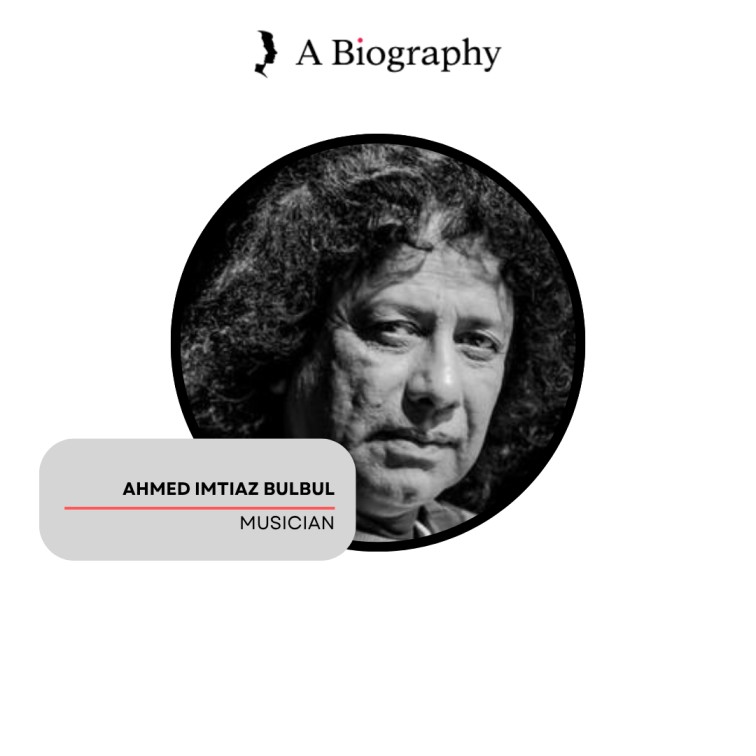
“Don’t let me be forgotten… so I posted a picture to remind you of my face.”
— Ahmed Imtiaz Bulbul’s last Facebook post, 2 January 2019
At a Glance: Life of Ahmed Imtiaz Bulbul
| Information | Details | Thriller Note |
| Full Name | Ahmed Imtiaz Bulbul | ‘Bulbul’ means nightingale – a symbol of music |
| Nickname | Bulbul | A legend in Bengali music under the name Bulbul |
| Birth | 1 January 1956, Dhaka (then East Pakistan) | The birth of a new melody on the first day of the new year |
| Death | 22 January 2019, Dhaka (age 63) | Breathed his last due to heart disease |
| Father’s Name | Wafiz Ahmed (Wajid Uddin Ahmed) | Government employee |
| Mother’s Name | Efad Ara Nazimunnesa (Iffat Ara) | Homemaker |
| Siblings | Iftekhar Uddin Ahmed Tutul, Ahmed Miraj | Tutul was also a freedom fighter; Miraj was killed in 2015 |
| Education | West End High School, Azimpur, Dhaka | No formal music education; self-taught talent |
| Profession | Music Director, Lyricist, Composer | Active from the late 1970s until 2019 |
| Participation in Liberation War | In 1971 (age 15) under Commander Major Abu Taher Mohammad Haider in Sector 2 | Teenage freedom fighter, armed combat |
| Imprisonment | Arrested in Brahmanbaria in October 1971; witnessed the massacre of 39 comrades on 16 November; escaped after snatching a weapon | Dangerous escape to save his life |
| Marriage | Shabnam Imtiaz (divorced) | Only son: Samir Imtiaz |
| Child | 1 son (Samir Imtiaz) | Son skilled in music and computer technology |
| First Film as Music Director | ‘Megh Bijli Badol’ (1978) | ‘Noyoner Alo’ (1984) was the milestone of success |
| Highest Honours | National Film Awards (Best Music Director) 2001 & 2005; Ekushey Padak (2010); Shikha Anirban Padak; President’s Award | Achieved the highest honours of Bangladesh |
| Total Work in Music | Music direction for over 350 films, over 1,000 songs, 9 albums | One of the most successful directors in the history of Bengali cinema |
Hidden between the lines of each entry in the table are stories of courage, melody, and sacrifice. Especially the columns ‘Participation in Liberation War’ and ‘Imprisonment’ – the extraordinary documentation of how a fifteen-year-old boy fought against the Pakistani army and did not surrender even in the face of death.
Early Life and Family Background (1956-1970)
On 1 January 1956, in the pre-independence Pakistani era, Ahmed Imtiaz Bulbul was born in a modest colony in Azimpur, Dhaka. His father, Wafiz Ahmed (also pronounced Wajid Uddin Ahmed), was a government employee; his mother, Efad Ara Nazimunnesa (Iffat Ara), was a homemaker. He received the nickname ‘Bulbul’ (nightingale) from childhood for his sweet voice; that later became his identity in music. Bulbul’s childhood was shaped by the narrow alleys of Azimpur Colony, broken roads, playing with neighbour children, and school lessons. He was very naughty and independent-minded. However, his pull towards music was evident from a young age; he would hum along to songs on the radio.
Bulbul was the youngest of three brothers – elder brother Iftekhar Uddin Ahmed Tutul and middle brother Ahmed Miraj. He passed his SSC from West End High School (Azimpur) but had no formal training in music. As he himself said, he never formally learned music from any teacher; he mastered the magic of melody by listening to the radio and through his own efforts. Alongside his studies, Bulbul had a strong rebellious spirit and patriotism from childhood. Through his father, he closely observed politics and the movement for self-determination. The 1969 mass uprising and the 1970 election inspired him with the spirit of independence at a young age. His elder brother Tutul had already decided to join the Liberation War. Bulbul also informed his father that he too would go to war. His father could not discourage him; instead, he expressed his pride and blessings.
The Fifteen-Year-Old Revolutionary
March 1971. The sky of Bengal was turbulent. On the dark night of 25 March, when the Pakistani army attacked innocent Bengalis, Bulbul was only 14 years and 2 months old (officially referred to as 15). He did not delay. He formed a resistance group with his friends Khoka (Khokon), Manik, Mahbub, and several others. Their base was in Jinjira, Dhaka. This group secretly collected firearms by stealing them from Pakistani soldiers and made their own grenades. While patrolling the New Market area, they gathered intelligence on army movements. In July 1971, they conducted their first operation, attacking a Pakistani army lorry at Gate No. 1 of New Market with grenades. The attack caused casualties to the Pakistani forces and created intense reactions in the area.
After the operation, they realised that full-fledged warfare required professional training. So they decided to go to India. Reaching the training camp in Agartala, they received training under Major Abu Taher Mohammad Haider, commander of Sector 2 of the Mukti Bahini. After about a month of intense guerrilla training, Bulbul formed a young guerrilla group called ‘Y (Young) Platoon’ and returned to Dhaka.
In October 1971, while going to India again for further training, they were caught by Pakistani forces and local Razakars in the Brahmanbaria area. Everyone was arrested.
Imprisoned in a Pakistani Jail and Witness to Massacre (October-November 1971)
Bulbul and his comrades were first taken to Mymensingh jail. There, inhumane torture began. Pakistani soldiers and Razakars would tie their hands and feet, beat them, whip them with electric wires, and use various methods of torture. To keep their identities secret, the brave freedom fighters endured the torture.
16 November 1971. At dusk, the prison doors opened. Captain Ali Reza brought Bulbul and the others outside and made them stand in a line. 43 freedom fighters were placed in one line, and Bulbul along with three others in another line. Then Brigadier Sad Ullah arrived. Bulbul courageously asked him, ‘Why are you separating us?’
Brigadier Sad Ullah gave a very straightforward answer – ‘They were caught earlier. They will be hanged this evening. You were caught later. Your hanging will be in three days.’
The fifteen-year-old Bulbul replied firmly, ‘Thanks.’
That night, 39 freedom fighters from the first line were brutally killed. Bulbul became an eyewitness to this massacre. This scene would remain the most horrific memory of his life forever. Later, this testimony would play an important role in the trial of war criminals. Bulbul and his three remaining comrades were taken to a Razakar camp (Danamia Bari) that night. There, the four decided to resist. By trickery, they managed to snatch the weapons of the guards and escape. Later, Bulbul rejoined the Mukti Bahini with his remaining comrades and continued fighting until Victory Day on 16 December. Even facing death repeatedly, he fought – this was extraordinary and irrepressible courage.
“I said ‘thanks’ to him. I can never forget that night from my life. A very heartbreaking thing.”
— Ahmed Imtiaz Bulbul, in an interview with BBC Bangla
The Dream Journey into Music After Independence (1972-1977)
After the Liberation War, Bulbul returned to Dhaka and continued his studies. But his pull towards music became even stronger than before. As he himself said, he never dreamed of becoming a singer – he would write and compose, other vocalists would sing the songs – that was his dream. Since 1970, he had been writing and composing patriotic songs for Bangladesh Television. After the war, he began writing patriotic songs even more regularly.
For the next eight years after 1971, he continuously created patriotic songs, and he did not accept any remuneration for these songs (excluding customary or minimal expenses). His first song, ‘O Majhi Nao Chhaira De’, sung by legendary vocalist Sabina Yasmin, gained immense popularity. Subsequent songs like ‘Shundor Shubarna Torunno Labonno’, ‘Oi Rail Liner Dhaare’, ‘Shob Kota Janala Khule Dio Na’, ‘Mago Ar Toke Ghum Parani Masi Hote Debo Na’, ‘Ekattorer Ma Janani’ – these songs seemed to touch the fresh blood of the Bengali soul. Especially the song ‘Ekattorer Ma Janani’, rendered by Runa Laila and Agun, is both poignant and emotional. It conveyed the deep turmoil of a freedom fighter’s patriotic spirit to the entire nation. Though these songs made Bulbul popular, full recognition came in 1984.
Bulbul’s greatest achievement was intimately establishing the relationship between politics and music. The spark of patriotism in his tunes and words still stirs the blood of Bengalis.
“My dream was that I would write songs. Whoever sings, sings. I never dreamed that I would both write songs and compose them.”
— Ahmed Imtiaz Bulbul
Noyoner Alo and Superhit Success (1984-1990)
Bulbul made his debut as a music director with the film ‘Megh Bijli Badol’ in 1978. However, he did not achieve the success he had hoped for. He continued working on one film after another from 1979 to 1983, but the milestone came in 1984.
In 1984, ‘Noyoner Alo’ created a stir in the history of Bangladeshi cinema. Director Mostafa Anwar initially signed someone else for music direction but finally gave Bulbul the opportunity. Though Bulbul himself was not fond of his own singing, his extraordinary talent in songwriting and composition was revealed. He composed music for six songs in ‘Noyoner Alo’. Each song became a superhit. Those songs, sung by Andrew Kishore, Sabina Yasmin, and Samina Chowdhury, captured the hearts of people of all ages. Especially ‘Amar Babarer Mukhe Prothom Jeding’, ‘Amar Sara Deh Kheyo Go Mati’, ‘Amar Bukher Modhkhane’, ‘Ami Tomar Duti Chokhe’ – these songs gained groundbreaking popularity.
The success of ‘Noyoner Alo’ completely changed the course of Bulbul’s career. Overnight, he was recognised as one of the best music directors of Bengali cinema. Subsequently, his music direction in films like ‘Beder Meye Jochona’, ‘Ammajan’, ‘Desh Premik’, ‘Hulia’, ‘Baghnini Kanya’, ‘Mayer Odhikar’, ‘Tomake Chai’, ‘Ananta Valobasa’, ‘Praner Cheye Priyo’ were also commercially successful. Bulbul’s songs had sweet melodies and modern arrangements, yet the integration of regional and indigenous elements was extremely precise. He worked with artists like Khalid Hasan Milu, Kanak Chapa, Samina Chowdhury, Andrew Kishore, Sabina Yasmin, Runa Laila, Somanath, Monir Khan, and gave them unforgettable songs. His musical style was straightforward and simple, and the magic of his melody easily reached ordinary people.
He directed music for about 15-20 films every year, turning the 1980s and 1990s into the golden age of Bengali cinema. During this period, he also earned a reputation abroad, especially in Kolkata and West Bengal, where he became known as one of the most respected composers of Bengali songs.
Evolution and Success in Film Music Direction (1991-2010)
From the late 1990s, the artistic quality of Bulbul’s songs matured further. ‘Tomay Dekhle Mone Hoye’ from ‘Desh Premik’ (1994), ‘Je Prem Shorgo Theke Ese’ from ‘Hulia’ (1995), ‘Chithi Likheche Bou Amar Bhanga Bhanga Haate’ from ‘Mohotto’, the title song ‘Ammajan Ammajan’ and ‘Pore Na Chokher Polok’ from ‘Ammajan’ – these songs remain equally popular today. Another major example of his work during this time is ‘Premer Tajmahal’ (2001) and ‘Hazar Bochor Dhore’ (2005). He won National Film Awards for music direction for these two films. Songs from ‘Premer Tajmahal’, such as ‘Ei Bukhe Boiche Jamuna’, ‘Ken Tumi Amay’, ‘O Priya Tui Kothay’, received immense audience response. The song ‘Tumi Sutoay Bendhechho Sapla Phool’ from ‘Hazar Bochor Dhore’ also had a notably rustic expression.
In the new millennium, Bulbul’s scope of work expanded. After 2000, he directed music for films like ‘Aaj Gaye Holud’, ‘Hira Chuni Panna’, ‘Abbajan’, ‘Ghani’, ‘Dui Noyoner Alo’, ‘Para Mon’, ‘Matir Thikana’, and others. To make himself acceptable to the younger generation, he also mastered contemporary music genres. Modern songs like ‘Tumi Chhara Ke Ache Amar’, ‘Moneri Majhe Tumi’, ‘Tumi Amar Emani Ekjon’, ‘Prithibir Joto Sukh Ami Tomar Chhoante Pechi’ were well-received by listeners of all ages.
Bulbul also set an example in another area – discovering new talent. He served as a judge on the reality show ‘CloseUp One Tomakei Khujche Bangladesh’ for three seasons, encouraging young singers and musicians. Many new artists came to light under his guidance.
Patriotic Songs
The most important aspect of Bulbul’s personality and identity was his patriotic songs. For eight years after independence, he only composed and arranged patriotic songs, without any financial exchange. From this period emerged countless timeless patriotic songs like ‘Shob Kota Janala Khule Dio Na’, ‘O Majhi Nao Chhaira De’, ‘Ekattorer Ma Janani’, ‘Mago Ar Toke Ghum Parani Masi Hote Debo Na’, ‘Amar Gorur Garite Bou Sajaiya’, ‘Jago Bangladesh Jago’. These songs carry the memory of the bravery and pain of the Liberation War. The song ‘Jago Bangladesh Jago’ was used as the official motivational song for the Bangladesh cricket team in 1996, strengthening love for the country alongside energising the team.
The song ‘Shob Kota Janala Khule Dio Na’ is particularly referred to as an ‘unparalleled success’. Written for imprisoned freedom fighters during the Liberation War, every word of this song remains equally relevant today. The idea for this song originated from Bulbul’s own experience when he witnessed the massacre in a Pakistani jail. The song is not just a song; it is a reflection of the scars of 1971 and the pride of victory.
Bulbul refused to take any money for patriotic songs, saying, “These are not things to be sold; these are spontaneous expressions of patriotism.” This noble mentality made him even more beloved and respected among ordinary people.
Albums and Diverse Musical Creations
Beyond film songs, Bulbul had his own albums; he released nine albums. Examples include ‘O Majhi Nao Chhaira De’ (1985), ‘Shikari’ (1987), ‘Ma Janani’ (1989), ‘Drishti Vhara Drishti’ (1991), ‘Abar Ken Pichu Dako’ (1993), ‘Bukta Amar Bhanga Bari’ (1995), ‘Bijoyer Prapti’ (1997), ‘Dui Chokhe Dui Nodi’ (1999), and ‘Ye Dil Tumhi Ko Diya’ (2002). The speciality of these albums was that they went beyond film dependence, presenting their own voice and diverse subject matter. ‘Ye Dil Tumhi Ko Diya’ consisted of some Urdu-mixed love songs, a distinct fusion in Bengali music. Through these albums, it was also proven that Bulbul was an artist of melody, not just a film composer.
In catering to the demands of many audiences and listeners, he created a world of songs where modern Bengali songs, soft romantic melodies, and sharp patriotic equations came together. Consequently, songs like ‘Shudhu Valobashay Joriye Pran’, ‘Tumi Chhara Ke Ache Amar’, and ‘Bajare Jachai Kore’ received unparalleled responses.
Testimony in War Crimes Trial and Threats (2010-2015)
When the trial of war criminals began in Bangladesh in 2009, Bulbul’s role took on a new dimension. He testified before the International Crimes Tribunal on 4 October 2012. That day, with tearful eyes, he recounted the entire history of Pakistani Brigadier Sad Ullah’s genocide – how 39 freedom fighters were brutally killed, a bloody night he himself had witnessed. His testimony moved everyone present in the tribunal chamber and was recognised as crucial evidence in the case against former Jamaat Ameer Ghulam Azam. For this testimony, he later had to endure various threats.
In response, Bulbul said, “I have spoken the truth. I am not afraid to die.”
Following this testimony, his younger brother, Ahmed Miraj, was shot dead near the Kuril Flyover in Dhaka on 24 April 2015. Bulbul directly alleged that the war criminal network had killed his brother. Thereafter, he became extremely anxious about his own and his family’s security. The government provided him security, but it was like a captive life. He wrote in a Facebook post, “Being confined to a single room under house arrest for six years has made me significantly ill. Eight blocks have been detected in my heart. I am now confined to house arrest under 24-hour police guard, living with my only son. This is an unprecedented tragic chapter.” This house arrest almost alienated him from the music world, affecting his mental and physical health.
Personal Life
Bulbul married an actress and singer named Shabnam in the 1980s (sometimes also referred to as ‘Shabarna Imtiaz’). Their only son is Samir Imtiaz. Though his father was a musician, the son was also attracted to music from childhood. Samir Imtiaz is currently skilled in music and computer technology. There is not much public information about Bulbul’s personal life; he preferred to keep his family life away from the media. However, what information is available proves his deep affection and sense of responsibility towards his child. He wanted his son to focus on his studies and not harm his career by becoming an artist. His only son, Samir Imtiaz, currently works at a renowned telecommunications company and is dedicated to further improving his music.
In his roles as husband and father, Bulbul was extremely affectionate and responsible. To maintain family relationships, he always tried to take care of his household despite the pressures of his career. However, close associates say that due to time constraints, it became difficult to give his son the necessary time.
Due to disagreements and differences in married life, he separated from Shabnam. But he did not sever ties with his son.
Awards and Honours
At the national level, Bulbul received numerous awards, recognising his achievements:
- National Film Award (Best Music Director) – 2001 & 2005: He won these awards for the films ‘Premer Tajmahal’ (2001) and ‘Hazar Bochor Dhore’ (2005). These two awards were the highest recognition of his music direction.
- Ekushey Padak – 2010: The second-highest civilian honour of Bangladesh. He received this award for his unique contribution to music. It was recognition of his patriotic songs and his work in highlighting the spirit of the Liberation War.
- Shikha Anirban Padak: The highest honour awarded by the Bangladesh Army. Bulbul is possibly the first civilian to receive this honour. It was essentially in recognition of his bravery and contribution to the Liberation War.
- President’s Award: Special recognition.
- Bachsas Award: 11 times, setting a unique precedent in the Bengali music world. The Bangladesh Film Journalists’ Association honoured him multiple times.
Additionally, he received ‘Lifetime Achievement Awards’ from various cultural and social organisations. These medals and recognitions prove that Bulbul, both as a talented musician and a fearless freedom fighter, remains ever-memorable to the people of the country.
Health Decline and Death (2018-2019)
At the end of 2018, Bulbul’s health began to deteriorate. He had been suffering from diabetes, high blood pressure, and heart disease for a long time. Due to house arrest, his mental depression and lack of physical exercise caused his condition to worsen rapidly. In May of the previous year, he himself announced on Facebook that he had eight blocks in his heart and needed urgent bypass surgery. However, due to physical weakness, it was delayed. On 22 January 2019, around 4:00 AM, he passed away after a heart attack at his own residence in Aftabnagar, Dhaka. He was 63 years old. The day before his death, he posted a picture on Facebook with the words: “Don’t let me be forgotten… so I posted a picture to remind you of my face.” This post went viral and became his last Facebook status. Who knew that this heartfelt appeal would be a sign of his final farewell!
At the time of his death, police personnel were deployed at his residence for 24-hour security, due to his house arrest. His son, Samir Imtiaz, was with him at the end. Later, in the morning, he was taken to the hospital, where the attending doctor declared him dead.
Funeral and State Honours
After his death, Bulbul’s body was first kept at the Dhaka Medical College morgue. Later, in the morning, it was taken to the Central Shaheed Minar. From 11:00 AM to 12:30 PM, people from all walks of life paid their last respects. As a valiant freedom fighter, he was given a guard of honour. A wreath was placed on behalf of President Md. Abdul Hamid. Culture Minister Asaduzzaman Noor, State Minister K. M. Khalid, Awami League leader Mahbubul Alam Hanif, and many others were present.
Then, after Zuhr prayers, his first funeral prayer was held at the Dhaka University Central Mosque. Later, after Asr prayers, a second funeral prayer was held at the Bangladesh Film Development Corporation (BFDC) premises. Finally, in the evening, he was buried at the Mirpur Shaheed Buddhijibi Graveyard. By burying him with state honours, the country paid its respects. Countless artists and music workers were present from the music world. Everyone’s eyes were filled with tears – the final pull of love for an extraordinary human being.
Controversy and Criticism
While there were no controversies at the beginning of Bulbul’s life, some criticism and allegations emerged later. Some critics occasionally accused his music of being ‘copy’ or ‘influenced by predecessors’. He directly rejected those allegations, though no legal complications arose. And because of his testimony in the war crimes trial, he became the target of mockery from a section of people. There were also incidents of him being looked at with suspicion as the ‘Emperor of Melody of Bangladeshi cinema’. However, in reality, he rarely responded to these controversies. Rather, he quietly continued his work.
Most people and music critics believe that the unique blend of commercial success and artistic quality in Bulbul’s music never made his melodies clichéd. His creations were rather spontaneous and distinctive. For this reason, he was acceptable to all spheres – both common and special.
Legacy and Impact on Music
Ahmed Imtiaz Bulbul’s legacy is immense. Music direction for over three hundred films, a thousand songs, and nine successful albums are his creations. He not only popularised commercial film songs but also brought a revolution in patriotic songs. He added a new dimension to the post-independence music scene. Immortal creations of Bengali music like ‘Amar Sara Deh Kheyo Go Mati’, ‘Amar Bukher Modhkhane’, ‘Chithi Likheche Bou Amar’, ‘Pore Na Chokher Polok’, ‘Ekattorer Ma Janani’ – these songs prove that Bulbul was one of the greatest composers of his era.
He discovered many talented artists, such as Kanak Chapa and Monir Khan. Through TV shows like ‘CloseUp One’, he also created opportunities for the youth in music. Today, even after his death, his songs are sung, and the new generation is enchanted by Bulbul’s melodies.
“Bulbul’s untimely death is an irreparable loss for us, for the music world.”
— Syed Abdul Hadi
Writing and Column Writing
Alongside music, Bulbul regularly wrote columns for various newspapers. He wrote regularly for ‘Daily Jugantor’, ‘Prothom Alo’, and ‘Bangladesh Pratidin’. The subjects of his columns were the spirit of the Liberation War, the history of Bengalis, the Language Movement, the trial of war criminals, and contemporary political realities. His writing was very clear, fearless, and direct. Sometimes he stirred controversy with his statements, but he did so to establish truth. His columns were no less popular.
Among his important columns, ‘Ora Keno Gan Bondho Kor Dil’, ‘Bangalir Rikte Swadhinata’, ‘Juddhaporadhir Bichar Na Hole’ were widely discussed.
Political Stance and Ideology
Bulbul believed in the ideals of the Liberation War and stood for secularism. He never formally became a member of a political party, but he respected Bangabandhu and Sheikh Hasina. Although he was close to the political philosophy of the Bangladesh Awami League, he never got involved in institutional party activities. His younger brother, Iftekhar Tutul, was involved in politics, but Bulbul declared himself non-political. However, his stance on the country’s independence and sovereignty, the trial of war criminals, and democracy was very clear. Until the end of his life, he demanded the execution of war criminals. This stance made him the target of attacks by the supporters of war criminals.
International Influence and Recognition
Bulbul’s work was not limited to Bangladesh. His composed songs gained immense popularity in West Bengal, Assam, and Tripura in India. Particularly, songs like ‘Pore Na Chokher Polok’, ‘Ammajan Ammajan’, ‘Tomay Dekhle Mone Hoye’, ‘Prithibir Joto Sukh’ conquered the hearts of Bengali song listeners in Kolkata. Local artists also sang his songs. In 2000, Bulbul was honoured at a cultural event in Kolkata. His songs are regularly played at events of expatriate Bangladeshis in London and New York. Although he had no scientific association with the IAEA, through music he brightened Bangladesh’s name on the international stage.
Though there are not many foreign documents on Bulbul’s work, international media like BBC Bangla, TRT, and others reported on his Liberation War testimony and music.
Unknown Facts and Unpublished Stories
There is some confusion about Bulbul’s age during the Liberation War; although official records state 15, he claimed he joined the war at age 14. When he was caught in October 1971, he was 14 years and 2 months old. Thus, he is formally one of the ‘youngest’ freedom fighters.
Father Wafiz Ahmed told his son before he went to war, “If you want to go, I have one condition – you must come back alive.” Bulbul did come back alive after the war, but he had to face many dangers to keep his father’s condition.
Bulbul kept the story of his escape from the Pakistani jail a secret his entire life. The mystery was revealed when he testified at the tribunal in 2012. Ordinary people then learned that he had witnessed the massacre of 39 comrades and escaped after snatching a weapon.
Though there was a misspelling of ‘Wajid Ullah Ahmed’, Bulbul never corrected it; he said, “People know me as Bulbul; I don’t bother about the spelling.”
Although ‘Amar Gorur Garite Bou Sajaiya’ sounds funny, the background is different. Bulbul used to tell the story of a village friend whose wedding was being delayed because he didn’t have a bullock cart at his home. So he wrote the song to bring happiness and encouragement to his friend.
Evaluation of Contribution to Music
Bulbul is considered among the greatest emperors of melody in Bengali music. Music critic Dr. Afsar Ahmed said, “Bulbul was an extraordinary fusion of mainstream trends and popular music. He seemed to spread the magic of melody in simple words.” Singer Andrew Kishore would say, “When I sang Bulbul Bhai’s songs, I felt the song was written for me. The words blended sweetly with the tune.” Singers Sabina Yasmin and Syed Abdul Hadi described him as a ‘source of inspiration’.
Bangladeshi film directors and producers have commented that without Bulbul’s music, many of those films’ songs would not have created such a stir. The success of films like ‘Noyoner Alo’, ‘Ammajan’, ‘Desh Premik’, ‘Praner Cheye Priyo’ was particularly due to Bulbul’s music.
He was called ‘a wolf of melody who carries songs in his pocket’. He had a unique skill of bringing out the right tune at the right time.
Timeline
- 1956 – 1 January: Born in Dhaka.
- 1970 – Began performing and composing patriotic songs on Bangladesh Television.
- 1971 – March-April: Formed a group as a guerrilla fighter; July: first operation at New Market; August: training in India; October: arrested; 16 November: witnessed massacre (39 freedom fighters killed); same night: escaped from captivity after snatching a weapon.
- 1972-1979 – Tirelessly created patriotic songs; took no money.
- 1978 – First film music direction ‘Megh Bijli Badol’ (debut film).
- 1984 – Gained national recognition by composing for ‘Noyoner Alo’.
- 1980-1990 – Golden age; consecutive hit film music.
- 1990-2000 – Work expanded outside the country; many albums.
- 2001 – National Film Award (Best Music Director) for ‘Premer Tajmahal’.
- 2005 – Second National Film Award for ‘Hazar Bochor Dhore’.
- 2010 – Received Ekushey Padak.
- 2012 – Testified at the International Crimes Tribunal; placed under house arrest.
- 2015 – 24 April: Younger brother Ahmed Miraj killed.
- 2018-2019 – Suffered from heart disease, treatment at various hospitals; health progressively declined.
- 2019 – 22 January: Breathed his last. Last respects at Central Shaheed Minar, buried at Mirpur Shaheed Buddhijibi Graveyard.
The Final Chapter of Personal Life and the House Arrest Episode
The final phase of Bulbul’s life, confined to house arrest for six long years, was extremely painful. After testifying in the war crimes trial, the government placed him under mandatory police protection to save his life from terrorist and war criminal accomplice networks. He wrote in a Facebook post, “Being confined to a single room under house arrest for six years has made me significantly ill. Eight blocks have been detected in my heart, and treatment is impossible without bypass surgery… I now live under 24-hour police guard, with my only son. This is an unprecedented tragic chapter.” Under this house arrest, his eating, movement – everything was controlled. He had to exercise and practice music inside the room. Very few people could meet him. His connection with society and politics was only through virtual means. Towards the end, he wanted to go abroad for treatment, but it was not possible. His hope of leading a normal life once again on his country’s soil was not fulfilled.
Testimony Alongside Other Witnesses of 1971 and His Brother’s Murder
Bulbul was not the sole witness; he stood as the 15th witness in the war crimes trial. Many freedom fighters had testified before and after him. But Bulbul’s testimony was particularly discussed because he was an eyewitness and a victim of trauma. Before and after the trial began, he received threats at various times. First, threats of disappearance, then his brother’s murder. The incident occurred on 24 April 2015; Miraj was publicly shot and killed in the Kuril area. Bulbul repeatedly demanded justice and security, but it remained elusive. After this incident, his police guard increased, and he could no longer leave the house. Consequently, his financial and social life was severely damaged.
List of Timeless Songs
Below are some examples of Bulbul’s timeless songs (invaluable assets of Bengali music):
- ‘Shob Kota Janala Khule Dio Na’
- ‘O Majhi Nao Chhaira De’
- ‘Ekattorer Ma Janani’
- ‘Shundor Shubarna Torunno Labonno’
- ‘Oi Rail Liner Dhaare’
- ‘Amar Sara Deh Kheyo Go Mati’
- ‘Amar Bukher Modhkhane’
- ‘Ami Tomar Duti Chokhe’
- ‘Amar Babarer Mukhe Prothom Jeding’
- ‘Chithi Likheche Bou Amar’
- ‘Pore Na Chokher Polok’
- ‘Ammajan Ammajan’
- ‘Jago Bangladesh Jago’
- ‘Mago Ar Toke Ghum Parani Masi Hote Debo Na’
- ‘Ektara Lage Na Amar’
- ‘Tomay Dekhle Mone Hoye’
- ‘Prithibir Joto Sukh Ami Tomar Chhoante Pechi’
- ‘Prem Kokhono Modhur’
- ‘Bajare Jachai Kore’
- ‘Nodi Chay Cholte, Tara Chay Jholte’
These songs remain as popular on radio, television, and online as they ever were, and new-generation music lovers also listen to them with emotion.
Last Wishes and Unfinished Dreams
Before his death, Bulbul expressed a desire to make a documentary and a film. The titles were to be ‘The Last Witness of the Liberation War’ or ‘Bengal’s Pride: The Language Movement’. He also wanted to write an autobiography, detailing his Liberation War experiences, the history of his music, and his testimony in the war crimes trial. Some songs from an album remained unfinished, which he did not record in his final days. His son, Samir Imtiaz, has said that he will gradually bring to light his father’s various unpublished writings and compositions. Another dream of Bulbul’s was to see all war criminals brought to justice, but that also remained unfulfilled.
Epilogue – Bengal’s Ever-Memorable Bulbul
Ahmed Imtiaz Bulbul was at once a fighting freedom fighter, a lyricist with immense human compassion, and a creator of immortal melodies. At a young age, he fought for his country with a weapon. He witnessed the brutal massacre inside a jail. For testifying for the truth, he lived under house arrest and lost his brother. After independence, he gave the country thousands of noble songs, which have inspired the Bengali nation. He never used music as a commercial tool; rather, he spread the message of patriotism through his tunes and words. The ‘Ekushey Padak’, ‘National Film Awards’, ‘Shikha Anirban Padak’ – the country has honoured him appropriately, but Bulbul’s true identity is that of a fearless freedom fighter and the voice of Bengal. With his death, Bengali music lost an invaluable gem, but his creations will forever resonate in the hearts of Bengalis.
The thriller does not end. Bulbul’s melodies still play on radio, television, and smartphones. ‘Chithi Likheche Bou Amar’ intoxicates youth, while ‘Amar Babarer Mukhe Prothom Jeding’ evokes memories of a father’s affection. The song ‘Shob Kota Janala Khule Dio Na’ carries the philosophy of the 1971 independence. His testimony in the war crimes trial remains an invaluable document. He was unflinching on the path of truth, as steadfast as the Himalayas. If the next generation studies Bulbul’s life, they will learn how the world of music and the seeds of independence can be sown together. Bulbul is immortal, ever-radiant.

