
Biography
A Biography of Bassbaba Sumon

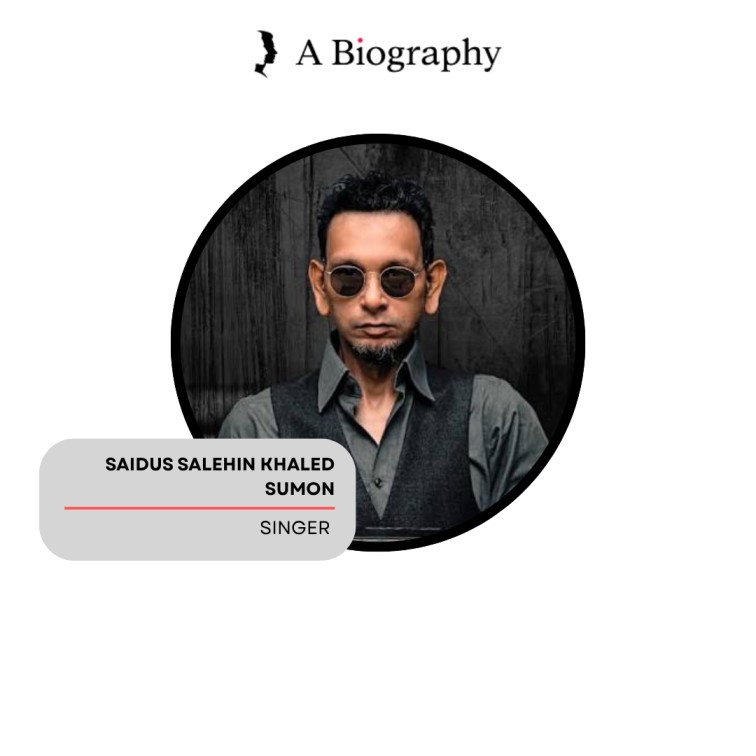
Introduction (2011)
Dhaka. Saidus Salehin Khaled Sumon was thirty-eight years old. His band Aurthohin was preparing their fourth studio album “Dhruvak.” Life was good—concerts, fans, the roar of amplifiers, the thump of his bass guitar shaking stadiums.
Then came the diagnosis.
Stomach cancer. Stage something terrible.
The doctor’s words fell like hammers: “You have approximately eighteen months.”
Sumon didn’t tell anyone. Not his bandmates. Not his wife. Not his parents. For two weeks, he locked himself in a room and stared at walls. He had faced many things in life—but never this. Never the hard stop of mortality.
But then something shifted. The man who had spent his life mastering the bass guitar, who had revolutionized how Bangladesh heard low-end frequencies, decided: I am not going to die like this.
He underwent surgery. They removed 85 percent of his stomach. Chemotherapy followed—weeks of poison meant to kill the invader inside him. By 2013, he was declared cancer-free.
But that was only the first battle.
This biography traces the extraordinary journey of Saidus Salehin Khaled Sumon—known to millions as “Bassbaba Sumon”—the father of bass guitar in Bangladesh. A man who turned his instrument into a weapon. A man who stared down death not once, but repeatedly. A phoenix who rose from ashes again and again.
At a Glance: Life of Bassbaba Sumon
| Aspect | Details |
| Full Name | Saidus Salehin Khaled Sumon |
| Nickname | Bassbaba (“Father of Bass”) |
| Born | January 8, 1973, Dhaka, Bangladesh |
| Current Age | 53 years (as of 2026) |
| Father | Nozmul Ahsan Khaled (Founder & Chairman, Khaled Group of Companies) |
| Mother | Shamsun Nahar Khaled |
| Spouse | Nazia Salehin Khaled (married 1996; also a singer) |
| Children | Ahnauf Salehin Khaled (son), Aurora Salehin Khaled (daughter) |
| Education | Government Laboratory High School; Dhaka City College (graduate) |
| First Instrument | Hawaiian guitar at age 7 |
| First Band | Feelings (1990), with James |
| Bands Played In | 11 bands by age 19: Feelings, Access, Sweet Venom, Rock Brigade, Jolly Roger, Shobdo, Warfaze, and others |
| Own Band | Aurthohin (founded 1998) |
| Studio Albums (Aurthohin) | 7 including Trimatrik (2000), Biborton (2001), Notun Diner Michil (2002), Dhruvak (2003), Oshomapto (2008), Oshomapto 2 (2011), Phoenix-er Diary 1 (2022) |
| Solo Albums | 5 including Sumon O Aurthohin (1997), Shopnogulo Tomar Moto, Megher Deshe, Boka Manush, Soul Food Part One |
| International Recognition | Featured in World’s Renowned Bass Player Magazine as “Bangladeshi Bass Pioneer” |
| Endorsements | MTD, Boss, Roland, Gruv Gear, Temple Audio Design |
| Medical Battles | Stomach cancer (2011), spine cancer, brain tumor, skin cancer, spinal cord damage (2017 Bangkok accident), stroke with paralysis, kidney complications, ruptured jaw ligament |
| Total Surgeries | 36 |
| Current Health | Cancer-free (confirmed 2024); spine issues remain |
| Business Role | Director, Khaled Group of Companies (20+ companies in agriculture, apparel, technology, shipping, real estate) |
Early Life (1973–1985)
January 8, 1973. Dhaka. Winter morning.
The city was still rebuilding after the Liberation War. In a respectable Muslim family, Nozmul Ahsan Khaled and Shamsun Nahar Khaled welcomed a son. They named him Saidus Salehin Khaled Sumon.
His father would later build the Khaled Group of Companies—a sprawling business empire. But young Sumon’s heart was never drawn to balance sheets. It was drawn to strings.
At age seven, he picked up a Hawaiian guitar. He didn’t know how to play. He just loved the sound—that thin, metallic voice that seemed to speak directly to his bones.
But a Hawaiian guitar is not a Spanish guitar. To play it properly, he needed different strings, a different bridge. He took the instrument to a music shop. The shopkeeper modified it, added Spanish guitar strings. Sumon’s eyes lit up.
He practiced until his fingers bled. Neighbors heard strange noises coming from his room. His parents worried—shouldn’t he be studying?
But something else was calling him.
At ten years old, he appeared on a national television program. Which program? Lost to time. But the image remained—a boy with wild eyes and a guitar, unafraid of the camera, unafraid of anything.
Education (1985–1991)
Sumon attended Government Laboratory High School in Dhaka—one of the city’s oldest institutions.
But while other boys memorized textbooks, Sumon memorized bass lines. While other boys solved math problems, Sumon solved the puzzle of rhythm and timing.
He watched a Warfaze concert once. The bass player, Kamal, played with such authority that Sumon’s jaw dropped. That night, he decided: bass guitar would be his life.
He couldn’t afford a real bass. So he converted his Spanish guitar—removed the 1st and 2nd strings, tuned the rest, and created a crude four-string instrument. The action was too high, the strings too thick, the sound imperfect. But it was his.
He practiced until his fingertips turned to leather.
After school, he enrolled in Dhaka City College and completed his bachelor’s degree. But by then, his real education was happening on stage.
Struggles & Adversities (1987–1990)
1987 – The Iron Maiden Revelation
Fourteen-year-old Sumon sat before a television screen. Bangladesh Television was broadcasting Iron Maiden’s “Live After Death” concert. The band thundered through the screen, but Sumon’s eyes were fixed on one man: Steve Harris.
The bassist. The backbone of the New Wave of British Heavy Metal.
Harris’s fingers danced across the fretboard with impossible speed. His bass lines weren’t background—they were frontline. They demanded attention.
Sumon’s mind exploded. That’s what I want to do.
But he had no bass. No teacher. No money.
He practiced anyway. On his converted guitar. In his room. Late into nights when Dhaka slept.
1990 – The Call from James
At sixteen, word reached the legendary rock vocalist James (Faruk Mahfuz Anam). There was this boy—this obsessed boy—who played bass like a demon.
James called him for an audition.
Sumon walked into the room, plugged into an amplifier, and played. James listened. Then he smiled.
“Welcome to Feelings.”
Sumon was now the bassist for one of Bangladesh’s biggest rock bands. He was sixteen years old. That same evening, he played his first major concert.
Love (1996)
In 1996, Sumon married Nazia Salehin Khaled. She was also a singer—someone who understood the language of melody, the sacrifices of a musician’s life.
They recorded together on a tribute album to John Denver. They built a home. They had two children: Ahnauf and Aurora.
When Sumon was diagnosed with cancer, Nazia never left his side. When he was paralyzed, she fed him. When doctors said he might never sing again, she whispered, “You will.”
He credits her with his survival. “She is my rock,” he once said. “When I wanted to give up, she reminded me that I had songs left to sing.”
Their daughter Aurora, barely three years old, sang on his album “Boka Manush.” Father and daughter, voices entwined. Music became the family language.
Personal Life (1990–2026)
Despite his fame, Sumon has always maintained a simple personal life.
Home: Modest by celebrity standards. Not a palace.
Demeanor: Quiet, introspective, philosophical—until he hits the stage. Then he transforms into something primal.
Business: He is a Director of Khaled Group of Companies—his father’s enterprise. Twenty companies spanning agriculture, apparel, technology, shipping, real estate. But he never lets business interfere with music. “Business pays the bills,” he once said. “Music pays my soul.”
Health Routines: After his cancer battles, he became disciplined. Strict diet. Vitamin supplements. In 2024, he announced he had lost 70 kilograms to reduce pressure on his spine.
Social Media: He is unusually transparent about his health. When he has surgery, he posts X-rays. When he is in the ICU, he updates fans. He treats his millions of followers as extended family.
Future Plans & Vision (2024–2026)
Sumon is not finished. Not by a long shot.
Phoenix-er Diary 2: Aurthohin announced work on their next studio album. The title continues the phoenix metaphor—rebirth from ashes. The album will feature international collaborations.
US Tour: For the first time, Aurthohin will tour the United States. A Bangladeshi rock band playing American stages. It is a milestone.
Health Management: Sumon continues to manage his spine issues. Eight screws remain in his back—reminders of the 2017 Bangkok accident. But he refuses to let them stop him.
He told fans: “I came back to the stage in 2021, 2022, 2023. You saw me. I will be back in 2024, 2025, and beyond. Spine issues will not stop Bassbaba.”
Career – Phase 1 (1990–1996)
At nineteen, Sumon had played with eleven different bands. Access, Sweet Venom, Rock Brigade, Jolly Roger, Shobdo—he moved through them like a restless spirit, learning, absorbing, evolving.
Each band taught him something. Different genres, different musicians, different audiences.
He was not yet a star. But he was becoming a master.
1996 – Warfaze
He joined Warfaze, one of Bangladesh’s most respected rock bands. He played on their hit album “Osamajik.” His bass lines became part of the band’s signature sound.
But even within Warfaze, he felt constrained. He had a vision—a vision of music where the bass was not background but foreground. Where the low end was not support but star.
He left after two years.
Career – Phase 2 (1998–2008)
1998 – The Birth of Aurthohin
“Arthohin” means “meaningless.” Or does it?
The band was Sumon’s brainchild. He wrote the songs, composed the music, produced the recordings. He played bass and sang. He was Aurthohin.
Critics asked: “Why such a negative name?”
Sumon replied: “Our music will give meaning to the meaningless.”
1997 – Sumon O Aurthohin (Album)
Before the band formally launched, he released a solo album with the same name. It featured eighteen musicians from six heavyweight bands. The title track contained twenty-seven different guitar solos—a record in Bangladeshi rock history.
The songs became anthems. “Tomar Jonno Noi,” “Monekoro,” “Kono Ek Nijhum Rate,” “Swadhinota,” “Shi,” “Tarar Pane,” “Ekta Nokkhotrer Gaan,” “Tahader Kotha ’71,” “Arthohin,” “Jokhon Charidike,” “Hayenas Autohashi,” “Shopner Dar,” “Mission Accomplished,” “Majhrate,” “Kono Ek Nijhum Rate 2.”
2000 – Trimatrik (First Aurthohin Studio Album)
Progressive metal. Complex time signatures. Deep lyrical themes. Bangladesh had never heard anything like it.
2001 – Biborton (Evolution)
This album broke through. “Majhe Majhe Tor Dekha Pai” became a staple of every concert. Sumon’s bass work was more prominent than ever.
2002 – Notun Diner Michil (Procession of a New Day)
Fans consider this Aurthohin’s finest work. The track “Saatdin” features a breathtaking bass solo that has become legendary.
2003 – Dhruvak (The Polestar)
Philosophical lyrics. Existential questions. The album’s title track remains a fan favorite.
Career – Phase 3 (2008–2011)
2008 – Oshomapto (Unfinished)
The title was prophetic. Sumon’s body was already showing signs of wear. He was tired. The music reflected it—melancholic, introspective, haunting.
2011 – Oshomapto 2
Released just before his cancer diagnosis. The track “Cancer” was written as he felt the disease growing inside him. He put his own suffering into music—raw, unfiltered, terrifying.
He called Oshomapto 2 his “purest creation.”
Career – Phase 4 (2022–Present)
2022 – Phoenix-er Diary 1
After six years of silence—six years of cancer, accidents, paralysis, recovery—Aurthohin returned.
Eight tracks. Among them: “Amar E Gaan,” “Boyos Holo Amar,” “Prothom,” “Walter White.”
The title said everything. Sumon was the phoenix. Burned to ash, then reborn.
He played the Chittagong concert on December 7, 2021. Forty thousand people. When he sang “Oshomapto,” the crowd wept. He wept.
“Bassbaba” Goes Global
Sumon’s influence reached far beyond Bangladesh.
World’s Renowned Bass Player Magazine – Featured him as “Bangladeshi Bass Pioneer.”
Endorsements – MTD, Boss, Roland, Gruv Gear, Temple Audio Design. These are global brands. They chose Sumon as their Bangladeshi ambassador.
Stuart Hamm – The legendary slap bass virtuoso produced music for Sumon. A student surpassing the master.
Sumon has also connected with Tom Morello (Rage Against the Machine) and Victor Wooten.
From a boy with a converted guitar in Dhaka to international recognition—the journey is almost unbelievable.
The Bangkok Accident (2017)
Bangkok. Sumon was returning from a hospital appointment—routine follow-up after cancer treatment.
His car was hit.
The impact crushed his spine. Spinal cord damage. Doctors said he might never walk properly again.
Nine surgeries followed. Months in a hospital bed. Then months of rehabilitation.
He couldn’t sit for more than ten minutes. He couldn’t hold his bass. He couldn’t stand on stage.
But he did not surrender.
He did strength training. He did physiotherapy. He willed his body to heal.
And eventually, he walked again.
The Stroke and Paralysis
While recovering from the accident, he suffered a stroke. His left side—the side he needed to fret his bass—went numb. Paralyzed.
Imagine a bassist who cannot use his left hand. Imagine a musician who cannot feel the strings.
Sumon did not imagine. He lived it.
He spent months relearning basic movements. Wiggling fingers. Clenching a fist. Lifting his arm.
Each small victory was a concert in itself.
When Doctors Said “You Will Never Sing Again”
During his paralysis recovery, his jaw ligament ruptured. A specialist in Singapore examined him and delivered the verdict: “You will never sing again.”
The jaw is essential for singing. The pressure, the movement, the control—all of it requires functional ligaments.
Sumon sat in the hospital corridor and wept.
Not because he feared death. But because he feared silence. A musician who cannot sing is like a bird who cannot fly.
But he refused the verdict. He wore a brace. He did exercises. He forced his jaw to heal.
Three months later, he sang again. Eighteen months later, he was fully recovered.
The Body as a Battlefield
Stomach removal. Spine surgeries. Tumor removals. Jaw repairs. Eye surgeries. Leg surgeries.
Thirty-six times under the knife.
Each surgery left scars. Each scar is a medal.
Sumon once posted an X-ray of his spine on Instagram. Eight screws visible. He captioned it: “Memories of a war I won.”
Phoenix-er Diary 1 & 2
Phoenix-er Diary 1 (2022)
The title is autobiographical. Sumon is the phoenix. He burned in the fires of cancer, accident, stroke, paralysis. And from the ashes, he rose.
Phoenix-er Diary 2 (Upcoming)
Announced for 2024-2025. International collaborations. A US tour. The phoenix flies beyond borders.
Business Life
Few fans know that Sumon is also a businessman. His father founded the Khaled Group—a fifty-year-old conglomerate with over twenty companies.
Sumon serves as a Director. He attends board meetings. He signs documents. He helps steer a business empire.
But he never lets business overshadow music. The bass comes first.
Unique Traits
The Slap Technique – He mastered the slap bass technique rare in Bangladesh. His fingers attack the strings like drumsticks.
Stage Presence – He does not hide in the back. He steps forward. He raises his bass above his head. He plays with his teeth. He is a showman in the tradition of Jimi Hendrix.
Philosophical Lyrics – His songs ask big questions. About existence. About time. About meaning.
Transparency – He shares his medical struggles openly. He posts X-rays. He updates fans from ICUs.
Resilience – Above all, resilience. He has been told he would die. Told he would never walk. Told he would never sing. He proved them all wrong.
Awards & Achievements
| Award/Recognition | Year |
| Featured in World’s Renowned Bass Player Magazine | 2023 |
| Endorsed by MTD, Boss, Roland, Gruv Gear, Temple Audio | Various |
| “Bangladeshi Bass Pioneer” title (international magazine) | – |
| Collaborated with Stuart Hamm | – |
| 27 guitar solos in one track (record) | 1997 |
| First Bangladeshi rock band to announce US tour | 2024 |
Controversies & Criticism
Sumon has largely avoided major controversies. His life has been too consumed by music and survival for petty scandals.
Bassbaba Title – Some purists argue the title is self-promotional. Fans counter that he earned it.
Aurthohin’s Democracy – He once said in an interview: “There is no democracy in Aurthohin. I am the band.” Critics called him authoritarian. He replied: “I write the songs. I compose the music. I produce the albums. What democracy?”
Health Transparency – Some advisors told him to hide his struggles. “Fans don’t want to see their hero weak.” He ignored them. He posts X-rays. He talks about his pain. This honesty has only deepened fan loyalty.
Contemporary Opinions & Interviews
James (Rock Legend) : “When I first heard Sumon play, I knew he was special. He had fire.”
Stuart Hamm (International Bass Virtuoso) : “Sumon’s technique is world-class. His survival story is even more impressive than his playing.”
A Fan on Social Media : “Bassbaba taught me that giving up is not an option. If he can survive 36 surgeries and still play, I can survive my problems.”
Sumon on Himself : “I am not a hero. I am just a man who refused to let go of his bass.”
Myths & Misconceptions
| Myth | Truth |
| “Bassbaba” is his real title | Fans gave him the nickname; it is not official |
| He only plays bass | He also sings, writes songs, and produces albums |
| His family opposed his music | His family supported him, though they wanted him to finish studies |
| He stopped music after cancer | He returned stronger than ever |
| The 36 surgeries number is exaggerated | It is documented in multiple interviews |
Famous Quotes & Thoughts
“Doctors gave me eighteen months. That was more than a decade ago. Who’s counting now?”
“Cancer took my stomach. The accident took my spine. The stroke took my left side. But nothing took my music.”
“I lay in bed for nine years. Nine years. And I got up. Because I had songs left to sing.”
“My fans are my superheroes. They carried me when I couldn’t walk.”
“Death has knocked on my door so many times. Each time, I opened it and said: not today.”
“Music is my bulletproof vest.”
Message for the Present Generation
Sumon’s message to young people is urgent:
“Dream without fear. I started with a converted guitar that cost almost nothing. You have YouTube, social media, cheap gear. You have no excuse.
When life hits you—and it will hit you—do not stay down. Get up. Crawl if you must. Just keep moving.
Do not wait for perfect health. Perfect circumstances. Perfect anything. Start where you are. Use what you have.
And never, ever stop playing.”
Death & Legacy (2026 – Still Alive)
As of 2026, Saidus Salehin Khaled Sumon is alive. This section addresses his legacy, not his death.
Sumon’s legacy is already secure:
- Musical Legacy – He changed how Bangladesh hears the bass guitar. Before him, bass was background. After him, bass became frontline.
- Inspirational Legacy – His survival story has inspired millions. Cancer survivors write to him. Accident victims message him. He replies to many.
- Global Recognition – He put Bangladeshi rock music on international maps.
- Business Legacy – As a Director of Khaled Group, he helped build a business empire that employs thousands.
- Family Legacy – His children sing. Music will continue in the Khaled bloodline.
When he eventually passes—hopefully many decades from now—Bangladesh will lose more than a musician. It will lose a symbol of human endurance.
But his songs will remain. His bass lines will remain. And every young bassist who picks up an instrument will remember: Bassbaba walked so they could run.
Timeline: Key Events (1973–2026)
| Year | Event |
| 1973 | Born January 8 in Dhaka |
| 1980 | Started playing Hawaiian guitar (age 7) |
| 1983 | First television appearance (age 10) |
| 1987 | Watched Iron Maiden; decided to play bass |
| 1990 | Joined Feelings with James (age 16) |
| 1993-1996 | Played with 11 different bands |
| 1996 | Joined Warfaze; married Nazia |
| 1997 | Released first solo album “Sumon O Aurthohin” |
| 1998 | Founded Aurthohin |
| 2000 | Released “Trimatrik” |
| 2001 | Released “Biborton” |
| 2002 | Released “Notun Diner Michil” |
| 2003 | Released “Dhruvak” |
| 2008 | Released “Oshomapto” |
| 2011 | Released “Oshomapto 2”; diagnosed with stomach cancer |
| 2013 | Declared cancer-free |
| 2017 | Bangkok road accident; spinal cord damage; 9 surgeries |
| 2017-2018 | Stroke; paralysis; jaw ligament rupture |
| 2021 | Returned to stage, Chittagong (Dec 7) |
| 2022 | Released “Phoenix-er Diary 1” |
| 2024 | Declared cancer-free again; announced US tour; lost 70 kg |
| 2024-2025 | Working on “Phoenix-er Diary 2” |
Conclusion
Saidus Salehin Khaled Sumon—Bassbaba—is not a legend because he played bass well. He is a legend because he refused to die.
Stomach cancer. Spine cancer. Brain tumor. Skin cancer. Spinal cord damage. Stroke. Paralysis. Jaw rupture. Thirty-six surgeries.
Each of these could have ended him. Each should have ended him. Doctors prepared his family for the worst—multiple times.
But Sumon kept getting up.
From the ashes of his own body, he rose. And rose again. And again.
He is the phoenix. Fire cannot destroy him. It only forges him anew.
Tonight, somewhere in Dhaka, a young musician will pick up a bass guitar. They will play a Sumon riff. They will not know the full story—the hospital rooms, the X-rays, the months of paralysis, the nights when breathing itself was a battle.
But they will feel something. A vibration. A resonance.
That is Bassbaba. That is his legacy. Not just music—but the indomitable will to make music. No matter what.
Long live the phoenix. Long live Bassbaba.
References
- Bangla Wikipedia – Saidus Salehin Khaled Sumon
- English Wikipedia – Saidus Salehin Khaled Sumon
- English Wikipedia – Khaled “Bassbaba” Sumon
- The Daily Star – “Bassbaba Sumon reflects on his journey through music and survival”
- The Daily Star – “I don’t have cancer anymore: Bassbaba Sumon”
- The Daily Star – “Bassbaba Sumon undergoes surgery again”
- Prothom Alo – Interviews and features (various dates)
- New Age – “Sumon to return to Dhaka in May”
- New Age – “Sumon shifted to ICU in Bangkok hospital”
- Jago News 24 – Health updates
- Bassbaba Sumon official website – La Bella profile
- Khaled Group of Companies official site – Director profile
- TBS News – “Bassbaba Sumon’s condition critical”
- Last.fm – Sumon biography
- IPFS.io – Sumon (musician)
Disclaimer
This biography is based on reliable and authoritative sources. Some narrative elements—such as internal thoughts, emotional descriptions, and dramatic reconstructions—have been added for storytelling purposes. These creative additions do not alter the factual accuracy of the events described. Minor variations may exist across sources regarding exact surgery counts and dates. The “Bassbaba” title originated from fans and is used respectfully. Saidus Salehin Khaled Sumon is alive as of 2026; references to “death” discuss his legacy, not his passing. This biography is intended to inspire and honor an extraordinary musician and survivor.
“I lay in bed for nine years. Nine years. And I got up. Because I had songs left to sing.”
— Bassbaba Sumon

