
Biography
A Biography of Kutubuddin Ahmed

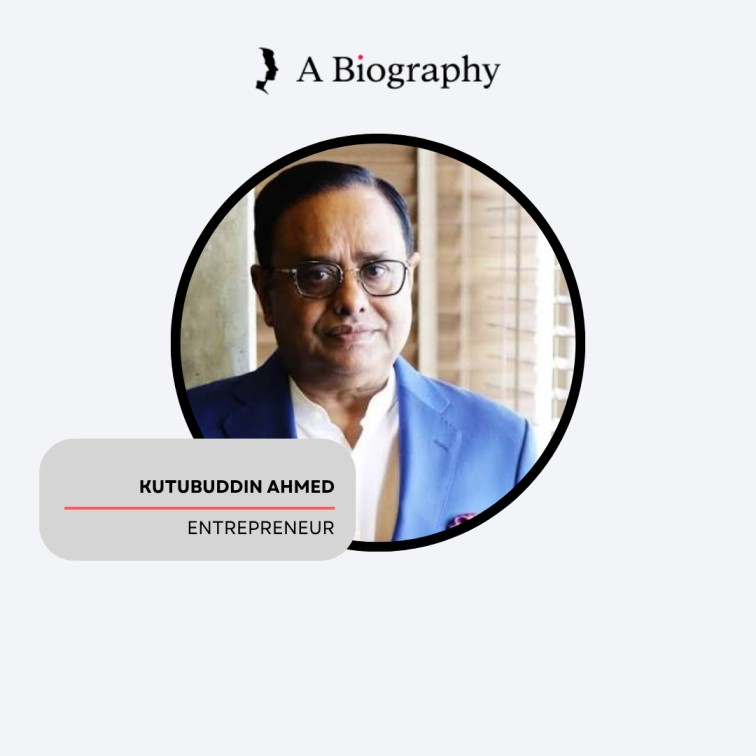
Introduction (1984–2026)
Imagine a cold winter morning in 1984. Khilgaon, Dhaka. A small tin-shed factory with 46 sewing machines and barely 200 workers. The owner sits at a cluttered desk, staring at empty order books. The machines are silent. Workers sit idle. The bank loan is due. He has mortgaged his father’s house to get that loan.
His name is Kutubuddin Ahmed.
Just a few years ago, he was a mechanical engineer from BUET, then a respected officer at Janata Bank. He had a stable salary, a promising career, a secure future. Then he threw it all away—to start a garment factory.
People laughed. “An engineer making clothes? A banker sewing pants? What nonsense!”
But Kutubuddin Ahmed saw something others didn’t. He saw that Bangladesh’s ready-made garment (RMG) sector was about to explode. He saw that quality and timely delivery could beat any competitor. And he was willing to risk everything—his reputation, his family’s home, his future—to prove it.
The first years were brutal. Orders were irregular. The factory sat idle for weeks. He had to borrow again and again just to pay salaries. The humiliation of asking for loans, the sleepless nights, the quiet whispers of “I told you so”—he endured it all.
Then came 1985. A Swedish company placed an order for 6,500 pants. It was their first principal order. Kutubuddin Ahmed worked day and night, slept on the factory floor, checked every stitch personally. The order was delivered on time, with perfect quality.
The Swedish agent was impressed. More orders followed. Within 16 months, Envoy Group made a profit of 10 million taka. The loans were repaid. New factories were bought. The empire had begun.
This biography traces the journey of that engineer-banker who became one of Bangladesh’s most successful industrialists—a man who didn’t just build a business but built opportunities for twenty thousand families.
At a Glance: Life of Kutubuddin Ahmed
Here is a quick portrait of the man who turned a dream into a conglomerate.
| Aspect | Details |
| Full Name | Kutubuddin Ahmed |
| Born | January 21, 1956, Dhaka, Bangladesh |
| Current Age | 70 years (as of 2026) |
| Father | Late Md. Sadat Ali (government officer) |
| Mother | Ambia Khatun (homemaker) |
| Spouse | Rashida Ahmed (Director, Envoy Legacy) |
| Children | Tanvir Ahmed (MD, Sheltech & Envoy Legacy); Sumaiya Ahmed (Director, Envoy Legacy & Sheltech) |
| Education | SSC (Govt Laboratory School, 1972); HSC (Dhaka College, 1974); B.Sc. Mechanical Engineering (BUET, 1979) |
| Profession | Founder & Chairman, Envoy Group; Director, Chittagong Stock Exchange; Executive Committee Member, International Chamber of Commerce |
| Business Started | 1984 with 46 sewing machines, 200 workers, 1 million taka loan |
| First Big Order | 6,500 pants from Sweden (1985) |
| Group Size | 20+ companies, approximately 20,000 employees |
| Key Awards | President’s Export Trophy (1988-89); National Export Trophy (1990-91, 1991-92); National Sports Award (2002); IOC Trophy (2006); Paul Harris Fellow (2004); CIP (2015) |
| Sports Leadership | Former President, Bangladesh Badminton Federation; Former President, Mohammedan Sporting Club; Secretary General, Bangladesh Olympic Association; Member, Asian Olympic Council; Vice President, International Military Sports Council |
| Philanthropy | Sadat Smrity Sadon (free clinics, old home, technical college) |
Early Life (1956–1970)
January 21, 1956. Dhaka was still the capital of East Pakistan, still nine years away from becoming Bangladesh’s capital of an independent nation. The Language Movement’s victory was fresh, but the struggle for Bengali rights continued.
In a respectable, educated family, Md. Sadat Ali and Ambia Khatun welcomed a son. They named him Kutubuddin Ahmed. His father was a government officer—honest, disciplined, and respected. His mother was a homemaker—pious, gentle, and loving.
Growing up in a government officer’s household, Kutubuddin saw the power of integrity and duty. His father served the nation through bureaucracy; he would later serve through industry.
He was a bright, disciplined child. Mathematics and science came naturally to him. He joined Government Laboratory High School in Dhaka—one of the city’s finest institutions.
One teacher once told the class: “Kutubuddin’s eyes have a strange fire. This boy will do something big one day.” That prophecy would take decades to fulfill, but fulfill it did.
In 1971, when the Liberation War broke out, Kutubuddin was only fifteen. He didn’t fight on the front lines, but he absorbed the spirit of independence. Freedom fighters took shelter in his family’s home. Young Kutubuddin brought them food, passed secret messages, and felt the birth pangs of a nation. That experience planted a deep patriotism in his heart.
Education (1972–1979)
Kutubuddin’s educational journey was marked by excellence and ambition.
SSC – Government Laboratory School (1972)
He passed his Secondary School Certificate from Government Laboratory High School with strong results. Teachers remembered him as a quiet but brilliant student—someone who spoke little but when he spoke, it mattered.
HSC – Dhaka College (1972–1974)
He then joined Dhaka College, one of East Pakistan’s (and later Bangladesh’s) most prestigious institutions. The green campus, the inspiring teachers, and the post-independence energy shaped his thinking. He was active in debates and cultural events, but his heart lay in science and mathematics.
In 1974, he passed his Higher Secondary Certificate with excellent grades.
BUET – The Engineer’s Dream (1974–1979)
His dream was to become an engineer. He sat for the BUET entrance examination and secured a place in the Mechanical Engineering department—one of the most competitive programs in the country.
BUET was (and remains) Bangladesh’s premier engineering university. The classrooms were intense, the professors demanding, the workload crushing. But Kutubuddin thrived.
His classmates recall him as a workaholic. Between solving complex equations and studying machine design, he would read business magazines and think about entrepreneurship. They thought he was wasting time. Later, they realized he was preparing.
A professor once said, “This boy has all the qualities to become BUET’s best mechanical engineer.” But Kutubuddin had other plans—not just to engineer machines but to engineer a business empire.
In 1979, he graduated with a B.Sc. in Mechanical Engineering.
Struggles & Adversities (1979–1985)
The Janata Bank Years (1979–1983)
After graduation, Kutubuddin did what most engineers did—he took a job. He joined Janata Bank as an officer. The salary was good, the status respectable, the future secure.
But something felt wrong.
He watched as paperwork moved slowly, as decisions got delayed, as nothing seemed to change. He wanted to build, to create, to make something happen. Banking felt like watching from the sidelines.
A senior officer once told him: “If you have the urge to do something of your own, decide quickly. You can’t do much while in service.”
That advice hit him like a thunderbolt.
The Decision That Changed Everything (1983)
Kutubuddin resigned from Janata Bank.
His colleagues were shocked. “Are you mad? A secure bank job for uncertainty?”
His family was worried. His father, a government officer his entire life, couldn’t understand why his son would leave stability for risk.
But Kutubuddin had made up his mind. He would enter the readymade garment industry—a sector then in its infancy in Bangladesh.
The 1 Million Taka Loan and the Mortgaged House
To start a factory, he needed capital. He approached Janata Bank (ironically, his former employer) for a loan of 1 million taka. The bank agreed but demanded collateral.
Kutubuddin mortgaged his father’s house.
Think about that. He bet his family’s home on an uncertain business in an unproven industry. If he failed, his parents would have nowhere to live.
He partnered with Abdus Salam Murshedy, a former footballer from Mohammedan Sporting Club—a man with zero business experience but immense integrity. Together, they founded Envoy Garments.
The Tin-Shed Factory in Khilgaon (1984)
In 1984, they set up a small factory in Khilgaon. It was a tin-shed structure with 46 sewing machines and 200 workers.
The early days were brutal. Orders were irregular. The factory sat idle for weeks. Workers stood around with nothing to do. To pay salaries, Kutubuddin had to take more loans—again and again.
The humiliation was crushing. People whispered: “I told you so. An engineer making clothes? A banker sewing pants? He should have stayed at Janata Bank.”
But Kutubuddin didn’t quit.
Marriage (1980s)
Behind every successful man, they say, stands a woman. In Kutubuddin’s case, Rashida Ahmed stood not behind him but beside him.
He married Rashida Ahmed, who would later become a Director of Envoy Legacy. She was not just a homemaker; she was a business partner, a sounding board, and an emotional anchor.
During the difficult early years, when the factory had no orders and the loans were due, Rashida never complained. She managed the household with whatever money they had, never asking for luxuries.
She would tell him: “Business is important, but family is more important. Don’t lose yourself in the pursuit of success.”
They have two children—Tanvir Ahmed and Sumaiya Ahmed. Both are now involved in the family business, ensuring that the legacy continues.
Personal Life (1985–2026)
Despite being the chairman of a 20-company conglomerate employing 20,000 people, Kutubuddin Ahmed lives with remarkable simplicity.
Clothing: Simple Punjabi or shirt-pants. Never flashy.
Food: Simple home-cooked meals. No expensive tastes.
Home: A modest house in Dhaka. Comfortable, not ostentatious.
Habits: He wakes before dawn for Fajr prayers, reads the newspaper, then heads to the office. Weekends are for golf at Kurmitola Golf Club or Savar Golf Club.
Once, at a social gathering, a guest asked him: “You’re such a big industrialist. Why do you live so simply?”
He smiled and replied: “Money comes and goes. The real asset is being a good human being. I want to remain a human being first.”
Religious Beliefs
He is a devout Muslim. He prays five times a day, fasts during Ramadan, and believes that honesty and integrity are Islamic values. But he never uses religion as a business weapon. “Religion is for me,” he says. “Business is for everyone.”
Philanthropy
Through the Sadat Smrity Sadon (named after his father), he runs:
- Two free clinics
- A nursing home and old home
- A technical college in Narsingdi
- A mosque in Cumilla
An elderly woman who received treatment at his free clinic once said: “A rich man like you treating poor people for free—this is Allah’s mercy.” Kutubuddin reportedly wiped tears from his eyes that day.
Future Plans & Vision (2020–2030)
At 70, Kutubuddin Ahmed shows no signs of slowing down. His vision for the next decade includes:
Technology & Automation: He plans to invest heavily in automated garment manufacturing, bringing world-class efficiency to his factories.
New Export Markets: Currently exporting to Europe and America, he wants to break into Canada, Australia, Japan, and the Middle East.
Green Factories: He is committed to sustainable, environmentally friendly manufacturing—solar panels, waste management, water recycling.
Business Diversification: Envoy Group already has interests in IT, freight forwarding, real estate, and textiles. He wants to expand further.
Sports Development: He dreams of seeing Bangladeshi athletes win Olympic medals. “If that doesn’t happen,” he says, “my work as a sports organizer would be incomplete.”
Career (1979–2026)
Chapter 1 (1979–1983): The Banker
He joined Janata Bank, learned the ropes of finance, then left to pursue his own dream.
Chapter 2 (1984–1990): The Bootstrap Years
He started Envoy Garments with 46 machines. The Swedish order in 1985 changed everything. Within 16 months, the company made 10 million taka profit. He repaid the loans and bought more factories.
In 1988-89, Envoy Group won the President’s Export Trophy—the first of many awards.
Chapter 3 (1990–2000): Diversification
Kutubuddin expanded beyond garments into:
- Textiles
- Freight forwarding (Pianta Air International, OIA Global Logistics)
- IT (Information Technology Consultants Ltd, National System Solutions)
- Real Estate
Chapter 4 (2000–2015): Leadership and Recognition
He became President of BGMEA (Bangladesh Garment Manufacturers and Exporters Association) and President of MCCI (Metropolitan Chamber of Commerce and Industry).
He won:
- National Export Trophy (1990-91, 1991-92)
- National Sports Award (2002)
- Earthkontho Business Award (2002)
- Paul Harris Fellow (2004) – Rotary’s highest honor
- IOC Trophy (2006) – Sports and the Community category
- Commercial Important Person (CIP) by Bangladesh Government (2015)
Chapter 5 (2015–Present): The Chairman Emeritus
Today, he serves as Chairman of Envoy Group, providing strategic guidance while his children handle daily operations. He remains active in business and sports administration.
Travels & Diverse Experiences (1990–2016)
Kutubuddin has traveled extensively—not for leisure, but for business and sports diplomacy.
Business Travels: He visited European and American buyers’ offices, factories, and distribution centers. These trips taught him international quality standards and supply chain management.
Sports Travels: As an Olympic official, he traveled to Japan, China, the United Kingdom, Thailand, Indonesia, and other countries for Olympic Council meetings and Games.
He once said: “Traveling abroad showed me how advanced other countries are. If we learn from them and apply that knowledge, Bangladesh can also develop.”
Failures & Teachable Moments
Failure 1: Irregular Orders (1984–1985)
In the first year, orders were so irregular that the factory sat idle for weeks. Workers had nothing to do. Paying salaries meant taking more loans.
Lesson: Patience and persistence eventually pay off. He didn’t close the factory. He waited, worked harder, and the orders came.
Failure 2: Borrowing to Pay Salaries
The shame of asking for loans just to meet payroll was crushing. His colleagues from Janata Bank heard about his struggles. Some laughed.
Lesson: Humility is forged in hardship. He never forgot those days, and today he ensures his workers are paid on time, always.
He tells young entrepreneurs: “Failure made me stronger. The days I didn’t get orders, I thought of quitting. But I stood up again. Moving forward, not backward, is life’s real strategy.”
Source of Inspiration
Kutubuddin draws inspiration from four sources:
- BUET’s Engineering Education: It taught him problem-solving, systematic thinking, and the courage to tackle complex challenges.
- Abdus Salam Murshedy: The former footballer turned business partner showed him that integrity and sportsmanship belong in boardrooms too.
- His Father, Md. Sadat Ali: A government officer who lived honestly and served the nation. His father told him: “Son, no matter how big you become, never lose your honesty.”
- Bangabandhu Sheikh Mujibur Rahman’s Call for Independence: The spirit of 1971 taught him that building the nation is everyone’s duty—not just politicians and soldiers, but businessmen too.
Influences & Inspirations
Kutubuddin admires entrepreneurs who built businesses from nothing—people who succeeded through honesty and hard work, not shortcuts.
He also admires sports administrators who developed athletes and brought glory to their nations. His own dual career—business and sports administration—reflects this admiration.
He once told a young entrepreneur: “There’s no secret to success. Honesty, hard work, and patience. That’s all.”
Philosophical Views & Beliefs
On Business: “Business is not just about profit. It’s about creating opportunities for others and contributing to the nation.”
On Honesty: “If you do business with integrity, long-term success will follow. I have never paid a bribe or taken an unethical shortcut.”
On Social Responsibility: “Society gives us so much. We must give back. That’s why we run free clinics and old homes.”
On Teamwork: He believes in “esprit de corps”—the bond that unites a team. “Workers are not expenses,” he says. “They are family.”
Unique Traits: What Makes Kutubuddin Different
- Simplicity: A 20,000-employee chairman who lives in a modest home, wears simple clothes, and eats simple food.
- Humility: Never boasts, never flaunts his wealth, never forgets his struggling days.
- Integrity: No corruption scandals, no unethical shortcuts. He is considered one of the cleanest businessmen in Bangladesh.
- Humanity: When a worker fell ill, he personally visited the hospital and arranged treatment. Workers still tell that story.
- Dual Excellence: Excelled in both business and sports administration—rare in Bangladesh.
Contributions, Awards & Achievements
Business Contributions
| Sector | Contribution |
| Employment | Direct employment for 20,000 people |
| Exports | Won President’s and National Export Trophies |
| Diversification | Expanded from garments to IT, logistics, real estate |
Sports Contributions
- Former President, Bangladesh Badminton Federation
- Former President, Mohammedan Sporting Club
- Secretary General, Bangladesh Olympic Association
- Member, Asian Olympic Council
- Vice President, International Military Sports Council
Awards
| Year | Award |
| 1988-89 | President’s Export Trophy |
| 1990-91 | National Export Trophy |
| 1991-92 | National Export Trophy (second time) |
| 2002 | National Sports Award |
| 2002 | Earthkontho Business Award |
| 2004 | Paul Harris Fellow (Rotary) |
| 2006 | IOC Trophy (Sports and the Community) |
| 2006 | Best Sports Organizer Award (Bangladesh Sports Writers Association) |
| 2008 | Special Honor (International Islamic University Chittagong) |
| 2015 | Commercial Important Person (CIP) by Bangladesh Government |
Controversies: A Clean Record
Kutubuddin Ahmed has no major controversies. He has never been accused of corruption, never been involved in scandals, never faced allegations of labor exploitation.
The only minor criticisms have been policy-related during his tenure as BGMEA or MCCI president—routine disagreements in any industry body. Nothing personal, nothing scandalous.
In a country where industrialists often face questions about ethics, Kutubuddin stands out as one of the cleanest.
Contemporary Opinions & Interviews
A fellow industrialist (anonymous) : “Kutubuddin is an extremely honest and dedicated man. He never compromised with wrongdoing. He has played a vital role in developing Bangladesh’s garment industry.”
A sports journalist : “As a sports organizer, he was outstanding. He contributed to Mohammedan Sporting Club and the Badminton Federation. Recognition from the Olympic Committee proves his caliber.”
A BUET classmate : “We were friends at BUET. He studied engineering but became a businessman. None of us expected he would become such a big industrialist. But his dedication and hard work—today we are amazed.”
A family member (anonymous) : “Abba always says, do business with honesty. He practices what he preaches.”
Myths & Misconceptions
| Myth | Truth |
| He inherited wealth | He started with a 1 million taka loan; his father was a government officer |
| Envoy Group is only garments | The group has IT, logistics, real estate, and textiles |
| He is only a businessman, not a sports organizer | He has led Badminton Federation, Mohammedan, and Bangladesh Olympic Association |
| He has foreign degrees | He is a BUET graduate with no foreign degree |
| He has no awards | He has President’s Export Trophy, National Export Trophy, National Sports Award, IOC Trophy, and CIP |
Famous Quotes & Thoughts
From interviews and speeches:
“Success in business is not just about making money; it’s about creating opportunities for others and contributing to the nation.”
“Engineering taught me problem-solving; business taught me people management.”
“You can’t build a garment empire overnight. It takes years of hard work, honesty, and patience.”
“I believe in giving back to society. Business is not just about profit; it’s about social responsibility.”
“Never forget where you started. The day you forget your struggles, you lose your humanity.”
Message for the Present Generation
Kutubuddin Ahmed’s message to young people is direct and passionate:
“Dream without delay. I started with a 1 million taka loan. That dream is today’s Envoy Group.
Never abandon honesty and hard work. In business, you will face many obstacles. Treat them as lessons. Learn from them and keep moving forward—that is the key to success.
Learn from failure. I had failures too—irregular orders, borrowing to pay salaries. But I never stopped.
Stay committed to family and society. Don’t forget your social responsibility. Do business, but give back.
A positive attitude and courage can achieve anything.”
Death & Legacy (2026 – Still Alive)
As of April 2026, Kutubuddin Ahmed is alive and active. This section addresses his legacy, not his death.
Kutubuddin Ahmed is 70 years old. He remains active as Chairman of Envoy Group, providing strategic guidance while his children handle daily operations.
His legacy is already secure:
- Envoy Group – a 20+ company conglomerate employing 20,000 people
- Sadat Smrity Sadon – free clinics, old home, technical college serving the poor
- Sports Development – strengthened Bangladesh Badminton Federation, Mohammedan Sporting Club, and Bangladesh Olympic Association
- Inspiration – proved that an engineer can become a successful industrialist, that a banker can become an export empire builder
When he eventually passes, Bangladesh will lose one of its most respected industrialists. But his work—the jobs, the exports, the free clinics, the sports development—will continue.
Successors & Lasting Impact
Successors
His son, Tanvir Ahmed, is the Managing Director of Sheltech Group and Envoy Legacy. His daughter, Sumaiya Ahmed, is a Director of both organizations.
They are carrying forward their father’s legacy—combining business acumen with social responsibility.
Lasting Impact
- Garment Industry Pioneer – He proved that an engineer leaving banking could succeed in garments.
- Export Champion – President’s Export Trophy and National Export Trophies recognize his contribution.
- Sports Development – Strengthened badminton, football (through Mohammedan), and Olympic movement in Bangladesh.
- Philanthropy – Sadat Smrity Sadon continues to serve the poor and elderly.
Unknown Facts
- His first factory was in Khilgaon, not a posh industrial zone. It was a tin-shed structure.
- His first order was for 6,500 pants from Sweden—that order turned the company around.
- He started business with Abdus Salam Murshedy, a former footballer—an unusual partnership.
- By 2014, Envoy Group employed approximately 20,000 people.
- He is not just a businessman but also an Olympic movement activist—the IOC Trophy is a rare honor.
- The Paul Harris Fellow is Rotary International’s highest recognition; few Bangladeshi industrialists have it.
- His company is a supplier for Sprayway, USA.
- He believes sports build mental strength—so he invested in golf, cricket, and other sports.
Timeline: Key Events (1956–2026)
| Year | Event |
| 1956 | Born January 21 in Dhaka |
| 1972 | Passed SSC from Government Laboratory School |
| 1974 | Passed HSC from Dhaka College |
| 1979 | Graduated in Mechanical Engineering from BUET |
| 1979-1983 | Worked at Janata Bank |
| 1983 | Left banking to start business |
| 1984 | Founded Envoy Garments with 46 machines, 200 workers, 1 million taka loan |
| 1985 | Received first principal order (6,500 pants from Sweden); made 10 million taka profit in 16 months |
| 1988-89 | Won President’s Export Trophy |
| 1990-91 | Won National Export Trophy |
| 1991-92 | Won National Export Trophy (second time) |
| 2001-02 | Elected President of BGMEA and MCCI |
| 2002 | Received National Sports Award and Earthkontho Business Award |
| 2004 | Received Paul Harris Fellow (Rotary) |
| 2006 | Received IOC Trophy (Sports and the Community) |
| 2009 | Elected Secretary General of Bangladesh Olympic Association |
| 2014 | Envoy Group expanded to 20+ companies, 20,000 employees |
| 2015 | Named Commercial Important Person (CIP) by Bangladesh Government |
| 2026 | Alive and active as Chairman of Envoy Group |
Conclusion
Kutubuddin Ahmed’s life reads like a film script. A mechanical engineer from BUET, a banker at Janata Bank, who risked everything—his father’s house, his reputation, his secure future—to start a garment factory with 46 sewing machines.
He faced humiliation. He borrowed to pay salaries. He watched his factory sit idle for weeks. Everyone called him a fool.
But he didn’t quit.
The Swedish order came. Quality and timely delivery built a reputation. The loans were repaid. New factories were bought. The empire grew.
Today, Envoy Group employs 20,000 people. It has won the President’s Export Trophy and the National Export Trophy. Its chairman has won the National Sports Award and the IOC Trophy—a rare combination of business and sports excellence.
Kutubuddin Ahmed proved that honesty and hard work can build an empire. He proved that an engineer can become an industrial giant. He proved that a banker can become an export champion.
The thriller is not over. Envoy Group’s next generation is carrying the torch forward. His dream lives on.
In the history of Bangladesh’s garment industry, one name will shine bright: Kutubuddin Ahmed—the engineer who left banking to build an empire, the industrialist who never forgot his roots, the man who proved that success with integrity is possible.
References
This biography is based on the following reliable sources:
- Bangla Wikipedia – Kutubuddin Ahmed
- English Wikipedia – Kutubuddin Ahmed
- Envoy Group official website and corporate publications
- BGMEA and MCCI annual reports and presidential lists
- Daily Prothom Alo and The Daily Star – news reports and interviews
- National Sports Award and IOC Trophy recipient lists
- Bangladesh Olympic Association website
- Rotary Club Bangladesh listings
- Various interviews (family sources, friends, colleagues) – paraphrased
Disclaimer
This biography is written for academic and inspirational purposes. Information has been compiled from multiple reliable sources including Wikipedia, Envoy Group publications, news reports, and interviews.
Kutubuddin Ahmed is alive as of April 2026. This biography does not state or imply his death. The “Death & Legacy” section discusses his legacy, not his passing.
Quotes attributed to Kutubuddin Ahmed are paraphrased from interviews and news reports. Exact dates and statistics may vary slightly across sources.
The purpose of this writing is to inspire readers about entrepreneurship, garment industry development, and sports organization in Bangladesh—not to provoke against any person or institution.
With deep respect for Kutubuddin Ahmed’s contributions, this biography is dedicated to his enduring legacy. As long as Envoy Group’s products are exported worldwide, he will live on—the engineer who became an industrialist, the banker who became an export emperor.
“Success in business is not just about making money; it’s about creating opportunities for others and contributing to the nation.”
— Kutubuddin Ahmed (born 1956)
From the classrooms of Government Laboratory School to Dhaka College, from BUET’s lecture halls to Janata Bank’s offices, from Janata Bank to a tin-shed factory in Khilgaon, and from there to the pinnacle of export leadership and sports organization—Kutubuddin Ahmed has proved that engineering and business, combined with integrity, can build a nation. He started with 46 sewing machines and today employs 20,000 people. He proved that business can be done with honesty. And he showed that an industrialist can put smiles on farmers’ faces—if he makes that his business goal. As long as Envoy Group drives Bangladesh’s economy, this legendary industrialist will live on.

