
Biography
A Biography of Mirza Ahmad Ispahani

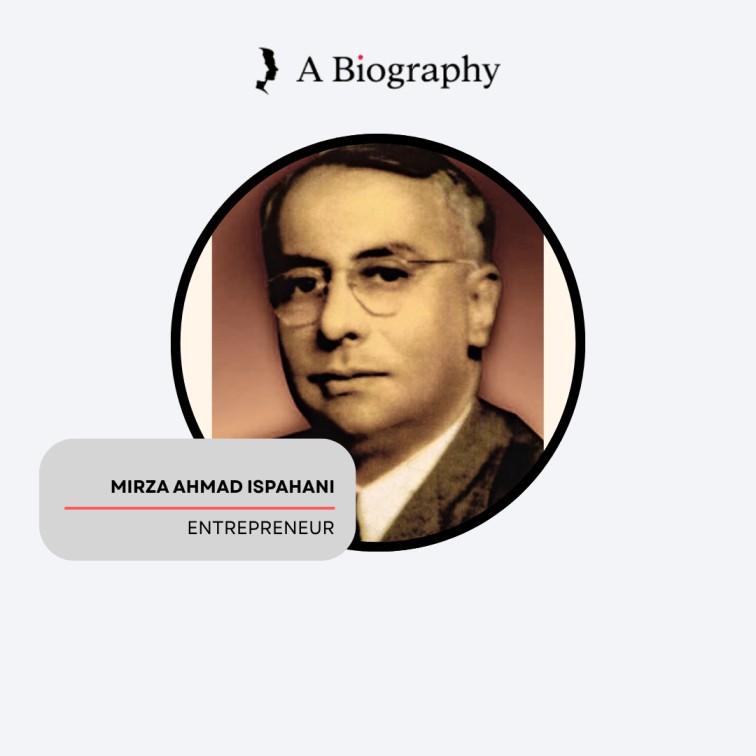
Introduction
October 23, 1946. Evening. In a Calcutta office, light burns intensely. Scattered across the table are aircraft construction blueprints, shareholder agreements, and the blueprint of an indomitable dream.
In this room sit two men. One is Adamjee Haji Dawood — an industrialist from Karachi. The other is Mirza Ahmad Ispahani — a respectable Muslim businessman from Calcutta. They are about to sign a historic document. The document is titled: The founding papers of Orient Airways.
Outside, the sky over Calcutta is cloudy. The winds of the partition of British India are blowing everywhere. Leaders of the Muslim League are dreaming of a new country called Pakistan. And Mirza Ahmad is dreaming — Pakistan’s flag will fly in the sky, and his airplanes will carry that flag.
Who knew that this airline would one day become known to the world as Pakistan International Airlines (PIA)? And who knew that this man would build the foundation of one of South Asia’s most powerful business empires?
Today’s story will uncover the unwritten history of the Ispahani empire. The dream of a young man, the sacrifices of a family, the story of changing the fate of two nations. Prepare yourself.
At a Glance — Life of Mirza Ahmad Ispahani
Right at the start of the thriller, let’s get to know our hero’s profile:
| Information | Details | Thriller Note |
| Full Name | Mirza Ahmad Ispahani | The title ‘Mirza’ indicates Persian aristocratic lineage |
| Birth | 1898, Rangoon, British Burma (now Myanmar) | The Ispahani family’s business was expanding across British Empire provinces |
| Death | 1986 (aged 87-88) | An era ends, but the legacy is immortal |
| Father | Mirza Mohammad Ispahani | One of the top businessmen of the Indian subcontinent; he too inherited from his father |
| Mother | Sakina Sultan Ispahani | Daughter of a respectable family; taught religious and social values |
| Siblings | Abul Hasan Ispahani, Mirza Mahmud Ispahani | Three brothers managed the enterprise together; Abul Hasan was active in anti-British politics |
| Wife | Rokeya Ispahani | Helped strengthen the family foundation |
| Children | Mirza Mehdi Ispahani (also known as Sadri Ispahani) | Only son who learned business directly from his father |
| Profession | Businessman, industrialist, airline founder | One of the most influential entrepreneurs of 20th century South Asia |
| Founded Airline | Orient Airways (1946), which became Pakistan International Airlines (PIA) | The first private airline in South Asia |
| Business Empire | Ispahani Group — Tea, Jute, Textiles, Shipping, Shipbuilding, Power, Real Estate, Packaging, ISP | Expansion across various sectors for over five decades |
| Special Institutions in Bangladesh | Ispahani Islamia Eye Hospital (1960), Cumilla Ispahani Public School & College (1962), Ispahani Public School & College (1979) | Revolutionary contributions to education and healthcare |
| Awards (Institutional) | 2003 – Enterprise of the Year, 2014 – Business Executive of the Year, 2017 – Green Business Climate Award | The institution continues to receive recognition even after his death |
| Special Achievements | First tea exporter from Bangladesh; played role in forming Pakistan Shipping Corporation | Pioneer in tea and shipping sectors |
| Historical Relevance | After the Liberation War, properties were confiscated under ‘Enemy Property’ Act; met with Bangabandhu and got them back | A complex chapter of history; Bangabandhu amended the law to return his assets |
Between every line of this table lies the history of wins and losses of a business empire during the journey from British India to independent Bangladesh. The line “Assets returned by Bangabandhu” opens the door to the most mysterious chapter of history.
Early Life
3.1 Birth — 1898, Rangoon, the Heart of the British Empire
1898. Rangoon, capital of British Burma (now Myanmar). At that time, one of the most important commercial centers of the British Empire. Trade in rice, tea, timber, and gemstones flourished here.
In this prosperous city, Mirza Ahmad Ispahani was born. His father, Mirza Mohammad Ispahani, was already one of the most successful businessmen of the Indian subcontinent. The family’s business was already widespread — from jute to tea, from export to shipping — they had a foothold in everything.
Why was he born in Rangoon? The Ispahani family’s business was spread across Burma and India. During British rule, Burma was also part of the British Empire, so they had a presence there for business convenience.
3.2 Family Roots
The original roots of the Ispahani family lie in the city of Isfahan, Iran. The surname ‘Ispahani’ means ‘resident of Isfahan’. For generations, they had settled in the Indian subcontinent.
In 1820, Haji Mohammad Hashim came from Iran to Bombay and established a business foundation. Gradually, their business expanded to Madras, Calcutta, Rangoon, and later Dhaka. Their religion was Islam (Shia sect), but their approach to business was modern and progressive.
Mirza Ahmad’s grandfather, Mirza Mehdi Ispahani, opened the first branch office in Dhaka in 1888. This Dhaka office later became the foundation of the Ispahani empire’s Bengal branch.
3.3 Education
Mirza Ahmad’s education began in Madras (now Chennai, India). He studied at an English-medium school there. From an early age, he gained proficiency in English, Urdu, Persian, and Bengali.
During his time in Madras, he not only studied books but also learned the basics of commerce. He learned about different branches of the family business. During holidays, he traveled with his father to Calcutta and Chittagong. Thus, he grew up in a business environment from childhood.
3.4 Stepping into Calcutta at Age 20
1918. At just 20 years old, he joined his father’s business in Calcutta. Although he started from the bottom, he quickly made his mark with his talent.
Father Mirza Mohammad, seeing his son’s intelligence, appointed him a junior partner within a short time. The Ispahani name was quite respected in Calcutta’s busy commercial circles at that time.
During this period, he learned the techniques of business not only from his father but also from British, Parsi, and Gujarati businessmen. He saw how to make contracts, how to negotiate, how to take risks.
Education
Not much is known about Mirza Ahmad Ispahani’s formal education. However, it is certain that he studied at a school in Madras. At that time, Madras was one of the educational centers of British India. Studying at an English-medium school there, he gained proficiency in English, mathematics, and accounting — skills necessary for business.
But his real education began in his father’s office. From his father, he learned how to make business contracts, how to take risks, how to import and export goods according to market demand. He never had the opportunity for higher education abroad, but the ‘degree of experience’ he received from his father was more valuable than any institutional degree.
He gained proficiency in several languages — English, Urdu, Persian, Bengali, and probably also knew Burmese. These languages were extremely necessary for business.
When he took over the business at a young age after his father’s death, he made intelligence and strategy his main weapons, not formal education. He also shared the business with his siblings — mutual understanding and coordination were their core strength.
Struggle and Adversity
Mirza Ahmad Ispahani’s business life is not just a story of success. Numerous crises, challenges, and adversities made every chapter of his life more colorful and dramatic.
5.1 First Struggle (1925)
May 1925. The Ispahani family was shattered by sad news. The head of the business, Mirza Mohammad Ispahani, passed away. Mirza Ahmad was only 27 years old then.
The responsibility of a vast business fell on the shoulders of a young man. Beside him were his two brothers — Abul Hasan Ispahani and Mirza Mahmud Ispahani. The three brothers decided to manage the company, ‘Mirza Mohammad Ispahani & Partners’ , together.
By then, the Ispahani name was quite respected in Calcutta’s business circles. Alongside names like Tata, Birla, Adamjee, the Ispahanis also competed. With the combined efforts of the three brothers, the company became even stronger. In 1934, they converted the company into a limited liability company. This was the first step in the modernization of the Ispahani empire.
5.2 Second Struggle (1947)
1947. The time had come for India and Pakistan to separate. Chaos, riots, looting everywhere. Uncertainty about Calcutta business. The Ispahani family’s business was divided.
Mirza Ahmad had to make a difficult decision — where would he stay? Staying in Calcutta was risky; going to the new Pakistan meant starting over.
He decided: he would go to East Pakistan (now Bangladesh) . He saw the endless potential of East Bengal. So in 1947 itself, he transferred the company’s head office to Chittagong.
This was a display of extraordinary foresight. If they had stayed in Calcutta, they might have survived, but they would never have been able to play the role they did in the development of East Pakistan. He came to Chittagong and established jute mills, tea gardens, and shipping companies.
5.3 Third Struggle (1946-1955)
October 23, 1946. Mirza Ahmad and Adamjee Haji Dawood established Orient Airways in Calcutta. British India had not yet been partitioned. But the seed of the dream of Pakistan had been sown. No one knew that this airline would one day become Pakistan’s national airline.
After partition, Orient Airways moved to East Pakistan. This proved how actively the Ispahanis wanted to play a role in building the new country.
On March 11, 1955, Orient Airways merged with the airline proposed by the Pakistan government to become ‘Pakistan International Airlines Corporation’ — PIA. Mirza Ahmad Ispahani became the first Chairman of PIA.
At the time of PIA’s establishment, he was not just a businessman; he was a dreamer of the new country. Pakistan’s founder, Muhammad Ali Jinnah, had requested him to build a national airline for the country.
5.4 Fourth Struggle (1971-1972)
After Bangladesh’s independence in 1971, the new government enacted the ‘Enemy Property Act’ to confiscate properties of minorities and pro-Pakistan businessmen from the Pakistan era.
Most of the Ispahani Group’s properties were identified as created during the Pakistan era and owned by Pakistanis. Although Mirza Ahmad Ispahani had made East Pakistan his home, in the eyes of the law, he was a ‘citizen of another country’.
As a result, properties worth millions of taka — tea gardens, factories, land, buildings — were all seized by the government. This was the biggest blow to the Ispahani empire. A lifetime of creation, about to disappear in an instant.
Mirza Ahmad was then a 73-year-old elderly man. Physically weak, mentally stunned. But he did not give up.
5.5 Fifth Struggle (1972)
In 1972, Mirza Ahmad Ispahani went directly to the Prime Minister, Bangabandhu Sheikh Mujibur Rahman. What happened in that meeting? What historians have written reads like a movie scene.
Bangabandhu asked him, “How are you?”
Mirza Ahmad replied, “How can I be well when you have taken all my property?”
Bangabandhu remained silent for a while. Then he called his Principal Secretary. He instructed: “Make arrangements to return Mirza Ispahani’s property.”
The Secretary, surprised, said, “Sir, according to the law, all enemy property has been nationalized. To return Mirza Ispahani’s property, the law must be changed in Parliament.”
Bangabandhu did not hesitate. He said, “Then change the law. Return his property.”
This was a historic moment. A country’s Prime Minister decided to change the law for a businessman. Bangabandhu called him a ‘Servant of Bangladesh’ and understood the importance of his institution.
However, he did not get all the property back. Bangabandhu returned only the Sylhet tea gardens and Chittagong tea factories so that tea exports could resume. The remaining properties were settled separately later. This comeback was the biggest ‘victory’ of Mirza Ahmad’s life.
5.6 Sixth Struggle (1977)
In 1977, President Ziaur Rahman offered him the chairmanship of Biman Bangladesh Airlines. His experience and reputation in the aviation industry were unparalleled. If he had become chairman, Biman might have achieved even greater success.
But Mirza Ahmad was then elderly — close to 79 years of age. He politely declined the offer.
This shows his humility and honest character. He was not greedy for power or position. He wanted to spend the last part of his life in peace.
5.7 Lessons Learned
Overcoming these five adversities, he created a new chapter of business in Bangladesh from Pakistan. Each adversity taught him something new:
- First lesson: After father’s death, the unity of the three brothers was essential to sustain the business. They did that.
- Second lesson: Choosing the right place during partition determined the future of the business. The decision to choose East Pakistan was correct.
- Third lesson: One must know how to take risks. The aviation industry was extremely risky, but he succeeded.
- Fourth lesson: Patience and strategy are crucial in danger. He did not panic after losing his property; instead, he sought Bangabandhu’s help.
- Fifth lesson: Not being greedy for power and position. He could have become chairman of Biman but declined it in old age.
Chapter 6: Love
6.1 Rokeya Ispahani
Very little information is available about Mirza Ahmad Ispahani’s personal life. He married Rokeya Ispahani. She was a respectable housewife. Her words and deeds were always kept behind a veil of privacy.
Rokeya was her husband’s unwavering support. She managed the household with patience through the ups and downs of business. While her husband traveled between Calcutta, Chittagong, London, she raised the children. She too was as cultured as her husband.
6.2 Son Mirza Mehdi Ispahani
Mirza Ahmad’s only son, Mirza Mehdi Ispahani (also known as Sadri Ispahani), was born in 1923. Mirza Ahmad wanted his son to take over the business. So he trained him in every branch of the business from an early age.
In 1949, Mirza Mehdi was appointed Chairman of M. M. Ispahani Limited. He was only 26 years old then. Taking on this responsibility at such a young age was extraordinary. He held this position until his death in 2004.
Mirza Ahmad trusted his son and himself stepped back from the family business in 1948 to focus on public service. This is a rare example — the business owner stepped aside to give his son the opportunity.
6.3 Relationship with Siblings
Mirza Ahmad was responsible towards his two brothers. After their father’s death in 1925, the three brothers managed the company together. Abul Hasan Ispahani was active in anti-British politics, while Mahmud Ispahani helped strengthen the business foundation.
When they converted the company into a limited company in 1934, all three were directors. This family relationship and trust solidified the foundation of the Ispahani empire.
Mirza Ahmad kept the family bond intact until his death. In his final years, he found joy in seeing his grandchildren. He wanted his institution to survive as a family tradition.
Personal Life
7.1 Simple Living
Mirza Ahmad Ispahani was extremely simple and humble in his personal life. He avoided luxury. He stood out among the industrialists of Calcutta and Chittagong.
He wore simple clothes, ate simple food. He did not use luxurious foreign cars. While living in Chittagong, he led a modest life.
A story goes — in 1981, when oil prices rose from $16 to $36 per barrel, he told a friend, “These kings and sheikhs will bow their heads within a year; oil prices will fall again.” Within a year, his prediction came true. This proves how deeply he understood the global economy.
7.2 Religious Life
Mirza Ahmad was a devout Muslim (Shia sect). He regularly offered prayers and fasted. He followed religious rules.
But he never used religion as a business tool. He believed that honesty and trustworthiness were the greatest religion in business. He avoided fraud and usury in business.
This moral stance gave the Ispahani Group an unblemished reputation. The institution still carries forward those values today.
7.3 Philanthropy
Mirza Ahmad was a silent donor. He never publicized his charitable work. He believed that if you do good, it’s better not to publicize it.
He donated money to countless madrasas, mosques, and schools from Teknaf to Tetulia. Very few people know about these donations.
His greatest donations were the establishment of Ispahani Islamia Eye Hospital and Ispahani Public School & College. These institutions continue to serve thousands of people today.
7.4 Sincere Nature
Those who worked under him have praised his sincerity and simplicity. He never shouted, never raised his voice. He treated employees with fatherly affection.
Executives called him ‘Mirza Saheb’ instead of ‘Sir’. He never behaved officially unnecessarily. Employees respected him as well.
7.5 Spending Time with Family
Despite his business busyness, he made time for his family. He regularly talked with his son Mirza Mehdi, spent time with his grandchildren. He wanted his family members to be happy.
He taught: No matter how big the business, family is bigger.
Future Plans and Goals
Mirza Ahmad Ispahani dreamed of making the Ispahani brand the most trusted brand in South Asia. His plans included various goals:
8.1 Ispahani Tea
He wanted Ispahani Tea to be everyone’s first choice. To that end, he focused on improving tea quality. He started the first tea exports from Bangladesh.
He wanted to make the tea pricing system fair. Once, during a tea auction, he attended and encouraged bidders to raise the price of tea.
Today, Ispahani Tea is the most popular tea brand in Bangladesh. About 50% of the branded tea market in the country is under Ispahani’s control.
8.2 New Ventures in the Aviation Industry
After paving the way for Orient Airways and PIA, he wanted Bangladesh to develop its own aviation industry one day. In 1977, when offered the chairmanship of Biman, although he declined, he never hesitated to offer advice.
President Ziaur Rahman would regularly call him for advice on industrial matters. His experience in aviation and industry was unique.
8.3 Expansion of Education and Health Sectors
He wanted Ispahani Islamia Eye Hospital to become the highest standard eye hospital in the country. To that end, he invested in modernizing the hospital. Today it is the largest eye hospital in the country.
He also wanted to modernize the educational institutions further. He regularly supervised quality improvement at the Ispahani Public Schools & Colleges in Cumilla and Dhaka.
8.4 Business Diversification
He did not stop at just tea and aviation. The Ispahani Group entered every sector — jute, textiles, shipping, plywood, matches, real estate, power generation.
He wanted the Ispahani Group to build an empire that would be diversified and sustainable. That dream has been fulfilled. In the late 1940s, the Ispahani Group was the largest exporter of shellac, kapok, jute bags, tea, and chemicals.
8.5 Partnership in National Development
Mirza Ahmad did not think only about his own business. He thought about the development of the entire country. He was the founding chairman of the Pakistan Industrial Development Corporation. He played an important role in establishing air links between East and West Pakistan.
He believed that business and national development go hand in hand. Therefore, every initiative of his was part of the country’s development.
Career
Mirza Ahmad Ispahani’s career can be divided into several chapters. Each chapter was a story of new challenges and new successes.
9.1 First Chapter (1918-1925)
In 1918, at just 20 years old, Mirza Ahmad joined ‘Mirza Mohammad Ispahani & Partners’ in Calcutta. Initially, he worked as an apprentice under his father.
He learned business strategies from his father. He saw how to make contracts, how to bargain for goods, how to create new markets. Satisfied with his father’s approval, he was elected a junior partner within a short time.
9.2 Second Chapter (1925-1934)
When his father died in May 1925, the three brothers took over the business. Mirza Ahmad became the Senior Partner. During this time, the three brothers jointly managed the company.
He realized that in the era he was doing business, being a limited liability company was essential. So in 1934, he converted the company into a limited company named ‘M. M. Ispahani Limited’ .
This decision strengthened the foundation of the Ispahani empire. The company was now a legally independent entity, reducing risk.
9.3 Third Chapter (1946-1955)
October 23, 1946, Calcutta. The day Orient Airways was established is memorable in business history. Mirza Ahmad and Adamjee Haji Dawood were co-founders of this airline.
It started with just 3 Douglas DC-3 aircraft, purchased from the USA. Although starting with so few planes, it later became the most important airline in the subcontinent.
After partition in 1947, Orient Airways’ head office moved to Karachi. At the same time, air links with East Pakistan were established. Air communication between East and West Pakistan was extremely important.
On March 11, 1955, Orient Airways merged with the Pakistan government to become ‘Pakistan International Airlines Corporation’ — PIA. Mirza Ahmad Ispahani became the founding Chairman of PIA.
9.4 Fourth Chapter (1947-1971)
After moving to East Pakistan after partition, Mirza Ahmad opened new branches of business. In Chittagong, he established jute mills, textile engineering factories, match and plywood factories.
In 1948, he entered the tea industry. And started the first tea exports from Bangladesh. The Ispahani name reached the top in the tea industry.
He also played a role in forming the Pakistan Shipping Corporation. He believed that controlling sea transport of goods was essential for business growth.
9.5 Fifth Chapter (1972-1986)
After the Liberation War, although his properties were confiscated, he got some back through Bangabandhu’s intervention. After that, he continued working vigorously.
Even after crossing 80, he remained active. He invested more in education and health. He established Ispahani Public School & College in 1979.
He remained involved in business until his death in 1986. His grandchildren were gradually joining the business.
Travel and Diverse Experiences
Due to the Ispahani family’s international business, Mirza Ahmad traveled to various countries around the world. Each trip taught him something new.
- Rangoon (Myanmar) — Childhood memories: He spent his early years where he was born. The busy port and commercial center of Rangoon taught him the first lessons of business.
- Madras and Calcutta — Education and business beginnings: He studied in Madras. He joined his father’s business in Calcutta. In Calcutta’s business circles, he had the opportunity to compete and cooperate with Tata, Birla, Adamjee.
- London — Stepping into the British market: The Ispahani Group had an office in London since 1900. Mirza Ahmad went to London to arrange tea and jute exports to the British market. He built relationships with European businessmen.
- New York and international trade centers — He traveled to the USA for airline meetings and international trade discussions. He learned about business practices, technology, and human resource management there.
- Jeddah and the Middle East — Ispahani products were also exported to the Middle Eastern market. So he had to travel to Saudi Arabia, the United Arab Emirates, and other countries.
- Villages of Bangladesh — Where true education lies: More important than foreign travel was his presence in the villages of Bangladesh. He visited tea gardens and weavers’ areas firsthand. He observed the business environment in the villages of Chittagong, Sylhet, Cumilla, and Tangail.
He believed that to make the right decisions, one must know the reality. So he mixed with people in villages, understood their problems.
Failures and Learning Moments
11.1 The Biggest Failure in Mirza Ahmad’s Life
The biggest failure in Mirza Ahmad Ispahani’s life was the confiscation of most of his properties under the ‘Enemy Property Act’ after the Liberation War.
It was not just financial loss. It devastated him mentally. Because he had dedicated himself to the development of East Pakistan. He had worked for the people of this country for decades. Yet he was labeled an ‘enemy’.
But he did not give up. Instead, he fought legally. He sought Bangabandhu’s help. Eventually, he got some properties back.
Lesson: His contribution to Bangladesh was recognized. He never gave up, but fought with patience and strategy. This is a big lesson — in danger, one must not lose patience but take appropriate steps.
11.2 Another Failure
When Orient Airways merged with the Pakistan government to form PIA, the airline went from private ownership to state hands. Mirza Ahmad could not fully enjoy its benefits.
But he never regretted this. He prioritized ‘national development over self-interest’ .
11.3 Learning Moments
- Lesson No. 1: Legal measures must be taken to protect property. Many properties were lost because there were no written documents.
- Lesson No. 2: It is important to understand the relationship between business and politics. He got his properties back by meeting with Bangabandhu. Otherwise, everything might have been lost.
- Lesson No. 3: Never be someone who gives up. Even at 73, he fought anew.
Sources of Inspiration
The main source of inspiration for Mirza Ahmad Ispahani was his father, Mirza Mohammad Ispahani. He saw with his own eyes how his father managed the family and business. After his father’s death, he walked the same path.
The second inspiration was the development of the people of Bengal. By establishing educational and health institutions in Chittagong and Dhaka, he proved that he desired not just business success but also the welfare of society.
The third inspiration was the mentality to take on new ventures and risks. Entering the aviation industry was extremely risky, but he succeeded. By starting tea exports, he created a new market for Bangladesh.
The fourth inspiration was Bangabandhu’s trust. When Bangabandhu changed the law to return his property, he became even more energized. He wanted to prove that he would leave his legacy as a servant of Bangladesh.
Influences and Inspirations
Mirza Ahmad Ispahani is an icon to the business community of Bangladesh. His tea brand ‘Ispahani’ is still the most popular tea in the country.
Businesspeople of the current generation see him as a ‘role model’ . Notably, the Ispahani Group received the ‘Enterprise of the Year’ award in 2003 and the ‘Best Brand Award’ in 2018 — which proves that even after his death, his institution follows his guidance.
Young generation businessmen say, “Ispahani means trust and quality.” Ispahani’s business case study is taught in various universities. His contributions to education and health are memorable in Bangladesh’s development history.
He influenced not only his own family but the entire country’s business community. He contributed to the Pakistan Industrial Development Corporation, Muslim Commercial Bank, and the Jute Board.
Philosophical Views and Beliefs
Mirza Ahmad Ispahani believed, “Business is not just for personal wealth accumulation; it should be used for the welfare of the people of the country.”
Therefore, a portion of his institution’s profits would be spent on building educational institutions and hospitals. As a devout Muslim, he avoided fraud and usury in business. This philosophy has passed from generation to generation, and the Ispahani Group remains a symbol of ethical business today.
He would say, “Trust and confidence are the greatest strengths. If you can earn the customer’s trust, business succeeds.”
Another philosophy was ‘foresight’ . In 1981, he predicted the oil market, which came true. Before making business decisions, he would think about the future.
Honesty — He never broke a contract. He never cheated. This honesty keeps the Ispahani brand trusted even today.
Unique Aspects of Character
15.1 Silent Donor:
Mirza Ahmad never publicized his charitable work. Take Ispahani Islamia Eye Hospital as an example. He donated money to mosques, madrasas, and schools from Teknaf to Tetulia — very few people know this.
15.2 Revolutionary Entrepreneur:
He stepped into the aviation industry when no one dared. He established the first private airline in the subcontinent.
15.3 Composed Personality:
Even during business rivalries, he never lost his composure. He never raised his voice, never behaved indecently.
15.4 Friend of Bengalis:
Even during the Pakistani regime, he emphasized hiring and training Bengali workers. He chose East Pakistan, not West Pakistan.
15.5 Keeping Family Bonds Intact:
He managed the business with his three brothers and other relatives. He did not establish sole authority. He made everyone a partner. This remains a top example of family business in Bangladesh today.
Contributions, Awards, and Achievements
Contributions
- Aviation Industry: Revolutionized South Asian aviation by establishing Pakistan International Airlines (PIA).
- Tea Industry: Expanded the country’s trade as the first tea exporter from Bangladesh.
- Health Sector: Established Ispahani Islamia Eye Hospital (1960) — the country’s best and largest eye hospital.
- Education Sector: Expanded education by establishing Cumilla Ispahani Public School & College (1962) and Ispahani Public School & College (1979).
- Industrial Sector: Played a revolutionary role in tea, sugar, jute, shipbuilding, power generation, and real estate.
Awards and Honors
Mirza Ahmad Ispahani himself did not receive any notable awards. However, his institution received various recognitions:
- 2003 – Enterprise of the Year (Bangladesh Business Award)
- 2004 – AmCham Business Executive of the Year (Managing Director M. Salman Ispahani)
- 2017 – Green Business Climate Award
- 2018 – Best Brand Award
He did not receive the Bangladesh Independence Award during his lifetime, but the government has always recognized his institution’s courage and economic contribution. The hangar at Jinnah International Airport in PIA is named ‘Mirza Ahmad Ispahani Hangar’ .
Controversies
17.1 Main Controversy
The controversy in Mirza Ahmad Ispahani’s life revolves around his role during the Pakistan era. Some believe he was close to the Pakistan government, especially during PIA’s creation. Therefore, his property was confiscated in independent Bangladesh.
But the reality is — he did business not only with the Pakistan government but also with the governments of India and Burma. He was neutral as a businessman, not a politician. And he had made East Pakistan his home. So labeling him an ‘enemy’ is controversial.
17.2 Bangabandhu’s Law Change
When Bangabandhu changed the law to return Mirza Ahmad’s property, there was criticism from leftist circles. Some say government assets were distributed for personal gain.
But Bangabandhu himself addressed him as ‘Servant of Bangladesh’ and stated that he made this decision in the interest of restarting tea exports.
17.3 Coming to Chittagong after Partition
Another controversy — why did he come to East Pakistan after partition? Some think it was difficult for a minority businessman to survive in Calcutta, so he came to East Pakistan.
But the development he did after coming to East Pakistan is undeniable. Tea gardens, factories, educational institutions, hospitals — he built everything. So it was a decision of patriotism, not convenience.
17.4 End of Controversy
Controversies remain. But his creations — tea and educational institutions — have found a place in the hearts of Bangladeshis. Literary figures and historians know him more as a ‘visionary industrialist’ and ‘philanthropist’ .
Opinions and Interviews of Contemporaries
18.1 Bangabandhu Sheikh Mujibur Rahman:
Bangabandhu addressed him as ‘Servant of Bangladesh’ . This was a great recognition.
18.2 Ziaur Rahman:
Former President Ziaur Rahman, recalling Mirza Ahmad’s experience in the aviation industry, offered him the chairmanship of Biman. He would regularly call him for advice on industrial matters.
18.3 G. M. F. Abdur Rab
In a 2007 recollection in The Daily Star, he wrote:
*”Mirza Ahmad Ispahani’s business acumen was so sharp that whatever he predicted would come true. In 1981, when oil prices rose from $16 to $36 per barrel, he told me: ‘These kings and sheikhs will bow their heads within a year, and oil prices will fall again.’ Within a year, it came true. His foresight, determination, and self-confidence were unparalleled.”*
18.4 An Executive of the Ispahani Group
An official of the group said, “Mirza Ahmad never raised his voice. He was humble and polite. We learned from him — to be a big businessman, you need a big heart.”
Myths and Misconceptions
| Myth | Reality |
| Mirza Ahmad Ispahani was a collaborator of Pakistan and left Bangladesh after independence | Truth: He remained in Bangladesh. Despite property confiscation, he did not leave the country and continued legal battles to get his property back |
| Ispahani Group only deals in tea business | Truth: The group’s business spans aviation, shipping, textiles, jute, power, education, and healthcare |
| Ispahani Islamia Eye Hospital was a government initiative | Truth: Mirza Ahmad Ispahani established it on his own initiative |
| He was born wealthy and never struggled | Truth: He faced many adversities: managing the business as a young man after his father’s death, restructuring after partition, and property confiscation |
| Mirza Ahmad Ispahani was never involved in politics | Truth: He did not contest elections directly, but contributed economically to the Pakistan Movement and the building of Bangladesh |
| All Ispahani Group institutions shut down after his death | Truth: They are still active and successful. Approximately 20,000 people work under the group |
Mirza Ahmad Ispahani’s Quotes and Thoughts
Although no direct quotes from Mirza Ahmad Ispahani are preserved, some valuable sayings have been collected from contemporaries’ recollections:
On business philosophy:
“I learned from my father: there will be wins and losses in business, but never lose honesty and trustworthiness.”
“If you want to do something big in business, you have to understand the needs of the people of the country. Business doesn’t last long if you only look at profit.”
On the aviation industry:
“PIA was not created without the dream of traveling the skies. There is no doubt that Bangladesh will one day have its own aviation industry.”
To the younger generation:
“Dream, and then move forward on the path to fulfilling it. Education and healthcare are the keys to development.”
Message for the Present Generation
If Mirza Ahmad Ispahani were alive today, what he would say to the younger generation:
- Dream — “You cannot achieve anything big without dreams. I dreamed of the aviation industry, and I made it happen.”
- Keep honesty — “You cannot survive in business long-term by cheating. Earn the customer’s trust, and everything is possible.”
- Work for the country — “Business is not just for yourself. There is no meaning if you don’t do something for the welfare of the people of the country.”
- Be patient in danger — “My properties were confiscated, but I patiently fought legally. Don’t give up.”
- Give importance to education — “Education and health are the backbone of a nation. I built many educational institutions and hospitals.”
- Protect family bonds — “No one becomes big alone. Know how to take help from family and the team.”
Current Life and Death
Mirza Ahmad Ispahani passed away in 1986. He was 87-88 years old. His death brought mourning to Bangladesh’s industry and education sectors.
Place of death: He remained in Bangladesh until the end. He likely died in Dhaka or Chittagong.
Funeral: The exact location of his burial is not known. However, many Ispahani family members have been buried in the family graveyard in Chittagong.
Legacy:
- His son Mirza Mehdi Ispahani (Sadri Ispahani) managed the business until 2004.
- His grandchildren are now managing the business — Mirza Ali Behrouz Ispahani (Chairman from 2004-2017), Mirza Salman Ispahani (current Chairman), Mirza Sajid Ispahani, and Mirza Shakir Ispahani.
- They are following the path of ‘business foresight’ and ‘social welfare’ . The group’s reputation remains unquestioned.
- Ispahani Tea and Ispahani Public School — these names alone have found a place in the hearts of Bengalis. Mirza Ahmad is gone, but his legacy lives on in the hearts of Bengalis.
Successors and Lasting Impact
Successors:
Mirza Ahmad Ispahani’s direct son, Mirza Mehdi Ispahani, was involved in the business during his father’s lifetime. He was appointed Chairman of M. M. Ispahani Limited in 1949.
After his father’s death, Mirza Mehdi served until 2004. Then his son Mirza Ali Behrouz Ispahani became Chairman. After Behrouz’s death in 2017, Mirza Salman Ispahani became the next Chairman.
Currently, four grandsons — Salman, Sajid, Shakir, and Behrouz (deceased) — are engaged in various responsibilities of the Ispahani Group. The group now invests in about 15 sectors, including Pahartali Textile Mill, Ispahani Foods, Ispahani Agro, Broadband Telecom, Shipping, and Real Estate.
Lasting Impact:
- Impact on Bangladesh’s industry: The Ispahani Group is the oldest (established 1820) and most respected conglomerate in Bangladesh. More than 20,000 people work here.
- Tea industry: Ispahani controls 50% of the country’s branded tea market and 80% of the tea bag market.
- Impact on education: Ispahani Public School & College (Dhaka and Cumilla) has secured places in the list of the country’s best educational institutions.
- Impact on healthcare: Ispahani Islamia Eye Hospital is the largest and most respected eye hospital in Bangladesh.
Mirza Ahmad Ispahani left behind not just an empire, but an ideology — a unique example of how business and social service can go hand in hand.
Unknown Facts
- Mystery of birth in Rangoon: The Ispahani family’s business was spread across Burma and India. They had commercial interests in Burma, so Mirza Ahmad was born there.
- Father’s ideal: Mirza Mohammad Ispahani died in 1925. Mirza Ahmad was only 27 then. He continued the business according to his father’s wishes.
- Struggle for airline license: Establishing Orient Airways required a hard fight to get a license from the Indian government.
- Jinnah’s request: Pakistan’s founder, Muhammad Ali Jinnah, requested Mirza Ahmad Ispahani to build a national airline for the country.
- Oil price prediction: When oil prices rose from $16 to $36 in 1981, he predicted prices would fall within a year. And it happened.
- Mystery of the meeting with Bangabandhu: He directly told Bangabandhu, “How can I be well when you have taken all my property?” — this statement left Bangabandhu with no choice but to respond.
- Bangabandhu’s statement: Bangabandhu instructed his Principal Secretary, “Change the law, but return his property.”
- Behavior with employees: He never raised his voice. Employees considered him fatherly.
- Construction of Cumilla Ispahani School: It is known that he personally collected funds for establishing the school and inspected every brick himself during construction.
- Silent donor: He donated money to countless mosques, madrasas, and schools from Teknaf to Tetulia, which he never publicized.
1898 to 1986 and Beyond
| Year | Event | Thriller Note |
| 1898 | Born in Rangoon | Expansion of Ispahani empire in British Burma |
| 1918 | Joined father’s business in Calcutta | Entered commerce at just 20 |
| 1925 | Father Mirza Mohammad Ispahani dies | Business responsibility falls on three brothers |
| 1934 | Converted company to limited company | Modernization of business |
| 1946 | October 23 — Established Orient Airways | Revolution in subcontinent aviation |
| 1947 | Partition — Head office moved to Chittagong | Beginning of East Pakistan’s development |
| 1948 | Stepped back from family business | Focused on public service, gave son responsibility |
| 1955 | March 11 — PIA formed | Mirza Ahmad becomes founding Chairman |
| 1960 | Established Ispahani Islamia Eye Hospital | Beginning of country’s largest eye hospital |
| 1962 | Established Cumilla Ispahani Public School & College | Important chapter in education expansion |
| 1971 | Bangladesh independence — properties confiscated under ‘Enemy Property Act’ | Extreme adversity |
| 1972 | Personal meeting with Bangabandhu and recovery of properties | Mysterious chapter of history |
| 1977 | Declined Ziaur Rahman’s chairmanship offer | Disinterest in power |
| 1979 | Established Ispahani Public School & College (Dhaka) | Another milestone in education movement |
| 1986 | Mirza Ahmad Ispahani passes away | Farewell to the architect of Ispahani empire |
| 1987 | Son Mirza Mehdi establishes Mirza Ahmad Ispahani High School | Immortalizing father’s name |
| 2003 | Ispahani Group receives ‘Enterprise of the Year’ award | Recognition continues |
| 2017 | Receives ‘Green Business Climate Award’ | Focus on sustainable business |
| 2024 | 38th death anniversary observed | Remembered even after 38 years |
Conclusion
Mirza Ahmad Ispahani was not just a businessman — he was a dreamer. At the beginning of the 20th century, establishing an aviation industry in the soil of Bengal was beyond imagination. Yet he made it happen.
- Establishing PIA — One of the most important airlines in South Asia, which connected East and West Pakistan.
- Revolutionary change in the tea industry — Started the first tea exports from Bangladesh, playing a vital role in the country’s economy.
- Building education and health institutions — Ispahani Public School & College and Ispahani Islamia Eye Hospital are still dedicated to serving Bengalis.
He proved how business and social welfare can go hand in hand. Just as Ispahani Tea finds a place on the breakfast tables of Bengalis every morning, Mirza Ahmad Ispahani’s legacy resonates in the hearts of Bengalis every day.
Today, over half a century after Bangladesh’s independence, the glory of the Ispahani brand has not diminished. This has been possible because of his foresight, honesty, and hard work.
Receiving the ‘Enterprise of the Year’ award in 2003, the ‘Best Brand Award’ in 2018 — all prove that Mirza Ahmad Ispahani’s successors have maintained success by walking the path he showed.
He may no longer be here, but the institutions, ideals, and love he left behind are immortalized in the hearts of Bengalis. From Rangoon to Chittagong, from his father’s office to the Chairmanship of PIA — this is the story of an extraordinary journey. A story of losing everything under the ‘Enemy Property’ Act and then making a comeback.
Mirza Ahmad Ispahani — an unforgettable dreamer of Bengal.
Final Words:
He showed how business and social welfare can go hand in hand. The Ispahani brand will remain with Bengalis forever, throughout eternity. We only need to remember — behind this brand lies the dream, struggle, and honesty of an indomitable man.
Just as the first cup of Ispahani tea in Bengal wakes you up in the morning, may Mirza Ahmad Ispahani’s story awaken aspiring entrepreneurs of Bengal, inspire them to dream, and give them the motivation to do something new.
Thank you, Mirza Ahmad Ispahani. Though you are not here, your honesty, foresight, and patriotism will live within us — forever.
“I learned from my father: there will be wins and losses in business, but never lose honesty and trustworthiness.”
— Mirza Ahmad Ispahani (1898-1986)
A child born in Rangoon, a teenager educated in Madras, a youth who learned business from his father in Calcutta, a visionary entrepreneur who restructured business in East Pakistan, the founder of the subcontinent’s first private airline, the first Chairman of PIA, a silent donor, a patron of education, and Bangabandhu’s ‘Servant of Bangladesh’ — these words sound like chapters of a thriller. But they are all real.
In every chapter of his life, Mirza Ahmad Ispahani wrote an immortal story of struggle, honesty, and success. Behind the taste in every cup of Ispahani Tea is his tireless effort, just as behind the success of every student of Ispahani Public School is his love for education.
The present generation may not know him, may not have seen him. But his creations — from tea to aviation, from hospitals to schools — all carry his memory. His name will remain in Bangladesh’s history forever, as long as Bengalis sip a cup of Ispahani Tea, as long as PIA’s planes fly in the sky.
Because Ispahani is not just a name; it is the name of Bengal’s trust, the name of honesty, the name of an immortal legend.

