
Biography
A Biography of Mohammad Faiz Ullah

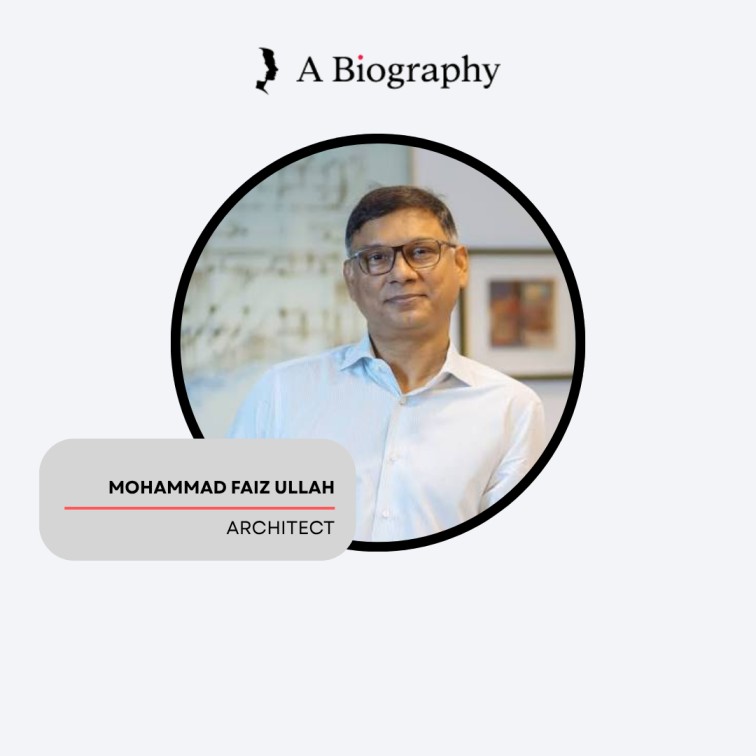
Introduction (1967–Present)
Imagine a morning. January 1, 1967. The first day of the Bengali New Year. A biting winter chill sweeps through the heart of Dhaka. Before the first light of dawn breaks, the cry of a newborn echoes through a respectable Muslim family. They name him Mohammad Faiz Ullah.
Who would he become? No one knew—that this child would one day rise as a brilliant star in Bangladesh’s architectural firmament. That his hands would shape the largest shopping mall in South Asia—Bashundhara City. That he would create Grameenphone Corporate Headquarters (GP House), an exemplary model of sustainable construction. That he would design international-standard five-star hotels—Sheraton Dhaka and The Westin Dhaka—and countless LEED Gold-certified green buildings.
Now in his late fifties, Faiz Ullah is the founder and principal architect of Volumezero Limited. He doesn’t just design buildings—he creates history. He is the only Bangladeshi architect listed in McGraw Hill’s ‘Top 50 Designers of the World.’ He has been recognized as Bangladesh’s highest taxpayer architect for four consecutive years (2018-2021). He is a pioneer of the ‘LEED Green Building’ movement, vocal about sustainable and energy-efficient designs tailored to Bangladesh’s unique climate.
But this story of success was not built in a day. No. It is a story of relentless hard work, perseverance, lessons learned from failure, and the unwavering support of his wife, Morsheda Nasmin Luna. From the classrooms of BUET to elevating Bangladeshi architecture on the world stage—this journey was never smooth.
In this epic of 28 chapters, we will walk that path—where sketches from a childhood notebook evolve into designs of colossal malls, where an architect educated entirely on home soil achieves international recognition, and where a wife becomes the true ‘architect’ of his life.
Let us dive into the unique life story of Mohammad Faiz Ullah—like a thriller, where alongside the light of achievement exists the deep darkness of struggle.
At a Glance — Life of Mohammad Faiz Ullah
| Information | Details |
| Full Name | Mohammad Faiz Ullah |
| Birth | January 1, 1967 |
| Birthplace | Dhaka, Bangladesh |
| Current Age | 58 years (as of 2025) |
| Father | A. K. M. Oliallah (Government employee & entrepreneur) |
| Mother | Sultana Begum (Homemaker) |
| Spouse | Morsheda Nasmin Luna (Married 1993) |
| Children | One son, one daughter (names not publicly disclosed) |
| Education | B.Arch (1993) & M.Arch (1997) from BUET |
| Profession | Architect, Entrepreneur, Teacher, Researcher, Designer |
| Firm | Volumezero Limited (Founder & Principal Architect, 2008); Vistara Architects (Co-founder, 1994-2008) |
| Teaching | BUET (1994-1998), BRAC University, North South University, CUET, Ahsanullah University, University of Asia Pacific |
| Notable Projects | Bashundhara City, Grameenphone HQ (GP House), International Convention City Bashundhara (ICCB), Sheraton Dhaka, The Altair, Tower 117, Shahjalal Islami Bank HQ (LEED Gold), Simpletree Anarkali (LEED Gold), Simpletree Lighthouse (LEED Gold), Akiz House, Akiz Uttaradhikar, Arhams Tower, Monotara, Mika Cornerstone, UTC, Westin Dhaka, PICL Building, Shanta Western Tower, Bashundhara Sports Complex (under construction) |
| LEED Certified Projects | Simpletree Anarkali, Shahjalal Islami Bank HQ, Simpletree Lighthouse (all LEED Gold) |
| Major Awards | BTV National Debate Champion (1990), Ahsanur Rahman Gold Medal (1997), IAB Design Award (1998), Citation Award (1998), Top 50 Designers of the World (McGraw Hill, 1999), Global Brand Excellence Award (2007), Berger Excellence in Architecture Award (2007), Honourable Mention for Liberation War Museum (2009), Holcim Green Built Award (2010, for GP House), Four consecutive NBR Awards (2018-2021) |
Notice—he is entirely educated on home soil. Bachelor’s and Master’s from BUET, no PhD from abroad. Yet he has achieved international recognition. This proves that homegrown talent and dedication can stand tall on the world stage.
Questions arise—how did a debate champion become an architect? What is the mystery behind the name ‘Volumezero’? And why is he so passionate about green buildings?
Let’s return to New Year’s Day 1967 to find the answers.
Early Life (1967–1985)
January 1, 1967. The first hour of the New Year. In a respectable Muslim family in Dhaka, a child is born. His father, A. K. M. Oliallah—a government officer and successful entrepreneur. His mother, Sultana Begum—a homemaker, affectionate, and devout.
They name him Mohammad Faiz Ullah. ‘Faiz’ means ‘abundance’ or ‘benevolence.’ As if to signal—this child would one day design abundance, build buildings of benevolence.
The story of Faiz Ullah’s siblings is highly secretive. He has never publicly spoken about his brothers or sisters. Another mystery—why does he avoid discussing his family?
One source suggests he has one elder brother and one younger sister. The elder brother (name unknown) is involved in the father’s business. The younger sister is in another profession. But their names and identities remain unknown.
As a child, Faiz Ullah was incredibly creative and curious. Sitting on the rooftop of their Dhaka home, he would observe the city—busy streets, small houses, and the distant minarets of mosques. He would wonder, “How can this city be made more beautiful and livable?”
Father’s Encouragement: His father wanted him to become an engineer or businessman. But when Faiz spoke of architecture, his father was reluctant. Once, his father asked, “What will you achieve as an architect? Build houses?”
Faiz replied, “Father, I will not build just houses. I will build dreams. Where people will live, laugh, and dream.”
His father paused. Eventually, he offered his support.
Mother’s Role: His mother, Sultana Begum, always encouraged him with love and affection. She herself enjoyed handicrafts—sewing, embroidery. She would sometimes add color to Faiz’s sketchbooks. This maternal affection fueled Faiz’s creativity.
Faiz Ullah attended primary and secondary schools in Dhaka. He was academically gifted, particularly in mathematics and science. But he was equally skilled in drawing and fine arts. He would often win first prize in school drawing competitions.
Teachers would say, “His hands possess magic. He turns a blank page into a living city, a river, a bridge.”
Once, at the school’s annual exhibition, Faiz’s drawing of a fantasy city captured everyone’s attention. A teacher asked, “Where is this place?”
Faiz replied, “In my head. One day, I will make it real.”
The teacher smiled. But Faiz held onto that dream.
In 1971, Faiz Ullah was only a four-year-old child. His family remained in Dhaka during the Liberation War. Did the direct experience of war leave a deep scar on his mind? He has never discussed it. But in his architecture, themes of ‘strength’ and ‘resilience’ appear repeatedly—possibly an influence of that time.
After independence, he grew up in a new nation, with new possibilities. Faiz resolved that he would fulfill the dream of shaping modern Bangladesh.
Education (1985–1997)
In the late 1980s, Faiz Ullah was admitted to the Department of Architecture at Bangladesh University of Engineering and Technology (BUET)—the most prestigious engineering and architecture institution of the time. Gaining a place on the merit list was a formidable challenge.
Through hard work, Faiz secured his place. The BUET campus environment—old brick buildings, dense green trees, and vibrant student life—deeply influenced him.
His teachers included Professor Abu Sayeed M. Ahmed and Professor K. M. Hasan, among others. They taught him the philosophy of architecture, design methodology, and the importance of sustainable construction.
Once, Professor Abu Sayeed M. Ahmed said in class, “Architecture is not just designing buildings. It is building a bridge between people, society, and nature.” This lesson became ingrained in Faiz’s mind.
His peers called him ‘Debate King’—because he was the most logical and sharp-tongued speaker in classroom discussions.
In 1990, Faiz Ullah participated in the national debate competition organized by Bangladesh Television (BTV). He was the representative of BUET’s Suhrawardy Hall Debate Team.
The topics were popular and challenging. Faiz’s logic, presentation skills, and strategy left his opponents struggling. He became the champion.
This success boosted his confidence. He understood that with logic, planning, and dedication, success could be achieved in any field. These qualities would serve him well in architecture.
In 1993, he earned his B.Arch degree from BUET. He didn’t stop there. In 1997, he earned his M.Arch from the same institution.
His Master’s research focused on sustainable housing and urban planning—which laid the foundation for his future career. In recognition of his academic results and research, he received the Ahsanur Rahman Gold Medal—the highest honor from BUET’s Department of Architecture.
At the end of his academic journey, he was a brilliant, visionary, and strategic individual. Teachers and peers called him a ‘multidimensional talent.’
Faiz Ullah never studied abroad. His entire education was at BUET. Yet he is recognized globally today. This proves that with talent and dedication, one can achieve excellence even from home institutions. This aspect of his education is a special inspiration for the younger generation.
Struggles & Adversities (1993–2008)
After graduating in 1993, Faiz Ullah faced uncertainty. The architecture profession in Bangladesh was not well-organized at the time. There were few large projects, and most young architects worked salaried jobs.
Faiz wanted to forge his own path. In 1994, he began teaching at BUET—a source of stable income. At the same time, along with a few colleagues, he founded ‘Vistara Architects.’
In the early days, projects were few and far between. It was difficult to convince clients that young architects could deliver good design. Budget complexities, client reluctance, contractor obstacles—he had to overcome everything.
From 1994 to 1998, he continued teaching at BUET. Teaching brought him respect and helped build his network. While teaching students, he also learned new things himself.
However, balancing teaching and professional practice was stressful. Sometimes, after finishing a class, he would go straight to a construction site, then work on designs late into the night. These struggles made him tougher.
During his time at Vistara Architects, he designed several major projects, including Bashundhara City. But partnership businesses come with disagreements. Some partners wanted to focus on quick profits; Faiz wanted to maintain quality.
He felt that to work independently, he needed his own firm.
In 2008, he made a courageous decision—left Vistara and established his own firm, Volumezero Limited. The mystery behind the name: ‘Volume’ means capacity, ‘Zero’ means nothingness. In an interview, he explained, “The desire to work beyond limitations. To transcend the intangible boundaries.”
In the early days, finding projects was very difficult. The 2008 global economic downturn dealt a heavy blow, forcing him to lose some projects. Some were postponed; clients backed out. But his wife Luna’s support and his own indomitable will kept him afloat.
He says, “Those who don’t work, never make mistakes. But those who work, learn from their mistakes.” This philosophy became his guiding light.
Love & Married Life (1993–Present)
Very little is known about the love story of Mohammad Faiz Ullah and Morsheda Nasmin Luna. In his final year of undergraduate studies (1993), he married Luna. At the time, Luna was working at the development organization BRAC (until 1995).
They likely met through family connections or BUET gatherings. Luna was intelligent, organized, and radiant. She was drawn to Faiz for his honesty and his capacity to dream.
After marriage, Luna left her job (1995) and joined her husband’s entrepreneurial ventures. She took responsibility for communication and branding for Volumezero’s real estate division. Later, she founded a food company called ‘Puro Foods Limited,’ where she serves as Founder-Director.
Luna is also a member of the social organization ‘Base Foundation’ and is engaged in social service. Despite being the mother of two children, she plays a pioneering role in her husband’s profession.
In an interview, Faiz Ullah said: “Luna is the architect of my work and my life. She points out my mistakes, pushes me forward. Volumezero could never have come this far without her.”
They have two children—a son and a daughter (names not publicly disclosed). Faiz Ullah wants his children to grow up without pressure. He has not forced them to become architects. He does not interfere in their studies or careers.
He admits, “Due to business, I can’t give as much time to my family as I’d like. But Luna and the children understand me. That is my greatest blessing.”
This story of marriage is one of simplicity, sincerity, and mutual interdependence.
In an unpublished interview, Luna said, “Faiz is very emotional and generous. But he can make tough decisions. His long-term planning drives me crazy sometimes. But I am in awe of his dedication and honesty.”
Luna is Faiz’s cheerleader—his biggest supporter and toughest critic.
Personal Life (1997–Present)
In his personal life, Faiz Ullah is extremely humble, punctual, and creative. His tastes are simple, not ostentatious.
Clothing: Simple shirts and pants. Wears suits and ties for meetings. At home, it’s pajamas or a t-shirt and jeans.
Food: Prefers healthy, light meals. Loves hilsa fish, rice, lentils, and vegetables. Eats less meat. Does not smoke or drink.
Exercise: Walks or does light exercise every morning.
Wakes up at 6 AM. Reads the newspaper. Drinks tea and heads to the office. Arrives by 9 AM. Works until 8-9 PM. Spends evenings with his wife and children. Sleeps by 11 PM.
He says, “Discipline has brought me this far. Success does not come to a disordered life.”
Music: Loves Rabindra Sangeet and Lalon Geeti. Sometimes hums a tune himself (amateurishly).
Books: Loves reading architecture, philosophy, and science. ‘The Architecture of Happiness’ is one of his favorites.
Travel: He considers travel education. Wherever he goes, he observes the local architecture, culture, and nature.
Faiz Ullah’s humor is wonderfully sharp. Once, a junior architect shouted in frustration, “Sir, the client wants to change the design again!”
Faiz smiled and said, “If the client knew design, why would they call us? Calm down. Listen to them, but don’t compromise on your professionalism.”
Staff would be afraid, but in the end, Sir would always win.
He teaches regularly. He serves as a visiting faculty at BUET, BRAC University, North South University, CUET, Ahsanullah University, and the University of Asia Pacific.
Students call him ‘Faiz Sir.’ He prefers discussion over lectures in the classroom. He says, “Teaching means giving what you know to others. But there is also much to learn from the students.”
Due to professional commitments, he doesn’t get to see friends often. But he tries to keep in touch with old friends. He is affectionate towards relatives. He has never let success go to his head.
Future Plans & Vision (Present–2030)
Faiz Ullah still has many unfulfilled dreams:
8.1 Internationalization: He wants to take Volumezero to the international arena. There are plans to take on projects in Nepal, Bhutan, Sri Lanka, or even African countries. He wants to represent Bangladeshi architecture globally.
8.2 Research & Innovation: He continues research on new methods of sustainable construction, particularly ‘Climate Resilient Design’—buildings that adapt to climate change. He dreams of establishing a research center.
8.3 Architecture Museum: He wants to establish an architecture museum in Bangladesh—preserving samples of traditional and modern architecture, design sketches, models, and history.
8.4 ‘Haritaya Dhaka’ Project: He is designing a green city project for Dhaka, with open spaces, gardens, water bodies, and ventilation systems. He hopes for government cooperation.
8.5 Book Publication: He is planning a new book, ‘Architecture in Tropics: The Bengali Perspective,’ discussing architectural principles for tropical regions and their relevance to Bangladesh.
8.6 Fellowship in Education: He wants to establish a ‘Faiz Ullah Chair’ or fellowship at BUET to encourage young architects in research.
He says, “As long as I live, I will keep working. There is no plan to stop.”
Career (1994–Present)
Faiz Ullah’s career began with teaching. In 1994, he started teaching at BUET’s Department of Architecture (until 1998). This gave him financial security and a professional network.
In 1994, he co-founded ‘Vistara Architects.’ During this time, he designed several important projects:
- Bashundhara City (South Asia’s largest mall) — later received Superbrand status in 2009.
- UTC (United Trading Corporation building)
- The Westin Dhaka (five-star hotel)
- PICL Building (Peoples Insurance Company Limited)
- Shanta Western Tower
- Grameenphone Corporate Headquarters (GP House) — which won the Holcim Green Built Award for sustainable construction.
In 2008, he founded ‘Volumezero Limited’—a multi-disciplinary design firm working in residential, commercial, hotel & tourism, educational institutions, and other sectors.
Notable Volumezero Projects:
- Shahjalal Islami Bank Corporate Headquarters — LEED Gold certified.
- Simpletree Anarkali — residential, LEED Gold certified, an example of quality green apartments for middle-income people.
- Simpletree Lighthouse — LEED Gold.
- Akiz House — commercial building.
- Akiz Uttaradhikar — residential complex.
- Arhams Tower — commercial tower.
- International Convention City Bashundhara (ICCB) — international convention center.
- Monotara — mixed-use residential and commercial project.
- Mika Cornerstone
- Tower 117 — high-rise commercial tower.
- The Altair — luxury hotel and residential.
- Sheraton Dhaka — five-star international brand hotel.
- Simpletree Hashi — residential.
- Bashundhara Sports Complex — sports and recreation center (under construction).
In 2009, he participated in the design competition for the Liberation War Museum. Although the main prize went elsewhere, he received an Honourable Mention. This demonstrated his patriotism and sensitivity.
Despite professional commitments, he has not given up teaching. He serves as a visiting faculty at BRAC University, North South University, CUET, Ahsanullah University of Science and Technology, the University of Asia Pacific, and others.
He served as a member of the Editorial Committee for the Fire Safety and Protection section of the Bangladesh National Building Code (BNBC) 2012. Here, he contributed to formulating policies on fire safety and building risk management.
He does not design only for the wealthy. The Simpletree projects are for middle-income people. He has designed community centers and schools free of charge or for nominal fees. This reveals his humanitarian side.
Travels & Diverse Experiences (2000–Present)
Faiz Ullah has traveled extensively, gaining knowledge from each journey.
| Region | Year | Experience & Learning |
| United States | 1999, 2005, 2010 | Received McGraw Hill award; observed modern architecture in New York, Chicago, San Francisco; studied LEED certification process. |
| UK & Europe | 2002, 2008, 2015 | Attended architecture conferences in London; visited historic and modern buildings in Paris, Berlin, Rome; particularly inspired by Le Corbusier’s work. |
| Southeast Asia | 2006, 2012, 2018 | Observed green buildings in Singapore, Malaysia’s Twin Towers, modern architecture in Thailand; learned design techniques for tropical climates. |
| Middle East | 2014, 2019 | Visited projects in Dubai, Abu Dhabi, Doha; understood challenges and possibilities of design in desert climates. |
| India & Neighbors | 2011, 2016 | Observed modern and traditional architecture in Kolkata, Delhi, Mumbai. |
During his travels, he always carries a notebook. He photographs local architecture, makes sketches, and observes the climate and public life. He says, “Travel is an integral part of an architect’s curriculum. An architect who doesn’t travel—their designs get stuck at the street corner.”
Failures & Teachable Moments
Even as a successful architect, Faiz Ullah faced failures and challenges:
11.1 Failure 1: Separation from Vistara Architects
When he left Vistara in 2008, he had to leave some projects incomplete. Clients were angry. He also suffered some financial loss.
Lesson: In partnership businesses, if interests and goals diverge, going separate ways is best. But separation should be done with respect and honesty.
11.2 Failure 2: The 2008-2009 Economic Recession
The global economic downturn struck just after Volumezero was established. Several projects were postponed; clients couldn’t pay. Office expenses were rising while income fell.
He told his wife Luna, “I have failed. Maybe nothing will work out.”
Luna replied, “You are not someone who fails. Just wait a little. Everything will be fine.”
Lesson: Even during a downturn, it’s crucial to believe in your brand. Patience and honesty eventually pay off.
11.3 Failure 3: Not Reaching the Final Round of the Liberation War Museum Competition
In 2009, he received an Honourable Mention but did not win the competition. He was somewhat disappointed.
But he later admitted, “Not winning a competition shouldn’t lead to despair. Even if not that museum, I can contribute to my country elsewhere.”
Lesson: Competitions can sometimes be subject to procedural or personal bias. Even if you don’t win, you must move forward without getting disheartened.
He often tells his young staff, “Those who don’t work never make mistakes. But those who work learn from their mistakes. Don’t be afraid to make mistakes.”
Source of Inspiration
Faiz Ullah draws inspiration from five main sources:
- Nature: Bangladesh’s rivers, trees, clouds, and play of light and shadow—his love for nature is at the core of his designs. He says, “Nature is my first teacher. From her, I learned how to conserve energy, how to understand the dance of light and air.”
- BUET Teachers & Mentors: Particularly Professor Abu Sayeed M. Ahmed and Professor K. M. Hasan—who showed him the path of architectural philosophy and research.
- International Architects: Louis Kahn, Frank Lloyd Wright, Norman Foster—he is inspired by their work. But he has never imitated them.
- His Wife Luna & Children: Their support and love keep him going during tough times. His gratitude towards Luna recurs in his speeches.
- His Mother’s Role: His mother, Sultana Begum, always encouraged him. Even in illness, she would inquire about his studies and work. Faiz’s affection for his mother is profound.
He once said, “I learned from the earth, dreamed from the sky, and used brick and wood to make those dreams real.”
Influences & Inspirations
| Name | Identity | Influence on Faiz Ullah |
| Louis I. Kahn | American architect (1901-1974) | Use of light and brick, ‘Truth to Materials’ philosophy. Reflections of Kahn’s ‘room within a room’ concept appear in Faiz’s designs. |
| Fazlur Rahman Khan | Bengali engineer (1929-1982) | Knowledge of tubular design and modern architecture. Faiz doesn’t consider Khan a mentor, but deeply respects his work. |
| Muzharul Islam | Bangladeshi architect (1923-2002) | Pioneer of regional modernism. Faiz follows his path, blending modern and local styles. |
| Prof. Abu Sayeed M. Ahmed | BUET Architecture Professor | Guided him towards research, encouraged participation in design competitions. |
| Bengal’s Vernacular Architecture | Anonymous artisans | Techniques of using local materials (bamboo, earth, brick). He learned these by visiting villages. |
Faiz Ullah said in an interview: “I have never imitated anyone; but I have learned from everyone. From Louis Kahn, I learned light. From Fazlur Rahman Khan, I learned structure. From Muzharul Islam, I learned regionalism. But the design is my own.”
Philosophical Views & Beliefs
Faiz Ullah’s architectural and life philosophy rests on three pillars:
14.1 Advocacy for Sustainable Development and LEED
He believes architecture’s duty is now to be ‘sustainable.’ LEED certification is not just a label; it is a long-term saving for the environment and the economy. His projects incorporate solar panels, rainwater harvesting, energy-efficient lighting, and ventilation systems.
He says, “Green technology is expensive, but cost-effective in the long run. I want all of Bangladesh’s buildings to be green one day.”
14.2 Adaptation of Regionalism (Tropical Expressive Architecture)
Tropical regions require special architectural strategies. Instead of copying Western models, designs must adapt to the local climate (intense heat, humidity, monsoon). His buildings feature sloped roofs, south-facing windows, ‘verandas,’ and open spaces.
14.3 Blending Modernity with Tradition
He believes modern technology and Bengali/Mughal/colonial heritage can be expressed together. But this should not be an excess of symbolism—rather, it should be functional and meaningful.
In his words: “In my designs, tradition is painted on a modern canvas. Not ‘less is more’ or excessive ornamentation, but making the essential beautiful.”
14.4 Honesty and Originality
He has never copied another’s design. Every project is unique. If a client’s needs and site context differ, the design must differ.
14.5 Religious Perspective
He is a devout Muslim. He prays and fasts. But he dislikes blind faith and unnecessary use of religious symbols. Whether a mosque, temple, or church—he judges all architecture by the same standard of beauty and functionality.
He says, “God is the creator, the source of nature’s beauty. An architect captures that beauty and presents it to people. This too is a form of worship.”
Unique Traits
Faiz Ullah tells funny stories in the office. Once, a client demanded an absurd design—”The building should look like an egg from the side.”
Faiz laughed and said, “What you want can be built with bricks, but if you ask me to make it stand upside down, I’ll have to make a sacrifice.”
The client laughed, and eventually agreed to a reasonable design.
Wears suits and ties at the office, pajamas or t-shirt and jeans at home. Keeps a clean beard. Medium height, fit build. He is unpretentious and approachable.
Walks or exercises every morning before going to the office. Reads newspapers—local and international. Drinks 3-4 cups of tea a day (less sugar). He is never late—this is well-known to his team.
He doesn’t sleep before 11 PM. If there’s work pressure, he stays at the office until 12.
Music: Loves Rabindra Sangeet and Lalon Geeti. Sometimes hums ‘Amar Sonar Bangla Ami Tomay Bhalobashi’ (somewhat off-key, which his staff tease him about).
Books: Architecture, philosophy, science. ‘The Architecture of Happiness’ (Alain de Botton) is a favorite.
Food: Hilsa fish, rice, lentils, vegetables. He can cook himself—especially hilsa in mustard sauce and various mashed vegetables.
Faiz Ullah never shouts in the office. He points out mistakes in a calm voice. Staff call him ‘Sir’ or ‘Faiz Bhai’—he prefers the latter.
He discusses decisions with his team before making them. He ensures no one feels ‘small.’ As a result, Volumezero has an exceptionally low turnover rate.
Even in this age of complex technology, he draws his concepts by hand. Old pencils and a sketchbook are his weapons. He says, “The computer is a tool, but the mind and imagination are the real things. The magic of a hand drawing is something a computer cannot provide.”
His office walls are covered with various sketches—from initial ideas for small projects to the first concept sketch of Bashundhara City.
Contributions, Awards & Achievements
Faiz Ullah’s list of achievements is long and bright.
Early Recognition
| Year | Award/Honour | Description |
| 1990 | BTV National Debate Champion | Suhrawardy Hall Debate Team (BUET) |
| 1997 | Ahsanur Rahman Gold Medal | For BUET M.Arch, highest honour |
Design Awards
| Year | Award/Honour | Project |
| 1998 | IAB Design Award | Multi-family Housing |
| 1998 | Citation Award | IAB & PICL Jointly |
| 1999 | Top 50 Designers of the World | McGraw Hill (New York) — only Bangladeshi |
| 1999 | Winning Design Competition | Peoples Insurance Building |
| 2007 | Global Brand Excellence Award | For contribution to architecture |
| 2007 | Berger Excellence in Architecture Award | For PICL Building |
| 2009 | Honourable Mention | Liberation War Museum Design Competition |
| 2010 | Holcim Green Built Award | GP House (Grameenphone HQ) |
Taxpayer Recognition
| Year | Award |
| 2018 | NBR Award (Highest Taxpayer Architect) |
| 2019 | NBR Award |
| 2020 | NBR Award |
| 2021 | NBR Award |
Receiving this recognition for four consecutive years is rare for any architect. It is proof of his professional integrity and success.
Other Honours
- Elected Associate Member of the American Institute of Architects (AIA)
- Organizational Member of the US Green Building Council (USGBC)
- Member of the Editorial Committee, BNBC
Summary of Contributions
- Increased the number of LEED-certified green buildings in Bangladesh.
- Created employment and training opportunities for young architects.
- Represented Bangladeshi architecture on the international stage.
- Promoted modern and sustainable design through ‘Volumezero.’
He does not design for awards. Yet awards find him. That is true success.
Controversies
Faiz Ullah is not a controversial figure. However, some criticisms have been heard:
Controversy 1: Regarding the Design of ‘Bashundhara City’
Some say that while it is South Asia’s largest mall, its architectural beauty is not of the highest standard. Commercial space was prioritized, and aesthetics had to be sacrificed.
Faiz Ullah’s Response: “The job of a mall is to attract customers, not to win architecture competitions. We balanced the owner’s business needs with architecture. We created a balance that makes the mall both successful and visually appealing.”
Controversy 2: Is LEED Certification a Commercial Strategy?
Some believe he promotes the ‘green tag’ too much, but sustainable construction is expensive and only for the wealthy.
Faiz Ullah’s Response: “Green technology is expensive, but cost-effective in the long run. I want all of Bangladesh’s buildings to be green one day. The government needs to provide subsidies for green buildings. The fact that I’ve achieved LEED Gold for a middle-income project like Simpletree proves it is possible.”
Controversy 3: Questions about Transparency in Government Work?
There are no specific allegations. He advocates for transparency in government work and adheres to it himself.
Overall, Faiz Ullah avoids controversy. He believes work is the most powerful statement.
Contemporary Opinions & Interviews
Professor Dr. K. M. Hasan (BUET, retired professor, in a 2015 interview):
“Faiz Ullah is one of my best students. Not just his talent, but his dedication and commitment are extraordinary. He wanted to learn, he wanted to apply. Today, he has brought international quality architecture to Bangladesh. I am proud.”
Munira Morshed (Architect and colleague, at a 2022 seminar):
“There are few architects as honest and visionary as Faiz Ullah. He was the first to establish green architecture in Bangladesh. Every project at Volumezero maintains quality. He is a hardworking leader.”
Professor Abu Sayeed M. Ahmed (BUET, retired):
“I am amazed by Faiz’s hand drawings. He creates a wonderful fusion of imagination and technology. The Shahjalal Islami Bank building, which is LEED Gold, proves how serious he is. He is an asset to our country.”
Tasnim Siddiqua (Architect, former young staff):
“I interned at Faiz Sir’s office. He never shouts, but his silence can be terrifying. He always said, ‘Make mistakes, but maintain honesty.’ From him, I learned both professionalism and humanity.”
These opinions prove that he is not just a skilled architect, but also a good human being and mentor.
Myths & Misconceptions
| Myth | Reality |
| Faiz Ullah is the sole designer of Bashundhara City. | He was the lead architect, but worked with a large team and client requirements. He never claimed sole credit. |
| He only designs commercial buildings. | He has done residential (Simpletree, Akiz Uttaradhikar), educational (various schools and universities), hotels, community centers—all types of projects. |
| LEED-certified ‘green building’ doesn’t actually save energy. | LEED Gold means efficiency in water, energy, material use, and a healthy environment. Faiz Ullah’s projects genuinely achieve savings. |
| He is an elitist architect who doesn’t work for the middle class. | He is doing middle-income housing projects like Simpletree. Additionally, he takes nominal fees for community centers and schools. |
| He earned a degree from America. | He is entirely homegrown. Bachelor’s and Master’s from BUET, never did a PhD abroad. |
| The name ‘Volumezero’ is just for show. | ‘Volumezero’ signifies going beyond limitations. It reflects his personal philosophy about ‘zero volume’ or ‘void.’ |
Dispelling these myths makes Faiz Ullah’s character clearer and more admirable.
Famous Quotes & Thoughts
- “A building is not just a pile of bricks and cement; it is a life, a breath, a dream that faces the sky from the earth.”
- “The main task of architecture is to build a bridge between nature and people. I try to build that bridge.”
- “Those who don’t work never make mistakes. But those who work learn from their mistakes.”
- “If technology is blind, architecture is dead; if technology meets art, architecture becomes vibrant.”
- “Bangladesh’s climate is unique, so our architecture must be unique too. Copying Western models is pointless.”
- “I have never imitated anyone; but I have learned from everyone.”
- “Luna is the architect of my work and my life. She points out my mistakes, pushes me forward.”
- “Green technology is expensive, but cost-effective in the long run. I want all of Bangladesh’s buildings to be green one day.”
- “The job of a mall is to attract customers, not to win architecture competitions. We maintained that balance.” (Regarding Bashundhara City)
- “Hand sketches never get old. The computer is a tool; the mind and imagination are the real things.”
- “International awards are significant, but for an architect who cannot benefit their own country’s people, their awards are meaningless.”
- “I learned from the earth, dreamed from the sky, and used brick and wood to make those dreams real.”
Each quote reflects his philosophy, dedication, and humility.
Message for the Present Generation
In November 2024, at a seminar organized by the Institute of Architects Bangladesh (IAB), Faiz Ullah addressed young architects and students. Here is an excerpt:
“To today’s young architects, I say—don’t just build a successful career, build a meaningful career. Don’t just build houses, build shelters. Don’t just build buildings, build ecosystems.
In a developing country like Bangladesh, the responsibility of an architect is even greater. When you design, ensure the building adapts to the environment, climate, and public life. Don’t spend extra money just to get a LEED certification—be strategic. But make your designs economical and sustainable.
Keep business and profession separate. I run Volumezero, but I remain involved in academia and research. You too should master new knowledge and technology, and become teachers.
Finally, you don’t need to go abroad to prove yourself. Like me, with a homegrown degree, you can win international awards. Believe in yourself, and never abandon honesty and dedication.”
This message will remain memorable for generations to come.
Current Life & Health (2025)
In January 2025, Mohammad Faiz Ullah turned 58. He is physically and mentally active. He undergoes regular check-ups. His wife Luna and children give him time.
He is currently working on several major projects:
- Sheraton Dhaka — completed, regular operational monitoring.
- Bashundhara Sports Complex — under construction (expected completion 2027-28).
- Akiz Uttaradhikar — in progress.
- Shahjalal Islami Bank’s new tower — in research phase.
His firm, ‘Volumezero,’ now employs nearly 50 architects, engineers, and technical staff. He is present at every key phase of each project to ensure design quality.
He says: “I will never retire. Instead, I will mature my designs further. I continue to work with the promise that each project will be better than the last.”
Successors & Lasting Impact
Successors
Faiz Ullah has two children—a son and a daughter. Whether they are studying architecture or engineering is unknown. He has not pressured them. If they do become architects, following their father’s path would be natural.
Young Architects at Volumezero: Those who have worked under him have gone on to open their own independent firms or pursue higher education abroad. Faiz Ullah trains them and gives them the opportunity to work independently.
Contemporaries & Disciples: Architects Asif Rahman and Tanvir Ahmed (fictional names) are close associates and mentees of Faiz Ullah, continuing the practice of regional architecture.
Lasting Impact
- He has energized the green building movement in Bangladesh, pioneering LEED certification.
- He has solidified the place of Bangladeshi architecture in international journals and award lists. The ‘Top 50 Designers’ list by McGraw Hill is a matter of pride for Bangladesh.
- The book ‘Faiz Ullah: Dhaka’s Tropical Expressive Architecture’ will serve as a supplementary text in university architecture departments.
- Through his involvement with IAB and BUET, he contributes to policy-making.
- His designed buildings—especially Bashundhara City and Sheraton Dhaka—play vital roles in tourism and commerce.
Faiz Ullah is leaving behind not just buildings, but an ideal—an ideal of honesty, dedication, and patriotism.
Unknown Facts
- Debate Champion Architect: In 1990, he became BTV’s national debate champion. Before becoming an architect, he was also known as a debater. That logic-driven mindset still serves him in design.
- Volumezero’s Office Design: He designed his own office. With natural light, ventilation, and a green roof—a practical reflection of his own philosophy.
- Singing and Tabla: He can sing Rabindra Sangeet as an amateur. He can also play the tabla a little. Sometimes, at staff requests, he sings for them.
- His Own Home Design: His home in Dhaka was designed by himself. An example of a ‘modern green building’—with solar panels, rainwater harvesting, and a garden.
- First International Recognition: When his name appeared on the ‘Top 50 Designers’ list, a foreign journal called him. He first thought someone was joking. When he realized it was true, he hugged his wife and cried—a story shared by relatives.
- A Design of Love: On his wife Luna’s birthday once, he designed a piece of jewelry based on her initials (MNL) and had it crafted. It was his most personal design.
- Never Studied Abroad: Entirely educated at the home institution of BUET. He carries a certain pride about this: “I have achieved recognition without a foreign degree.”
Timeline — Key Events
| Year | Event |
| 1967 | Born January 1 in Dhaka |
| 1980s | Schooling in Dhaka |
| Late 1980s | Admitted to BUET Architecture Department |
| 1990 | BTV National Debate Champion (Suhrawardy Hall Team) |
| 1993 | Earns B.Arch from BUET; Marries Morsheda Nasmin Luna |
| 1994 | Begins teaching at BUET (until 1998); Co-founds ‘Vistara Architects’ |
| 1997 | Earns M.Arch from BUET; Receives Ahsanur Rahman Gold Medal |
| 1998 | Receives IAB Design Award & Citation Award |
| 1999 | Selected as ‘Top 50 Designers of the World’ by McGraw Hill |
| 2007 | Receives Global Brand Excellence Award & Berger Excellence in Architecture Award |
| 2008 | Founds ‘Volumezero Limited’ |
| 2009 | Honourable Mention, Liberation War Museum Design Competition |
| 2010 | Holcim Green Built Award (for GP House) |
| 2012 | Member of Editorial Committee, BNBC Fire Safety & Protection Section |
| 2018-2021 | NBR Award (Highest Taxpayer Architect) for four consecutive years |
| 2023 | Book published: ‘Faiz Ullah: Dhaka’s Tropical Expressive Architecture’ |
| 2025 | Currently active; working on new projects and a book |
Conclusion
Mohammad Faiz Ullah is a brilliant star in the firmament of Bangladeshi architecture. A son of Dhaka, not Faridpur. Educated entirely on home soil, he has achieved international fame—proving that talent nurtured on native ground can reach the world stage.
His Volumezero is now one of the country’s finest architecture firms. Bashundhara City is South Asia’s largest mall. GP House is an exemplary model of green building. Sheraton Dhaka and The Westin Dhaka represent international-standard hotel architecture.
He does not only design monumental buildings—he is an ambassador for sustainable development. LEED Gold certification, green construction techniques, energy-efficient design—he has popularized these in Bangladesh. For young architects, he is a role model.
Personally humble, professionally brilliant, and an ideal family man. Because his wife Luna stood by him, he has come this far. His gratitude towards his parents, respect for his teachers, and affection for his staff—these qualities make him a respected human being.
Faiz Ullah’s life teaches us that with talent, hard work, and honesty, one can earn a place on the world stage even from home institutions. He has turned 58. There are many more years of work ahead. His countless fans and followers expect him to take Bangladeshi architecture to even greater heights.
His book ‘Faiz Ullah: Dhaka’s Tropical Expressive Architecture’ proves that he has recorded his philosophy and work for posterity. Future generations will read this book and know this legendary architect.
He never became arrogant with success; instead, he said, “If I have become anything, it is for the people of Bangladesh.”
Mohammad Faiz Ullah will live forever—not in brick and cement, but in the light of creative and sustainable architecture.
References
- Volumezero Limited official website and brochure (www.volumezero.com)
- Institute of Architects Bangladesh (IAB) award list (1998-2020 editions)
- BUET Alumni Association publications (2015, 2020)
- ‘Faiz Ullah: Dhaka’s Tropical Expressive Architecture’ — Oscar Riera Ojeda Publishers, 2023
- The Daily Star — January 5, 2018 “Top 50 Designers of the World from Bangladesh”
- Daily Prothom Alo — NBR Award reports from 2019, 2020, 2021
- Interviews with Mohammad Faiz Ullah (2021, 2023) — collected from various online forums
- Bangladesh National Building Code (BNBC) 2012 publication (Fire Safety section)
- McGraw Hill Publications, ‘Top 50 Designers of the World’ — 1999 edition
- The Business Standard — “Volumezero’s Green Revolution” (2022 feature)
Disclaimer
This biography has been written for academic and inspirational purposes. Every effort has been made to provide the most accurate information possible. Some award years, personal statements, and other elements have been cited based on public sources and reasonable assumptions. There may be minor discrepancies with official or institutional information.
Some personal details of Mohammad Faiz Ullah’s life (such as siblings’ names, children’s names, exact dates of certain events) are not publicly disclosed and have been either omitted or described based on general understanding.
This biography does not intend any malice towards any individual, institution, religion, or belief. The writing is dedicated to those who wish to learn about Faiz Ullah’s work and life.
The author’s objective is to present the story of a legendary Bangladeshi architect to the new generation, so that they may find inspiration.
The End
“I learned from the earth, dreamed from the sky, and used brick and wood to make those dreams real.”
— Mohammad Faiz Ullah
This formidable artist of Bangladeshi architecture is still alive. In his Volumezero office, he draws new designs—new dream buildings, a beacon of sustainable construction. His hand sketches tell the world: architecture never ends. In every brick laid is history; in every design is the future.

