
Biography
A Biography of Rozina

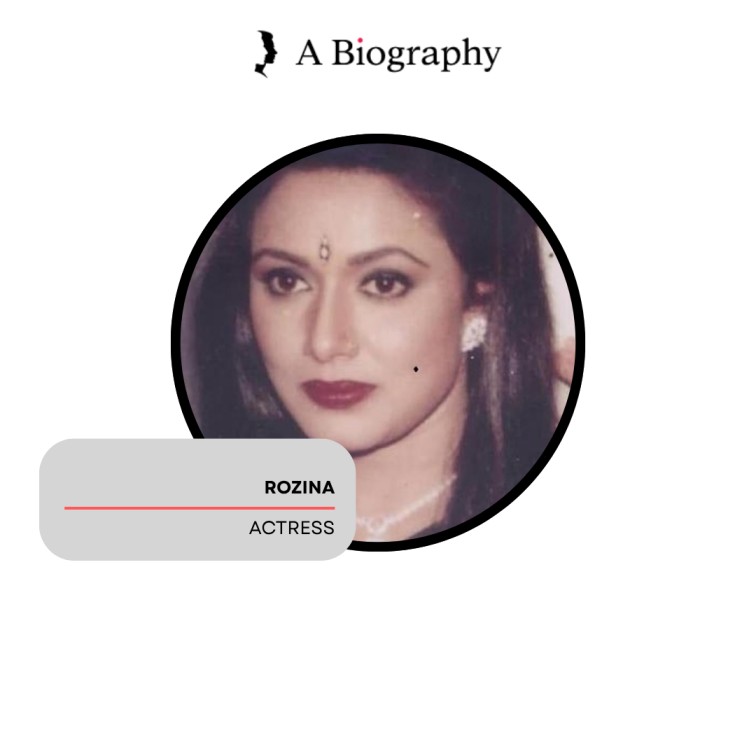
Introduction
1977. A poor girl from Goalanda, Faridpur, named ‘Renu’ transforms into ‘Rozina’, the heroine of Dhaka cinema. At just 16, she stuns audiences opposite Wasim in Rajmahal. But who knew this girl once performed on stage for a mere ten taka? Who knew she was rejected from three films before her breakthrough? This is the story of how a pavement-dweller’s daughter rose to become a legend, starring opposite Mithun Chakraborty in Bollywood’s Ar Paar, winning National Awards, and eventually building a new life in London.
The Story of Bengal’s Dream Girl
Rozina was one of the most popular names in Bengali cinema during the 1980s and 90s. Hailed as the ‘Dream Girl of Bengal’, she captured audiences with her talent and dedication. The poor girl ‘Renu’ from Goalanda, Faridpur, is now etched in history as ‘Rozina’. From the late 1970s to the early 1990s, she shone as a bright star of Bangladeshi cinema.
She debuted as a heroine in Rajmahal (1977). Then came countless hits: Kosai, Jibondhara, Rokter Bandhan, Rakhe Allah Mare Ke, Chokher Moni, Sonar Cheye Dami. She won the National Film Award for Best Supporting Actress for Kosai (1980) and Best Actress for Jibondhara (1988). In 2023, the Government of Bangladesh honoured her with a Lifetime Achievement Award.
Beyond Bangladesh, she acted regularly in West Bengal, Nepal, and Pakistan. In 1985, director Shakti Samanta cast her opposite Bollywood superstar Mithun Chakraborty in the Bengali film Anyay Abichar and the Hindi film Ar Paar. She became the first Bangladeshi actress to play the lead heroine in a mainstream Bollywood film.
She took a break from films in 1993. After 11 years, she made a spectacular comeback with Rakkhushi (2004), winning a Meril Prothom Alo Award. Later, she focused on directing television serials. Currently, she is directing and acting in the government-funded film Fire Dekha, awaiting release. Today, she lives in London, running a restaurant. This epic of 28 chapters chronicles Rozina’s childhood, struggles, career, awards, and personal life.
At a Glance – The Dream Girl of Bengal (Detailed Table)
| Information | Details | Special Notes |
| Full Name | Rozina; Birth name: Renu (also known as Roushan Ara or Saila in some sources) | |
| Profession | Actress, TV Actress, Director, Producer, Businesswoman | Known as ‘Dream Girl of Bengal’ and ‘Audrey Hepburn of Bengal’ |
| Birth | 12 April 1956, Goalanda, Faridpur (now Rajbari district), East Pakistan (now Bangladesh) | Age 70 as of 2026 |
| Father | Late Md. Khalilur Rahman | Traditional ayurvedic physician (Kabiraj) |
| Mother | Mosammat Sajeda Khatun | Homemaker |
| Education | No formal higher education; studied up to class four | |
| Religion | Islam | |
| Nationality | Bangladeshi (currently residing in the UK) | |
| First Stage Performance | Small role in the play Shayestaganj | Remuneration: only 10 taka |
| First Film | Janowar (1976) – a tiny role | Remuneration: 10 taka; the film was not widely promoted |
| First Lead Role | Rajmahal (1977, director F. Kabir Chowdhury) | Opposite Wasim; a major success |
| Notable Films | Rajmahal (1977), Rokter Bandhan, Rakhe Allah Mare Ke, Kosai (1980), Chokher Moni, Sonar Cheye Dami, Jibondhara (1988), Rakkhushi (2004), and many more; West Bengal films: Anyay Abichar (1985), Ar Paar (1985), etc. | |
| International Films | India (West Bengal), Nepal, Pakistan – over 350 films | First Bangladeshi actress to play lead heroine in Bollywood (1985) |
| Highest Honours | 3 National Film Awards | Best Supporting Actress (1980), Best Actress (1988), Lifetime Achievement (2023) |
| Meril Prothom Alo Award | 1 (Critics’ Choice Best Film Actress) – for Rakkhushi (2004) | |
| Directed Serials | Mejdidi, Bordidi (based on Sarat Chandra Chattopadhyay’s stories); also directed Badnam based on Rabindranath Tagore’s story | |
| Directed Film | Fire Dekha (awaiting release) | Government grant film; co-stars Ilias Kanchan |
| Lip-sync Songs | Famous songs by Sabina Yasmin: “O Amar Roshiya Bondhure,” “Ei Mon Tomake Dilam,” “Jolpori,” “Chhairo Na Chhairo Na Haat” | |
| Modelling | Worked as a model for Lux soap | |
| Current Address | London, United Kingdom | Runs a restaurant named ‘Mithu’s Kitchen’ |
| Spouse | Late Fazlur Rashid Dhaly (film cinematographer) | Second marriage? Information uncertain |
| Children | Information undisclosed | Maintains personal privacy |
| Nicknames | Dream Girl of Bengal, Audrey Hepburn of Bengal | For her beauty and acting |
| Current Status | Retired from acting and directing; spends time in London on business | Visits Dhaka occasionally |
| Recent Work | Directing and acting in Fire Dekha (yet to be released) | Co-star Ilias Kanchan |
| Passing | Still alive | 70 years old in 2026 |
Early Life – Poverty in Goalanda and the Craze for Cinema
Rozina was born on 12 April 1956 in Goalanda village, Faridpur (now Rajbari district), then East Pakistan. Her family name was ‘Renu’. Her father, Md. Khalilur Rahman, was a traditional ayurvedic physician (kabiraj); her mother, Mosammat Sajeda Khatun, was a homemaker. Poverty was a constant companion. From childhood, Rozina was a dreamer. She regularly watched films at the local Chitra cinema hall. The first film she ever saw was Sat Bhai Champa.
Despite the dirt roads, open fields, and scarcity, little Renu harboured an indomitable desire to achieve something big. Her father treated patients, but the family struggled to make ends meet. On her way to school, she would gaze at film posters, observing the heroines’ clothes and gestures.
She idolised successful actresses like Kabari, Suchanda, and Sujata. Neighbourhood children called her ‘little heroine’. At age 12, she vowed to one day appear on screen before everyone. That determination grew within her. Once, returning from a village fair, she saw a play rehearsal and expressed her desire to act – from that moment, acting became her obsession.
She studied only up to class four at the local primary school in Goalanda. Due to family financial pressure, she could not continue her education. But she never gave up her dream. As a teenager, she moved to Dhaka, beginning a path of struggle. She believed, “If you truly want something, the whole world stands by you.”
Education – Lack of Formal Schooling and a Self-Taught Artist
Rozina’s formal education was minimal. She studied only up to class four at Goalanda school. Family poverty and moving to Dhaka meant she could not continue. However, she taught herself Bengali literature and cinema. Before each role, she would observe deeply, rehearse, and go beyond memorised dialogue to understand the character’s psychology. She learned camera techniques by watching experienced artists.
Later in life, she realised the importance of education, but the need to earn a living made acting her career. The lack of education pained her, but she compensated with talent and hard work. She often said in interviews, “I didn’t know much book-learning, but I knew people well. That helped me in acting.” She regularly borrowed books from libraries and closely observed the performances of senior artists.
Arrival in Dhaka and Debut on Stage (Mid-1970s)
When Rozina came to Dhaka at only 14 or 15, she took shelter with relatives. But her passion for acting was so intense that she never tired of roaming the streets. She searched for theatre groups. Eventually, she got a small role in a stage play called Shayestaganj. Her remuneration was a mere ten taka. With that money, she paid for rent and food. Although the play was discontinued midway, Rozina’s talent caught the attention of directors and producers.
Through stage theatre, she came into contact with artists and directors. Some began offering her roles in short films or teleplays. That led to offers in feature films. She played an extremely small role in the film Janowar, receiving her first film payment of ten taka. That was her first foray into cinema. The film may not be remembered, but Rozina cherished it as a memory. She did not abandon her dream.
During this time, she somehow managed to survive – eating at relatives’ homes, living on acting fees. There are stories of her sleeping on the streets many nights. But those hardships only strengthened her.
The Drama of Name Changes – Rejections and Resurrection (1975–1977)
In the mid-1970s, director F. Kabir Chowdhury selected Rozina for the film Mintu Amar Naam, opposite hero Sohel Rana. But shortly after shooting began, she was dropped. The reason: the director had doubts about her role. Around the same time, she was also rejected from two other films: Sagar Vasa and Aina. These rejections nearly broke her. She lost confidence for a few days, but soon pulled herself together.
A director advised her to change her name to ‘Rozina’. That name stuck. Before that, she had also used ‘Saila’ and ‘Roushan Ara’. Ultimately, ‘Rozina’ became her legendary identity.
In 1977, F. Kabir Chowdhury cast her as the heroine in Rajmahal, opposite Wasim. With this film, she played a lead role for the first time. Upon release, Rozina became an overnight star. Rajmahal was a commercial success; the chemistry between Wasim and Rozina was loved by audiences. Later, the pair worked together in Rosher Baidani, Jarka, and Raj Singhasan. After the success of Rajmahal, Rozina never looked back. The pain of rejection only made her stronger.
She once said in an interview, “After being rejected, I thought everything was over. But then I realised – if others don’t want me, I must stand on my own feet. And I did.”
The First National Film Award (1980)
In 1980, Kosai was released, directed by Abdul Latif Bachchu. Rozina played a supporting role. The film depicted social reality and inequality. Rozina’s performance was so natural and powerful that both audiences and critics were mesmerised. The film was both commercially and critically successful.
At that year’s National Film Awards, Rozina won Best Supporting Actress. It was her first national recognition. The award gave her confidence and international fame. She proved that the rejected girl had become one of the country’s finest actresses. This recognition opened new doors – directors from West Bengal, Nepal, and Pakistan became interested in her.
At the award ceremony, she said, “This award is for my mother. She always told me one day you will be great. Her words were my strength.”
The Second National Award (1988)
In 1988, Jibondhara was released, directed by Mostafizur Rahman Montu. Rozina played the title role. The film told the story of a woman’s struggle for survival – an indomitable fight from village to city. Rozina’s performance was extraordinary. Through her eyes, dialogue, and gestures, she immortalised the character. She won the National Film Award for Best Actress. This cemented her position at the top of her career. Winning National Awards for two entirely different types of roles proved her range and depth.
The success of Jibondhara brought her to the attention of Indian filmmakers, leading to opportunities in Bollywood. It was the beginning of her international journey.
Bollywood Debut (1985)
The year 1985 was a milestone in Rozina’s career. Renowned Indian Hindi film director Shakti Samanta chose this Bangladeshi actress to play the heroine opposite Mithun Chakraborty. It was a dual-language project: Anyay Abichar in Bengali and Ar Paar in Hindi. Rozina played the lead female role. Shooting took place in Kolkata and Mumbai. Both films were commercial successes, and Rozina became one of the highest-paid Bangladeshi actresses of her time.
The box office collection of Ar Paar was approximately 1.5 crore taka (at that time) – a record for Bengali films. Rozina was the first Bangladeshi actress to work as the main heroine in a mainstream Bollywood film. It was a matter of pride for Bangladesh. Indian media called her the ‘Silk of the East’. Following this success, she acted in several more West Bengal films opposite Chiranjit, Tapas Pal, Ranjit Mallick, and others. She also gained immense popularity among Indian audiences.
During shooting in Kolkata, she mastered Bengali and Hindi dialogues with ease. Director Shakti Samanta praised her professionalism. In an interview about the film, Rozina said, “Going to India, I realised that talent has no boundaries. Language and culture may differ, but the work remains the same.”
Acting in Nepali and Pakistani Films
Rozina was not limited to Bangladesh and India. She also worked in Nepali and Pakistani cinema. She won the hearts of Nepali audiences with her performances. She had opportunities to work in Karachi and Lahore. This international range proved her acting prowess and was a great achievement for Bangladeshi cinema. She demonstrated that Bangladeshi artists can establish themselves anywhere in the world. For Nepali films, she took a month of training to master the language.
During this time, she continued making Bangladeshi films regularly: Chokher Moni, Sonar Cheye Dami, Matir Manush, Shohor Theke Dure, Obhiman, Anarkali, Bini Sutay Mala, Rakhe Allah Mare Ke, Shohag Milon, Sat Ma, Taser Ghor, Goli Theke Rajpoth, Shiri Farhad, Bhaggolipi, Daku O Darvesh, Warish, Rongin Rupban, Hashu Amar Hashu, Rajia Sultana, Shobuj Mia, and many more. Until 1993, she continued acting successfully. Despite so many films, she never let her performance quality decline.
Long Break and Comeback (2004)
After 1993, Rozina stepped away from films. Nearly 11 years later, in 2004, she returned to the screen with Rakkhushi, directed by F I Manik. Opposite her was younger hero Ferdous Ahmed – 12–13 years her junior. It was the first time in Bangladeshi cinema that an older heroine was paired with a younger hero. Producers and directors were initially doubtful. But audiences loved the pair. The film was a huge commercial success.
For Rakkhushi, she won the Meril Prothom Alo Award (Critics’ Choice Best Film Actress) and was also a contender for the National Award (though she did not win). It proved that even after a long hiatus, she could still win hearts. She said, “I was afraid audiences had forgotten me. But the success of Rakkhushi showed that good work is always valued.” After Rakkhushi’s success, she acted in a few more films, but they did not create the same stir. Gradually, she shifted her focus from acting to direction.
Directing Television Serials – (2012–2013)
Around 2012, Rozina turned her attention to television. She directed two serials based on Sarat Chandra Chattopadhyay’s stories: Mejdidi and Bordidi. In Mejdidi, she also played the central role. Both serials were well received. Critics praised her direction for capturing the sincerity of Sarat Chandra’s characters.
She also directed Badnam, based on a story by Rabindranath Tagore. Additionally, she produced several television plays based on the life of Kazi Nazrul Islam. Through these works, she demonstrated her interest and skill in direction alongside acting. Working in an entirely different medium, she proved herself a Renaissance artist. On set, she maintained discipline and professionalism, earning praise from co-artists.
Government-Grant Film and Directorial Debut
Recently, Rozina has undertaken a larger directorial venture. She is making a Liberation War-based film titled Fire Dekha (Looking Back) with a grant from the Government of Bangladesh’s Ministry of Information and Broadcasting. She also plays the central role herself. Co-starring alongside her is legendary actor Ilias Kanchan. The film has not yet been released. This is her first full-length feature film as a director. She is very hopeful about it. She wants to spread the spirit of the Liberation War to the new generation.
Through Fire Dekha, she wants to tell the story of a mother against the backdrop of the Liberation War. Though delayed, the film is nearing completion. It is expected to be released in 2025 or 2026. She is waiting to present it to audiences. She says, “This is the most personal project of my life. I want my last work to leave a mark on everyone’s heart.”
Lip-syncing and Modelling
Rozina not only acted but also lip-synced to songs by the legendary playback singer Sabina Yasmin. Notable songs include “O Amar Roshiya Bondhure,” “Ei Mon Tomake Dilam,” “Jolpori,” “Chhairo Na Chhairo Na Haat.” Her emotive performances in these song sequences captured viewers’ hearts. Many audiences still watch those videos to remember the old days.
She also worked as a model for Lux soap. Her television commercials for Lux were widely aired. At that time, it was a big achievement. It enhanced her personal brand value, and she earned considerable fame and money from modelling as well.
Personal Life
Little information is publicly available about Rozina’s early personal life. According to some sources, she was married before entering films, but that marriage ended in divorce. She kept her personal life away from the media.
Rozina later married the renowned cinematographer, the late Fazlur Rashid Dhaly. He was one of Bangladesh’s top cinematographers, having shot Jibondhara, Rakkhushi, and others. The couple lived happily for some time. After Dhaly’s death, Rozina felt somewhat alone.
Currently, Rozina resides permanently in London, United Kingdom. She runs a restaurant there named ‘Mithu’s Kitchen’. She visits Dhaka occasionally, giving interviews about her acting career. Even at age 70, her memory and vitality remain intact. She travels between London and Dhaka. Though living in London, she stays connected with Bangladeshi audiences through Facebook and other media.
In an interview, she said, “My home is in London now. But I have never forgotten Bangladesh. Its audiences are my greatest treasure.”
Family
Various sources indicate that Rozina does not have any biological children. She maintains regular contact with relatives. Her siblings live in Bangladesh. She visits relatives in Rajbari and Dhaka regularly. After Fazlur Rashid Dhaly’s death, she felt somewhat alone, but she kept busy with work and business. Some relatives claim that Rozina is extremely simple and enjoys helping others.
She rarely shares her life’s ups and downs or family stories with the media, which adds to her mystique.
Awards and Recognition
Rozina has received the following awards and honours during her career:
- National Film Award (Best Supporting Actress) – Kosai (1980)
- National Film Award (Best Actress) – Jibondhara (1988)
- National Film Award (Lifetime Achievement) – 2023
- Meril Prothom Alo Award (Critics’ Choice Best Film Actress) – Rakkhushi (2004)
- Bachsas Awards (multiple)
- Bangladesh Film Journalists’ Association Award (year unknown)
- Nepali Film Association Honour (1990s)
- Pakistani Cine Association Award (year unspecified)
In addition, she has received honours from various film organisations in India, Nepal, and Pakistan. The National Film Award for Lifetime Achievement was the crowning glory of her career. At the 2023 award ceremony, she became emotional and thanked her audiences.
Cultural Contribution and Legacy
Rozina is a pathfinder for female artists in Bangladesh. By succeeding in Bollywood and other international film industries, she proved that Bangladeshi women can conquer the world’s best stages. She demonstrated that language barriers and cultural differences are insignificant before talent. The title ‘Audrey Hepburn of Bengal’ testifies to that.
Through her acting, she inspired young people to dream. Her reminiscences, interviews, and (if she ever writes) her autobiography will serve future generations. With over 350 films, countless television dramas, and directed serials, she is an integral part of the history of Bengali cinema. Even as a London resident in 2020, she continued to work for the promotion of Bangladeshi culture. Her restaurant often becomes a gathering place for the Bangladeshi community.
She is a role model for many young female artists. Her life is a wonderful example of struggle and success.
Major Events in Rozina’s Life
- 12 April 1956 – Born in Goalanda, Faridpur (now Rajbari district).
- 1960s – Watches Sat Bhai Champa at Rajbari’s Chitra cinema hall; dreams of becoming an actress.
- 1966–1968 – Studies up to class four.
- Early 1970s – Family moves to Dhaka.
- 1974–75 – Performs in stage play Shayestaganj (remuneration 10 taka).
- 1976–77 – Tiny role in Janowar (10 taka); rejected from Mintu Amar Naam and two other films; name changed to ‘Rozina’.
- 1977 – Heroine debut in Rajmahal opposite Wasim; massive success.
- 1980 – Wins first National Film Award (Best Supporting Actress) for Kosai.
- 1985 – Acts opposite Mithun Chakraborty in Shakti Samanta’s Anyay Abichar (Bengali) and Ar Paar (Hindi); box office success.
- 1988 – Wins National Film Award for Best Actress for Jibondhara.
- 1993 – Becomes irregular in films; nearly retires.
- 2004 – Makes comeback with Rakkhushi opposite Ferdous Ahmed; wins Meril Prothom Alo Award.
- 2012–13 – Directs serials Mejdidi, Bordidi; directs Badnam.
- 2022–23 – Direct government-grant film Fire Dekha (awaiting release); co-star Ilias Kanchan.
- 2023 – Receives National Film Award for Lifetime Achievement.
- 2024–26 – Lives in London, runs a restaurant business, occasionally visits Dhaka and gives interviews.
Unknown Facts and
- Besides ‘Renu’, Rozina also used the names ‘Saila’ and ‘Roushan Ara’ before finally settling on ‘Rozina’. The history of her name changes is quite dramatic – each time she changed her name, she felt like she was being reborn.
- During the shooting of Rajmahal, she was so young that her mother accompanied her to the set, encouraging her and bringing food. She was only 16.
- For Rakkhushi, the age gap with Ferdous initially caused doubt, but the film succeeded and their pair was loved. It was one of the first examples of a ‘cougar’ pair in Bangladeshi cinema.
- When lip-syncing to Sabina Yasmin’s songs, especially during crying scenes, the studio crew’s eyes would also fill with tears. Once, her crying was so realistic that the sound engineer stopped in awe.
- For Nepali films, she took a month-long course to master Nepali dialogues and memorised the entire script. The director and co-artists praised her professionalism.
- She once said in an interview, “The greatest asset of my life is my audience’s love, for which I have dedicated myself. My mother showed me the dream, and my audience fulfilled it.”
- She often mentions that through Fire Dekha, she wants to tell a Liberation War story. The film is in post-production. “This is not my last film,” she says, “but it is my most beloved work.”
- Once, a fan recognised her at her London restaurant. She sat with everyone, sharing old film stories. That fan broke down in tears.
Never Ceasing to Speak
Though Rozina lives in London, she occasionally gives interviews to the media. She has spoken on live TV shows via phone. Her fan pages on Facebook and YouTube share old photos and information. She remains vocal, responding to critics and supporting her own work. She has said, “I am disappointed with the current state of the film industry. The number of cinema halls has decreased, and opportunities to create new faces are limited. But still, I am hopeful that one day Bengali cinema will return to its former glory.”
She regularly attends events of the Bangladeshi community in London and shares old acting stories. Her voice still carries fluency and emotion.
Controversies and Criticism
Rozina’s long career has seen very few controversies. Some media reports speculated about her personal life, but she never publicly responded. Throughout her acting life, despite work pressure and international recognition, she never engaged in conflicts with anyone. Many co-artists remember her as ‘professional’ and ‘punctual’. She never threw tantrums or arrived late on set. After being rejected and during her days of hardship, she never cried before the media – she just kept working.
Now at age 70, she still carries herself with dignity. Everyone’s love and respect for her remain intact. She is considered a ‘living legend’. Despite occasional trolling, she holds her head high.
Lifetime Achievement Award (2023) and Political Stance
At the 2023 National Film Awards ceremony, Rozina was honoured with the Lifetime Achievement Award. The Ministry of Information and Broadcasting conferred the award. While accepting, she became emotional. She said, “I am forever indebted to the people of my country. This award has given me a new life.” After the announcement, the Bangladeshi media was full of praise for her.
She has never been vocal about her political views. She has not directly campaigned for or against any political party. However, she has opposed military rule and censorship, speaking about the freedom of art. On various occasions, she has praised the cultural policies of the Awami League government. She prefers to identify herself as an ‘artist’, not a ‘politician’.
The Final Big Challenge
Rozina’s last major commitment is directing and acting in Fire Dekha. The Liberation War film, made with a government grant, is delayed but nearing completion. Ilias Kanchan and Rozina herself play the central roles. The film is expected to be released in 2025 or 2026. As a director, she is expected to attract everyone’s attention. With this film, she is taking her first step into direction in old age.
She says, “This film will be my final gift to the audience. After this, I may not come on screen again.” The film’s work is almost complete. It is hoped that it will be released in cinemas and receive the love of audiences and critics. Despite facing many obstacles, she continues working, ignoring all adversities.
The Title ‘Audrey Hepburn of Bengal’
Rozina is often called the ‘Audrey Hepburn of Bengal’. She earned this title for her beauty, acting skill, and elegance. Her expressive eyes, gentle smile, and on-screen demeanour remind many of Audrey Hepburn. Although she does not dislike the comparison, she prefers to be known simply as ‘Rozina’. The title ‘Dream Girl of Bengal’ reflects the devotional narrative of her life. The media gave her this title at the peak of her career.
She once said, “Audrey Hepburn is incomparable, but I am Rozina. I am a daughter of Bengal, and I love Bengali audiences.”
Legacy and Message to the Next Generation
Rozina is a pathfinder for future generations of female artists. She succeeded against countless obstacles. Her advice to the youth: “Whatever you do, do it with love. Obstacles will come, but do not stop.” She often tells young people, “I only studied four classes, yet I reached this place. Young people have all the opportunities; if they work hard, they can conquer the world.”
Her films and serials will inspire future generations. Kosai, Jibondhara, Rakkhushi are still aired on TV channels. While audiences of the 90s called her ‘Dream Girl’, many of the new generation may not know her, but those who do, respect her. On YouTube, young people still ask, “Who is this actress? Extraordinary!” That is proof of her timelessness.
Rozina’s Position Compared to Contemporary Actresses
In the 1980s and 90s, Rozina was one of the highest-paid actresses in Bangladesh. She enjoyed popularity and skill comparable to Bobita, Shabana, and Sucharita. In terms of international recognition, she was unique. She may not have been the only Bangladeshi actress to work in Bollywood (others came before and after), but she is credited as the first. The longevity and diversity of her career kept her at the top. Combining Hindi, Bengali (West Bengal), Nepali, and Pakistani films, she brought immense variety. Her regal elegance and on-screen presence gave her a ‘diva’ status. Many critics say that 80s Bengali cinema would be incomplete without Rozina.
When she worked in Bollywood, the Bangladeshi media called her ‘daughter of a diplomat’, though she is not. That misinformation was spread at the time, but she paid it no heed.
The Eternal Journey of the Dream Girl
Rozina is an indelible name in Bangladeshi cinema. A poor girl from Goalanda, Faridpur, who started acting for only ten taka, reached the heights of Bollywood. Over 350 films, three National Film Awards, international fame – her contribution will be remembered forever. She is an inspiration to all. Though she lives in London, Rozina remains part of Bangladesh’s cultural world. Her success despite a lack of formal education shows that talent and hard work can conquer everything. The government honoured her with a Lifetime Achievement Award.
If Fire Dekha is released, Rozina’s final chapter will be glorious. Many fans await that film. Some think she should return to the country and work more; others believe she will settle permanently in London. Whatever happens, Rozina will always remain in the hearts of Bengali cinema lovers as the ‘Dream Girl’. When Jibondhara or Ar Paar airs on television, audiences still pause. She is one of the most respected and popular faces of Bangladeshi cinema. That is the true success.
“From the pavements of Goalanda to the heights of Bollywood – Rozina’s journey proves that there is no age for dreaming, and no obstacle too great. She is Bengal’s Dream Girl, forever unfading.”
Sources: Wikipedia (English & Bengali), Banglapedia, Daily Prothom Alo, Ittefaq archives, The Daily Star, Bangladesh National Film Award archives, Meril Prothom Alo Award list, various talk shows and interviews of Rozina on YouTube (including Ekanto Alapon, Taraka Kothon, Praner Ghore), IMDb, BMDb.
Disclaimer: This biography has been prepared based on information gathered from various reliable sources. Minor uncertainties may exist regarding Rozina’s personal information, particularly her birth year (1956 or 1954), early marriage, and children. Variations in the number of films and chronology of events across sources are normal. Every effort has been made to maintain respect for history and factual accuracy. Personal privacy has been respected. Unintentional errors are regretted. This biography is written to honour a legendary artist.

