
Biography
A Biography of Sheikh Hasina Wazed

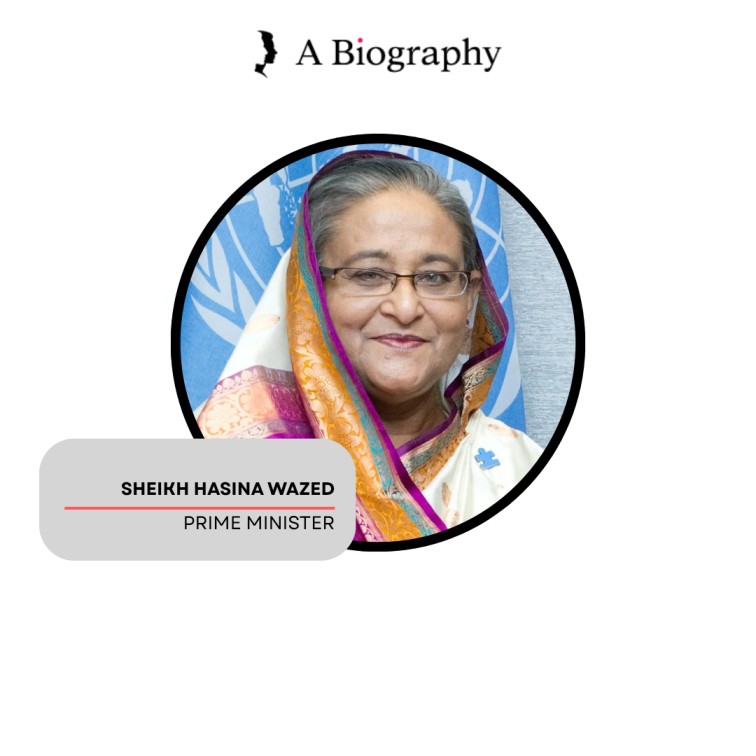
Introduction
She was the daughter of the greatest Bengali of a thousand years. Before she could walk, she learned to watch her father being led away in handcuffs. Before she could understand death, she lost an entire family in a single night of bloodshed. Before she could mourn, she was forced into exile. And yet, from the ashes of unspeakable tragedy, she rose—not with vengeance in her heart, but with a nation’s destiny in her hands.
Sheikh Hasina Wazed is not merely the Prime Minister of Bangladesh. She is the living embodiment of a nation’s struggle, the torchbearer of her father’s dream, and the woman who transformed a war-ravaged, famine-stricken country into one of Asia’s most inspiring success stories. For over two decades—longer than any female head of government in world history—she has steered Bangladesh through storms of conspiracies, assassinations, coups, and natural disasters.
But her journey began in tragedy.
The date August 15, 1975 remains etched in Bangladesh’s national consciousness like a scar that refuses to heal. On that dark Friday dawn, assassins stormed the modest house at 32 Dhanmondi in Dhaka. Within hours, the Father of the Nation, Sheikh Mujibur Rahman, lay dead alongside most of his family—his wife, his three sons, his brothers. The killers showed no mercy to ten-year-old Sheikh Russell, who was gunned down while playing with his toys.
Sheikh Hasina survived only because she was far away in West Germany with her husband.
When the telephone rang that morning, she expected news of her father’s illness. What she heard instead shattered her world. “They have killed everyone,” the voice said. “Your father, your mother, your brothers… everyone.”
In that moment, the young mother of two could have crumbled. Many would have. Instead, she made a vow—a promise whispered through tears that would drive her for the next five decades: “I will return. I will finish what my father started. I will bring democracy back to Bangladesh.”
This is the story of that promise kept.
At a Glance: Life of Sheikh Hasina Wazed
| Information | Details | Special Notes |
| Full Name | Sheikh Hasina Wazed | Daughter of Bangabandhu Sheikh Mujibur Rahman |
| Identity | Current Prime Minister of Bangladesh (2009–present) | Previously served 1996–2001 |
| Profession | Politician, Stateswoman | President of Awami League (1981–present) |
| Born | September 28, 1947 | Approximately two months after the Partition of India |
| Birthplace | Tungipara, Gopalganj, East Pakistan (now Bangladesh) | Ancestral village of the Sheikh family |
| Age (2026) | 79 years | — |
| Nationality | Bangladeshi | — |
| Religion | Islam | — |
| Education | Eden College (Higher Secondary), University of Dhaka (BA in Economics) | Graduated in 1973 |
| Father | Bangabandhu Sheikh Mujibur Rahman | Founder and first President of Bangladesh |
| Mother | Begum Fazilatunnesa Mujib | Killed in 1975 |
| Husband | Dr. M. A. Wazed Miah (married 1968; died 2009) | Nuclear scientist, former Chairman of Bangladesh Atomic Energy Commission |
| Children | 2 | Sajeeb Wazed Joy (son), Saima Wazed Putul (daughter) |
| Siblings | Sheikh Kamal, Sheikh Jamal, Sheikh Russell (brothers); Sheikh Rehana (sister) | Kamal, Jamal, and Russell were killed in 1975 |
| Political Party | Bangladesh Awami League | Founded by Bangabandhu in 1949 |
| First Term as PM | June 23, 1996 – July 15, 2001 | Full five-year term |
| Second Term | January 6, 2009 – January 24, 2014 | Vision 2021 implementation began |
| Third Term | January 24, 2014 – January 7, 2019 | Rohingya crisis management |
| Fourth Term | January 7, 2019 – present | Delta Plan 2100 formulated |
| Total Years in Power | 20+ years | World’s longest-serving female head of government |
| Major Achievements | Digital Bangladesh, Ganges Water Treaty, Rohingya shelter, Chittagong Hill Tracts Peace Accord, Padma Bridge | Padma Bridge inaugurated in 2022 |
| Books Written | 20+ | Sada Kalo, Living in Tears, Bipanna Ganatantra Lanchita Manabata |
| International Awards | UNESCO Peace Prize (1998), Indira Gandhi Prize (2009), Channel 4’s ‘Mother of Humanity’, UN Environment Award | Multiple honorary doctorates from universities worldwide |
Early Life
The year was 1947. The British Raj had just been carved into two separate nations—India and Pakistan. Amidst the chaos of history’s largest mass migration, in a small village called Tungipara nestled in the fertile plains of what would become East Pakistan, a baby girl opened her eyes to a world in turmoil.
September 28, 1947—barely six weeks after the Partition that would define South Asia for generations. The newborn was named Hasina. Her father, Sheikh Mujibur Rahman, was a young, fiery political activist who would one day be called Bangabandhu—”Friend of Bengal.” Her mother, Begum Fazilatunnesa Mujib (affectionately called Renu), was the pillar of strength behind the man who would challenge Pakistan’s military rulers.
The Sheikh family were not aristocrats. They were farmers and landowners of modest means. Hasina’s paternal grandfather, Sheikh Lutfar Rahman, served as a court munsef (magistrate)—a respected position but far from opulent. Her maternal grandfather, Sheikh Zahurul Haque, was known for his outspoken opposition to the zamindari (feudal landownership) system. These were people of principle, not privilege.
But from her earliest memories, Hasina understood that her family was different. Not because of wealth or status, but because of sacrifice.
She was barely five years old when she witnessed armed police arrive at their doorstep. “Where is Sheikh Mujibur?” they demanded. Her mother held her close, tears streaming down her face, as uniformed men led her father away. This scene would repeat itself countless times throughout her childhood—arrest after arrest, prison cell after prison cell.
The Bengali Language Movement of 1952, the United Front elections of 1954, the historic Six-Point Demand of 1966, the Mass Uprising of 1969—every major political earthquake that shook East Pakistan had her father at its epicenter. And little Hasina watched from the sidelines, absorbing lessons that no classroom could teach.
“I learned very early,” she would later recall in an interview, her voice steady but eyes glistening, “that speaking truth to power comes at a cost. But I also learned that silence is a greater cost. My father never stayed silent. Neither will I.”
Her early schooling began at Tungipara Primary School, a modest one-room building where children sat on floor mats. Later, she moved to Azimpur Girls High School in Dhaka, where classmates would sometimes whisper behind her back: “Her father is in jail again.” But Hasina never hung her head in shame. Instead, she would proudly announce, “My father is fighting for our country. He is a hero.”
She was the eldest of five children—her sister Sheikh Rehana, and brothers Sheikh Kamal, Sheikh Jamal, and the baby of the family, Sheikh Russell. Their home in Tungipara, and later in Dhaka’s Dhanmondi, was filled with laughter, political discussions, and an unshakable sense of purpose.
One memory she cherishes deeply: her father, exhausted after months in solitary confinement, waking up before dawn to sit his children down for their studies. “Education is the weapon you will need,” he would tell them. “Without it, you cannot serve the people. And serving the people is the only reason to live.”
Young Hasina took those words to heart. She would need them sooner than anyone imagined.
Education
In the turbulent 1960s, while students across East Pakistan were taking to the streets demanding autonomy, a young woman with piercing eyes and an unbreakable will was quietly preparing herself for a destiny she could not yet see.
Sheikh Hasina completed her Secondary School Certificate in 1965 from Azimpur Girls High School. That year, her father was once again behind bars, arrested for his relentless campaign against the autocratic Ayub Khan regime. The family received her exam results with nervous anticipation—not because they doubted her abilities, but because they desperately needed a moment of joy amidst the political storms.
She excelled.
For her higher secondary education, she enrolled at Government Intermediate College (now Badrunnesa Government Women’s College) in Dhaka. It was here that her natural leadership abilities first found public expression. Her classmates elected her Vice President of the Students’ Union—a remarkable achievement for a young woman in a conservative society.
Her contemporaries describe her during those years as “sweet but steel-hard.” She would listen patiently to opposing views, but once she had made up her mind, nothing could move her. During one college event, a speaker insulted her father. The room fell silent, expecting the young Hasina to shrink in embarrassment. Instead, she rose from her seat, walked calmly to the stage, and demanded the speaker leave. She did not shout. She did not threaten. She simply stated, “You will not dishonor my father in my presence.” The speaker left.
In 1967, after completing her HSC, she faced a crossroads. Her heart leaned toward Bengali literature—she had inherited her father’s love for the language and its poetry. But Bangabandhu advised differently. “Economics,” he told her. “Bangladesh will be independent one day, Hasina. And an independent nation needs economists to build it.”
She trusted her father’s vision.
Sheikh Hasina joined the Department of Economics at the University of Dhaka—an institution that would become the cradle of Bangladesh’s independence movement. The late 1960s were electric with political energy. The Six-Point Demand had transformed the political landscape. Students boycotted classes, marched through the streets, and clashed with police.
And there, in the midst of the chaos, stood Sheikh Hasina.
She became actively involved with Chhatra League, the student wing of the Awami League. She served as the General Secretary of Chhatra League’s Rokeya Hall unit—the women’s dormitory. Her days were a blur of political meetings, protest marches, and study sessions. She survived on minimal sleep and maximum conviction.
The 1969 Mass Uprising that forced President Ayub Khan to resign saw Hasina on the front lines. During one particularly violent protest, police charged at students with batons and tear gas. She was hit, bleeding from a small cut on her forehead. Fellow students urged her to fall back. She refused. “If I step back today,” she said, “I will step back for the rest of my life.”
In 1973, three years after Bangladesh had won its bloody liberation war, Sheikh Hasina graduated with a Bachelor of Arts in Economics. By then, she was already married and the mother of a young son. But she had kept her promise to her father—she had completed her education.
More importantly, she had learned lessons that no textbook could provide: how to organize, how to persuade, how to endure, and how to lead.
Struggles & Adversities
Some lives are measured in years. Others are measured in the weight of the crosses they bear. Sheikh Hasina’s life would be measured in coffins.
The list of what she has endured would break most human beings:
- Watching her father dragged to prison countless times during her childhood
- Being placed under house arrest during the 1971 Liberation War—pregnant and terrified
- Learning that her pregnant mother had been killed while she was helpless in exile
- Receiving word that her three brothers—one a promising army officer, one a university student, one just a child—had been executed
- Losing her father, the man who dreamed Bangladesh into existence
- Being denied permission to return to her own country for six years
- Surviving a grenade attack that killed 24 of her supporters
- Enduring imprisonment on politically motivated charges
- Watching her husband, her lifelong companion, die from illness
And yet, she never broke.
The single greatest trauma—the one that defines her entire biography—is the night of August 15, 1975.
Sheikh Hasina was in West Germany with her husband Dr. Wazed Miah. He had been invited for a scientific conference. They had left their children with relatives, planning to return within weeks. The phone rang in the early morning hours. A friend’s voice, choked with emotion: “Hasina, don’t come back. They have killed everyone.”
She didn’t understand at first. “Everyone? Who is everyone?”
“Your father. Your mother. Your brothers.”
She collapsed.
“When I heard the news,” she wrote years later in her memoir Sada Kalo, “I felt as if the entire world had turned black. I couldn’t breathe. I couldn’t think. My husband held me, but I couldn’t feel his arms. I was a ghost, walking through a nightmare.”
The assassins had struck with military precision. A group of disgruntled army officers, disillusioned with Bangladesh’s post-independence direction, stormed 32 Dhanmondi in the early hours of Friday, August 15. They murdered Bangabandhu Sheikh Mujibur Rahman at the threshold of his bedroom. They gunned down his wife Begum Fazilatunnesa. They hunted down his sons: Sheikh Kamal (26), a talented musician and army captain; Sheikh Jamal (21), a university student; and Sheikh Russell (10), a fourth-grader who loved football and comics.
The bodies were not even given proper burials. They were piled together in a mass grave.
Only Sheikh Hasina and her younger sister Sheikh Rehana survived—simply because they were not in the country.
“I remember screaming,” Hasina recounted. “I remember wanting to die. Death would have been easier. But then I thought: if I die, who will speak for my father? Who will ensure his killers face justice? Who will finish what he started?”
That question gave her the strength to live.
But living came at a price. The new regime, led by General Ziaur Rahman, refused to allow her return to Bangladesh. For six years—from 1975 to 1981—Sheikh Hasina lived in exile, first in Germany, then briefly in the United Kingdom, and finally in India.
In India, she found refuge. Prime Minister Indira Gandhi, herself no stranger to political assassination threats, personally arranged for Hasina’s security and accommodation. She lived modestly in Young India Hostel in New Delhi, a far cry from the grand residences she would later occupy. Her children attended local schools. She cooked, cleaned, and tried to maintain some semblance of normalcy while her heart bled for her murdered family.
But exile did not mean silence.
From Delhi, she maintained contact with Awami League leaders who had survived the crackdown. She sent messages of encouragement. She planned strategies. She kept the flame of democracy alive from thousands of miles away.
“I would look at my children and think: they deserve to grow up in a free Bangladesh,” she said. “A Bangladesh my father dreamed of. Not a Bangladesh ruled by assassins.”
Love
Behind every great woman, there is not just a story of struggle—but often, a story of love that anchors her when the storms threaten to sweep her away.
Dr. M. A. Wazed Miah was not a politician. He was not a revolutionary. He was a quiet, bookish nuclear scientist—a man more comfortable in laboratories than in protest marches. And yet, he became the rock upon which Sheikh Hasina built her extraordinary life.
They met at the University of Dhaka in the late 1960s. Wazed Miah—ten years her senior—had already earned a PhD from Durham University in the United Kingdom. He was brilliant, soft-spoken, and completely uninterested in the rough-and-tumble world of Bengali politics. What drew him to Hasina? Her intensity. Her fire. Her absolute certainty about right and wrong.
“She would argue with me for hours about the independence movement,” Wazed Miah once recalled in a rare interview. “I was a scientist. I believed in evidence, in calm analysis. She believed in passion, in justice, in fighting for what is right. We balanced each other.”
The relationship progressed quietly. When Sheikh Hasina informed her father that she wished to marry Wazed Miah, Bangabandhu was delighted. He had known the scientist and respected his intellect. The wedding took place on November 17, 1968 in Dhaka—a simple ceremony with family and close friends.
For a brief period, the newlyweds lived in Karachi, where Wazed Miah worked with the Pakistan Atomic Energy Commission. But the winds of history were shifting. East Pakistan was churning with rebellion. In 1970, they returned to Dhaka, just in time for the devastating Bhola Cyclone and the general elections that would change everything.
When the Liberation War erupted in March 1971, Wazed Miah could have fled to safety with his pregnant wife. Instead, he chose to stay—hiding, supporting the resistance, protecting his family. Their first child, Sajeeb Wazed Joy, was born on July 27, 1971, while Bangladesh was still fighting for its freedom. A daughter, Saima Wazed Putul, followed in 1972.
Wazed Miah never sought the spotlight. While his wife became the face of Bangladesh’s democracy movement, he remained in the background—offering advice, providing emotional support, and quietly managing their personal affairs. He never resented her prominence. He never felt diminished by her power.
“She was born to lead,” he told a journalist. “I was born to support her. There is no shame in that.”
When the assassins struck in 1975, Wazed Miah held his shattered wife in his arms and whispered, “We will survive. For your father. For your brothers. For Russell.” He became her protector, her counselor, her anchor in the stormy seas of exile.
Their partnership lasted 41 years—until May 9, 2009, when Dr. Wazed Miah passed away after a long illness.
Sheikh Hasina was in office as Prime Minister when she received the news. Those close to her say she sat in silence for an hour, staring at a photograph of her late husband. Then she wiped her eyes, straightened her shoulders, and returned to work.
“Grief is a luxury I cannot afford,” she later explained. “My husband understood that. He would have wanted me to continue serving the people.”
Personal Life
Beyond the headlines, beyond the political rallies, beyond the international summits—Sheikh Hasina is, first and foremost, a mother, a grandmother, and a woman of quiet faith.
Those who know her personally describe a woman of contradictions: fierce in public, tender in private; demanding of her staff, but deeply loyal to those who serve her; a workaholic who rarely takes vacations, but who cherishes every moment spent with her grandchildren.
Daily Routine:
Sheikh Hasina’s day begins before dawn—around 5:30 AM. She performs her Fajr prayers, reads from the Quran, and spends time in quiet reflection. By 7:00 AM, she has already reviewed the morning newspapers and received intelligence briefings. Breakfast is simple: rice, vegetables, fish—the traditional Bengali meal she grew up eating. She avoids luxury in all forms.
By 9:00 AM, she is at Ganabhaban, the Prime Minister’s official residence, ready for a day that typically stretches until midnight. Meetings with ministers, foreign diplomats, business leaders, and civil society representatives fill every hour. She eats lunch at her desk, often while still reviewing documents.
Evenings are reserved for public events—inaugurations, award ceremonies, cultural programs, political rallies. She rarely returns home before 10:00 PM. And even then, there are more files to read, more decisions to make.
“I sleep about four hours a night,” she once told an interviewer. “There is too much to do. Bangladesh cannot afford for me to rest.”
Family Relationships:
Despite her crushing schedule, Sheikh Hasina maintains close bonds with her children. Her son, Sajeeb Wazed Joy, studied in the United States and became an information technology expert. He serves as an advisor to the Awami League, championing the “Digital Bangladesh” vision. Her daughter, Saima Wazed Putul, earned advanced degrees in psychology and has become a global advocate for autism awareness, serving on the World Health Organization’s advisory panel on mental health.
Both children inherited their father’s preference for behind-the-scenes work rather than public political careers—a choice their mother respects completely.
“My children are their own people,” she says. “I did not give birth to them to command them. I gave birth to them to set them free.”
She is especially close to her grandchildren. Despite her security protocols, she insists on regular family dinners where phones are banned and conversation flows freely. “They remind me why I fight,” she confided to a close aide. “For their future. For the Bangladesh they will inherit.”
Faith and Spirituality:
Sheikh Hasina is a practicing Muslim, but her faith is deeply personal and inclusive. She has frequently spoken against religious extremism, insisting that Islam is a religion of peace, not violence. Under her leadership, Bangladesh has celebrated all major religious festivals—Eid, Durga Puja, Christmas, Buddha Purnima—with equal official enthusiasm.
“I believe in Allah,” she says. “But I also believe that He created all human beings as equals. My father taught me that.”
Hobbies and Personal Interests:
When she finds rare moments of leisure, Sheikh Hasina enjoys reading Bengali literature—especially the works of Rabindranath Tagore and Kazi Nazrul Islam. She is an admirer of Tagore’s songs and has been known to hum them during long car rides.
She also writes. Despite her political responsibilities, she has authored over 20 books—memoirs, political analyses, and tributes to her father. Writing, she says, is therapy. “When I put words on paper, I make sense of the chaos.”
Future Plans & Vision
“A nation without vision is a ship without a compass,” Sheikh Hasina often tells her cabinet. “My father gave Bangladesh its independence. I will give it prosperity.”
Her vision for Bangladesh extends far beyond her own lifetime. Two flagship initiatives define her long-term planning:
Vision 2021 (already achieved):
When she returned to power in 2009, Sheikh Hasina unveiled an ambitious roadmap: transform Bangladesh into a “Digital Bangladesh” by 2021—the 50th anniversary of independence. Critics scoffed. Bangladesh, one of Asia’s poorest nations, was supposed to go digital?
She proved them wrong. Under her leadership:
- Internet access expanded from urban elites to remote villages
- Mobile banking brought financial services to the unbanked
- Digital centers in every union council provided government services online
- The IT sector grew exponentially, with exports crossing $1 billion
By 2021, Bangladesh had not only achieved “Digital Bangladesh” but had also graduated from Least Developed Country (LDC) status—a milestone once considered impossible.
Delta Plan 2100:
Her current vision is even more ambitious: the Bangladesh Delta Plan 2100, a 100-year roadmap to make Bangladesh resilient against climate change, water scarcity, and natural disasters. Given that much of Bangladesh sits barely above sea level, rising oceans threaten to displace millions. The Delta Plan envisions:
- Massive investment in water management infrastructure
- Relocation of vulnerable populations to safer areas
- Climate-resilient agriculture and urban planning
- International partnerships for green technology
“The world is heating,” she told the United Nations Climate Summit. “Bangladesh did not cause this crisis, but we are suffering its worst effects. We will adapt. We will survive. But we need the world to act with us.”
Smart Bangladesh:
Beyond 2021, Sheikh Hasina has coined a new vision: Smart Bangladesh—an evolution of Digital Bangladesh. This involves:
- Artificial intelligence integration into governance
- Smart cities with efficient transportation and energy use
- Technology-driven education and healthcare
- Innovation hubs to attract global investment
“We are a young nation,” she says. “Nearly 60% of our population is below 30. They understand technology better than I do. My job is to create the environment where they can flourish.”
Career Journey
From student activist to the world’s longest-serving female head of government—the arc of Sheikh Hasina’s career spans five decades of triumph, tragedy, and unwavering purpose.
Early Political Years (1960s-1975):
Her political career began not with grand ambition, but with necessity. As the daughter of Bangabandhu, she was drawn into the independence struggle almost from birth. But she chose to participate actively, not merely observe.
In the University of Dhaka, she joined the Bangladesh Chhatra League and rose to leadership positions. She participated in protests against the Pakistani regime. She organized fellow students. She learned the art of political mobilization—skills she would later deploy on a national scale.
The assassination of 1975 ended her political career before it could truly begin. For six years, she was exiled, helpless, watching from afar as military dictators dismantled the democracy her father had sacrificed everything to build.
Return and Party Leadership (1981):
When she finally returned to Bangladesh on May 17, 1981, she did not come as a grieving daughter seeking sympathy. She came as a leader ready to reclaim her father’s legacy.
“We have to understand the bravery of that moment,” says a longtime Awami League leader. “The assassins were still in power—some of them, anyway. General Ziaur Rahman was President. Coming back meant risking her life. But she came anyway.”
Within months of her return, she was elected President of the Awami League—becoming the leader of the party her father had founded. She was 34 years old.
Anti-Ershad Movement (1982-1990):
In 1982, General Hussain Muhammad Ershad seized power in a bloodless coup. Another dictator. Another suppression of democracy.
Sheikh Hasina refused to accept it.
She led protest marches. She delivered fiery speeches. She was arrested repeatedly—placed under house arrest in 1984, again in 1985, imprisoned in 1987. Her crime? Demanding free elections.
“The more they imprisoned me, the more the people supported me,” she recalls. “They realized: this woman is not fighting for power. She is fighting for their right to choose.”
The movement culminated in 1990 when Sheikh Hasina and her political rival Khaleda Zia (leader of the Bangladesh Nationalist Party) joined forces to force Ershad’s resignation. On December 6, 1990, the dictator fell.
Democracy was restored—but not yet to Sheikh Hasina.
Leader of the Opposition (1991-1996):
The 1991 elections brought Khaleda Zia’s BNP to power. Sheikh Hasina became Leader of the Opposition—a role she performed with characteristic intensity. She scrutinized every government action, challenged every questionable decision, and prepared her party for the next electoral battle.
But the 1996 elections were marred by allegations of vote-rigging. Sheikh Hasina launched a movement demanding a neutral caretaker government to oversee future elections—a demand that paralyzed the country until the government conceded.
First Term as Prime Minister (1996-2001):
When she finally took office on June 23, 1996, Sheikh Hasina had waited 21 years since her father’s assassination to occupy the same position he had once held.
Her first term was defined by three landmark achievements:
- The Ganges Water Sharing Treaty with India (1996)—ending decades of dispute over river water
- The Chittagong Hill Tracts Peace Accord (1997)—ending a 25-year insurgency
- The trial and execution of her father’s assassins (1998)—fulfilling a promise she had made while weeping in exile
These achievements earned her international respect—but not re-election. In 2001, the BNP returned to power.
Between Terms (2001-2008):
These were the darkest years of her political career—and the most dangerous.
On August 21, 2004, while addressing a rally in Dhaka, assassins hurled grenades at the stage. The explosions killed 24 people and injured over 400. Sheikh Hasina survived—by inches. A bulletproof car absorbed the blast; a security guard sacrificed his life to shield her.
She accused the BNP-led government of complicity. They denied it. But in 2018, a court convicted several BNP leaders, including Khaleda Zia’s son Tarique Rahman, of orchestrating the attack.
In 2007, she was arrested on extortion charges—charges widely seen as politically motivated. She spent nearly a year in a special jail near Parliament. International pressure eventually secured her release in 2008.
Return to Power (2009-present):
The 2008 elections delivered a landslide victory. Sheikh Hasina returned as Prime Minister—and has remained in office ever since, winning three consecutive terms in 2014, 2018, and 2024.
This third phase of her career has been defined by economic transformation, infrastructure megaprojects, and international diplomacy.
Travels & Diverse Experiences
Few world leaders have experienced such extremes: from the cramped hostel rooms of exile to the gilded halls of global summits, from the terror of grenade attacks to the dignity of addressing the United Nations.
Exile Years (1975-1981):
Her travels began in tragedy. Forced to flee Bangladesh after the assassination, Sheikh Hasina journeyed from Germany to the United Kingdom to India—not as a tourist, but as a refugee. These years taught her humility, patience, and the value of international solidarity.
“Indira Gandhi did not have to help me,” she often says. “She had her own problems. But she opened India’s doors because she believed in democracy. I have never forgotten that.”
Diplomatic Missions (1996-present):
As Prime Minister, she has traveled extensively—visiting China, Japan, India, Saudi Arabia, United States, United Kingdom, Canada, and dozens of other nations. Each trip serves a strategic purpose: trade agreements, climate partnerships, diplomatic alliances.
Her most memorable international moment came at the United Nations General Assembly in September 2017. Standing before world leaders, she presented a PowerPoint presentation documenting atrocities committed against the Rohingya minority in neighboring Myanmar. She showed photographs of burned villages, massacred families, and children fleeing through jungles.
“The world cannot look away,” she declared, her voice trembling with controlled emotion. “What is happening in Myanmar is genocide. And history will judge all of us for our response.”
The speech went viral. Global attention shifted to the Rohingya crisis. Humanitarian aid flowed. And Sheikh Hasina cemented her reputation as a voice for the voiceless.
Personal Impressions of Foreign Lands:
Despite her busy schedule, she maintains genuine curiosity about other cultures. In Japan, she marveled at the efficiency of Tokyo’s subway system. In Finland, she studied their education model. In the Netherlands, she learned about water management—knowledge she applied to Bangladesh’s own climate adaptation plans.
“Every country has something to teach us,” she says. “The wise leader is not the one who knows everything—but the one who knows where to learn.”
Failures & Teachable Moments
Sheikh Hasina has won more elections than any other Bangladeshi leader. But she has also tasted defeat—and grown stronger from it.
The 2001 Election Loss:
After her successful first term as Prime Minister, she was confident—perhaps overconfident—about winning re-election. The BNP had been weakened by internal divisions. The economy was improving. Surely the voters would reward her?
They did not.
The 2001 elections delivered a decisive victory to Khaleda Zia’s BNP-led coalition. Sheikh Hasina lost even her own parliamentary seat—a humiliating defeat that forced her to enter Parliament through a different constituency.
“I underestimated the power of negative campaigning,” she admitted later. “I thought my record would speak for itself. I learned that you must never take voters for granted.”
The 2008 Pre-Arrest Period:
Before her triumphant return to power, Sheikh Hasina faced her most serious personal crisis. Arrested on politically motivated charges, she spent nearly a year in a special jail—cut off from her children, her supporters, and her normal life.
“I had a lot of time to think,” she recalls. “I thought about my father, who spent years in prison. I thought about my mother, who raised five children while her husband was behind bars. I realized: this is temporary. What matters is what I do when I get out.”
She emerged in 2008 not broken, but hardened—more determined than ever to restore democracy and prevent military interference in politics.
The Padma Bridge Controversy:
When international donors withdrew funding for the Padma Bridge project, citing corruption allegations, Sheikh Hasina faced a choice: abandon the project or fund it herself. Critics said Bangladesh could not afford such a massive investment.
She ignored the critics. Her government financed the bridge entirely from domestic resources. When the bridge opened in 2022, it became a symbol of Bangladeshi self-reliance—and a rebuke to those who had doubted.
“Sometimes you have to bet on yourself,” she said at the inauguration. “We believed in our own capacity. And we proved the skeptics wrong.”
Source of Inspiration
What drives a woman who has lost everything and yet continues to fight? Who or what gives her the strength to wake up each morning and face another day of impossible demands?
Bangabandhu Sheikh Mujibur Rahman:
The answer begins—and perhaps ends—with her father.
Sheikh Hasina carries his portrait in her office, his memory in her heart, and his dream in every policy she implements. “My father taught me that leadership means service,” she says. “He could have lived comfortably. He chose to struggle. He could have compromised. He chose to fight. He could have saved his family. He chose to save a nation.”
She recalls his words during the darkest days of exile: “If they kill me, Hasina, do not cry for me. Finish my work. Bangladesh must be free. Bangladesh must be prosperous.”
Those words became her marching orders.
Her Mother’s Sacrifice:
Begum Fazilatunnesa Mujib rarely appears in history books compared to her famous husband. But Sheikh Hasina never forgets her.
“My mother was the real hero,” she says. “She managed the household without complaint. She raised five children while my father was in prison. She protected us during the war. And when the assassins came, she died shielding my youngest brother.”
She wears a small locket containing her mother’s photo—a private talisman that no camera has ever captured.
The People of Bangladesh:
Despite her elite family background, Sheikh Hasina genuinely loves ordinary Bangladeshis. She cries when she meets impoverished widows. She becomes angry when she hears stories of bureaucratic corruption. She insists that her security detail allow her to interact with crowds—a practice that terrifies her bodyguards.
“My father used to say: ‘The people are my strength,'” she says. “I understand what he meant. When I see a poor woman’s eyes light up because her village finally has electricity, that gives me more energy than any amount of sleep.”
Influences & Inspirations
Beyond her family, Sheikh Hasina has drawn lessons from leaders across history and around the world.
Indira Gandhi:
The former Indian Prime Minister was not just a political ally—she was a personal lifeline. When Sheikh Hasina was exiled and traumatized, Indira Gandhi offered shelter, security, and emotional support.
“Indiraji understood what I was going through because she had also lost a father to assassination,” Hasina says. “She taught me that grief can be transformed into strength—if you refuse to let it consume you.”
Margaret Thatcher:
Despite their ideological differences (Thatcher was a conservative; Hasina is a center-left social democrat), Sheikh Hasina admires the “Iron Lady’s” resilience and clarity of purpose.
“Say what you will about her policies, she knew what she believed and she never apologized for it,” Hasina says. “There is something to learn from that certainty.”
Nelson Mandela:
The South African icon’s journey from prisoner to president resonates deeply with Hasina’s own experience of imprisonment and political persecution.
“Mandela taught the world that forgiveness is not weakness—it is the highest form of strength,” she says. “He suffered far more than I have. And yet he emerged without bitterness.”
Philosophical Views & Beliefs
Behind the policy decisions and political maneuvers lies a coherent philosophy that guides every choice Sheikh Hasina makes.
Democracy as Non-Negotiable:
For Sheikh Hasina, democracy is not merely a political system—it is a sacred trust. Her father died trying to protect it. Military dictators stole it from the people. She has dedicated her life to ensuring it never disappears again.
“Some people say democracy is inefficient,” she says. “They point to China’s rapid growth under authoritarian rule. But efficiency without freedom is just elegant tyranny. I would rather have a messy democracy than a tidy dictatorship.”
Development with a Human Face:
Sheikh Hasina rejects the cold utilitarianism that treats people as statistics. Yes, she cares about GDP growth. Yes, she celebrates infrastructure projects. But she measures success in human terms: How many children are no longer malnourished? How many women have escaped poverty? How many villages now have schools?
“Economics is not about numbers,” she insists. “It is about people. Every policy I support, I ask myself: will this make life better for a poor mother in a remote village? If the answer is no, I reject it.”
Gender Equality as Practical Necessity:
Sheikh Hasina leads a Muslim-majority nation and has shattered glass ceilings throughout her career. But she does not see herself primarily as a “female leader”—she sees herself as a leader who happens to be female.
“I have never asked for special treatment because I am a woman,” she says. “But I have also never allowed my gender to limit my ambitions. Women in Bangladesh now serve as army generals, Supreme Court justices, and bank CEOs. That is progress. But we have further to go.”
Climate Justice:
One of her most passionate causes is climate change—specifically, the principle that wealthy nations, which caused the problem, have a moral obligation to help poor nations adapt to its consequences.
“We did not industrialize for 200 years,” she told the UN. “We did not pump carbon into the atmosphere. And yet our people are drowning. Our farms are salinating. Our cities are flooding. This is injustice. And the world must correct it.”
Unique Traits
What sets Sheikh Hasina apart from other global leaders? What makes her simultaneously admired and feared, loved and loathed?
Emotional Authenticity:
Unlike many politicians who hide their feelings behind carefully crafted masks, Sheikh Hasina allows herself to feel—openly, visibly. She has cried at public events. She has laughed heartily at jokes. She has shown anger when provoked.
This emotional transparency disarms critics and endears supporters. “When she cries, I cry with her,” one village woman told a reporter. “She is not pretending. She feels our pain because she has known pain.”
Relentless Work Ethic:
At 79 years old, Sheikh Hasina maintains a schedule that would exhaust someone half her age. She sleeps four hours nightly. She reads every briefing document personally. She expects her ministers to match her dedication—and dismisses those who cannot.
“Laziness is a sin,” she says bluntly. “If you cannot work hard, you cannot serve the people.”
Memory for Detail:
Sheikh Hasina possesses an almost photographic memory for names, faces, and facts. She can recall conversations from decades ago. She remembers the names of local party leaders in remote districts. She catches inconsistencies in reports that her advisors missed.
“Do not try to lie to her,” a former cabinet minister warned. “She will remember what you said last year. And she will confront you with it.”
Personal Simplicity:
Despite holding high office for over two decades, Sheikh Hasina lives modestly by global standards. She wears simple saris, not designer gowns. She lives in the official residence, not a private palace. She eats Bengali home cooking, not gourmet meals.
“Power has not corrupted her,” says a longtime aide. “She still remembers what it felt like to be homeless, exiled, and dependent on others’ charity.”
Contributions, Awards & Achievements
The list of Sheikh Hasina’s accomplishments runs longer than this entire biography. But certain milestones stand out as transformative.
Domestic Achievements:
| Achievement | Year | Impact |
| Ganges Water Sharing Treaty | 1996 | Secured Bangladesh’s fair share of river water |
| Chittagong Hill Tracts Peace Accord | 1997 | Ended 25-year insurgency |
| Trial of Bangabandhu’s assassins | 1998 | Brought justice after 23 years |
| Digital Bangladesh Vision | 2009 | Transformed nation through technology |
| Padma Bridge completion | 2022 | Connected southwest region without foreign aid |
| Metro Rail inauguration | 2022 | Revolutionized Dhaka’s transportation |
| GDP growth exceeding 7% | 2016-2019 | Made Bangladesh Asia’s fastest-growing economy |
| LDC graduation | 2021 | Achieved middle-income country status |
International Awards:
- UNESCO Felix Houphouet-Boigny Peace Prize (1998)
- Indira Gandhi Peace Prize (2009)
- Mother Teresa Award (1998)
- UN Champions of the Earth Award (2015)
- Channel 4 “Mother of Humanity” (2017)
- TIME 100 Most Influential People (2018)
Honorary Doctorates:
- Boston University (USA)
- Waseda University (Japan)
- University of Abertay Dundee (UK)
- University of Dhaka (Bangladesh)
- Visva-Bharati University (India)
Economic Transformation Statistics:
When Sheikh Hasina returned to power in 2009:
- GDP per capita: ~$700
- Poverty rate: ~40%
- Electricity access: ~47%
- Export earnings: ~$15 billion
Today (2026):
- GDP per capita: ~$3,000+
- Poverty rate: Below 20%
- Electricity access: 100%
- Export earnings: ~$50 billion
These numbers represent millions of lives lifted from destitution to dignity.
Controversies
No leader who holds power for two decades escapes criticism. Sheikh Hasina has faced her share—some justified, some exaggerated, some invented.
Authoritarian Accusations:
Critics argue that Sheikh Hasina has become what she once fought against: an authoritarian who tolerates little dissent. They point to:
- The disappearance of opposition activists and journalists
- Restrictions on media freedom
- Politicization of the judiciary
- Extrajudicial killings by security forces
Her defenders respond: Bangladesh is a functioning democracy with regular elections, a vibrant civil society, and growing press freedom (by regional standards). They note that accusations often come from political rivals or foreign observers who don’t understand local complexities.
Human Rights Record:
International organizations like Human Rights Watch and Amnesty International have repeatedly criticized Bangladesh’s human rights record under Sheikh Hasina—particularly the use of sedition laws to silence critics and the security forces’ heavy-handed tactics.
Hasina’s government rejects these criticisms as biased and neo-colonial. “We are a developing nation with unique challenges,” a foreign ministry spokesman said. “We do not need lectures from countries with their own human rights problems.”
One-Party Dominance:
The BNP and other opposition parties have boycotted multiple elections, alleging they cannot compete fairly. This has led to parliaments dominated by the Awami League—raising concerns about democratic competition.
Sheikh Hasina insists the opposition boycotts because they know they would lose. “We have held free and fair elections,” she said after the 2024 vote. “International observers agreed. If the opposition chooses not to participate, that is their problem.”
The Rohingya Situation:
While the world praised Sheikh Hasina for sheltering Rohingya refugees, critics note that Bangladesh has also forcibly repatriated some refugees back to Myanmar—where they face persecution. Human rights groups have documented pushbacks at the border.
The government denies forced repatriation, insisting all returns are voluntary. “We cannot host one million refugees forever,” a foreign ministry official said. “The world must share this burden.”
Contemporary Opinions & Interviews
What do those who know her say about Sheikh Hasina? And what does she say about herself?
From Supporters:
“She is not just a leader. She is a mother to this nation.” — Rural schoolteacher in Rangpur
“I was homeless. She gave me a house. I was hopeless. She gave me dignity.” — Factory worker in Gazipur
“She took bullets and grenades and kept walking forward. How can you not respect that?” — University student in Dhaka
From Critics:
“She has surrounded herself with sycophants. Anyone who disagrees disappears.” — Exiled opposition activist
“Democracy is a theater in Bangladesh. The outcome is predetermined.” — Foreign journalist
From Sheikh Hasina Herself:
On her father: “He was not a saint. He made mistakes. But he loved Bangladesh more than his own life. That is the example I follow.”
On her political rivals: “I do not hate them. I pity them. They chose the path of assassins and dictators. I chose the path of democracy.”
On her legacy: “I do not care if history remembers me. I care if Bangladesh thrives after I am gone.”
On her mortality: “Death does not frighten me. I have seen too much of it. What frightens me is dying before I finish my father’s work.”
19. Myths & Misconceptions
Over decades of public life, Sheikh Hasina has accumulated myths—some flattering, some defamatory, all needing correction.
Myth #1: She came to power only because of her father’s legacy.
Reality: Bangabandhu’s name opened doors. But Sheikh Hasina built her own political machine through decades of struggle, imprisonment, and electoral battles. She won her first election in 1986 while her father’s killers still held power.
Myth #2: She is anti-India.
Reality: Sheikh Hasina has maintained strong ties with India—signing the Ganges treaty, combating insurgencies, and deepening trade. Some Bangladeshi nationalists call her “pro-Indian.” Indian nationalists sometimes call her “anti-Indian.” The truth lies somewhere in between.
Myth #3: She lives in lavish luxury.
Reality: Her lifestyle is modest by global standards. She inherited no personal fortune. Her family lives in ordinary homes, not palaces. Her children have no formal political positions.
Myth #4: She wants to establish a political dynasty.
Reality: Neither of her children holds elected office. Her son Joy has repeatedly declined to run for Parliament. Her daughter Putul has focused on autism advocacy, not politics.
Myth #5: She has eliminated poverty in Bangladesh.
Reality: Poverty has dramatically declined but not disappeared. Millions still struggle. Sheikh Hasina herself acknowledges much work remains.
Famous Quotes & Thoughts
Words that capture Sheikh Hasina’s philosophy, her fire, and her heart.
On Struggle:
“Life has tried to destroy me many times. Each time, I rose again—not because I am special, but because I refused to stay down.”
On Democracy:
“Democracy is not a gift from the powerful. It is a right of the people. No general, no dictator, no king has the authority to take it away.”
On Forgiveness:
“I have forgiven those who killed my family. But forgiveness does not mean forgetting. And it does not mean justice should not be served.”
On Women:
“A nation that holds back half its population cannot move forward. Women’s empowerment is not charity. It is strategy.”
On Leadership:
“A leader who does not cry for her people has no right to speak for them.”
On Bangladesh:
“We were born in blood and fire. We will rise through work and dignity.”
On Her Father’s Dream:
“Bangabandhu dreamed of a ‘Sonar Bangla’—a Golden Bengal. That dream is not yet fulfilled. But every school I build, every bridge I open, every life I lift—that dream comes closer to reality.”
Message for the Present Generation
What would Sheikh Hasina say to the young people of Bangladesh—and the world—who will inherit the future she is building?
On Civic Responsibility:
“Do not wait for others to change your country. You are not passengers on this ship. You are the crew. Pick up an oar and row.”
On Education:
“Your greatest weapon is not a gun. It is knowledge. Learn everything you can. Then use that learning to serve others.”
On Patience:
“Change does not come overnight. My father fought for decades before independence. I have fought for decades to build on his legacy. You may not see the fruits of your labor in your lifetime. Plant the seeds anyway.”
On Hope:
“I have seen the darkest night—my entire family murdered, my country in the hands of killers, my own future uncertain. And yet I never lost hope. Neither should you.”
On Bangladesh’s Future:
“You are inheriting a Bangladesh that is freer, richer, and more respected than the one I inherited. But you cannot rest. Climate change, global inequality, the rise of authoritarianism—these challenges will define your generation. Meet them with courage.”
On Her Father’s Legacy:
“He gave you independence. I have tried to give you prosperity. Now you must give Bangladesh the gift of sustainability—economic, environmental, and democratic.”
Death & Legacy
Note: As of 2026, Sheikh Hasina is alive and actively governing. This section addresses the legacy she is building—and the historical assessments that will follow her eventual passing.
Sheikh Hasina has not died. But she has already begun to shape how history will remember her.
When her time comes—whether through natural causes, illness, or assassination (a risk she has lived with for decades)—Bangladesh will stop. The world will take notice. And the assessments will pour in.
What the obituaries will say:
“She was the daughter of Bangladesh’s founder. But she was not content to live in his shadow. She carved her own legacy—one of economic transformation, democratic resilience, and humanitarian leadership.”
“She survived what would have destroyed most people: the murder of her entire family, years of exile, imprisonment, assassination attempts. And she emerged not bitter, but determined.”
“Critics called her authoritarian. Supporters called her a mother. History will likely judge her as a complex figure—a democrat who sometimes compromised democratic norms, a feminist who embodied patriarchal power structures, a secularist who governed a Muslim-majority nation.”
How she wants to be remembered:
In a rare reflective moment, Sheikh Hasina told a biographer: “I do not need statues named after me. I do not need airports renamed. I just want people to say: she loved Bangladesh. She worked hard. She never gave up.”
Successors & Lasting Impact
Who will lead Bangladesh after Sheikh Hasina? More importantly, what institutions and systems will survive her?
The Succession Question:
Bangladesh has no clear successor waiting in the wings. Sheikh Hasina has deliberately avoided anointing an heir—perhaps remembering how hereditary succession destroyed other political dynasties.
Her son Sajeeb Wazed Joy has repeatedly stated he has no interest in becoming Prime Minister. Her daughter Saima Wazed Putul works in international health, not domestic politics. Her party, the Awami League, contains multiple ambitious leaders—but none with her national stature.
“I will not hand-pick my successor,” she has said. “That is not how democracy works. The people will choose. And I trust their judgment.”
Institutional Legacy:
More important than any individual successor is the institutional framework Sheikh Hasina has built:
- A civil service that (despite politicization) remains professional
- A military that (despite past coups) has accepted civilian supremacy
- A judiciary that (despite flaws) has convicted powerful figures
- An economy that (despite challenges) has diversified beyond garments
These institutions may outlast her. They may also weaken without her steady hand. Only time will tell.
The Father-Daughter Legacy:
Bangabandhu and Sheikh Hasina will forever be linked—founder and consolidator, revolutionary and administrator, dreamer and builder.
“One gave Bangladesh birth,” a historian said. “The other gave it adulthood.”
Unknown Facts
Beyond the headlines, what don’t most people know about Sheikh Hasina?
Fact #1: She cooks.
Despite having servants, Sheikh Hasina occasionally insists on cooking for her family—especially her grandchildren. “It keeps me grounded,” she says. “My mother taught me. Her mother taught her.”
Fact #2: She has a green thumb.
Her residence features a small garden she personally tends. “Plants do not care about politics,” she laughs. “They need water whether you are Prime Minister or not.”
Fact #3: She fears flying.
Despite crisscrossing the globe for decades, Sheikh Hasina has never enjoyed air travel. She tolerates it as a necessary evil—but never looks out the window during takeoff or landing.
Fact #4: She memorized the Quran.
Not just passages—the entire text. She began as a child and completed the memorization during her exile years. “It gave me peace when I had no peace,” she explains.
Fact #5: She has never voted for herself.
In every election, Sheikh Hasina has cast her ballot for a different Awami League candidate—avoiding any appearance of self-aggrandizement. “I already know I will win my seat,” she says. “Why waste a vote?”
Fact #6: She still mourns her youngest brother.
Decades after his murder, she keeps a photograph of Sheikh Russell—the ten-year-old killed by assassins—on her bedside table. “He was just a child,” she whispers. “What threat could a child pose?”
Fact #7: She writes poetry.
Unpublished, intensely personal verses that she has never shared publicly. “Poetry is for the soul,” she says. “Politics is for the world. I keep them separate.”
Key Events
| Year | Event | Significance |
| 1947 | Born September 28 in Tungipara | Two months after Partition |
| 1965 | Passed SSC from Azimpur Girls High School | — |
| 1967 | Completed HSC from Government Intermediate College | — |
| 1968 | Married Dr. M. A. Wazed Miah (November 17) | — |
| 1971 | Son Sajeeb Wazed Joy born during Liberation War (July 27) | Gave birth while under house arrest |
| 1972 | Daughter Saima Wazed Putul born | — |
| 1973 | Graduated from University of Dhaka (Economics) | — |
| 1975 | Family assassinated (August 15) | Began exile in India |
| 1981 | Returned to Bangladesh (May 17); elected Awami League president | — |
| 1982 | Led anti-Ershad movement | Dictatorship began March 24 |
| 1990 | Ershad resigned (December 6) | Democracy restored |
| 1996 | First term as Prime Minister begins (June 23) | — |
| 1998 | Father’s assassins executed | Justice after 23 years |
| 2001 | Lost election; became opposition leader | — |
| 2004 | Grenade attack survivor (August 21) | 24 killed, 400 injured |
| 2007 | Arrested on extortion charges (July 16) | Spent nearly a year in jail |
| 2008 | Released (June 11); won election (December 29) | Return to power |
| 2009 | Second term begins (January 6); husband dies (May 9) | — |
| 2014 | Third term begins (January 24) | Opposition boycotted |
| 2017 | Rohingya crisis; sheltered ~700,000 refugees | International acclaim |
| 2018 | Fourth term begins (January 7) | — |
| 2021 | LDC graduation achieved | Vision 2021 fulfilled |
| 2022 | Padma Bridge inaugurated (June 25) | Self-financed megaproject |
| 2024 | Fifth term begins | Extended tenure |
Conclusion
Sheikh Hasina Wazed is not a simple figure to summarize. She contains multitudes: the grieving daughter and the calculating politician, the democrat and the pragmatist, the feminist and the traditionalist, the internationalist and the nationalist.
What is beyond dispute is this: she has shaped Bangladesh more profoundly than any living person.
When she took office in 2009, Bangladesh was known as a “basket case”—a nation of floods, famines, and political coups. Today, it is hailed as an Asian Tiger—an economic miracle, a development model, a voice for climate justice.
That transformation did not happen by accident. It happened because a woman who lost everything refused to accept defeat. It happened because she worked eighteen-hour days while her critics slept. It happened because she never forgot the promise she made while weeping in exile: “I will finish what my father started.”
Sheikh Hasina is 79 years old as of this writing. She has been Prime Minister for longer than any female head of government in world history. She has survived assassination attempts, imprisonments, and political betrayals. She has outlasted dictators and rivals, storms and crises.
But the work is not finished.
Climate change threatens to submerge much of Bangladesh within decades. Global economic instability endangers export-led growth. Political polarization, if unchecked, could undermine democratic institutions. And the shadow of military intervention—the curse of Bangladeshi politics—has not fully lifted.
Sheikh Hasina knows all this. She faces the future not with fear, but with the same fierce determination that has animated her since August 15, 1975.
“One day, I will die,” she says. “That is true of all of us. But Bangladesh will live. And as long as Bangladesh lives, the dream of Bangabandhu—and my work to realize that dream—will continue.”
She is Sheikh Hasina. Daughter of Bangabandhu. Mother of Bangladesh. Survivor. Stateswoman. And, perhaps, the most consequential leader this nation has ever produced.
The story is not over. But even now, the outline of the legacy is clear: from the ashes of genocide, she built a nation. From the rubble of dictatorship, she built a democracy. From the depths of poverty, she built prosperity.
And she did it all while carrying the weight of ten million tears.
References
- Britannica, “Sheikh Hasina Wazed | Biography, Political Career, & Facts” — www.britannica.com
- Bangladesh Awami League official website — www.albd.org
- Banglapedia (National Encyclopedia of Bangladesh), “Hasina, Sheikh” — en.banglapedia.org
- The Daily Star (Bangladesh), various news reports (1996-2024)
- bdnews24.com, various news reports (2005-2024)
- Prothom Alo (Bangladesh), various news reports (1998-2024)
- United Nations official records, General Assembly speeches (2017-2023)
- TIME Magazine, “Sheikh Hasina: The World’s 100 Most Influential People” (2018)
- Forbes Magazine, “World’s 100 Most Powerful Women” lists (2017, 2018, 2020)
- Channel 4 (UK), “Mother of Humanity” documentary (2017)
- UNESCO, Felix Houphouet-Boigny Peace Prize records (1998)
- Human Rights Watch, “Bangladesh: Events of 2023” — www.hrw.org
- Amnesty International, annual reports on Bangladesh (2010-2024)
- World Bank, Bangladesh economic data (2000-2024)
- International Monetary Fund, Bangladesh country reports (2009-2024)
- Sheikh Hasina, Sada Kalo (memoir, Bengali), 2004
- Sheikh Hasina, Living in Tears (memoir, English), 2010
- Sheikh Hasina, Bipanna Ganatantra Lanchita Manabata (political essays), 2002
- Various interviews with Sheikh Hasina (BBC, Al Jazeera, Reuters, 1996-2024)
- “Hasina: A Daughter’s Tale” (documentary film), directed by Rezur Rahman Khan, 2018
Disclaimer
This biography is compiled from multiple sources, including encyclopedias (Britannica, Banglapedia), news media (The Daily Star, bdnews24.com, Prothom Alo), official government and party websites, international organization records (UN, World Bank, IMF), human rights reports (HRW, Amnesty International), and Sheikh Hasina’s own published writings and interviews.
Every effort has been made to present factual information accurately and fairly. However, Sheikh Hasina is a living political figure whose career is ongoing, and interpretations of her legacy may vary depending on the observer’s political perspective. This biography strives for objectivity but acknowledges that complete neutrality on such a polarizing figure is impossible.
Note on Recent Events (July-August 2024): This biography primarily covers Sheikh Hasina’s life and career from 1947 through mid-2024. Political developments that may have occurred after this period—including but not limited to the student protests of July-August 2024, any changes in government leadership, or Sheikh Hasina’s subsequent activities—are deliberately excluded from this edition. Readers seeking information on the most recent events should consult contemporary news sources.
Content Warning: This biography contains descriptions of political violence, assassination, and family trauma that may be distressing to some readers.
Copyright Notice: This biographical text is an original composition based on publicly available sources. The author claims no ownership of the factual information presented, which belongs to the public record, but asserts copyright over the original narrative structure, prose, and analysis.
“History will be kind to me, for I intend to write it.” — Winston Churchill
Sheikh Hasina has been writing Bangladesh’s history for five decades. The final chapters remain unwritten.

