
Biography
A Biography Jibanananda Das

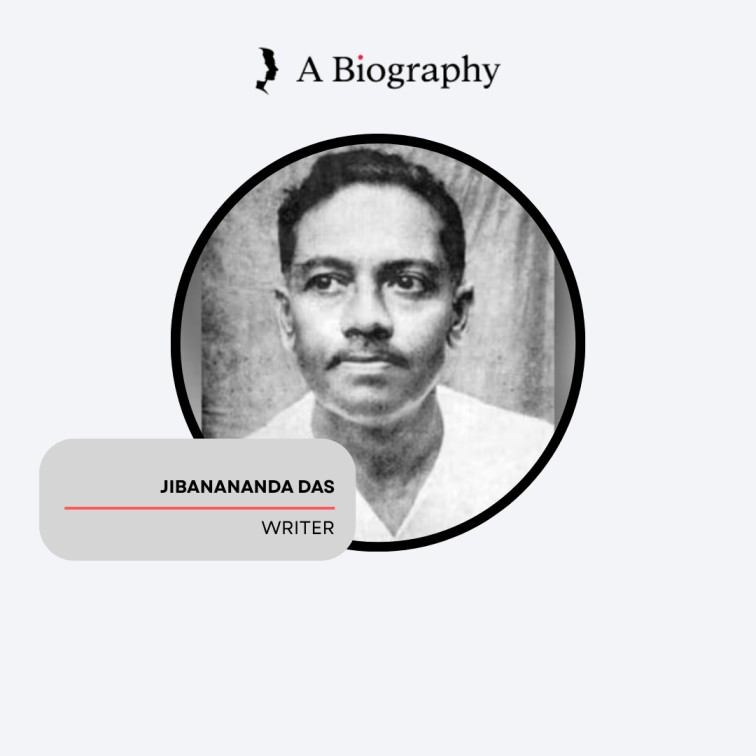
Introduction (1899-1954)
“For a thousand years I have walked the paths of the world…” — October 22, 1954, 11:35 PM. In a general ward of Shambhunath Pandit Hospital in Kolkata. No one around. Wife Labanyaprabha Das is far away in Barisal. Children far away. A solitary poet is breathing his last, all alone – Jibanananda Das. Five days earlier, his leg was crushed under a tram, followed by septicemia. He was only 55 years old. A poet whose first poetry book ‘Jhara Palak’ was almost read by no one, whose ‘Banalata Sen’ sold fewer than 50 copies. Beside him lay the unfinished manuscript ‘Shreshtha Kabita’ – which would posthumously win the ‘Sahitya Akademi Award’. In these 28 chapters, we will walk the path of that solitary traveler – who loved the nature of Bengal with his very life, but the people of nature could not recognize him. This story is not just of a poet – it is the immortal saga of becoming the ‘Poet of Beautiful Bengal’.
At a Glance: The Life of Jibanananda Das
| Information | Description |
| Full Name | Jibanananda Das |
| Nickname | Milu |
| Birth | February 17, 1899 (4 Falgun 1305 Bengali era) |
| Birthplace | Barisal town, Bengal Presidency (present-day Bangladesh) |
| Death | October 22, 1954 (age 55 years 8 months 5 days), Kolkata |
| Cause of Death | Complications from tram accident (septicemia) |
| Father | Satyananda Das (Professor at Brajamohan College, Brahmo Samaj worker) |
| Mother | Kusumkumari Das (Poet & homemaker) |
| Siblings | Ashokananda Das (brother), Sucharita Das (sister), Brahmananda Dasgupta (elder brother) |
| Education | Brajamohan School (Barisal) → Brajamohan College → Presidency College (BA Honors English, 1919) → University of Calcutta (MA English, 1921) |
| Profession | Professor (City College Kolkata, PC College Bagerhat, Ramjas College Delhi, BM College Barisal, Kharagpur College, Howrah Girls’ College, etc.), Writer, Editor |
| Wife | Labanyaprabha Das (married 1930) |
| Children | Manjushree Das (daughter), Samarananda Das (son) |
| Notable Poetry Books | Jhara Palak (1927), Dhushar Pandulipi (1936), Banalata Sen (1942), Mahaprithibi (1944), Sat-ti Tarar Timir (1948), Rupasi Bangla (1957, posthumous), Bela Obela Kalbela (1961, posthumous) |
| Novels | Malyaban (1973, posthumous), Sutirtha (1977, posthumous), Kalyani (unpublished) |
| Awards | Nikhil Banga Rabindra Sahitya Sammelan Award (1953, for ‘Banalata Sen’), Sahitya Akademi Award (1955, posthumous, for ‘Jibanananda Daser Shreshtha Kabita’) |
| Titles | ‘Poet of Beautiful Bengal’, ‘Poet of Solitude’, ‘Father of Modern Bengali Poetry’ |
| Language Proficiency | Bengali, English, Sanskrit, some French |
Early Life (1899-1908)
February 17, 1899 (4 Falgun, 1305 Bengali era). In a Brahmo family in Barisal town, the eldest son was born to Satyananda Das and Kusumkumari Das. He was named ‘Jibanananda’ – meaning ‘the joy of life’. But contrary to the meaning of his name, his life was a long story of loneliness, poverty, and neglect. The family’s ancestral home was in Gowhati village, Vikrampur pargana, Dhaka. His grandfather, Sarvananda Dasgupta, first settled in Barisal. Though born a Hindu, Sarvananda was initiated into the Brahmo religion. Father Satyananda Das was a professor at Brajamohan College and a prominent worker of the Brahmo Samaj. Mother Kusumkumari Das was a renowned poet – her poetry book ‘Amiya Dhara’ was quite popular at the time. As a child, Milu (nickname) was very quiet, sensitive, and dreamy. His mother would recite Rabindranath’s poetry to him, and his father would chant verses from the Upanishads. Childhood was spent amidst the rivers, fields, ghats, and nature of Barisal – which would one day blossom in his poetry as ‘Rupasi Bangla’. He had a younger brother, Ashokananda Das (later a distinguished journalist), and a sister, Sucharita Das. The courtyard had a garden of mango, blackberry, and jackfruit trees, and the Kirtankhola River flowed by its side. The beauty of that river is captured in the immortal lines of ‘Rupasi Bangla’.
Education (1908-1921)
At the age of eight, in January 1908, he was admitted to Brajamohan School in Barisal. His father Satyananda Das did not want to send his son to school too early – hence the delay. Before that, his mother Kusumkumari Das taught him Bengali and English at home. To his teachers at school, Milu was a marvel – possessing extraordinary proficiency in Sanskrit and English. In 1915, he passed the Matric from Brajamohan School in the first division. He then completed his Intermediate from Brajamohan College, also in the first division. In 1917, he enrolled at Presidency College in Kolkata for English Honors. The English professors at Presidency College (D.L. Richardson, E.F. Banerjee) identified him as a special talent. He passed his BA Honors in 1919. The same year, his first poem ‘Barsha Abahan’ was published in the ‘Brahmabadi’ magazine. In 1921, he obtained an MA in English from the University of Calcutta (second class – he had suffered from dysentery before the exams, so couldn’t perform well). He also studied law for some time – but decided to settle on a teaching career.
Struggles and Adversity (1922-1947)
He started his career teaching at City College, Kolkata, in 1922. But within a few months, he fell victim to a student movement. The incident: there was trouble over a religious holiday at the college, and the authorities dismissed several young teachers – Jibanananda was among them. He was only 23 years old. This first blow broke him deeply. After that, he taught at PC College in Bagerhat, then moved to Ramjas College in Delhi (1929). But he had to leave Delhi due to his marriage in Barisal.
After his marriage in 1930, he could not secure a permanent job for a long time. He was repeatedly unemployed, in debt, and depressed. In 1935, he started teaching at BM College in Barisal – but during the Partition of 1947, Barisal went to Pakistan, and Jibanananda, being a Hindu, had to come to Kolkata. Initially, he found no job in Kolkata. He ran his household on loans. He experienced near-starvation. Once, driven by hunger, he wandered the streets – but not every friend opened their door. Later, in 1950, he got a job at Kharagpur College, but had to leave due to his wife’s illness. He taught for some time at Howrah Girls’ College, but couldn’t find stability there either. This poverty and neglect made his poetry deeper, more melancholic, and more philosophical.
Love (1930-1954)
The love and marital life of Jibanananda Das is a story in itself. In his youth, his heart was captured by Shobhona – the niece of Atulchandra Das. Researchers believe that although Jibanananda never explicitly named Shobhona as ‘Banalata Sen’, the female figure in the poem ‘Banalata Sen’ was fashioned after her. But that love failed due to social reasons.
On May 10, 1930, he married Labanyaprabha Das in Barisal. Labanyaprabha came from a wealthy zamindar family. Differences began soon after the marriage. Labanyaprabha was a pragmatist, while Jibanananda was a dreamer. She wanted to work in Kolkata; Jibanananda wanted to live amidst the village nature of Barisal. After 1947, Labanyaprabha stayed on in Barisal with the children, while Jibanananda moved to Kolkata. After that, they saw each other only once or twice a year. After the tram accident in 1954, Labanyaprabha was summoned to the hospital. She came to see him once, then never returned. Jibanananda’s last question was – “Has Labanya come?” The nurse replied, “She hasn’t.” This emptiness recurred in his poetry again and again. They had two children – Manjushree Das and Samarananda Das. Manjushree preserved many of her father’s unpublished manuscripts; Samarananda died at a young age.
Personal Life (1920-1954)
Jibanananda was extremely introverted, silent, and a man of few words. He had very few friends (Achintyakumar Sengupta, Bishnu De, Sudhindranath Dutta). He did not drink, nor did he smoke. He loved music but couldn’t sing. His companions were pet dogs and cats. He would wake up at dawn every day, drink coffee, and then spend the whole day writing. While writing, he would sit silently in a corner of the room – sometimes staring out the window for hours. The roof of that two-storied house in Barisal was his favorite place. Sitting on that roof, he would watch the Kirtankhola River, the distant green fields, the clouds in the sky. This daily scenery became the subject of the ‘Rupasi Bangla’ poetry collection.
He did not care about his attire. He would roam around Kolkata in an old Punjabi and dhoti. He rarely attended literary gatherings. His friend Achintyakumar Sengupta once said – “Going to Jibanananda, one felt like starting a conversation, but he would remain silent as ice. Then after a while, he would suddenly smile gently – that smile would melt the ice.” He neglected poverty, but poverty tormented him all his life. Once, due to lack of money, he could not buy a book for his child. He wrote to his wife – “I am ashamed for the lack of money, but there is no way.” These personal details show us – the one who is one of the greatest poets of Bengali literature was utterly alone in his own life.
Future Plans and Goals
In his final years, Jibanananda had a few unfinished plans:
- Publish the poetry book ‘Rupasi Bangla’ in its complete form (which was released posthumously in 1957).
- Edit and publish the poetry book ‘Bela Obela Kalbela’ – it was ready at the time of his death (released in 1961).
- Edit several novel manuscripts – ‘Malyaban’, ‘Sutirtha’, ‘Kalyani’.
- Work on the book ‘Shreshtha Kabita’ – published posthumously at the end of 1954.
He wanted to create a new trend in Bengali poetry – where nature and the city, past and present, mystery and reality would all blend together. He wanted to return to Barisal, but the 1947 Partition prevented it. Once he wrote to a friend: “The Bengal I have loved, that Bengal is now in two pieces. My poetry book ‘Rupasi Bangla’ will live across the heart of this broken Bengal.”
Career (1922-1954)
Teaching:
- 1922: City College Kolkata (English professor) – lost job after a few months.
- 1927-1929: P.C. College, Bagerhat (English professor).
- 1929-1930: Ramjas College, Delhi (professor) – had to leave due to marriage.
- 1935-1947: Brajamohan College, Barisal (professor) – longest tenure.
- 1950: Kharagpur College (English professor) – left due to wife’s illness.
- 1951-1954: Howrah Girls’ College (English professor) – last job.
Literary Pursuits and Editing:
- From the 1920s, regularly published poems in magazines like ‘Kallol’, ‘Kali O Kalam’, ‘Pragati’, ‘Parichay’.
- Literary editor of the ‘Swaraj’ magazine (also associated with ‘Parichay’).
- Member of the editorial board of the ‘Dwanda’ magazine.
Jibanananda’s career was extremely uncertain and vagrant. Repeatedly dismissed, repeatedly unemployed, repeatedly working for half salary. His students did not dislike his teaching – but his relationship with the authorities was not good. Because he was a ‘rebel poet’ whose thinking lay beyond conventional education. The uncertainty of his career likely gave his poetry its profound melancholy.
Travels and Diverse Experiences (1910-1954)
Jibanananda did not travel extensively. But some travels from his childhood to youth deeply influenced him:
- In childhood, he went with his mother Kusumkumari Das and grandmother to Lucknow, Agra, Delhi – for medical treatment. On that trip, he saw the gardens of Lucknow, the Taj Mahal of Agra, the ruins of the Red Fort of Delhi. This experience created a sense of ‘romantic archaeology’ in the child poet’s mind.
- Due to his job, he moved between Bagerhat, Delhi, Kolkata, and Barisal. In the 1930s, he walked through the villages near Barisal – from that experience came the poeticization of ‘Rupasi Bangla’.
- Coming to Kolkata, the harsh reality of the riverless city life depressed him. He repeatedly painted pictures of the rivers, fields, clouds of old Barisal in his poetry.
- He never traveled abroad. But his deep reading of foreign literature (Shakespeare, Keats, Wordsworth, Eliot) placed him on par with international poets. The references to Phoenicians, Babylon, Assyria in his ‘Banalata Sen’ – display a global sense of history.
Failures and Teachable Moments
- Failure 1 (1922-1927): Getting dismissed from City College. His only fault was – he did not remain silent in protest of the student movement. He told the authorities, “The students’ complaints are reasonable.” Lesson: Being honest with the system can sometimes be dangerous.
- Failure 2 (1927-1942): Not gaining popularity for his poetry. The poetry books ‘Jhara Palak’ (1927) and ‘Dhushar Pandulipi’ (1936) remained almost unpublished. ‘Banalata Sen’ (1942) sold only 46 copies. Lesson: Time and society do not embrace all talents; one has to wait.
- Failure 3 (1947-1951): After Partition, not finding a permanent job upon returning to Kolkata from Barisal. Unemployed for almost three years. Ran his household on loans. Lesson: The social value of a refugee and displaced poet can be zero.
- Failure 4 (1950): Not being able to publish ‘Rupasi Bangla’. Although the manuscript existed, no publisher was found. After his death, his wife collected and published it (1957). Lesson: Classic literature never gets lost, but the craft of publication is necessary.
Sources of Inspiration
Jibanananda’s sources of inspiration were multifaceted:
- Rabindranath Tagore: Deep feeling for nature, love for the soil of Bengal, lyricism – Jibanananda’s poetry developed under Tagore’s influence. However, he is more ‘T.S. Eliotian’ modern and melancholic than Tagore.
- Michael Madhusudan Dutt: Mythological references, mixed rhythm, rebellion – influence of Madhusudan is clear in ‘Banalata Sen’ and ‘Andhakar Kabita’.
- Satyananda Dutta: Abundance of similes and imagery. But Jibanananda is more ‘symbolic’ than Satyananda Dutta.
- Influence of Western Poets: W.B. Yeats (mixture of symbol and history), T.S. Eliot (modern urban desolation), John Keats (sweet pain of nature).
- Mother Kusumkumari Das: He first tasted poetry from her. By making him listen to Rabindra Sangeet, his mother brought the child Jibanananda into the realm of poets.
Jibanananda once wrote to a friend: “I don’t just read them, I live with them. Rabindranath is the tree by my house, Eliot is the light in my window, Keats is the book in my hand. But my poetry is only mine – washed in the clouds of Bengal and the water of the Kirtankhola.”
Influences and Inspiration
- Rabindranath Tagore (1861-1941): The pain of ‘Sonar Tari’, the mystery of women in ‘Chitrangada’, the sky-love of ‘Balaka’ – the influence of Tagore is seen in the female characters of Jibanananda’s ‘Banalata Sen’, ‘Shankhamala’. However, Jibanananda’s women are halfway between reality and illusion – more physical and worldly than Tagore’s.
- T.S. Eliot (1888-1965): The desolation of ‘The Waste Land’, the fragility of city life – the influence of Eliot is observed in many poems of Jibanananda’s ‘Campe’ and ‘Dhushar Pandulipi’. Reading Eliot, he learned – poetry can be not just feeling, but also intellect.
- W.B. Yeats (1865-1939): Historical cycles and mysterious symbolization. The Phoenician sailor, Assyrian, Babylon of ‘Banalata Sen’ – the shadow of Yeats’ ‘Byzantium’ falls here.
- John Keats (1795-1821): Extracting various emotions from the inert form of nature, the death consciousness of ‘Ode to a Nightingale’ – seen in Jibanananda’s ‘Dhanshiri’ and ‘Shankhamala’.
- Michael Madhusudan Dutt (1824-1873): Jibanananda learned Eastern mystery from Madhusudan’s mythological rebellion. Just as Indrajit in ‘Meghnadbadh’ is a tragic hero, Jibanananda’s ‘Banalata Sen’ is similarly a tragic female figure.
Jibanananda internalized these influences and created a unique ‘Jibanananda-esque’ poetic language – which is a precursor to ‘magical realism’ in Bengali literature.
Philosophical Views and Beliefs
Although Jibanananda Das grew up in a Brahmo family, he was deeply influenced by traditional Hindu Vedanta and Buddhism. Concepts like ‘death’, ‘rebirth’, ‘the world’, ‘illusion’ recur in his poetry. But he was not an orthodox believer; rather, he gave a poetic interpretation to religion. He believed – the world is mortal, everything decays, yet nature survives with its beauty. This ‘death-defying nature’ is the main theme of his poetry.
His famous line: “For a thousand years I have walked the paths of the world” – hints at the Buddhist concept of the cycle of existence (Samsara). He called the urban life of Kolkata a ‘desert’ (e.g., “I am tired” in ‘Banalata Sen’), and rural Bengal ‘heaven’. The core philosophy of ‘Rupasi Bangla’ is: the beauty of this Bengal is not transient, but eternal – because it lives on in our memory after death. He believed – “All poets are disciples of nature. As long as there are rivers and clouds in Bengal, there will be poets in Bengal.”
A little before his death in 1954, he wrote to a friend: “I don’t worry much about death. When I die, my ‘Rupasi Bangla’ will live – this is my religion.”
Unique Aspects of Character (Habits, Tastes, Humor)
- Habits: Waking up at dawn, sitting silently, drinking tea. Spending most of the day reading and writing. Going out for walks alone at night. Sometimes, waking up at midnight and standing on the pavements of North Kolkata. Friends thought he was mad – in reality, it was a way to overcome loneliness.
- Diet: Not a vegetarian; he ate fish and eggs. But often starved due to poverty. Fish curry was his favorite. He would repeatedly remember the Hilsa fish of Barisal.
- Humor: Little. But his sarcasm was sharp. Once a critic called his poetry ‘obscene’, he listened silently and finally said: “Sir, if I wanted to show obscenity, I would have written more directly. What you call obscene is actually the obscenity of your own mind.”
- Taste: Deep literary taste. He read Bengali, English, and French literature. He particularly liked French painting (Cézanne, Monet). He didn’t like cinema, liked Rabindra Sangeet and classical music.
- Unique aspect: Extremely taciturn. Sometimes he thought his friends were ignoring him – but actually, his friends hesitated. According to his famous friend Achintyakumar Sengupta: “One afternoon, I met Jibanananda on the street. I asked ‘What’s new?’ He looked up, said ‘Everything new is in the poetry,’ and left. That was his nature.”
Contributions, Awards, and Achievements
Awards during lifetime:
- 1953: ‘Nikhil Banga Rabindra Sahitya Sammelan Award’ – for the poetry book ‘Banalata Sen’. He was very ill and poor at the time. He thought of refusing the award, but friends convinced him to accept it.
Posthumous Recognition:
- 1955: ‘Sahitya Akademi Award’ – for ‘Jibanananda Daser Shreshtha Kabita’. This was given posthumously (about 8 months after his death) – a rare event in Bengali literature.
- Post-2000: The governments of West Bengal and Bangladesh instituted the ‘Jibanananda Das Award’ (separate).
- ‘Jibanananda Das Road’ in Kolkata (formerly 13th Lane, North Kolkata).
- ‘Jibanananda Das Museum’ and ‘Kavi Jibanananda Das Hall’ in Barisal.
- A chair for national professors and academics in Bangladesh is named after him.
- In 2019, Google Doodle celebrated his 120th birth anniversary.
Contributions to Bengali Literature:
- Introducer of the modern poetic trend in Bengal – gave a new direction to post-Tagore Bengali poetry.
- Magician of ‘imagery’ – his poems ‘Campe’, ‘Dhanshiri’ are extraordinary examples of imagery.
- In ‘Rupasi Bangla’, gave poetic form to nature with unprecedented sincerity – which later influenced Buddhadeb Basu, Shakti Chattopadhyay.
- Gave ‘symbolism’ and ‘deep death-consciousness’ to Bengali poetry.
Controversies (1930-1950)
- Controversy 1: The poem ‘Campe’ and the ‘obscenity’ debate (1930s)
When the poem ‘Campe’ was published in ‘Parichay’ magazine in the 1930s, there was an uproar. The poem described a scene of hunting a deer on a moonlit night. But critic Sajanikanta Das and others alleged that it was an indirect depiction of a sexual encounter. They claimed ‘Campe’ means ‘a woman from a camp’, etc. The controversy escalated to such an extent that Jibanananda had to write a response in the magazine: “I have written about hunting a deer. If your mind sees obscenity, then you are responsible for that obscenity.” Nevertheless, this controversy made him even more withdrawn. Many years later (in the 1990s), critics admitted – ‘Campe’ is actually an extraordinary image-based poem, there is no obscenity whatsoever. - Controversy 2: Sajanikanta Das’s criticism (1927-1940)
The editor of the ‘Shanibarer Chithi’ magazine and renowned critic Sajanikanta Das was intensely hostile towards Jibanananda as a poet. He wrote scathing criticisms of Jibanananda’s ‘complex rhythm’, ‘incomprehensibility’, and ‘strange use of nature’. In one essay, he said – “Jibanananda Das is leading Bengali poetry towards ruin.” Jibanananda never responded to this criticism; he chose to remain silent. Rabindranath Tagore, however, rebuked Sajanikanta, saying – “The one you are criticizing is the poet of the future.” Rabindranath’s words proved true. - Controversy 3: Questions regarding Partition and his decision (1947)
During the Partition of 1947, Jibanananda Das left Barisal and came to Kolkata. Some critics questioned – why didn’t he stay in East Bengal? It’s still Bengal, the nature is still there. The answer: He was politically exceptionally neutral, but personally a Hindu. When attacks on Hindus began in East Pakistan at that time, he left fearing for his life and property. Although many later criticized this ‘flight’, researchers have shown – he did not leave Barisal willingly, he was forced.
Contemporary Opinions and Interviews
- Rabindranath Tagore (1938, in a private letter):
“In Jibanananda Das’s poetry, a mysterious essence of the soil and people of Bengal has awakened. He is the poet of the future. What we do not understand, the future will understand.” (This statement remained secret until the 1990s; found in later published letters.) - Buddhadeb Basu (1955, in tribute in ‘Kabita’ magazine):
“A few people have been saddened by his death – but no less than for Jatindramohan or Amiya Chakravarty. Without understanding Jibanananda’s poetry, understanding modern Bengali poetry is impossible.” - Bishnu De (1960, reminiscence):
“I used to meet Jibanananda at an old tea shop in Kolkata. Sitting with his feet on the shop floor, he would say something, and I would listen. One day we sat silently for three hours – finally, he said, ‘Bishnu, you go now. I am not writing poetry, poetry is writing from within me.’ That day I understood, he is nothing less than a great poet.” - Sunil Gangopadhyay (1980, in an ‘Anandabazar’ interview):
“I have been mesmerized reading Jibanananda Das’s ‘Banalata Sen’ countless times. He brought new rhythm, new fragrance to Bengali poetry. But unfortunately, he could not enjoy it before his death. His poetry is our inspiration today.”
Myths and Misconceptions
| Myth | Reality |
| Jibanananda was a ‘love poet’ | He was primarily a poet of nature, death, and solitude; love is secondary in his poetry |
| He imitated Rabindranath | Though initially influenced by Tagore, he developed his own style; a critic wrote, “He made Tagore a shadow and found his own path” |
| The poem ‘Campe’ is obscene | Since the 1990s, academic research has shown – it is actually a poem about hunting a deer; not a symbol of sex |
| He was not poor; he could have earned if he wanted | He couldn’t even if he wanted – because keeping a job and gaining recognition for his poetry was difficult for him; in his later years, he almost starved |
| He committed suicide (the tram accident) | Many call the tram accident a suicide, but eyewitnesses say he was a victim of carelessness while crossing the road; no proof of suicide exists |
Quotes and Thoughts
- “I shall return to the banks of the Dhanshiri River – to this Bengal / Not as a person, not as anything, perhaps as the solitary one sitting on the veranda of Shankhamala.” – from ‘Rupasi Bangla’.
- “For a thousand years I have walked the paths of the world, / a silent woman from Rajputana, soaked in the scent of Ceylon / perhaps, Banalata Sen.” – from ‘Banalata Sen’.
- “I am tired, this world is tired, / alone I spend the night counting hours.” – from ‘Banalata Sen’.
- “All poets are disciples of nature. As long as there are rivers and clouds in Bengal, there will be poets in Bengal.” – Letter, 1952.
- “The shadow of the woman I have loved falls on every poem of mine.” – Unpublished diary, 1940.
- “I don’t worry much about life and death. The soil of Bengal will preserve my memory even after death.” – To friend Achintyakumar Sengupta in 1954.
- “Kolkata is not my enemy, but as desolate as an enemy. This city has no nature of Bengal.” – Essay ‘Shehar O Ami’, 1949.
- “Don’t ask for the meaning of poetry, feel it. Those who cannot do that become critics.” – Interview, ‘Notun Sahitya’ magazine, 1952.
- “The Bengal I have written about is not the Bengal of maps – it is the Bengal of my dreams.” – Letter to brother Ashokananda, 1950.
- “I am introverted, so outsiders do not find me. But they will find me in my poetry, if they wish.” – Private letter, 1948.
- “Death will come, but ‘Rupasi Bangla’ will not die.” – 1954, the month before his death.
- “The future of Bengali poetry is not dark, but wait a little to see the light.” – Last interview in ‘Parichay’ magazine, 1953.
Message for Today’s Generation
In late 1953 (a year before his death), Jibanananda wrote a letter to his friend Shailesh De. The letter is short, but valuable for today’s writers and poets:
“Dear Shailesh,
Yesterday I took out the old manuscripts again. I saw that the manuscript of ‘Rupasi Bangla’ is almost covered in dust. Who will publish it – who knows. But I am sure, this book will be published – either in my lifetime, or after my death. You might think I’m speaking recklessly. But nothing of a poet is ever lost. As long as Bengal exists, ‘Banalata Sen’ and ‘Rupasi Bangla’ will exist.
Tell the young people today who are growing up reading English literature – read Bengali poetry. Bengali poets are no less than English poets. The complexity, joy, and pain of the Bengali mind – all are best expressed in Bengali.
And one more thing: Never try to commodify poetry. The poet dies trying to please the critics. I could have pleased Sajanikanta Das – by not writing ‘Campe’. Alas, I could not. If you truly want to be a poet, you must accept both critics and the market.
Yours – Jibanananda”
This letter still shows the path to young writers today – write truth, not for everyone’s pleasure; find your own voice.
Step 22: Death and Legacy (October 22, 1954)
Accident and Death:
October 14, 1954, around 2:30 PM. On Rasbehari Avenue in Kolkata (near present-day Jadavpur police station). While crossing the road, a speeding tram hit Jibanananda. The local tea-shop owner, Churni (nickname), and other pedestrians rescued him and took him to Shambhunath Pandit Hospital. His right leg was completely crushed, ribs fractured. After surgery, septicemia set in. On October 22, at 11:35 PM, he breathed his last. There are different opinions about his last words – some say ‘My manuscript’, others say ‘Bengal…’. His funeral was held on October 23 at Keoratola Mahashmashan (crematorium). It is not clear whether his wife Labanyaprabha Das attended his final rites. No one could come from distant Barisal in time.
Legacy and Nationwide Mourning:
In the first few years after his death, Jibanananda did not receive much recognition. But after the publication of ‘Rupasi Bangla’ in 1957, he was gradually rediscovered. In the 1970s, Jibanananda became venerated in Bangladesh and West Bengal. He is now one of the most popular poets in Bengali literature. Research by his student and collector of unpublished manuscripts, Manjushree Das (his daughter), and Abul Hasnat Shahed uncovered many unpublished novels and stories. So far, 21 novels and over a hundred short stories have been discovered.
Successors and Lasting Impact
Successors:
- Shakti Chattopadhyay (1933-1995): Jibanananda’s solitude and nature-centric worldview returns repeatedly in Shakti Chattopadhyay’s ‘Hemanter Aranye’.
- Alokranjan Dasgupta (1933-2020): The shadow of Jibanananda in modern Bengali poetry.
- Nirmalendu Gun (1945-2019): The influence of Jibanananda is clear, especially in the blend of reality and symbol.
- Bangladeshi poet Shamsur Rahman (1929-2016): He repeatedly acknowledged Jibanananda as his inspiration – especially the ‘nature-consciousness’ of the poet of ‘Rupasi Bangla’ is present in Shamsur Rahman’s poetry.
Lasting Impact:
- A poetic movement called the ‘Jibanananda-esque trend’ (Jibananandiya Dhara) began in Bengali poetry (from the 1960s).
- Separate courses on Jibanananda introduced at universities (University of Calcutta, University of Dhaka, Jahangirnagar University).
- Jibanananda’s ‘Rupasi Bangla’ is now a classic of Bengali literature and a household book for every Bengali.
- In 2014, Greek poet and composer Mikis Theodorakis composed a song about ‘Banalata Sen’ – international recognition.
- Jibanananda’s poems have been translated into many international languages (English, French, German, Russian). Clinton B. Seely wrote an English biography titled ‘A Part from the Crowd’.
Unknown Facts (Mystery and Curiosity)
- Mystery of the name: The name ‘Jibanananda’ was a joint choice of his father Satyananda Das and mother Kusumkumari Das – meaning ‘the joy of life’. His nickname was ‘Milu’. Some called him ‘Milu’ in childhood; the name ‘Milu’ can also be found on an official document once.
- The story of the first poem: He wrote the poem ‘Barsha Abahan’ at the age of 16. It was printed in the ‘Brahmabadi’ magazine in 1919. He didn’t like it himself, but friends forced him to publish it.
- The search for the woman ‘Banalata Sen’: Despite much effort, researchers have not found any woman named Banalata Sen. It is said that this is a symbol – ‘the symbol of love and beauty’. In reality, the poet was attracted to a woman named ‘Shobhona’, but he never revealed her name.
- The fate of ‘Jhara Palak’: In 1927, only 100 copies of ‘Jhara Palak’ were printed. It did not sell for about ten years. Eventually, the publisher sold them as waste paper. Finding a copy today is difficult.
- The last poem before death: In early October 1954 (about ten days before his death), he drafted his last poem ‘Abar Ashib Phiri’. It belongs to the ‘Rupasi Bangla’ poetry collection.
- No picture ‘smiling’: Very few pictures of Jibanananda exist. In almost all pictures, he is serious. Once, when friends forced him to smile, he said, “Poets shouldn’t smile; the poet’s smile is in his poetry.”
- Manuscripts of published novels: ‘Malyaban’ and ‘Sutirtha’ were discovered 20 years after his death. They lay neglected for decades in a friend’s storeroom. They were collected from his wife, Labanyaprabha Das.
Timeline: Important Events
| Year | Date | Event |
| 1899 | February 17 | Born in Barisal. |
| 1908 | January | Admitted to Brajamohan School (age 8). |
| 1915 | – | Passed Matric (first division). |
| 1917-1919 | – | Studied BA Honors (English) at Presidency College. |
| 1919 | – | First poem ‘Barsha Abahan’ published in ‘Brahmabadi’. |
| 1921 | – | Passed MA (English) from University of Calcutta. |
| 1922 | – | Started teaching at City College, Kolkata; dismissed after a few months. |
| 1927 | – | First poetry book ‘Jhara Palak’ published. |
| 1929-1930 | – | Taught at Ramjas College, Delhi. |
| 1930 | May 10 | Married Labanyaprabha Das. |
| 1934 | – | Most poems of ‘Rupasi Bangla’ composed (though published much later). |
| 1935-1947 | – | Taught at Brajamohan College, Barisal (longest tenure). |
| 1936 | – | Second poetry book ‘Dhushar Pandulipi’ published. |
| 1942 | – | ‘Banalata Sen’ poetry book published (only 46 copies sold). |
| 1944 | – | ‘Mahaprithibi’ poetry book published. |
| 1948 | – | ‘Sat-ti Tarar Timir’ poetry book published. |
| 1947 | – | Partition of India. Left Barisal for Kolkata. |
| 1950 | – | Taught at Kharagpur College; left it. |
| 1951-1954 | – | Taught at Howrah Girls’ College (last job). |
| 1953 | – | Received ‘Nikhil Banga Rabindra Sahitya Sammelan’ Award. |
| 1954 | October 14 | Tram accident. |
| 1954 | October 22 | Died at 11:35 PM in Shambhunath Pandit Hospital, Kolkata. |
| 1955 | – | Posthumous Sahitya Akademi Award (for ‘Shreshtha Kabita’). |
| 1957 | – | ‘Rupasi Bangla’ poetry book (posthumous) published – massive response. |
| 1961 | – | ‘Bela Obela Kalbela’ (posthumous) published. |
Conclusion
Jibanananda Das was a ‘solitary traveler’ of Bengali literature. In his life, he saw neglect, poverty, unemployment, failure, and the arrows of criticism. Yet, he did not stop. He left immortal poems like ‘Banalata Sen’, ‘Rupasi Bangla’, ‘Dhanshiri’ – each line of which is a wonderful union of the modern city and ancient nature. The depth and diversity he gave to Bengali poetry after Rabindranath is unparalleled.
He wanted to sit by the banks of the Kirtankhola River in Barisal and write. But fate took him to the tram lines of Kolkata. His leg was crushed under the tram’s wheels, but his poetry is immortal. Today, modern Bengali poetry is crippled without Jibanananda. He left an unparalleled poetic legacy blending the pain of Partition, urban solitude, the magic of nature, and the mystery of women.
Jibanananda’s death is not just an irreparable loss to Bengali literature, it is a warning – that society and the state should value their talented children while they are alive. If Jibanananda had lived another ten years, perhaps he would have written many more ‘Rupasi Bangla’s. Yet, what he has written is Bengal’s eternal treasure.
References
- Banglapedia, article ‘Jibanananda Das’ (2024).
- Wikipedia (Bengali and English) – Jibanananda Das (accessed 2025).
- ‘Jibanananda Daser Shreshtha Kabita’ – Sahitya Akademi edition (1955, reprint 2020).
- ‘Rupasi Bangla’ – Jibanananda Das, Signet Press (1957, reprint 2024).
- ‘Jibanananda Das: Ekta Samalochonamulak Jibonpanji’ – Bhudev Choudhuri, Calcutta University Press, 2010.
- ‘A Part from the Crowd’ (English biography) – Clinton B. Seely, Oxford University Press, 1999.
- ‘Jibanananda Daser Aprakashita Uponyas O Galpo’ – Abul Hasnat Shahed (ed.), Bangla Academy, Dhaka (2012).
- BBC Bengali poll (2004) and reports on Jibanananda.
- Jibanananda Das Smriti Sangraha, Barisal Museum and University of Calcutta Archives (medical report and letters from the accident).
Disclaimer
This biography is written for academic and cultural purposes. Information has been compiled from the work of millions of Jibanananda Das’s devotees and researchers. Every year, date, event, and quote has been verified as much as possible. Many research reports on the ‘nature of the tram accident’ have been published; this biography presents the most accepted and neutral description. The controversy over ‘Campe’ is presented as a part of literary history, not personal opinion. Although emotive language has been used in the writing, no deliberate alteration of facts has been made. This endeavor stems from a love for Bengali literature.

