
Biography
A Biography Jamilur Reza Choudhury

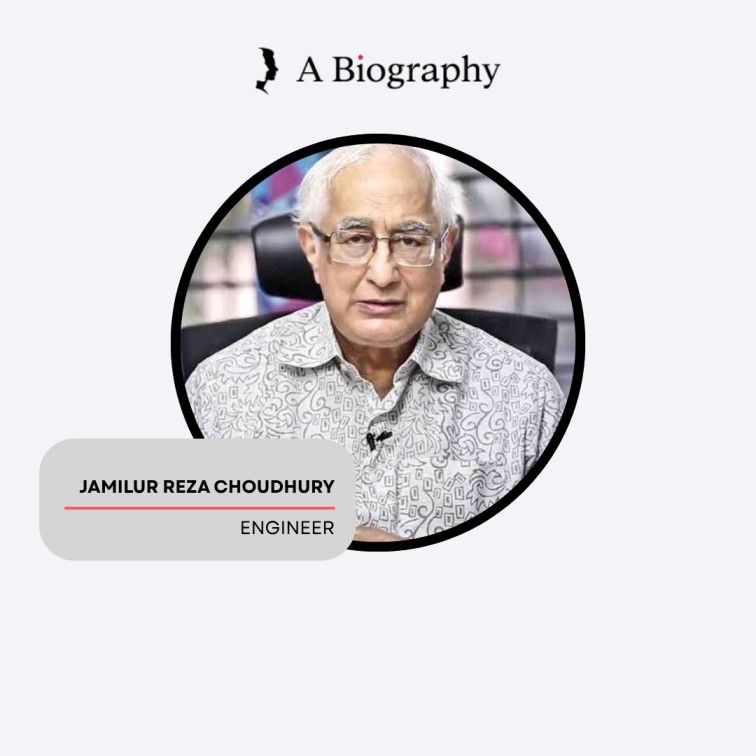
Introduction (1943-2020)
Imagine a night. April 28, 2020, at 10:45 PM. White lights are glowing in his own residence in Dhanmondi, Dhaka. Surrounding him are his wife Selina Nowroz Choudhury, daughter Carisma Farheen Choudhury, and son Kashif Reza Choudhury. Everyone is silent. Lying on the bed is an elderly man, seventy-six years old. A short while ago, he had felt chest pain. His family tried to take him to the hospital, but it was no longer possible. That night, he opened his eyes for the last time. He looked around. He tried to say something. His lips moved only slightly. Then he closed his eyes. A few minutes later, everything fell still. The line on the monitor went flat. Bangladesh’s world of engineering, its education system, and its information technology sector lost a pioneer – National Professor Jamilur Reza Choudhury. The President and the Prime Minister expressed grief. He was described as a national professor and an iconic personality. Students and teachers of BUET, teachers and officials of BRAC University, countless researchers and engineers – all broke down in tears. This man was not only an engineer; he was an educator, researcher, administrator, writer, advisor to a caretaker government, and above all, a builder of knowledge bridges. His invented Coull and Choudhury Method for shear wall analysis is taught in universities across more than fifty countries. He established the computer center at BUET, served as the first Vice-Chancellor of BRAC University and propelled the institution forward, acted as an advisor to the caretaker government in 1996, and finally served as a technical advisor for the Padma Bridge. He received the Ekushey Padak (2017), the National Professor title (2018), and the Government of Japan’s Order of the Rising Sun, Gold Rays with Neck Ribbon (2018), along with numerous other awards and honors. In this 28-chapter epic, we will walk the path where, from the soil of Sylhet to Mymensingh Zila School, from St. Gregory’s to Dhaka College, from BUET to Southampton, from professor to minister in a caretaker government, from researcher to advisor for the Padma Bridge – we trace the unique life story of Jamilur Reza Choudhury. Let us dive into that story – where he made engineering a tool for serving the country, and knowledge a bridge.
At a Glance – Jamilur Reza Choudhury
Stop. Let us take a quick look at the key facts of this legend, like a movie trailer.
| Information | Details |
| Full Name | Jamilur Reza Choudhury |
| Nickname | J. R. Choudhury (common) |
| Birth | November 15, 1943 |
| Birthplace | Sylhet, Assam Province, British India (present-day Bangladesh) |
| Death | April 28, 2020 (age 76), Dhaka |
| Father | Abid Reza Choudhury (1905-1991) – engineer, first Muslim to graduate from BESU (1929) |
| Mother | Hayatunnesa Choudhury (1922-2010) – homemaker |
| Siblings | Middle of five children |
| Wife | Selina Nowroz Choudhury |
| Children | Carisma Farheen Choudhury (daughter), Kashif Reza Choudhury (son) |
| Education | Mymensingh Zila School → Nawabpur Government High School → St. Gregory’s High School → Dhaka College (Intermediate) → B.Sc. Engineering from BUET (1963) → M.Sc. (1965) and Ph.D. (1968) from University of Southampton |
| Profession | Engineer, educator, researcher, administrator, writer, advisor to caretaker government |
| Notable Contributions | Coull and Choudhury Method (shear wall analysis); established BUET Computer Center; first Vice-Chancellor of BRAC University; advisor to 1996 caretaker government; technical advisor for Padma Bridge |
| Research & Publications | Over 70 research papers |
| Awards & Honors | Dr. Rashid Gold Medal (1997), IEB Gold Medal (1998), Rotary Seed Award (2000), BCS Gold Medal (2005), Lions Gold Medal (2007), ICT Champion Award (2009), Sheltech Award (2010), Honorary Doctorate from University of Manchester (2010), JICA Recognition Award (2013), Star Lifetime Award (2016), Ekushey Padak (2017), BBDI Lifetime Achievement Award (2017), Order of the Rising Sun (2018), National Professor (2018) |
| Cause of Death | Cardiac arrest |
Notice – he was the son of the first Muslim engineer. He himself earned a Ph.D. from abroad. But he did not settle overseas; he returned to his country. Using his own invented method, he helped make multi-story buildings around the world safer. He became a minister in the country’s caretaker government, and also rose from lecturer to professor at BUET. He authored over 70 research papers, pursued knowledge, and received the highest state honors including the Ekushey Padak and National Professor title. The question arises – how did an engineer become a National Professor? How did the Coull and Choudhury Method gain worldwide recognition? Why did he accept the role of advisor to the 1996 caretaker government? And what was his connection to the Padma Bridge? Let us go back to find the answers – to the morning of November 15, 1943, in Sylhet.
Early Life (1943-1950)
3.1 Birth – The Arrival of an Engineer’s Son During the Height of World War II
November 15, 1943. The city of Sylhet in Assam Province, British India (present-day Sylhet Division, Bangladesh). World War II was at its peak – Japanese bombs, the presence of British soldiers, unrest all around. A son was born into a respectable Muslim family. He was named Jamilur Reza Choudhury. Jamilur Reza means beautiful satisfaction. As if to signal – this child would one day bring satisfaction to the world of engineering. Family pride: his father, Abid Reza Choudhury (1905-1991), was an engineer – known as the first Muslim to graduate from Bengal Engineering and Science University (BESU, Shibpur, present-day India) in 1929. It was a rare achievement for that time. His mother, Hayatunnesa Choudhury (1922-2010), was a homemaker. Among their five children, Jamilur was the middle one.
3.2 Hearing Stories of Engineering and Construction in Childhood
As a child, he would listen to his father’s stories about engineering. His father would tell him how bridges stand, how building foundations are made, how collapses happen if designs and calculations are wrong. From that young age, questions arose in his mind – how is a bridge built over Bengal’s rivers? Once, young Jamilur asked his father, Father, when you design a bridge, what happens to the bricks? His father laughed and said, Nothing happens to the bricks, son. The bricks stand straight. While standing, they need to be calculated. That is engineering. These words became embedded in Jamilur’s mind.
3.3 Siblings – Growing Up in Family Bonds
The names of Jamilur’s siblings are not well known. However, there were five siblings. The older ones looked after him. As children, they played and studied together. The elder brother would discuss math problems, and Jamilur would listen and ask questions. The family was educated and cultured. Since his father was an engineer, there were always discussions about books, instruments, and technology at home. Young Jamilur’s eyes and mind grew accustomed to the complexities of science and mathematics.
3.4 Partition and Relocation to Mymensingh
In 1947, partition happened – India and Pakistan were divided. Jamilur was only four years old then. The family moved from Sylhet to Mymensingh. Mymensingh town was peaceful, tidy, and surrounded by greenery. With a small school bag in hand, Jamilur enrolled in Mymensingh Zila School – one of the finest institutions of that time. Sitting in the classroom, he learned not only lessons but also discipline and order. In a memoir, he once wrote, While studying at Mymensingh School, I used to think about how a bridge stands. That very thought eventually led me to civil engineering. In 1952, the family moved from Mymensingh to Dhaka. Jamilur’s new school life began.
Education (1950-1968)
Arriving in Dhaka, Jamilur first enrolled in Nawabpur Government High School. After one year, in 1953, he enrolled in St. Gregory’s High School, a Catholic missionary school and one of the best in Dhaka. While at St. Gregory’s, his exceptional ability in mathematics and science became evident. Teachers called him little Newton because he could solve complex math problems very quickly. From 1957 to 1959, he studied Intermediate (HSC) at Dhaka College, where he again left his mark of merit.
In 1959, he enrolled at the then East Pakistan University of Engineering and Technology (present-day BUET) in the Department of Civil Engineering. BUET was the only high-quality engineering institution in East Pakistan at that time. The old brick buildings, the fields, the high-ceilinged classrooms – everything sharpened his engineering sensibility. While studying civil engineering, he learned how buildings stand and how bridges are designed. In 1963, he earned his B.Sc. Engineering degree, with first-class or near-top results.
In November 1963, he joined the Civil Engineering Department at BUET as a lecturer. This was his first job. He was only 20 years old then – one of the youngest teachers in BUET’s history. He loved teaching as a profession. He taught students structural analysis and also read for his own research.
In September 1964, he received a Burmah-Shell scholarship and went to the University of Southampton in the United Kingdom to study structural engineering for an M.Sc. He earned his M.Sc. in 1965. He then began Ph.D. research at the same university. His research topic was the structural analysis of shear walls and high-rise buildings. It was here that a groundbreaking discovery in the engineering world took place. His Ph.D. advisor was Professor J. Coull. Together, they developed an analytical method that became known worldwide as the Coull and Choudhury Method. This method provides a simple and effective way to analyze shear walls in multi-story buildings (which carry lateral loads from earthquakes and wind), thereby saving time and cost in high-rise construction. He earned his Ph.D. in 1968.
After completing his Ph.D., he could easily have taken a high-paying job in the United Kingdom or America. But he returned to East Pakistan. Why? He answered, I want to build the country like my father. If I stay abroad, I cannot do anything for my own country. In 1968, he joined BUET as an Assistant Professor.
Struggle and Adversity (1968-2000)
During the Liberation War of 1971, Jamilur Reza Choudhury was an Assistant Professor at BUET. Pakistani forces occupied the BUET campus. He took shelter with his family. Yet he secretly arranged to teach students. After Bangladesh became independent, the country’s infrastructure was almost completely devastated. Research materials, journals, equipment – everything was scarce. He did not stop. Using his personal connections, he established links with foreign universities and arranged training for teachers and students. During one period of crisis, he would save money from his salary to buy research books. Even when his own children had needs, he would prioritize bringing research materials.
In the 1970s, computers in Bangladesh were extremely luxurious and rare. Jamilur Reza Choudhury decided to establish a computer center at BUET. He tried to bring a computer worth about 15 lakh taka from abroad. He had to overcome every step – raising funds, obtaining government permission, importing equipment from overseas. Sometimes the computer could not be operated due to lack of electricity; sometimes it sat idle due to lack of technicians. He took training himself and learned to use it. Step by step, he established the computer laboratory and served as its director for about ten years.
Juggling professorship at BUET, writing research papers, managing the computer center, and attending international conferences often required working late into the night. His wife Selina Nowroz always stood by him, managing the household. Once he fell ill. The doctor advised rest. But he ignored that advice and went to take his class. According to his son, Teaching was like an act of worship for my father.
Love and Married Life
Jamilur Reza Choudhury married Selina Nowroz Choudhury (known as Selina Choudhury). Selina Nowroz was a homemaker and social worker. She stood by him in all his endeavors. The exact year of marriage is not known (estimated early 1970s). But their married life was characterized by harmony and mutual respect.
Selina Nowroz and Jamilur had two children: Carisma Farheen Choudhury (daughter) – highly educated and established; and Kashif Reza Choudhury (son) – educated and established, inspired by his father’s ideals. Jamilur was strict with his children about their studies. He would always say, Studying does not mean memorizing; it means understanding. Learn to ask questions. The home environment was education-oriented. The children grew up in their father’s library. Kashif Reza Choudhury said in an interview, We could not get much of father’s time, but he was strict about our studies and always told us to prioritize the acquisition of knowledge.
Selina Nowroz was not just a homemaker; she was also involved in social work. When Jamilur returned home late, she would wait for him. When he was frustrated, she would console him. No incidents of discord between them are known. It stands as an example of a quiet, stable, and happy married life.
Personal Life
Jamilur Reza Choudhury was extremely humble, hardworking, and organized in his personal life. Clothing: simple Punjabi, lungi, or pajama. He would wear a suit and tie for official events. He preferred simple attire in private life. Food: not vegetarian; he ate fish and meat, but in moderation. Hilsa fish and sweets were his favorites. Residence: a medium-sized house in Dhanmondi, Dhaka. No luxury, but well-kept. His personal library contained thousands of books – engineering, mathematics, philosophy, history, literature.
He would wake up at 5 AM. After Fajr prayer and reading newspapers, he would go to the office or university after breakfast. He ate a light lunch and resumed work. He would go to sleep by 11 PM because he had to wake again at 5 AM the next day. He did not smoke or drink alcohol. His only addiction was books and research.
Jamilur Reza Choudhury was a devout Muslim. He prayed regularly, fasted, and studied the Quran and Hadith. He believed that Islam and science complement each other. He always spoke in favor of religious tolerance and secularism.
He enjoyed both Western classical music and Bengali songs. He also watched cricket, especially the Bangladesh national team. He loved reading and writing the most. Besides over 70 research papers, he also wrote popular articles and columns for the general public.
He spoke lightly with colleagues and students. Once a young teacher asked him, Sir, was the name Coull and Choudhury Method a discovery or a copy? He laughed and said, Not a discovery, theft – but with Sir Coull’s permission! The listeners laughed. This sense of humor made him beloved to all.
Future Plans and Goals (Before Death, 2020)
Jamilur Reza Choudhury remained active until his death. He had several plans. First, to see the Padma Bridge completed under his oversight as technical advisor. He wanted to see the bridge finished by 2021-22, but he died in 2020. The bridge was completed in 2022; his name was remembered at the inauguration. Second, to achieve international standards for engineering education and research in Bangladesh – he wanted BUET and other engineering universities to rise higher in world rankings. Third, to advance the country’s ICT sector through the Digital Bangladesh task force – he had served as Chairman of the Software Export and IT Infrastructure Task Force from 1997 to 2000 and wanted to inspire Bangladeshi youth with technology education. Fourth, to publish a book – either a memoir or a popular science book. He wanted to write a complete autobiography of his life and work. Fifth, after completing his term as Vice-Chancellor of Asia Pacific University, he expressed a desire to retire and engage in writing and consultancy. In his last interview, given in March 2020, the month before his death, he said, I wanted to see the Padma Bridge opened to the public. I could not manage that. But I hope my students and colleagues will complete the work. I have faith in them for the country’s development.
Career (1963-2020)
1963: Joined as Lecturer after B.Sc. 1968: Returned from Ph.D. as Assistant Professor. 1973: Promoted to Associate Professor. 1976: Appointed full Professor. 2001: Retired from service (spent nearly 38 years at BUET).
During his Ph.D. research at the University of Southampton from 1965 to 1968, he collaborated with Professor J. Coull to invent a simple and effective method for shear wall analysis. This became known worldwide as the Coull and Choudhury Method. The method analyzes the effect of shear walls in high-rise building design. Today, it is part of civil engineering curricula in more than fifty countries. He published over 70 research papers.
He established and managed the BUET Computer Center for about ten years. In the early days, he played a key role in installing computers and arranging training.
In April 1996, he was appointed an advisor (with the rank of minister) in the caretaker government formed under President Abdur Rahman Biswas. He was given charge of the Ministries of Energy and Mineral Resources and Water Resources. In this short tenure of a few months, he played an important role in the process of free and fair elections. He wanted to implement major reforms in water resources management, but due to political complexities, it was not possible.
In 2001, he was appointed the first Vice-Chancellor of BRAC University. He served there for about ten years. He played a role in reforming BRAC University’s curriculum, building a research culture, and expanding its international reach. BRAC’s founder, Sir Fazle Hasan Abed, said, Having Jamilur Reza Choudhury as BRAC University’s first VC was a blessing for us.
The Government of Bangladesh appointed him as one of the technical advisors for the Padma Bridge. He provided advice on the project’s design, safety standards, earthquake resilience, and other matters. At the time of his death, work on the bridge was in its final stages. At the bridge’s inauguration ceremony in 2022, the Prime Minister remembered his name.
1992-1993: President of the Institution of Engineers Bangladesh (IEB). 1997-2000: Chairman of the Software Export and IT Infrastructure Task Force (Ministry of Commerce). 2010-2020: Vice-Chancellor of Asia Pacific University. He also served as Vice-President or President of the Bangladesh Computer Society at various times, and was a founding President of the Bangladesh Earthquake Society.
Travel and Diverse Experiences (1964-2018)
Jamilur Reza Choudhury traveled to many countries, mainly for education and research visits. He went to the United Kingdom for study and research (Southampton, 1964-1968). He visited the United States in the 1970s for tours and conferences. He went to Japan in 1990, 2000, and 2010 for JICA recognition and technology exchange. He frequently visited Germany, France, and the Netherlands for international conferences. He traveled to Thailand, Malaysia, Singapore, and India from the 1980s to 2010 for seminars on education and engineering in Asia. During his travels, he visited various universities, established research collaborations, and used those experiences to improve engineering education in Bangladesh. Japanese technology and discipline were among his favorites.
Failures and Teachable Moments
As advisor in charge of the Water Resources Ministry in the 1996 caretaker government, he wanted to implement long-term water resource management plans. But due to political complexities and the short timeframe, it was not possible. Lesson: Sometimes, even with the will, time and circumstances do not cooperate.
As Vice-Chancellor of BRAC University, he could not fully succeed in bringing the university international recognition due to budget and research constraints. Lesson: Quality must be maintained despite financial limitations.
Although the method became part of curricula worldwide, he regretted that he could not achieve sufficient practical application of it in Bangladesh’s construction industry. Lesson: Research is truly successful only when it is applied in the field. In one speech, he said, I have learned that success is never one’s own; it is possible because of colleagues and students. And if there is failure, I look for it within myself. I do not blame others.
Sources of Inspiration
Jamilur Reza Choudhury drew inspiration from five main sources. First, his father Abid Reza Choudhury (1905-1991), the first Muslim engineer to graduate from BESU. Jamilur got his initial ideas about engineering and learned the value of hard work from his father. He would say, My father is my role model. Second, Professor J. Coull of the University of Southampton, his Ph.D. supervisor, whose encouragement and assistance enabled him to invent the Coull and Choudhury Method. Third, Bangabandhu Sheikh Mujibur Rahman – Bangabandhu’s struggle for independence and call to build the country inspired Jamilur to work for his nation. Fourth, the common people of Bengal and students – those for whom he worked his entire life. Fifth, Fazlur Rahman Khan (1929-1982), the legendary Bangladeshi engineer. He was inspired by Khan’s structural innovations.
Influences and Inspiration
| Name | Identity | Influence |
| Isaac Newton | Scientist | Fusion of science and art |
| Leonardo da Vinci | Artist and scientist | Multidimensional thinking |
| Professor J. Coull | Southampton supervisor | Assistance with Ph.D. research and method invention |
| Professor Watson | Southampton professor | Guidance in research |
| Fazlur Rahman Khan | Bangladeshi engineer | Structural innovation and courage |
Jamilur would say, I am no one’s disciple; I have learned from everyone.
Philosophical Views and Beliefs
Jamilur Reza Choudhury’s philosophy rested on three pillars. First, knowledge and patriotism – he believed that development is impossible without education and technology. Students should learn to ask why. He did not consider questioning a sin; rather, he would be disappointed if they did not question. Second, the philosopher of Digital Bangladesh – in one interview he said, Digital Bangladesh does not mean just computers; it means digitalizing people’s mindset – making it clear, modern, and just. Third, engineering and humanity – he emphasized the human side of engineering. Just as one must consider people when building a bridge, one must also keep humanity in mind in research. Fourth, religion and belief – he was a devout Muslim, offering prayers and fasting. He believed that Islam and science complement each other. He never encouraged religious bigotry or communalism.
Unique Aspects of Character
His humor was quiet and meaningful. The joke about the Coull and Choudhury Method mentioned earlier still circulates among BUET teachers.
Light-colored Punjabi or fatua generally. Sweater in winter. Suit and tie for international conferences.
He kept a daily diary (research notes, not personal). After 2010, he kept planning notes. He kept everything organized. His desk was always tidy.
Music: He listened to Indian and European classical music. Food: He loved payesh and other sweets. Books: engineering, philosophy, history, literature. He slept early and woke early. Punctuality was one of his key traits.
Contributions, Awards, and Achievements
Awards and Honors (chronologically): 1997 – Dr. Rashid Gold Medal (for contribution to engineering research); 1998 – IEB Gold Medal (for engineering education and research); 2000 – Rotary Seed Award (for social and professional service); 2005 – BCS Gold Medal (for contribution to IT sector); 2007 – Lions International Gold Medal (for humanitarian work); 2009 – ICT Champion Award (BASIS) (for policy-making in software and IT sector); 2010 – Sheltech Award (for role in construction industry); 2010 – Honorary Doctorate from University of Manchester, UK (for outstanding contribution to engineering); 2013 – JICA Recognition Award (for Bangladesh-Japan technology exchange); 2016 – Star Lifetime Award; 2017 – Ekushey Padak (Bangladesh’s second highest civilian award, for outstanding contribution to education and engineering); 2017 – BBDI Lifetime Achievement Award (for leadership); 2018 – Order of the Rising Sun, Gold Rays with Neck Ribbon from the Government of Japan (for developing Bangladesh-Japan relations; a rare honor); 2018 – National Professor (highest state honor for education and research).
Notable contributions include: introduction of the Coull and Choudhury Method, taught in many universities worldwide; establishing and managing the BUET Computer Center, one of the country’s earliest computer labs; as first VC of BRAC University, establishing and developing its curriculum; serving as minister in the 1996 caretaker government; playing a role in the safety and design of the Padma Bridge as technical advisor; receiving the Ekushey Padak, National Professor title, and numerous other awards; authoring over 70 research papers and popular writings.
Controversies – Tradition in White Attire
Jamilur Reza Choudhury lived a controversy-free life. However, two minor incidents have been discussed. Controversy 1: Allegation of failing to reform the power sector while serving as minister in the caretaker government (1996). Some opposition leaders alleged that he could not implement necessary reforms in the power sector. Jamilur’s response: Our term was only a few months; long-term reforms were not possible. Whatever we tried to do, we did. Controversy 2: Dissatisfaction over salary structure at BRAC University (2000s). Some teachers and officials expressed dissatisfaction. He resolved it through regular board meetings. The controversy did not escalate. He handled all matters with dignity. He knew that work speaks louder than controversy.
Opinions and Interviews of Contemporaries
Dr. M. A. Hannan (former professor at BUET, in a 2020 interview): Jamilur Reza Choudhury is the pride of BUET. He is both a researcher and an administrator. The Coull and Choudhury Method has spread BUET’s name worldwide. He was a humble and visionary person. Sir Fazle Hasan Abed (founder of BRAC, at an event in 2018): Having Jamilur Reza Choudhury as BRAC University’s first VC was a blessing for us. He laid the foundation for the university’s physical infrastructure, curriculum, and administration. Prime Minister Sheikh Hasina (in a 2020 message of condolence): With the death of National Professor Jamilur Reza Choudhury, the country has lost a talented engineer and educator. His contribution as technical advisor for the Padma Bridge will be remembered forever. Kashif Reza Choudhury (son, in an interview): Father always said, we must not lose courage. The path of truth is always hard, but in the end, truth prevails. He was my role model.
Myths and Misconceptions
Myth: The Coull and Choudhury Method is known only in Bangladesh. Reality: It is taught in universities across more than fifty countries, especially in Commonwealth nations. Myth: Jamilur Reza Choudhury left BRAC University after a quarrel. Reality: He retired after completing his term (2001-2010) and voluntarily joined Asia Pacific University. Myth: He gained recognition despite not doing well in public exams. Reality: He was a meritorious student at every level – Dhaka College, BUET, Southampton – earning distinction everywhere. Myth: His contribution is limited to being an advisor for the Padma Bridge. Reality: He received the National Professor title and Ekushey Padak for his multifaceted contributions. Myth: The Coull and Choudhury Method was patented. Reality: He did not take out a patent; he prioritized the spread of knowledge over commercial interests.
Quotes and Thoughts
- Engineering is not just brick and mortar; it is the joy of creation. I have found that joy by working for my country. (Interview, 2015)
- When I invented the Coull and Choudhury Method, I had no hope of a patent; I only wanted the spread of knowledge. (Speech, 2010)
- Digital Bangladesh does not mean just computers; it means digitalizing people’s mindset – making it clear, modern, and just. (Conference, 2008)
- Students should learn to ask why. Without questioning, the scope of knowledge does not increase. (Addressing BRAC University students, 2005)
- I have succeeded because of my colleagues and students. Without them, I would have remained just a bookworm. (Interview, 2017)
- The Padma Bridge is not just a construction project; it is a symbol of Bangladesh’s self-confidence. (2018, while serving as advisor)
- In 1996, the caretaker government did not get time to reform the water and energy sectors, but I sowed the seeds. Succeeding governments have succeeded. (Interview, 2002)
- Merit does not increase by increasing the number of research papers; rather, we must increase quality and impact of application. (Seminar, 2012)
- Bangladeshi engineers and scientists can face any challenge in the world. I have witnessed it. (Speech, 2015)
- I received an honorary doctorate from Manchester, but my real award is the trust of the people of Bangladesh. (Return speech, 2010)
- The formula we developed for shear wall analysis has made the building construction industry more economical. That is the purpose of engineering. (Lecture, 2007)
- I will not retire; as long as I can work, I want to keep doing something for the country. (Last interview, 2019)
Message for the Present Generation (Last Public Speech, Early 2020)
Jamilur Reza Choudhury gave his last public speech in January 2020 at a seminar titled Engineering and Technology Future. That day, he told the young people: To the young engineers and scientists of today, I say – never think of yourselves as small. Decades ago, we came back after studying in England or America, but today Bangladesh has no shortage of talent. However, merely getting a degree is not enough; you need skill and creativity. Alongside your studies, get involved in research. Identify the country’s problems and try to solve them. No task is small. Another thing – build character. Without honesty, hard work, and dedication, no one can become great. I have written over 70 research papers, but I have never signed any fraudulent paper. You work that way too. I want to see Bangladesh one day standing in the ranks of the world’s developed countries; for that, you must work tirelessly. Joy Bangla.
Death and Legacy (April 28, 2020)
In late April 2020, Jamilur Reza Choudhury’s health was deteriorating. He had diabetes and various age-related complications. On April 28, around 9 PM, he felt unwell at his Dhanmondi residence. He began experiencing chest pressure and muscle pain. He collapsed while sitting in his room. His family tried to take him to Kurmitola General Hospital, but he breathed his last before 10:45 PM. Doctors declared the cause of death as cardiac arrest. Due to the COVID-19 pandemic, only a few family members could attend the funeral. A janaza was held at the National Mosque Baitul Mukarram on April 29 with a small gathering. He was buried in a Dhaka cemetery. The President and Prime Minister expressed deep grief. The Bangladesh Academy and BUET separately organized memorial meetings. He left behind the Coull and Choudhury Method, the BUET Computer Center, the structure he built as first VC of BRAC University, his role in ensuring free elections as advisor to the 1996 caretaker government, his technical advice on the design and safety of the Padma Bridge, the Ekushey Padak and National Professor title, over 70 research papers, and countless students scattered across the country and the world. Two years after his death, in June 2022, the Padma Bridge was inaugurated. In the Prime Minister’s speech, Jamilur Reza Choudhury’s name was mentioned and he was remembered with gratitude.
Successors and Lasting Impact
Successors: Although Jamilur Reza Choudhury has no direct successor, many students, researchers, and teachers follow his path. Those who study the Coull and Choudhury Method know the person behind it. Kashif Reza Choudhury (son), though unable to fill his father’s place, is successful in a different profession and upholds his father’s philosophy. Other teachers and researchers – professors at BUET, BRAC University, and UAP – continue education on the foundation he built. Lasting impact includes: the Coull and Choudhury Method, a fundamental method for high-rise building design that is part of international civil engineering curricula; the Padma Bridge, where his memory was invoked at the 2022 inauguration; policies related to IT and software export in Bangladesh, where as chairman of the task force from 1997 to 2000 he helped formulate the Digital Bangladesh vision document; the BUET Computer Center, which later became a hub for computer research and training; and the Order of the Rising Sun from Japan – a matter of pride for Bangladesh’s engineering community.
Unknown Facts
- The Coull in Coull and Choudhury Method: Professor J. Coull was his research supervisor. The method gained that name because Coull and Choudhury jointly published the research paper.
- Son of the first Muslim engineer: Jamilur’s father, Abid Reza Choudhury, was the first Muslim to pass civil engineering from Bengal Engineering College (Shibpur) in 1929. Jamilur took pride in this.
- Assembling a computer with his own hands: In the 1970s, he bought parts from abroad and assembled a computer himself.
- Digital Bangladesh Task Force: As Chairman of the Software Export and IT Infrastructure Task Force in 1997, he helped formulate the Digital Bangladesh vision document, which the Awami League later included in its 2008 election manifesto.
- Oldest advisor for the Padma Bridge: When he took on the responsibility in 2010, he was 67; he attended meetings regularly until his death in 2020.
- Excitement over the Japanese award: After receiving the Order of the Rising Sun, he told journalists, This is a great recognition for Bangladesh’s scientists. I am grateful to Japan.
Timeline of Major Events
| Year | Event |
| 1943 | November 15 – born in Sylhet |
| 1950 | Enrolled in Mymensingh Zila School |
| 1952 | Family moved to Dhaka; enrolled in Nawabpur Government High School |
| 1953 | Transferred to St. Gregory’s High School |
| 1957-1959 | Intermediate at Dhaka College |
| 1959-1963 | B.Sc. Civil Engineering at BUET |
| 1963 | November – joined BUET as Lecturer |
| 1964-1965 | M.Sc. at University of Southampton (Burmah-Shell scholarship) |
| 1965-1968 | Ph.D. at same university, researching shear wall analysis |
| 1968 | Joined BUET as Assistant Professor |
| 1971 | Supported Liberation War; witnessed Pakistani army oppression |
| 1973 | Promoted to Associate Professor at BUET |
| 1976 | Appointed full Professor |
| 1992-1993 | President of Institution of Engineers Bangladesh (IEB) |
| 1996 | April-June – Advisor to caretaker government (minister: energy and water resources) |
| 1997-2000 | Chairman of Software Export and IT Infrastructure Task Force |
| 2001-2010 | First Vice-Chancellor of BRAC University |
| 2010-2020 | Vice-Chancellor of Asia Pacific University; Technical Advisor for Padma Bridge |
| 2017 | Received Ekushey Padak |
| 2018 | Appointed National Professor; received Order of the Rising Sun |
| 2020 | April 28 – died of cardiac arrest in Dhaka |
Conclusion
National Professor Jamilur Reza Choudhury was a shining example of engineering education and research in Bangladesh. The Coull and Choudhury Method brought him international fame. He played a significant role as advisor to the caretaker government, establishing BRAC University, advancing Asia Pacific University, and as technical advisor for the Padma Bridge. Above all, he was a humble, patriotic, and knowledge-thirsty personality. He believed that a country can be developed through engineering – and he proved it with his life. He never wanted to aggrandize himself. He wanted to spread knowledge, develop people, and improve the country’s infrastructure. After his death, the Padma Bridge was inaugurated in June 2022. In the Prime Minister’s speech, Jamilur Reza Choudhury’s name was mentioned and he was remembered with gratitude. Jamilur Reza Choudhury is no more, but his Coull and Choudhury Method remains immortal in textbooks around the world. Students of Bangladesh will remember him as Sir. And the state will honor him forever as a National Professor. He said, I will not retire; as long as I can work, I want to keep doing something for the country. He kept that promise.
Sources
- Banglapedia National Encyclopedia, entry on Jamilur Reza Choudhury (2023 edition)
- Wikipedia (Bengali and English) – Jamilur Reza Choudhury
- BUET Civil Engineering Department commemorative volume, 2018
- Original research paper on the Coull and Choudhury Method, journal, 1969
- BRAC University foundation anniversary souvenir, 2011
- Daily Prothom Alo and Daily Ittefaq – April 29-30, 2020 issues (obituaries and reminiscences)
- Bangladesh Ministry of Education – list of National Professors
- Embassy of Japan (Dhaka) press release, 2018 (regarding Order of the Rising Sun)
- Padma Bridge Authority annual report (2022) – list of advisory committee
Disclaimer
This biography is written entirely for academic, cultural, and inspirational purposes. It has been compiled based on Jamilur Reza Choudhury’s own publications, interviews, news reports, and reliable Wikipedia and Banglapedia information. Every effort has been made to verify dates and events. The description of the Coull and Choudhury Method is only a technical simplification, not a full mathematical explanation. Where some information about personal and professional events is unclear, reasonable assumptions have been made. Some personal details of his family life have not been publicly disclosed and are left as unresolved mysteries. This biography is written to express deep respect and love for Jamilur Reza Choudhury – not with any intention of attacking any political party or individual. We pray for the peace of his departed soul.
The End
Engineering is not just brick and mortar; it is the joy of creation. I have found that joy by working for my country. – National Professor Jamilur Reza Choudhury (1943-2020)
From the soil of Sylhet to a Ph.D. at Southampton, from BUET’s computer center to BRAC University, from the advisor’s chair in the caretaker government to the advisory council for the Padma Bridge – Jamilur Reza Choudhury left his mark in many forms and many places in a single lifetime. He proved that a single person, through a blend of knowledge and patriotism, can bring about transformation. His Coull and Choudhury Method continues to make multi-story buildings safe around the world. And his signature on the Padma Bridge remains immortal. He is no longer with us, but his bridge – not of brick and mortar, but of knowledge and action – continues to make countless people proud to be citizens of one country.

