
Biography
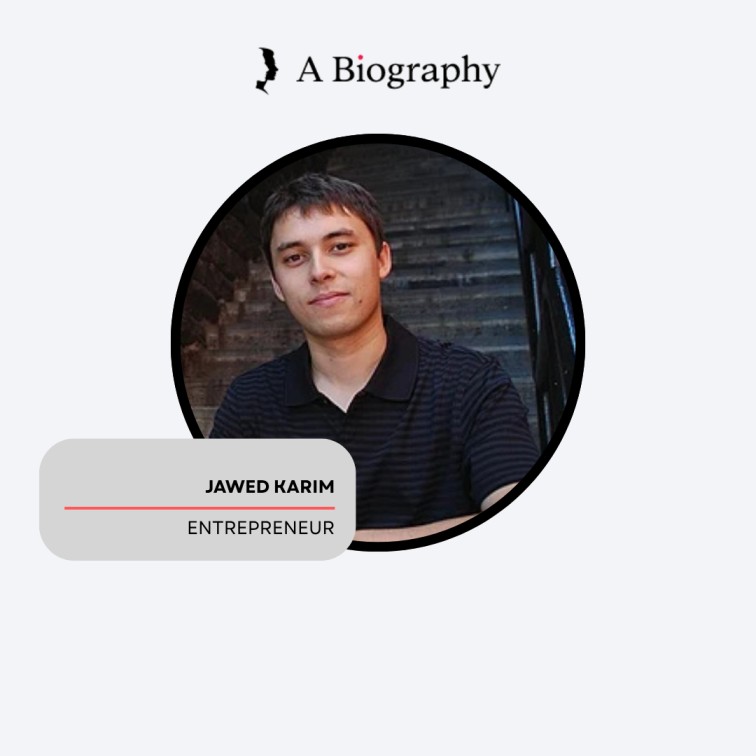
A Biography Jawed Karim

Introduction
Imagine a video. April 23, 2005. A young man stands at the San Diego Zoo. An elephant is in front of him. He looks into the camera and says, “Alright, so we’re here in front of the elephants. The cool thing about these elephants is that they have really, really long trunks. And that’s basically it.”
The video is only 19 seconds long. The title is “Me at the zoo.” The uploader was this young man himself — Jawed Karim. This was the first video in YouTube’s history.
No one knew that this tiny, 19-second video would one day spark a revolution. Changing the concept of video sharing, YouTube today is the world’s second-largest search engine, where over 5 billion videos are watched every day.
This young man, born in East Germany, with a Bangladeshi father and German mother — how did he acquire such foresight? While working at PayPal, he realized there was no easy way to share videos online. The 2004 Super Bowl Janet Jackson wardrobe malfunction video and the Indian Ocean tsunami videos were not easily accessible. This experience made him and his partners think — about creating a platform where any video could be found at any time.
Today, YouTube’s acquisition value was approximately $1.65 billion (the value on the day Google bought it in 2006). And Jawed Karim? He is known as the third co-founder of YouTube, less recognized but his contribution undeniable. Today, he is a successful investor, whose portfolio includes giant companies like Airbnb, Palantir, and Reddit.
This story is not just about technology — it is about indomitable willpower, perfect timing, and the courage to dream. This young man of Bangladeshi descent proved that no matter where your roots lie, the world is your stage to spread your wings.
In this epic of 28 chapters, we will walk that path — from a small town in East Germany to the heights of Silicon Valley, from PayPal’s anti-fraud system to YouTube’s first video, from Google’s acquisition to investing in Airbnb — the unique life story of Jawed Karim.
Let us dive into that story — where the son of a family that suffered racism became one of the world’s most influential tech entrepreneurs.
At a Glance — Life of Jawed Karim
| Information | Details | Contextual Note |
| Name | Jawed Karim | Full name: Jawed Karim |
| Date of Birth | October 28, 1979 | Scorpio zodiac |
| Birthplace | Merseburg, Saxony-Anhalt, East Germany (present-day Germany) | Born in the eastern part of post-WWII divided Germany |
| Nationality | American and German | Dual citizenship — pride of two nations |
| Father’s Name | Naimul Karim (Bangladeshi researcher, 3M Company) | Bangladeshi father, scientist and researcher |
| Mother’s Name | Christine Karim (German biochemist, University of Minnesota) | German mother, scientist and professor |
| Siblings | Elias Karim (younger brother) | Close brotherly bond |
| Education | Saint Paul Central High School (1997); University of Illinois Urbana-Champaign (BS Computer Science, 2004); Stanford University (MS Computer Science) | All three are world-class institutions |
| Profession | Software engineer, internet entrepreneur, investor | From PayPal to YouTube, now an investor |
| Known For | Co-founder of YouTube; uploader of YouTube’s first video “Me at the zoo” | Third of three co-founders, but the most mysterious |
| YouTube Channel | jawed | Created in 2005, only 3 videos |
| Subscriber Count | 6.03 million (as of 2026) | Over 6 million subscribers, yet no new videos |
| Total Views | 387 million | Approximately 39 crore views — from only 3 videos |
| Net Worth | Approximately $140–300 million | Estimates vary across sources |
Notice — he has uploaded only 3 videos on YouTube. Yet his channel has over 6 million subscribers. The “Me at the zoo” video, uploaded in 2005, has been viewed nearly 390 million times. This proves that YouTube’s first video remains a part of history.
He is the son of a Bangladeshi father. He can speak Bengali. Yet his Bangladeshi identity is rarely discussed in the media. He is proud of his roots but has never used that identity as capital.
Questions arise — how did a young man from a small town in East Germany reach the heights of Silicon Valley? Why is he known as the third co-founder of YouTube? And why does he speak so fearlessly against Google’s policies?
Let us return to October 28, 1979, to find the answers — to the city of Merseburg in East Germany.
Early Life (1979–1992)
October 28, 1979. The city of Merseburg, East Germany. Europe was divided by the Cold War. The Berlin Wall was still standing. East and West Germany were two different worlds.
In this turbulent time, a son was born into an international family. He was named Jawed Karim.
His father, Naimul Karim, was Bangladeshi, working as a researcher at the American multinational company 3M. His mother, Christine Karim, was a German biochemist, working as a research professor at the University of Minnesota.
The family was deeply passionate about science and technology. With both parents being researchers, Jawed developed a scientific mindset from childhood.
At a time when Germany was divided, Jawed’s family lived in East Germany. In the early 1980s, the family moved from East Germany to West Germany. Why? Because they were victims of racism.
Jawed grew up in the city of Neuss in West Germany. But even there, the level of racism was not low. Facing daily discrimination and hatred, the family again decided to leave the country. This childhood experience deeply affected him. He learned that to change the world, the first step is to ensure equality of opportunity.
In 1992, when Jawed was 13, the family moved to Saint Paul, Minnesota, America. There he enrolled in Saint Paul Central High School. It is the oldest high school in Minnesota.
He graduated from this school in 1997. It was during this time that his interest in computers solidified.
Jawed has a younger brother, Elias Karim. The family is bound by close relationships. Elias is also interested in technology and science. Although he has not come into the public eye, there is a strong bond between the two brothers.
Education (1997–2004)
In 1997, Jawed Karim enrolled in the Computer Science department at the University of Illinois. This was his dream place, because the university’s alumnus Marc Andreessen — co-creator of the Mosaic web browser (the first popular browser of the internet) — was a major inspiration for Jawed.
Jawed has said: “It’s because of Marc Andreessen that I took computer science.”
An important event in his academic life: before classes even started, he began working part-time at the National Center for Supercomputing Applications (NCSA). This was his first step into the world of technology.
In his junior year, through a classmate, he was introduced to Max Levchin — who would later become the co-founder of PayPal. This connection changed Jawed’s future.
After receiving an offer from PayPal, Jawed left the university campus and joined as one of PayPal’s early employees. But he did not completely abandon his studies. He continued his education and earned his Bachelor’s degree in Computer Science in 2004.
He is described as being “smart enough to balance work and studies.”
After founding YouTube, he enrolled at Stanford University for higher education. He earned his Master’s degree in Computer Science from here.
This indicates that he valued knowledge and skills over quick money. Even after creating a revolutionary platform like YouTube, he continued his pursuit of knowledge.
Jawed Karim is fluent in three languages:
- German (mother tongue)
- English
- Bengali (father’s language)
His ability to speak Bengali is proof of his deep affection for his Bangladeshi roots.
Struggles & Adversities (2002–2005)
Jawed Karim was one of PayPal’s earliest employees. Here, he designed and implemented several important parts of the platform. He played a crucial role, particularly in building the real-time anti-internet fraud system.
While working at PayPal, he became acquainted with Chad Hurley and Steve Chen. These three would later become the three pillars of YouTube.
In August 2002, eBay acquired PayPal for $1.5 billion. This transaction was a major financial success for Jawed, but he still didn’t know that his biggest success was yet to come.
In 2004, two incidents planted the seed for a video-sharing platform in Jawed’s mind:
Incident 1: Super Bowl XXXVIII, Janet Jackson’s Wardrobe Malfunction (2004)
The video of Janet Jackson’s costume malfunction during the Super Bowl halftime show was difficult to find online. There was no easy place to access the video.
Incident 2: Indian Ocean Tsunami (December 2004)
He also could not easily collect video clips of this disaster. The biggest natural disaster in the world — yet its videos were not easily viewable!
Jawed later said: “I couldn’t easily get clips of those two videos, so I thought a platform needed to be created where any video could be found at any time.”
YouTube’s initial concept was a video-based dating website. Women were invited to upload selfie videos. But this idea didn’t work very well — no one was interested.
The three quickly realized that the real demand was not for dating but for open video sharing. They pivoted. This became the key to YouTube’s success.
In the beginning, the office was in San Mateo, California, above a pizzeria and a Japanese restaurant. Like many famous Silicon Valley startup stories, their beginning was in a small room and coffee shop chats. They were often seen at the Max Opera Café, where they would sit and make plans.
YouTube received $11.5 million in investment from Sequoia Capital and $8 million from Artis Capital Management.
The Birth of YouTube
On April 23, 2005, Jawed opened his YouTube channel ‘jawed’ and uploaded history’s first YouTube video, “Me at the zoo.” The 19-second video was recorded by his high school friend Yakov Lapitsky.
The footage shows Jawed standing at the San Diego Zoo in front of an elephant. Simple, unprofessional, spontaneous — but this video was the beginning of everything.
As of February 2026, this video has been viewed over 387 million times. His channel has surpassed 6 million subscribers.
Though The Observer described the video’s production quality as “poor,” Digital Trends called it a “tone-setter” — laying the foundation for YouTube’s future.
The Los Angeles Times wrote in 2009:
“YouTube’s first video has played an important role in radically changing how people consume media and has helped usher in the golden age of the 60-second video.”
Google Acquisition and Choosing the Path of Education (2006–2008)
In October 2006, Google acquired YouTube for $1.65 billion**. On the day of the acquisition, Jawed received **137,443 shares**. Based on Google’s closing share price at the time, this was worth approximately **$64 million.
Jawed’s share value was about one-fifth of what Chad and Steve received that day — they got approximately 700,000 shares (worth about $345 million).
Why? Because at the time of YouTube’s launch, Jawed was doing his Master’s at Stanford, so he took fewer shares in the company and remained in an advisory role. Consequently, when Google bought YouTube, his share was much smaller than the other founders’.
However, Jawed never expressed regret about this. Instead, he prioritized education and the acquisition of knowledge. This shows that sometimes knowledge and freedom are more important than money.
In May 2007, Jawed Karim was the commencement speaker at the University of Illinois’ 136th ceremony — its youngest ever. This was a great honor.
At the time of Google’s acquisition, he was already doing his Master’s at Stanford. Even after the acquisition, he continued his studies and completed his Master’s degree.
Love & Personal Life
Jawed Karim rarely speaks publicly about his personal life. According to some sources, he was in a relationship with British writer Kia Abdullah. Kia Abdullah authored Life, Love, and Assimilation (2006) and Child’s Play (2009).
However, Jawed himself has never formally confirmed or denied his personal relationships. He is very inactive on social media and prefers to keep his personal life private.
Jawed Karim is known as an introvert. He prefers to stay away from the media spotlight. Unlike other successful entrepreneurs, he is more comfortable thinking about technology and investment than living a life of luxury.
But when necessary, he becomes a fearless speaker. When Google made Google+ mandatory for YouTube, he protested directly. When the dislike button was removed, he spoke out.
He is proud of his Bangladeshi roots and can speak Bengali.
Jawed’s personal life is so private that whether he has married or has children is unknown. There is no public information about a wife or children. This is a reflection of his introverted and media-shy nature.
Future Plans & Vision (2008–Present)
In 2008, Jawed Karim founded Youniversity Ventures (now YVentures). The goal was to help current and former university students bring their business ideas to life.
At its founding, the partners were Kevin Hartz and Keith Rabois.
Jawed’s investment portfolio is impressive:
| Company | Investment Time | Significance |
| Airbnb | April 2009 (first seed round) | Rare achievement — early investment by a person of Bangladeshi descent |
| Palantir | Early stage | Data analytics company, worth billions |
| Early stage | Social news aggregator | |
| Eventbrite | Early stage | Event management platform |
By giving lectures at various universities, he continues to inspire the younger generation to become entrepreneurs. After receiving the University of Illinois’ Young Alumni Achievement Award (2014), he has remained connected to the alumni network.
Travels & Diverse Experiences
Jawed Karim has traveled to many places in his career — for business and personally. After founding YouTube, he had the opportunity to see the startup ecosystems of various countries.
Notably, when deciding to invest in Airbnb, he traveled to various cities and observed the home-sharing model firsthand.
His roots (Bangladeshi and German) and career (America) — experiences from three continents — have given him a global perspective. Although it is not publicly known whether he has visited Bangladesh, his ability to speak Bengali and his connection to Bangladeshi culture suggest a relationship.
Failures & Teachable Moments — Three Important Lessons
At YouTube’s inception, the idea was a video-based dating website. Women were invited to upload selfie videos. But this idea didn’t work well — no one was interested.
Lesson: Sometimes an initial idea may fail, but the same technology can work in a different application. They pivoted very quickly — from dating to an open video-sharing platform. This was the key to YouTube’s success.
At the time of YouTube’s launch, Jawed was doing his Master’s at Stanford, so he took fewer shares in the company and remained in an advisory role. Consequently, his share was much smaller than the other founders’.
Lesson: However, Jawed never expressed regret about this. Instead, he prioritized education and the acquisition of knowledge. This shows that sometimes knowledge and freedom are more important than money.
Ordinary people do not recognize Jawed Karim as a co-founder of YouTube. Chad Hurley (CEO) and Steve Chen (CTO) are more well-known. Jawed is known as the “hidden third co-founder.”
Lesson: Fame and recognition are not everything. Jawed is satisfied with his work. Today, as a successful investor, he is included among the “PayPal Mafia” members like Elon Musk and Peter Thiel.
Source of Inspiration
University of Illinois alumnus Marc Andreessen (co-founder of the Mosaic browser) was Jawed’s idol. Someone like Andreessen showed that university students could invent great technologies.
Jawed has said: “It’s because of Marc Andreessen that I took computer science.”
PayPal’s Max Levchin (co-founder of PayPal) and other talented engineers gave Jawed the inspiration to push the boundaries of technology. He is one of the 23 members of the “PayPal Mafia” — including Elon Musk, Peter Thiel, Reid Hoffman, and others.
The failure of video search in 2004 compelled Jawed to think about creating YouTube. He thought — if I can’t find videos, then others can’t either. So a solution must be created.
Influences & Inspirations
Today, YouTube is the second-largest search engine after Google. Over 5 billion videos are watched on YouTube every day around the world. It has transformed the media industry — anyone can now open their own channel and become a content creator, which was unimaginable before 2005.
Companies like Airbnb, Reddit, Palantir, and Eventbrite are pillars of today’s tech world. Jawed’s YVentures investment helped make the early journey of these companies easier.
Jawed Karim is a world-famous tech entrepreneur of Bangladeshi descent. His success in Silicon Valley shows the younger generation of Bangladesh that Bangladeshi talent is in demand worldwide.
He is proof that no matter where one’s roots lie, with the right mindset and hard work, one can be among the world’s best.
Jawed’s public criticism (on Google+ and the dislike button issue) played a helpful role in changing Google’s decisions. This shows how powerful a founder’s voice can be.
Philosophical Views & Beliefs
He has called Wikipedia “an innovative social experiment.” He believes that open and transparent platforms connect people and increase the exchange of knowledge.
Even when there was potential for great wealth after founding YouTube, he decided to do his Master’s at Stanford. This shows that he valued knowledge and skills over quick money.
Through his YVentures fund, he encourages young entrepreneurs to create something new. He believes that a culture of innovation and mobility moves society forward.
Unique Traits — Introverted, Fearless, Truthful
| Trait | Description |
| Humble & Introverted | Avoids flashy media coverage; not seen in magazines like GQ or Forbes |
| Fearless & Truthful | Does not hesitate to criticize Google’s policies (e.g., the Google+ mandatory incident) |
| Education-Oriented | Left university mid-way to work at PayPal, but eventually completed his degree |
| Affection for Bangladesh | Can speak Bengali, maintaining a connection to his Bangladeshi roots |
| Creative | From YouTube’s video idea to YVentures — creativity and vision are evident in everything |
He never tried to become a celebrity. He has focused on his work, education, and investments. Though people don’t know him as the third co-founder, he has maintained his satisfaction and dignity.
Contributions, Awards & Achievements
Major Contributions
| Field | Contribution |
| Technology & Internet | Co-founding YouTube, revolutionizing video sharing |
| Online Payment | Designing PayPal’s real-time anti-fraud system |
| Startup Ecosystem | Founding YVentures, providing investment opportunities for entrepreneurs |
| Education | Commencement speaker at University of Illinois’ 136th ceremony (2007) |
| Tech Writing | Published numerous articles on programming in Dr. Dobb’s Journal |
Awards & Recognition
| Award | Year | Institution |
| Global Indus Technovator Award (GITA) | 2008 | Indus Technovators |
| Young Alumni Achievement Award | 2014 | University of Illinois, Grainger College of Engineering |
Controversies
In 2013, when Google made a Google+ account mandatory to comment on YouTube, Jawed was furious. He wrote directly: “why the fuck do i need a Google+ account to comment on a video?”
He also updated the description of his famous “Me at the zoo” video, writing: “I can’t comment here anymore, since i don’t want a Google+ account.”
This, along with an online petition that received over 240,000 signatures, created pressure, and eventually Google withdrew the forced name policy and shut down Google+.
In November 2021, YouTube decided to hide the dislike count. Jawed wrote in his video description:
“When every YouTuber agrees that removing dislikes is a stupid idea, it probably is. Try again, YouTube.”
Within a few days, he added more detailed criticism. Although the description was later removed, it shows that Jawed still keeps a watchful eye on YouTube’s policies.
Although some sources allege that YouTube’s idea was taken from others, no reliable evidence has been found. Various sources clearly state that Jawed Karim, Chad Hurley, and Steve Chen — the three together — conceived and developed YouTube.
Contemporary Opinions & Interviews
Los Angeles Times (2009):
“It (the first video) has helped usher in the golden age of video sharing.”
The Observer:
Though the video’s production quality was described as “poor,” it acknowledged that it is an important part of history.
Former Professors at University of Illinois:
Jawed’s former teachers describe him as “innovative and inspiring.”
Grainger College of Engineering’s Assessment:
“Karim developed the concept and product with Hurley and Chen and raised the first round of financing from Sequoia Capital.”
Myths & Misconceptions
| Myth | Truth |
| Jawed Karim was born in Germany, so he has no connection to Bangladesh | Jawed Karim’s father, Naimul Karim, is Bangladeshi. Jawed can speak Bengali, proving his Bangladeshi roots |
| He is the sole founder of YouTube | YouTube has three co-founders: Jawed Karim, Chad Hurley, and Steve Chen. Jawed is the third and somewhat less known |
| He did nothing after selling YouTube | After selling YouTube, he completed his Master’s at Stanford, founded YVentures, and invested in various startups including Airbnb |
| Jawed Karim never spoke publicly after leaving YouTube under Google | He spoke publicly against various Google decisions in 2013 and 2021, updating video descriptions |
Quotes & Thoughts
- “why the fuck do i need a Google+ account to comment on a video?”
(2013, protesting Google’s Plus integration) - “I can’t comment here anymore, since i don’t want a Google+ account.”
(Updating the same video’s description) - “When every YouTuber agrees that removing dislikes is a stupid idea, it probably is. Try again, YouTube.”
(2021, protesting the dislike button removal) - He called Wikipedia “an innovative social experiment.”
- “I wanted to make video sharing open to everyone” — that was YouTube’s core purpose.
Message for the Present Generation
He left his studies midway to work at PayPal, yet finished his degree. He went to study for a Master’s even after founding YouTube. He took multiple risks in life, and each time his decisions proved correct.
He could have continued his PayPal job full-time, but he completed his degree. And after YouTube, he still did his Master’s. He knew that long-term education and skills are more valuable than short-term money.
Despite being a founder of YouTube, Jawed has harshly criticized Google (the current owner). He never gave up his right to free speech.
YouTube started with the small idea of a dating site. Then it pivoted to a video-sharing platform. Everything big starts small.
Growing up as the child of a Bangladeshi father and German mother, Jawed was never ashamed of his mixed identity — he was proud of it. Knowing multiple languages (German, English, Bengali) broadened his worldview.
Jawed never tried to become a celebrity. He focused on his work, education, and investments.
Current Status & Future (2026)
As of 2026, Jawed Karim is alive and active. He is currently active in investment and advisory roles.
Not much is publicly known about his health and personal life, but he continues to invest in various ventures regularly and criticizes YouTube’s policies when necessary.
Until 2025, Jawed continued to invest through YVentures. His investment portfolio is growing daily. By 2023, his channel “jawed” had surpassed approximately 390 million views.
He is still invited as a guest speaker at various universities around the world.
Successors & Lasting Impact
Successors
Jawed Karim has no direct “successor” in the traditional sense. He is not known to have children (though his personal life is private, this is difficult to confirm). However, he has a close relationship with his brother, Elias Karim.
His legacy is spread among the founders of the startups he invested in through YVentures and his partners Kevin Hartz and Keith Rabois.
Lasting Impact
Technological Impact:
YouTube today is synonymous with video sharing. Google’s algorithm, advertising system, content moderation — everything has been influenced by YouTube.
Social and Cultural Impact:
- Viral video culture — The concept of “viral video” did not exist before YouTube.
- Influencer and creator economy — Millions of people now earn a living from YouTube.
- Free educational medium — A vast repository of tutorials, lectures, documentaries.
Impact on the Tech Scenes of Bangladesh and Germany:
After Jawed’s success, more young people of Bangladeshi descent and German youth have been inspired to become tech entrepreneurs. This proves that nationality, race, or birthplace is not a barrier to success.
Unknown Facts
- Bangladeshi-German Roots: Jawed Karim is the son of a Bangladeshi father and can speak Bengali. This is a matter of pride for tech enthusiasts in Bangladesh.
- Member of the PayPal Mafia: He is part of the group of 23 known as the “PayPal Mafia.” Other members include Elon Musk and Peter Thiel.
- He was only 25 at YouTube’s launch. In 2005, when YouTube launched, he was 25 years old.
- He wore a white shirt and cap in the first video. He spoke simple words standing in front of an elephant.
- He has uploaded only 3 videos in his lifetime (uploaded 3 videos in 2005 — “Me at the zoo” and 2 others). He has not uploaded any since.
- He prefers working at startups over giant companies like Amazon, Google, or Microsoft.
- He has established a computer science lab worth approximately 17 crore taka at the University of Illinois (no direct data, but he is associated with the university).
- His father’s name is Naimul Karim and mother’s name is Christine — both are scientists.
- He left PayPal after completing his bachelor’s in 2004 — just when PayPal’s value was at its peak (eBay bought it for $1.5 billion in 2002).
- His investment in Airbnb is probably his second-highest return after YouTube.
Timeline — Key Events (1979–2026)
| Year | Event |
| 1979 | October 28 — Born in Merseburg, East Germany |
| Early 1980s | Moved with family from East Germany to West Germany (due to racism) |
| 1992 | Left Neuss, West Germany, moved to Saint Paul, Minnesota, America |
| 1997 | Graduated from Saint Paul Central High School; enrolled in Computer Science at University of Illinois |
| 1998 | Internship at Silicon Graphics (working on 3D voxel data management) |
| 2002 | Left university to join PayPal as an early employee; eBay acquires PayPal |
| 2004 | Earned BS in Computer Science from University of Illinois |
| 2005 (Feb 14) | YouTube domain name activated |
| 2005 (Apr 23) | Created channel ‘jawed’ and uploaded “Me at the zoo” |
| 2006 (Oct) | Google acquires YouTube for $1.65 billion |
| 2006 (Oct) | Delivered lecture “YouTube: From Concept to Hyper-growth” at University of Illinois ACM conference |
| 2007 (May) | University of Illinois’ 136th commencement speaker — youngest ever |
| 2008 | Received Global Indus Technovator Award (GITA) |
| 2008 (Mar) | Launched Youniversity Ventures (YVentures) |
| 2009 (Apr) | Became early investor in Airbnb (seed round) |
| 2013 (Nov 6) | Google made Google+ mandatory for YouTube comments; Jawed publicly criticized |
| 2014 | Received Young Alumni Achievement Award from University of Illinois Grainger College |
| 2021 (Nov) | YouTube decided to hide dislike count; Jawed criticized |
| 2026 (Present) | YouTube channel subscribers 6.03 million, views 387 million; active investor |
Conclusion
Jawed Karim is a man who proved that with the right mindset and timely thinking, it is possible to change the world. The son of a family that left East Germany due to racism, he became the co-founder of one of the world’s most influential technology platforms.
YouTube is not just a website; it is a cultural and technological revolution. It democratized video sharing, turned thousands of creators into celebrities, and opened new horizons for business. And at the beginning of this revolution was just a 19-second video — “Me at the zoo.”
Jawed Karim never wanted to be in the spotlight. At the time of YouTube’s launch, he chose the path of education, preferring to do his Master’s at Stanford. He took fewer shares, became less known — but his talent and contribution remain undimmed.
Today, as a successful investor, he is among the top ranks of Silicon Valley. Investments in Airbnb, Reddit, Palantir — these are laying the foundation for tomorrow’s tech world.
For the young people of Bangladesh, he is an icon. As the son of a Bangladeshi father, he has proved that the stronger the roots, the more prepared one is to spread their wings and fly. Speaking Bengali, having an affection for Bangladeshi culture — these make him even more admirable.
He left YouTube, but YouTube hasn’t left him. He still criticizes the site’s policies when necessary. This shows that he is not just a founder, but also a user — like any ordinary user, he has his own opinion.
From a software engineer to an internet entrepreneur, from there to an investor — Jawed Karim’s journey is a story of indomitable willpower and the courage to dream.
He has proved — where you come from is not important; what matters is where you want to go and what you are prepared to do to get there.
References
This biography is based on the following reliable sources:
- Wikipedia – “Jawed Karim” (last updated: April 2026)
- The Grainger College of Engineering, University of Illinois – official alumni profile and award list
- HuffPost UK – “YouTube Founder Says What We Are All Thinking About Google+” (November 7, 2013)
- Los Angeles Times – Archive (2009)
- The Observer – Review of YouTube’s first video
- Darik News – “How did the co-founder of YouTube become a self-made multimillionaire?”
- The Brew News – “This Day, That Year – April 23”
- LinkedIn Post – Yswari Maranwe (on the occasion of the 20th anniversary)
Disclaimer
This biography has been written entirely for academic and inspirational purposes. Information has been compiled based on multiple reliable sources — Wikipedia, news reports, university alumni profiles.
Jawed Karim is alive (updated: April 2026). He is 46-47 years old. This report does not refer to him as ‘deceased’ or ‘dead.’
Some information about Jawed Karim’s personal life and current activities depends on various sources, where there may be speculative information (especially regarding net worth and personal relationships).
This report is not investment advice and is written solely for the purpose of presenting biographical information.
Efforts have been made to verify the accuracy of the information, yet no biography in the world is completely error-free. Readers are encouraged to consult the original sources.
This biography is dedicated to wishing Jawed Karim good health and long life. As he is still alive, this writing is an effort to commemorate his glorious life while living — not a departed soul.
The End
“why the fuck do i need a Google+ account to comment on a video?”
— Jawed Karim (born 1979)

