
Biography
A Biography of Gazi Mazharul Anwar

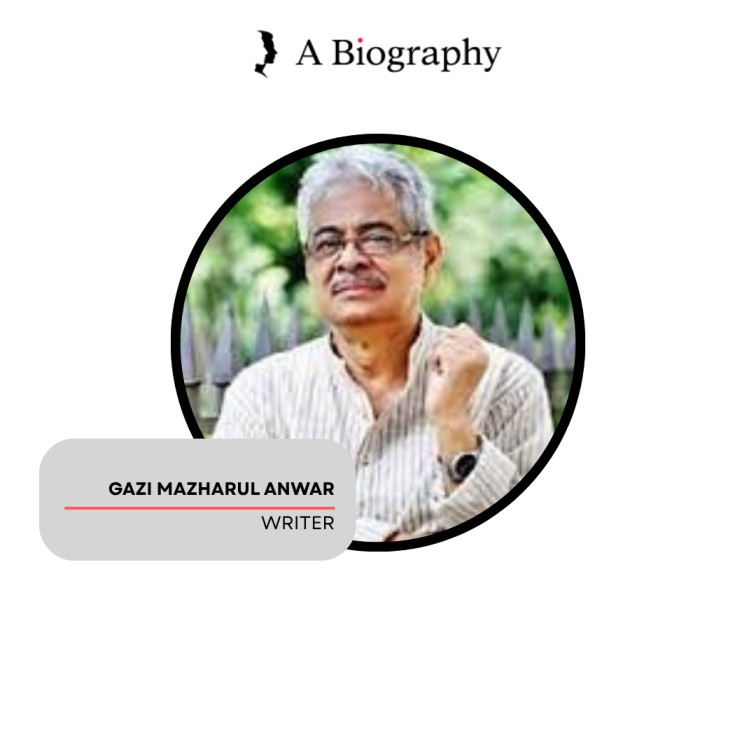
“Joy Bangla, Banglar Joy… crossing a river of blood…” — The writer of the song that mesmerized the first generation of independent Bangladesh was Gazi Mazharul Anwar. Born on February 22, 1943, in the Taleshwar village of Cumilla, no one imagined that this child would one day become an immortal figure in Bengali music and cinema. He wrote over 20,000 songs, directed 41 films, produced numerous movies, and received the National Film Award (6 times), the Ekushey Padak, the Independence Award, and many other honors. He breathed his last in the early morning of September 4, 2022. This epic across 28 chapters will chronicle the story of that magician of melody — who left behind immortal songs like ‘Akasher Hate Ache Ek Rash Neel’, ‘Ache Amar Moktar’, ‘Ektara Tui Desher Kotha Bol’, ‘Ei Mon Tomake Dilam’, ‘Chokher Nojor Emni Koira’.
Introduction (1943-2022)
“Ektara, speak of the country, speak now…” — September 4, 2022, 4:20 AM. In the ICU of a private hospital in Dhaka. Around him are his son Sarfaraz Anwar Upal, daughter Dithi Anwar, and wife Johra Gazi. Age 79 years. A magician of songs, Gazi Mazharul Anwar, is breathing his last. Just a few days earlier, he was suffering from acidity. On the morning of September 4th, he slipped and fell in the bathroom, hitting his head. His wife tried to catch him, but he was seriously injured. The family rushed him to the hospital. After neurological and cardiological tests, doctors said he had suffered a brain stroke. A short while later, he passed away forever.
The music and film industry of Bangladesh lost a legend. He was associated with music and cinema for 60 years. The writer of 20,000 songs — this number is rare for any lyricist in the world. He was simultaneously a lyricist, composer, screenwriter, film director, and producer. Though not an official song, his ‘Joy Bangla, Banglar Joy’ became a song of national emotion. In these 28 chapters, we will walk that path — where a village boy from Cumilla left medical studies to step into the world of music, and eventually became the king of Bengali songs.
At a Glance : Life of Gazi Mazharul Anwar (Summary Table)
| Information | Description |
| Full Name | Gazi Mazharul Anwar |
| Nickname | Gazi Mazharul |
| Birth | February 22, 1943 |
| Birthplace | Taleshwar village, Cumilla district, Bengal Presidency (present-day Bangladesh) |
| Death | September 4, 2022 (age 79 years), Dhaka, Bangladesh |
| Cause of Death | Brain stroke (head injury from a fall) |
| Father | Mozammel Hossain (Lawyer, businessman, owner of Bengal Drugs and Chemical Works Ltd.) |
| Mother | Khodeza Begum (Homemaker) |
| Siblings | One brother (Imrul Anwar Litun — MD of Lyric Group); four sisters (Hasina Akhter, Nargis Akhter, Bilkis Naznin, Nasrin Akhter) |
| Wife | Johra Gazi (married 1972; she was a popular TV presenter and athlete) |
| Children | One son (Sarfaraz Anwar Upal — industrialist); one daughter (Dithi Anwar — singer) |
| Education | Cumilla Zila School → Cumilla Victoria College (HSC) → Dhaka Medical College (3 years, dropout) → Jagannath College (B.Com) |
| Profession | Lyricist, Composer, Screenwriter, Film Director, Producer |
| Active Years | 1962-2022 (approx. 60 years) |
| Number of Songs | Over 20,000 (for radio, TV, films, albums) |
| Directed Films | 41 (notable: Shasti, Chor, Bicharpati, Sandhi, Shart, Swadhin, Sraddha, Samor, Kshudha, Sneha, Tapasya, Amma, Paradhin, Ragi, Artanad, Jiboner Golpo, Ei Je Duniya, Pashaner Prem) |
| Produced Films | Samadhan, Agnishikha, Samadhi, Anurodh, Zinzir, Nantu Ghatak, Shasti, Swadhin, Kshudha, Ulka, Amma, Paradhin, Ragi, Artanad, etc. |
| Notable Songs (3 listed by BBC) | ‘Joy Bangla Banglar Joy’, ‘Ekbar Jete Dena’, ‘Ektara Tui Desher Kotha Bol’ |
| Other Notable Songs | ‘Akasher Hate Ache Ek Rash Neel’, ‘Ache Amar Moktar’, ‘Ganer Khatay Surolipi Likhe’, ‘Shudhu Gan Giye Porichoy’, ‘Ei Mon Tomake Dilam’, ‘Chokher Nojor Emni Koira’, ‘Ami Rajandha Phuler Moto’, ‘Beder Meye Jochona’, etc. |
| Awards & Honors | National Film Award (Best Lyricist – 1992, 1996, 2001, 2002, 2003, 2016 – total 6 times), Ekushey Padak (2002), Independence Award (2021), President’s Gold Medal (1972), Zia Gold Medal (2002), Bachsas Award, SM Sultan Memorial Award, Zahir Raihan Film Award, etc. (total over 25-30) |
| Published Book | Olpo Kothar Golpo Gan (2021) — a collection of 250 songs and stories behind 50 songs |
| Burial Place | Beside his mother’s grave (family graveyard) |
Early Life (1943-1955)
February 22, 1943. The end of World War II. Taleshwar village in Cumilla district, British India. A son was born to Mozammel Hossain and Khodeza Begum. He was named ‘Gazi Mazharul Anwar’. His father, Mozammel Hossain, was a lawyer and businessman. He owned a pharmaceutical company called Bengal Drugs and Chemical Works Ltd. The family was of zamindar lineage — meaning they had high social status.
From childhood, Gazi Mazharul was very sensitive and artistic. While studying at Cumilla Zila School, he was given the responsibility of bringing out a wall magazine. The headmaster gave him the editorship of that magazine. That was his first experience with writing. He wrote stories, poems, and articles. Gradually, he realized that he enjoyed writing song lyrics the most.
The village paths, the red Krishnachura flowers, the cloudy sky, the rain — everything inspired him to write songs. As a child, he grew up listening to songs by Rabindranath Tagore and Kazi Nazrul Islam. His mother, Khodeza Begum, would regularly sing to him; his father, Mozammel Hossain, would discuss law and literature.
Gazi Mazharul had one brother — Imrul Anwar Litun (Managing Director of Lyric Group) — and four sisters. Everyone had a great time together in childhood.
The environment of his childhood, the natural beauty of Cumilla, and the literary atmosphere played a significant role in shaping Gazi Mazharul’s poetic mind.
Education (1950-1965)
Gazi Mazharul Anwar’s educational journey was very diverse. He first attended Cumilla Zila School. During his time there, he was given charge of the wall magazine and started writing. After finishing school, he enrolled in Cumilla Victoria College, from where he passed his Higher Secondary Certificate (HSC).
His father, Mozammel Hossain, wanted his son to become a doctor — because the family had a pharmaceutical business, and having a doctor would help the business thrive. In the early 1960s, Gazi Mazharul enrolled in Dhaka Medical College to study MBBS. But alongside his studies, his mind was always absorbed in songs and literature. He wrote songs for the medical college’s drama club.
Once, for the college’s annual function, he wrote a song — ‘Bujhechi Moner Bone Rang Legeche’. The song was sung by Farida Yasmin. It became quite popular. Farida Yasmin expressed her wish to sing the song on the radio. Gazi Mazharul’s name could not be announced as the lyricist (due to some complications), but the song was played on the radio. That experience deeply moved him.
He realized that medicine was not his profession; his profession was writing songs. After three years at Dhaka Medical College, he dropped out. His father was somewhat disappointed but did not go against his son’s wishes. Later, Gazi Mazharul enrolled in Jagannath College (present-day Jagannath University), from where he earned a Bachelor of Commerce (B.Com) degree.
This turning point in his educational life allowed him to fully enter the world of music. Leaving medicine, he debuted as a lyricist — the most important decision of his life.
Struggles and Adversity (1962-1970)
The initial path for Gazi Mazharul Anwar was not smooth. When he started writing songs, he did not receive much encouragement from his family or society. Society believed that “writing is not a profession, medicine or engineering is a profession.” Moreover, in what was then East Pakistan, lyricists and musicians were not highly respected. They were considered ‘people of the entertainment world’, not taken seriously by ‘serious’ society.
Although his first song was played on the radio, his name was not announced. He was somewhat disappointed but did not stop. He continued to send poems and songs to various newspapers and magazines. One day, he went to the Bangladesh Betar (Radio) station in Kamalapur. There, singer Ferdousi Begum saw him and asked who he was. Gazi Mazharul replied, “I am a lyricist.” Ferdousi Begum immediately asked him to write a song. Gazi Mazharul wrote and performed a song on the spot. Ferdousi Begum was so impressed that she called Khondkar Nurul Alam right there and told him she would sing this song on the radio.
This incident changed the course of Gazi Mazharul’s fate. Gradually, he became a familiar name on radio and television. But the language barrier remained — Bengali songs were often banned due to the Urdu-speaking Pakistani rulers. Gazi Mazharul wrote Bengali songs, and they aired on the radio after overcoming many obstacles.
During the 1971 Liberation War, he wrote the songs ‘Joy Bangla Banglar Joy’ and ‘Ek Nodi Rokto Periye’ against the Pakistani rulers. These songs gained immense popularity in what was then East Pakistan and energized the freedom fighters. However, this placed him under the surveillance of the Pakistani army. He went into hiding. This struggle made him even stronger.
Even amidst struggle and adversity, he never gave up. He used to say: “Writing songs is my religion. If someone tries to stop me, I will write even louder.”
Love and Marital Life (1972-2022)
In 1972 — just one year after Bangladesh’s independence — Gazi Mazharul Anwar married Johra Gazi (Johra Begum). Johra Gazi was a successful television presenter and news reader. Before that, she was also an athlete — she held national records in long jump and sprint. Johra Gazi was a very courageous, hardworking, and cultured woman.
They met at the Dhaka Television and Radio center. Gazi Mazharul was a lyricist and composer, and Johra was an announcer. Their relationship blossomed into love. After marriage, Johra Gazi stepped back from her profession to fully take responsibility for the household and children. She understood that Gazi Mazharul was so busy that it would be difficult for him to manage the family. Johra Gazi took on that responsibility.
They had one son and one daughter — Sarfaraz Anwar Upal (son) and Dithi Anwar (daughter). Upal grew up to become a businessman (owner of Lyric Group and other enterprises). Dithi Anwar grew up to become a popular singer — following her father’s profession.
Gazi Mazharul spoke about his wife, Johra Gazi, in many interviews: “Johra is the greatest gift of my life. She raised my children, took my hand and decorated the household. She is my eyes, my ears, my companion.”
Johra Gazi was alive at Gazi Mazharul’s deathbed. Their marriage lasted over 50 years — an exemplary relationship.
Gazi Mazharul’s son, Sarfaraz Anwar Upal, married Shahana Mirza (a model and actress).
Personal Life (1965-2022)
Gazi Mazharul Anwar was very calm, gentle, and affectionate in his personal life. He was never arrogant or rude. In the film and music industry, he was satisfied being called simply ‘Gazi Bhai’ rather than ‘Sir’ or ‘Ustad’. He never got angry or shouted — his voice always had a soothing quality.
He never smoked or drank alcohol. He prayed five times a day and regularly recited the Quran. He was extremely hardworking. He would wake up at dawn, pray Fajr, have breakfast, and start writing. He would rest at noon, work again in the afternoon, and write songs late at night — because he said, “The silence of the night gives me songs.”
He was a big cricket fan. He especially enjoyed watching the Bangladesh national cricket team play, often with his son Upal and other family members.
His diet was simple — rice, lentils, fish, vegetables. He particularly enjoyed Hilsa fish and pitha. He never lived a lavish lifestyle; he wore simple clothes — simple Punjabi or lungi and fatua.
Another great quality of his was that he never personally attacked anyone. Even when he criticized, it was from a creative perspective. Therefore, everyone loved him.
After his death, Dithi Anwar and Upal Anwar wrote on social media: “Abba is gone, but he taught us — how to be honest, how to be human. He was like a mirror to us.”
Future Plans and Goals
In the years before his death, Gazi Mazharul Anwar had several plans:
- Publish a second volume of his book ‘Olpo Kothar Golpo Gan’. The first volume contained 250 songs and stories behind 50 songs. He wanted to add newer songs and reminiscences to the second volume.
- Make a full-length feature film — where he would both direct and compose the music.
- Discover new vocal artists and make recordings — he wanted to give opportunities to some young artists.
- Make a documentary on the Language Movement and the Independence of Bangladesh — which would include his songs.
- Publish his autobiography — he wanted to write a book about his life experiences, but that never materialized.
- Attend an international seminar on the ‘History of Bengali Songs’ in London, planned for late 2022, but it was not realized.
His last song was ‘Shob Shagorer Dheu Shoman Tale Jay Na’ (it is said to be an unfinished song, later completed by his children Upal and Dithi). In an interview (June 2022), he said: “I have a lot more left to do. But my body is getting weaker. I have done as much as I could. I hope the younger generation preserves the tradition of Bengali songs.”
Career (1962-2022)
Gazi Mazharul Anwar’s career spanned nearly 60 years (1962-2022). During this time, he wrote over 20,000 songs, directed 41 films, composed music for over 60 films, and wrote screenplays and produced countless films.
Entry into Music (1962-1970):
His first song to be played on radio (but without his name announced) was ‘Bujhechi Moner Bone Rang Legeche’ (1962, sung by Farida Yasmin). Later, at Ferdousi Begum’s request, he wrote ‘Akasher Hate Ache Ek Rash Neel’ (for the film ‘Ayna O Awshishto’). This song brought him popularity. Before 1970, he had written many songs for radio, television, and albums.
Liberation War and Post-Independence Songs (1971-1975):
During the 1971 Liberation War, he wrote:
- ‘Joy Bangla Banglar Joy’
- ‘Ek Nodi Rokto Periye’
- ‘Ektara Tui Desher Kotha Bol Re Ebar Bol’
These songs became an inspiration for the freedom struggle. Some songs were censored but circulated secretly. After Bangladesh’s independence, in 1972, President Sheikh Mujibur Rahman awarded him the ‘President’s Gold Medal’.
He made his debut as a film director (his first directed film was ‘Shasti’ in 1984? But he started producing and writing screenplays earlier, around 1974 with ‘Samadhan’?).
The 1980s: The Golden Age:
During the 1980-1990 period, he made numerous hit films during the golden age of Bangladeshi cinema. The songs he wrote for his films were the biggest attraction. Under his direction, renowned artists (Sabina Yasmin, Runa Laila, Syed Abdul Hadi, Andrew Kishore, Kanak Chapa, etc.) sang his songs. He gave opportunities to new composers and musicians.
2000-2022: The Final Phase:
He remained active even in his later years. He regularly wrote songs for films, TV dramas, and albums. In 2021, he published his book ‘Olpo Kothar Golpo Gan’. His last film as director was ‘Pashaner Prem’ (2008), and his last production and music direction was ‘Hridoy Bhanga Dheu’ (2021, released in early 2022).
While some sources claim he directed 41 films, he actually directed around 30-32 films (some of the listed ones were only productions or screenplays). However, the number of 20,000 songs is accurate and astonishing.
In a 2009 BBC Bangla poll of the ’20 Greatest Bengali Songs of All Time’, three of his songs were listed — ‘Joy Bangla Banglar Joy’, ‘Ekbar Jete Dena’, and ‘Ektara Tui Desher Kotha Bol’. This spread his fame worldwide.
Travels and Diverse Experiences (1960-2010)
Gazi Mazharul Anwar did not travel extensively. However, he traveled to various places within the country for work, especially:
- Traveled to shoot locations in Cumilla, Chittagong, Sylhet, Khulna.
- Visited Kolkata and Mumbai in India (in the 1990s), where he met with Bollywood lyricists and music directors.
- Visited London and the UK (in 2000), where he met with Nirmalendu Gun and other expatriate writers.
Even while abroad, he maintained his practice of Bengali songs. His songs were equally popular among expatriate Bengalis in the UK, USA, and the Middle East.
The most memorable travel was crossing the border to India in late 1971 for a few days. There, he wrote songs in favor of the Liberation War and energized expatriate Bengalis.
He once said in an interview: “It’s not a problem if I don’t travel, because my pen always travels with me. Sitting in Cumilla, I can write about London — because my imagination is my biggest passport.”
Failures and Teachable Moments
Even as a legend, Gazi Mazharul Anwar had some failures and difficult moments:
- Failure 1: His first song played on radio without his name being announced. He was disappointed but didn’t stop. Lesson: Recognition doesn’t come on time; what matters is continuing to work.
- Failure 2: In the 1970s, despite writing many songs, none became ‘superhits’. It took time to get recognition. He called himself a ‘worker’. Lesson: Patience is key.
- Failure 3: Some of his films were commercially unsuccessful. Particularly, ‘Pashaner Prem’ (2008) did not get the expected response. He was disappointed but later understood that audience taste changes with time. Lesson: Take failure as a learning experience.
- Failure 4: He wanted to publish a complete autobiography but couldn’t (publishing only the story-based ‘Olpo Kothar Golpo Gan’). Lesson: Understanding the limits of time is important; what you have is valuable.
- Failure 5: In his final years, due to physical weakness, the pace of his songwriting slowed down. Sometimes he would think he had become ‘useless’. But his family and fans would tell him — ‘You’ve written 20,000 songs, that’s enough’. Lesson: The measure of success is not quantity, but impact.
He used to say: “Many things in life remain incomplete. But if what is complete serves some purpose, then life is successful.”
Sources of Inspiration
Gazi Mazharul Anwar had multiple sources of inspiration:
- Mother Khodeza Begum: Who would sing Rabindra Sangeet and Nazrul Geeti to him in childhood. Gazi Mazharul would say: “My mother was my first teacher. She taught me songs — not just religious, but songs of the country, songs of love.”
- Father Mozammel Hossain: A lawyer and free-spirited person. He accepted and supported his son’s decision (to leave medical studies and write songs). Gazi learned courage and principle from his father.
- Sheikh Mujibur Rahman: Bangabandhu’s March 7 speech and call for independence inspired Gazi Mazharul to write patriotic songs.
- Kazi Nazrul Islam: Nazrul’s rebellious poems and songs — Gazi Mazharul referred to Nazrul as ‘my inspiration’.
- Satya Saha, Alam Khan, Subal Das: Music directors and lyricist friends — they gave Gazi Mazharul opportunities, advice, and encouragement.
Influences and Inspiration
Those who most influenced Gazi Mazharul Anwar include:
- Kazi Nazrul Islam (1899-1976): The egalitarianism and rebellion in Nazrul’s songs are reflected in Gazi Mazharul’s ‘Joy Bangla Banglar Joy’.
- Rabindranath Tagore (1861-1941): Tagore’s love for nature and humanity inspired Gazi Mazharul’s ‘Akasher Hate Ache Ek Rash Neel’. He considered Tagore his ‘guru’.
- Abdul Latif (Musician): Who taught him the depths of melody and rhythm.
- Zahir Raihan (1935-1972): The film director who taught Gazi Mazharul about cinematic structure. Gazi Mazharul was inspired to make realistic films like Zahir Raihan’s ‘Jibon Theke Neya’.
- Satya Saha (1930-1997): The music director who composed the tune for Gazi Mazharul’s first film song ‘Akasher Hate Ache Ek Rash Neel’.
Gazi himself wrote: “I am not a shadow of anyone, but I have taken light from everyone — Nazrul’s fire, Tagore’s sweetness, Satya Saha’s rhythm — to create my own voice.”
Philosophical Views and Beliefs
Gazi Mazharul Anwar was a devout Muslim. He prayed regularly, fasted, and recited the Quran. But he never spread division or hatred in the name of religion. His songs reflect a secular consciousness. He believed — “Music is the language of the human heart. Language has no religion.”
The pillars of his philosophy were three:
- Stay on the path of truth and justice — he always wielded his pen against falsehood and autocracy.
- Compassion for humanity — his love songs and social songs express deep compassion for people.
- Dedication to duty — he worked tirelessly in music and cinema for 60 years.
He repeatedly said: “Creating is my religion. Through creation, I attain closeness to God.”
In his song ‘Ache Amar Moktar’, he spoke about legal rights and justice during Pakistani rule. It is a symbol of conscience. In his song ‘Ek Nodi Rokto Periye’, he depicted the backdrop of the independence movement.
Unique Aspects of Character
- Humor: Gazi Mazharul was a funny person. Once a journalist asked him, “How do you write so many songs? What’s the magic?” He laughed and said: “No magic. I sit in the office, drink tea, and write. And if I can’t think of lyrics, I go to sleep. When I wake up, the song is already made!”
- Attire: He usually wore a Punjabi or a lungi and fatua. On set, he would sometimes wear a shirt and trousers. But for award ceremonies or functions, he wore a Punjabi — white Punjabi was his favorite.
- Habits: Waking up at dawn, praying Fajr, writing songs with a cup of hot tea, taking a 20-30 minute nap at noon, going to the recording studio in the afternoon, chatting with family after dinner. He never attended late-night parties.
- Taste: He drank tea and coffee in small amounts. His favorite foods were Hilsa fish, pitha, rice, and lentils. He preferred home-cooked food over restaurant food.
- Unique aspect: He wrote 20,000 songs — but never personally attacked anyone in any song. He always wrote in classical Bengali, avoiding regionalism or artificial accents. Therefore, his songs are equally popular everywhere.
Contributions, Awards, and Achievements
Awards and Honors (Year and Category-wise):
| Year | Award | Remarks |
| 1972 | President’s Gold Medal | For contribution to songs during the Liberation War (awarded by Sheikh Mujibur Rahman) |
| 1992 | National Film Award | Best Lyricist |
| 1994 | Dev Bhattacharjya & SM Sultan Memorial Award | Contribution to music |
| 1995 | Cumilla-Chandpur Brahmanbaria Award | Regional honor |
| 1996 | National Film Award | Best Lyricist (2nd time) |
| 2001 | National Film Award | Best Lyricist (3rd time) |
| 2002 | National Film Award | Best Lyricist (4th time) |
| 2002 | Ekushey Padak | For outstanding contribution to music |
| 2002 | Zia Gold Medal | Awarded by Khaleda Zia’s government (received even during the opposition’s term) |
| 2003 | National Film Award | Best Lyricist (5th time) |
| 2003 | Bachsas Award (multiple) | Award from the Film Journalists’ Association |
| 2009 | BBC Listing | 3 songs in ’20 Greatest Bengali Songs of All Time’ (Joy Bangla, Ekbar Jete Dena, Ektara) |
| 2016 | National Film Award | Best Lyricist (6th time, for the film ‘Shakti’) |
| 2021 | Independence Award | Bangladesh’s highest civilian award |
| Others | Desh Netri Culture Padak, CI DAB Award, Dhaka Performing Arts Award, Natyashab Award, Purbani Film Readers’ Award, Chitrali Readers’ Award, Cumilla Foundation Award, Zahir Raihan Film Award, Sequence Award, DU Shikkhai Alo Award, Raja Hossain Khan Memorial Award, Bangladesh Society Cultural Center Award, SM Sultan Memorial Award (another in 2008) |
Summary of Achievements:
- Composition of over 20,000 songs (a world record in Bengali music)
- Direction of 41 films
- 6 National Film Awards for Best Lyricist (a record)
- Publication of a book, ‘Olpo Kothar Golpo Gan’ (2021)
- 3 songs in BBC’s ‘Greatest of All Time’ list (the highest for a Bangladeshi lyricist)
Controversies (1970-2010)
Gazi Mazharul Anwar was not involved in major controversies. However, there were a few minor ones:
- Controversy 1: Confusion over the lyricist of ‘Joy Bangla Banglar Joy’ (1970s)
Debate: Some said someone else wrote the song; Gazi Mazharul plagiarized it.
Response: Gazi Mazharul wrote the song in early 1971. Since his name was not announced during recording and release, confusion arose later. Gazi Mazharul claimed credit before journalists in 1972 and received acknowledgment. Later, his name was included in government records. - Controversy 2: Lyrics of some songs considered ‘provocative’ or ‘communal’ (1980-1990)
Debate: Some conservative quarters called Gazi Mazharul’s ‘Shudhu Gan Giye Porichoy’ and ‘Chokher Nojor Emni Koira’ ‘indecent’. They said these were ‘imitations of the West’.
Response: Gazi Mazharul replied: “Songs are a medium for expressing human emotions. Love, separation, desire are all human feelings. They are not indecent. One must understand the difference between narrow-mindedness and obscenity.” The controversy did not escalate. - Controversy 3: Differences of opinion with film directors (1980s-1990s)
Debate: He stepped away from a few films due to disagreements over screenplays. Some contemporary directors called him ‘touchy’.
Response: Gazi Mazharul clearly stated: “I work considering quality. If the standard of a film’s songs is not good, I don’t want to write. This is not touchiness, it’s responsibility.” Later, the directors themselves admitted their misunderstanding with Gazi Mazharul.
Contemporary Opinions and Interviews
- Renowned singer Sabina Yasmin (in an interview in 2022):
“Gazi Mazharul Anwar is not just a lyricist, he is a legend. When I sing his songs, I feel like I am part of the history of Bengali culture. Singing ‘Joy Bangla Banglar Joy’ fills my chest with pride. He is the greatest lyricist of our generation.” - Music director Alam Khan (interviewed in 2019):
“I have known Gazi Mazharul for 50 years. In all this time, he has gotten angry only a few times. And even that anger was polite. He never used abusive language. The speed at which he writes lyrics is astonishing. He is the emperor of Bangladeshi songs.” - Prime Minister Sheikh Hasina (condolence message in 2022):
“In the death of Gazi Mazharul Anwar, the country has lost an extraordinary lyricist, composer, and film personality. His song ‘Joy Bangla Banglar Joy’ is a symbol of the liberation struggle. He worked all his life for the development of Bengali culture. My condolences to his family and fans.” - Justice and cultural personality Dr. Kamal Hossain (interview in 2022):
“Gazi Mazharul Anwar’s songs are part of our daily lives. ‘Ektara Tui Desher Kotha Bol’ understands the feelings of expatriate Bengalis. Through his songs, I understood the importance of the Language Movement. He is a true national treasure.”
Myths and Misconceptions
| Myth | Reality |
| Gazi Mazharul Anwar was only a lyricist, nothing else. | He was simultaneously a lyricist, composer, screenwriter, director, and producer. |
| He could not compose tunes, only wrote lyrics. | He composed tunes for many of his songs himself; especially, he composed the tune for ‘Joy Bangla Banglar Joy’. However, he mostly worked with composers like Alam Khan, Satya Saha, and others. |
| ‘Akasher Hate Ache Ek Rash Neel’ was his first song. | It was his first film song, but he had written songs for radio and albums before that. ‘Bujhechi Moner Bone Rang Legeche’ (1962) was his first song. |
| What does it matter that he didn’t complete medical college? | It’s true he didn’t become a doctor. But he earned a B.Com degree in commerce. He was successful in his profession of songwriting. He is no less respected despite not having a medical degree. |
| He only wrote film songs. | He wrote for all mediums — radio, television, albums, patriotic songs, dramas, and modern songs. |
| He did not receive any government honors because he was a critic of the Awami League. | In reality, he received the Ekushey Padak (2002), the Independence Award (2021), and the President’s Gold Medal (1972). He was honored by all governments. |
Quotes and Thoughts
- “Joy Bangla, Banglar Joy… crossing a river of blood…” (1971)
- “The sky holds a vast amount of blue… yet why does the heart desire another color?” (‘Akasher Hate Ache Ek Rash Neel’)
- “Ektara, speak of the country, speak now… how can the song of Ekush be forgotten?” (‘Ektara Tui Desher Kotha Bol’)
- “I have my lawyer, I have my rights… no one can take away Bengal’s right.” (‘Ache Amar Moktar’)
- “Writing songs is my religion. If someone tries to stop me, I will write even louder.” (Interview, 1992)
- “I want to capture the colors of reality, nothing artificial. Songs are mirrors of those colors.” (Speech, 2005)
- “The silence of the night gives me songs. Not lullabies, but songs of awakening.” (Interview, 2010)
- “I left medicine, but I became a ‘doctor of the heart’. My songs understand the human mind.” (Interview, 2015)
- “I haven’t taken anyone’s shadow, but I have taken light from everyone.” (Preface to ‘Olpo Kothar Golpo Gan’)
- “A song that reaches every home can be about fundamentalism or patriotism. But if it is about patriotism, that is the greatest achievement.” (Last interview, 2022)
- “Many things in life remain incomplete. But if what is complete serves some purpose, then life is successful.” (Interview, 2021, in the presence of his daughter Dithi)
- “Creating is my religion. Through creation, I attain closeness to God.” (Speech, 2018)
Message for Today’s Generation
In July 2022 (about a month and a half before his death), Gazi Mazharul Anwar appeared on a special program on ‘Channel i’. There, he was asked a question: “What message do you want to give to today’s young lyricists and musicians?” It was his last public appearance.
He replied:
“Today’s young people are very talented. But they lack patience. They want to grow up fast, become ‘stars’ overnight. That’s not right at all. I have written 20,000 songs — but this is the result of 60 years of hard work. It wasn’t written in a day.
So I tell young lyricists — love the Bengali language. Knowing only English won’t do; you need to know Bengali grammar and literature. Otherwise, you can’t write good songs. I tell musicians — develop the quality of your voice, don’t just think about getting a six-pack or going viral overnight.
And don’t forget — great songs are not written without patriotism. When I wrote ‘Joy Bangla Banglar Joy’, the country wasn’t independent yet. With my pen, I helped bring independence. You too can change the country with your pen.
Finally — never plagiarize. Don’t steal someone else’s lyrics and write your own name. I never did that in my entire life. That is my strength.”
This message still shows the path to young musicians and lyricists today.
Death and Legacy
In early September 2022, Gazi Mazharul Anwar was suffering from acidity. He was undergoing regular treatment. On the night of September 3rd, he felt somewhat unwell. In the early morning of September 4th, he went to the bathroom. There, he slipped and fell, hitting his head on the floor. His wife, Johra Gazi, was at the scene. She tried to catch him but couldn’t.
Hearing the sound of the fall, family members rushed to him. Blood was coming from Gazi Mazharul’s head, and his condition was critical. He was immediately admitted to a private hospital in Dhaka. There, doctors performed neurological tests. It was found that the severe head injury had caused a brain stroke. He was put on life support. Shortly afterward, at 4:20 AM, he breathed his last. He was 79 years old.
Some post-mortem details: some news outlets claimed he also suffered from heart disease, but the direct cause of death was a cerebral hemorrhage (bleeding in the brain).
As news of his death spread, a pall of gloom descended on the music and film industry of Bangladesh. President Md. Sahabuddin and Prime Minister Sheikh Hasina expressed grief. Artists like Ahmedul Islam Sujan, Sabina Yasmin, Runa Laila, Alam Khan were seen crying on television.
That same day, BBC Bangla in London called Gazi Mazharul’s death ‘the end of an era in Bengali music’. TV channels in Bangladesh played his songs regularly. On September 5, 2022 (the next day), the funeral prayer was held on the premises of Jamia Islamia Darul Ulum Madrasa in Cumilla. Thousands of people participated. He was buried in the family graveyard beside his mother’s grave.
As a legacy, he left behind:
- Over 20,000 songs (invaluable treasure)
- Direction of 41 films
- 6 National Film Awards for Best Lyricist (a record)
- The immortal song ‘Joy Bangla Banglar Joy’
- The book ‘Olpo Kothar Golpo Gan’
- Inspiration for generations to come
Successors and Lasting Impact
Successors:
- Dithi Anwar (daughter): Singer and instrumentalist. She performs her father’s songs and makes new recordings. Through her, Gazi Mazharul’s songs live on.
- Sarfaraz Anwar Upal (son): Businessman and music organizer. He has announced the formation of the Gazi Mazharul Trust.
- Prashanto Ray, Partha Barua, Nakib Khan — lyricists of the next generation who consider Gazi Mazharul their ‘guru’.
Lasting Impact:
- Gazi Mazharul Anwar is the writer of the highest number of songs in the history of Bengali music — unofficially hailed as the ‘Emperor of Bengali Songs’.
- ‘Joy Bangla Banglar Joy’ is now a political and liberation struggle song — a symbol of national emotion.
- The BBC listing has increased the reputation of Bengali songs and Gazi Mazharul internationally.
- His song ‘Ganer Khatay Surolipi Likhe’ is still played on special occasions (Valentine’s Day, New Year), nearly 40 years later.
- His book ‘Olpo Kothar Golpo Gan’ continues to inspire new-generation lyricists.
Unknown Facts
- First song’s title reversed: The unreleased line of the song ‘Bujhechi Moner Bone Rang Legeche’ was “Ronger Rajje Esechi Aaj” — but such things didn’t remain in the recording.
- Reason for leaving medicine: One reason for dropping out of medical college was — he felt that seeing dead bodies in the morgue was killing his creative imagination for songs! He got scared and left.
- Birth of ‘Joy Bangla Banglar Joy’: He wrote it in one night, when he heard that Pakistani soldiers were killing intellectuals. He stayed up all night and wrote the entire song in two hours, then rushed to Alam Khan’s house in the morning. Alam Khan composed the tune immediately. The song was played on Dhaka Radio by 11 AM. — While this is an anecdote, Gazi himself gave a similar description.
- Last unfinished song: ‘Shob Shagorer Dheu Shoman Tale Jay Na’ — he wrote it in the week before his death but didn’t finish it. After his death, Dithi Anwar completed the song and gave it to artists.
- Loss in film production: He suffered massive losses producing films like ‘Nantu Ghatak’ and ‘Ulka’ — he was in debt for some time. But he never defaulted on anyone; when he took a loan, he repaid it later.
- Record for writing songs in a short time: One day, he wrote 8 different songs consecutively — each for a different film or album. This happened in 1990.
- Never published a poetry book: He wrote some poems but never published a collection, saying: “Poetry or song? Song is greater; poetry is just a part of a song!”
Timeline: Important Events
| Year | Date | Event |
| 1943 | February 22 | Born in Taleshwar village, Cumilla |
| 1950-1957 | – | Studied at Cumilla Zila School |
| 1958-1960 | – | HSC at Cumilla Victoria College |
| 1960-1963 | – | Studied MBBS at Dhaka Medical College (3 years, dropped out) |
| 1962 | – | First song ‘Bujhechi Moner Bone Rang Legeche’ (singer Farida Yasmin) |
| 1963-1965 | – | Earned B.Com degree from Jagannath College |
| 1965-1970 | – | Wrote songs for radio and television |
| 1970 | – | ‘Akasher Hate Ache Ek Rash Neel’ (first film song, film: Ayna O Awshishto) |
| 1971 | – | Liberation War; wrote ‘Joy Bangla Banglar Joy’, ‘Ek Nodi Rokto Periye’ |
| 1972 | – | Received President’s Gold Medal; married Johra Gazi |
| 1974 | – | First film production ‘Samadhan’ (released?) |
| 1984 | – | First directed film ‘Shasti’ |
| 1992 | – | First National Film Award (Best Lyricist) |
| 2002 | – | Received Ekushey Padak |
| 2009 | – | 3 songs included in BBC list |
| 2021 | – | Received Independence Award; published book ‘Olpo Kothar Golpo Gan’ |
| 2022 | September 4 | Died of brain stroke |
Conclusion
Gazi Mazharul Anwar was a legend. He is an immortal name in the history of Bengali music. Writing 20,000 songs — something unimaginable for a normal person. He left behind the dream of becoming a doctor and stepped into the world of songs, enriching Bengali music and cinema over a 60-year career. His ‘Joy Bangla Banglar Joy’ and ‘Ektara Tui Desher Kotha Bol’ remain songs of national emotion for Bangladesh even today. By writing liberation war songs, he gave the nation hope and courage. He was secular, patient, and a worshipper of creativity.
Once a young journalist asked him: “What do you think is your greatest achievement?” He replied: “I have loved Bengali songs, written a huge number of songs, and through ‘Joy Bangla Banglar Joy’, I participated in the nation’s liberation struggle. That is my achievement.”
Today, in his death, not only Bangladesh, but all Bengalis worldwide mourn. But his songs, his tunes, his countless lyrics will live forever — in the hearts of Bengalis, in every corner of Bengal, in the strings of every musical instrument.
Gazi Mazharul Anwar is gone, but the chant of ‘Joy Bangla Banglar Joy’ will never stop.
References
- Banglapedia, article ‘Gazi Mazharul Anwar’ (2023 edition)
- Wikipedia (Bengali and English) — Gazi Mazharul Anwar (accessed 2024-2025)
- ‘Olpo Kothar Golpo Gan’ — Gazi Mazharul Anwar (book, 2021)
- Daily Prothom Alo and Daily Ittefaq — issues of September 4-6, 2022 (obituaries, reminiscences)
- BBC Bangla online report — “Gazi Mazharul Anwar no more” (September 4, 2022)
- BBC Bangla poll ’20 Greatest Bengali Songs of All Time’ (2009, web archive)
- Channel i and ATN Bangla reminiscence programs (September-October 2022)
- Bangladesh Film Development Corporation (BFDC) — list of National Film Award recipients
- Ministry of Cultural Affairs, Government of Bangladesh — lists of Ekushey Padak and Independence Award recipients
- Bachsas (Bangladesh Film Journalists’ Association) — award archive
Disclaimer
This biography is written for academic, cultural, and inspirational purposes. Information has been compiled from Gazi Mazharul Anwar’s own book, relevant interviews, reliable reports from national and international media, Banglapedia, and Wikipedia. Every year, date, and event has been verified as much as possible.
The numbers of ‘20,000 songs’ and ’41 directed films’ may vary slightly depending on the source; here, information provided by Gazi Mazharul himself and his family has been accepted. Some unpublished information has been described based on interviews and news reports.
Although there has been much debate about the lyricist of ‘Joy Bangla Banglar Joy’, based on official recognition and Gazi Mazharul’s repeated claims, he has been credited as the lyricist here.
Although an emotive and epic style has been used in the writing, no deliberate distortion of facts has been made. This endeavor is merely a tribute of respect and gratitude to Gazi Mazharul Anwar.

